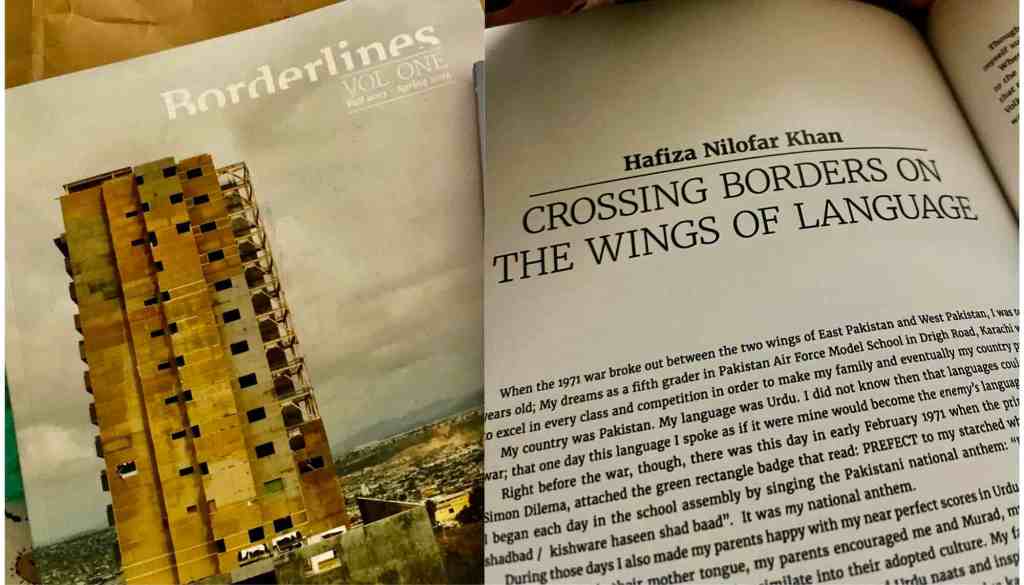
It was only as an adult long after 1971 that I learnt about the internment camps where Bengalis in then West Pakistan had been detained. My source was an essay titled ‘Crossing Borders on the Wings of Language’, by Hafiza Nilofar Khan, in Borderlines, Vol. 1 (2014), an anthology published by Voices Breaking Boundaries, my sister Sehba Sarwar’s nonprofit in Houston (now archived at the University of Houston).
The ten-year-old Hafiza whose father is in the Pakistan Air Force and proud of her prowess in Urdu suddenly finds herself and her family in the situation that Lahore-based historian Ilyas Chatta details in his recently published book Citizens to Traitors: Bengali Internment in Pakistan 1971-1974 (Cambridge University Press, 2025).
Off-Kendrik started over 16 years ago, “committed to building a broad platform for South Asian theatre groups and the next generation of South Asian Americans through theatre and storytelling”.
PERSONAL POLITICAL By Beena Sarwar
I went to see ‘Madho’ last night with my mother at the Third South Asia Theatre festival, SAATh 2024, in the Boston area. A musical play set in Lahore, it is written and directed by Sarbpreet Singh, an engineer by profession whose passion is music and storytelling.
I meant to share this when it was first published on Sapan News recently, my article co-authored with Dr Serena Hussain and Vishal Sharma, but was caught up with the Colombo screening of my Sri Lanka documentary. Thought I’d post now – the piece is still relevant especially given a recent article in an influential foreign policy magazine debunking the idea of Southasia
Images from various SAARC summits sourced from copyright-free photos. Collage by Pragayan Srivastava
Why the regimes ushered in through the democratic political process need to collaborate for a better future for the peoples of the region
By Dr Serena Hussain, Vishal Sharma and Beena Sarwar
The recent elections in Britain, France, and India are a reminder of the power of the people – and also of the importance of regional cooperation.
Pakistani PM Benazir Bhutto with her Indian counterpart Rajiv Gandhi at 1988 SAARC Summit in Islamabad. Source: Dawn
The Indian elections were the third electoral exercise in South Asia this year, after Bangladesh in January and Pakistan in February. Sri Lanka is also required to hold presidential elections before October.
As part of the democratic political process, elections determine the leadership that will shape not only a nation’s destiny, but also in closely connected regions.
The governments may choose to be isolationist, or follow the will of foreign powers, or cooperate and collaborate with neighbouring nations. Can and will South Asia’s regimes cooperate to promote regional peace, prosperity and progress as they have done in previous decades such as, during the 1950s, 1980s, and 2000s?
Such collaboration is essential for the sake of the peoples of the region.
It’s a dream, and aspiration. To quote Gulzar’s beautiful poem, “Ankhon ko visa nahi lagta, sapnoN ke sarhad koi nahiN” (Eyes don’t need a visa, dreams don’t have frontiers)
So there’s this dream: Southasia is a region with soft borders, like the European Union, or like the Southasia region itself was, prior to 1965.
We’ve long been calling for dialogue to be uninterrupted and uninterruptible. The call for soft borders and allowing people-to-people contact takes this further. Letting people meet, travel, and trade will benefit the region economically, as well as reduce misunderstandings and violent extremism.
Check out the list of demands – we know it’s a long shot, but we desis are used to bargaining – sign and share this online petition, coordinated by the Southasia Peace Action Network or Sapan. As of today, over 36,000 signatures and counting. Help us reach 50,000.
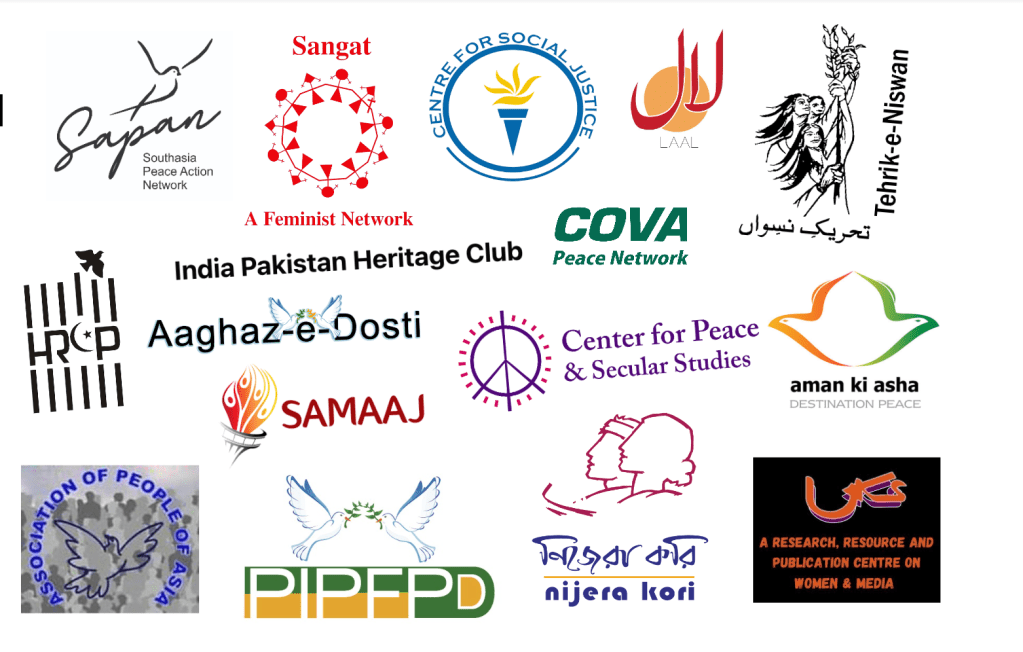
Here’s a compilation of the organisations collaborating on this so far. More are joining. Each person counts, like the drops that make up the ocean.
We may not attain the dream in our lifetime but let’s not let that stop us from trying.
Logos of participating organisations. Being updated on the petition site as more join.
The petition is addressed to the prime ministers and foreign offices of India, Pakistan and Bangladesh. Nepal and Sri Lanka allow visa-on-arrival. This is how it starts:
“This August marks 75 years since India gained independence from the British colonists and was simultaneously partitioned as the new country of Pakistan was born. In 1971, there was further independence and partition as East Pakistan became Bangladesh. These momentous events are marked with much blood and pain.
“It is time to heal the pain. Let people meet, “milne do”. Let us ‘reclaim Southasia’, to quote the late journalist I.A. Rehman.
“It is essential to allow people-to-people contact in order to fulfil the objectives of SAARC, the South Asian Association for Regional Cooperation which aims to “promote the welfare of the peoples of South Asia” in all ways possible and to enable the peoples of the region to “live in dignity and to realise their full potential”.
Over 30 organizations around Southasia and beyond have endorsed a joint statement about cross-border prisoners initiated and coordinated by Sapan, the Southasia Peace Action Network, calling for the humane treatment of cross-border prisoners and to decriminalise inadvertent illegal border crossings.
All three had served their sentences but remained in custody on ‘the other side’. Compounding the tragedy, there are terrible delays in the repatriation of the bodies of such fisherfolk, notes the statement.
The statement also draws attention to some teenagers who remain incarcerated in juvenile centers in India, mostly without any contact with their families. One has already served his sentence but remains incarcerated. Details below – Statement text and endorsements:
Arrested fisherfolk in custody across the border, far from home, no consular access until after sentence is over, often kept in custody even after serving their sentences. File photo. Getty images
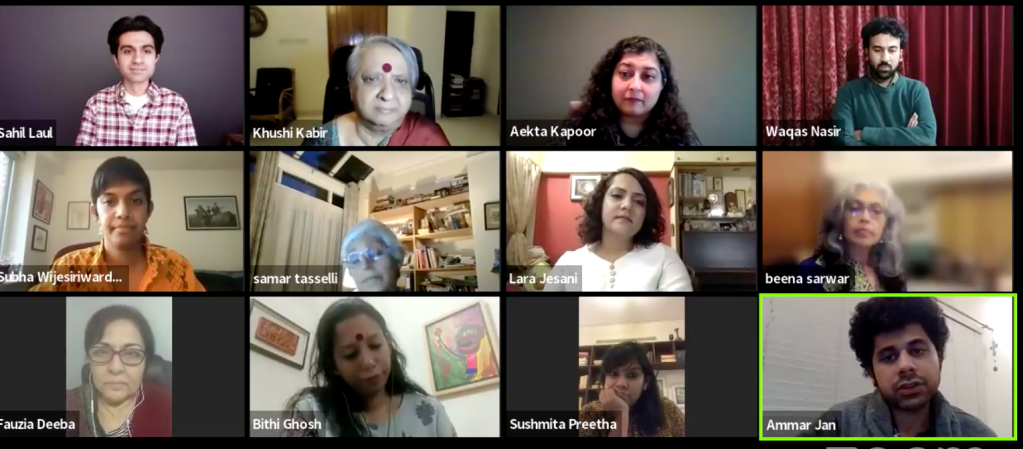
The last Sapan – South Asia Peace Action Network – event of the year was titled “Growing up, growing together” with activists across the region resolving to continue working for a better tomorrow. It was wonderful to hear so many young people speak – most under 35 years old. Thanks to all those who worked so hardto make the event a success – including the poetry and music at the end.Sapan’s next monthly event on the last Sunday of January will have more music and culture.
Commemorating Human Rights Day, the founding of SAARC, and 50 years of Bangladesh’s independence, Sapan discussion highlights the commonality of human rights issues across the region
Some of the participants at the event – most speakers were under 35-years old. Screenshot.Continue reading →
At a small gathering last year, our friend S. Ali Jafari read his essay in Urdu about my father, whom he called “Doc”. His son Salman videotaped the reading, which forms the basis of this 14-minute video I edited for 26 May 2019, ten years after Dr M. Sarwar passed away peacefully at home in Karachi, at age 79.
“Shahidul is free !! ধন্যবাদ !!! Thank you for your support!!” – message from Dhaka. Best news of the day 🙂
Press statement from the Commonwealth Human Rights Initiative and
South Asia Media Defenders Network
Dhaka, November 20– After day-long wrangles today between his lawyers and jail authorities in Dhaka over purported “discrepancy” in the prison’s address, internationally acclaimed Bangladeshi photographer Shahidul Alam was set free on bail to joyous scenes this evening. Continue reading →
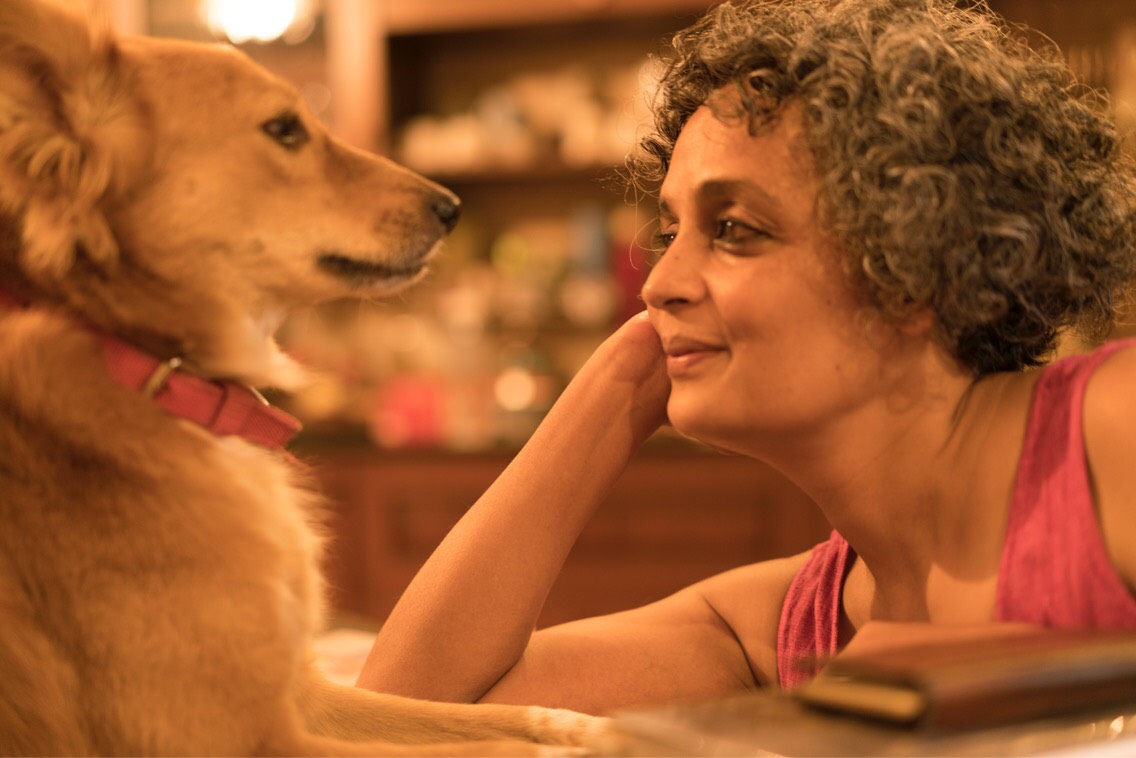
Arundhati Roy with a furry friend. Photo by Shahidul Alam.
Read Arundhati Roy’s letter to Shahidul Alam as part of PEN International’s Day of the Imprisoned Writer, 15 November. Today the Dhaka High Court also finally granted bail to Shahidul Alam, been incarcerated for over 100 days. He has yet to be actually released — the government is appealing the court’s decision.
Every November 15 PEN highlights the cases of five persecuted writers and activists imprisoned, killed, persecuted or otherwise at risk for their work. This year’s campaign focuses on Dawit Isaak imprisoned in Eritrea, Miroslava Breach Velducea killed in Mexico, Oleg Sentsov imprisoned in Russia, Shahidul Alam detained in Bangladesh and Wael Abbas imprisoned in Egypt. Writers David Lagercrantz, Jennifer Clement, Tom Stoppard, Salil Tripathi and Khaled Hosseini are also participating in this year’s campaign. Continue reading →
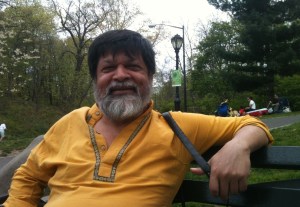
Shahidul Alam in Central Park, New York, 2012. Photo: Beena Sarwar
The Washington Post published my opinion piece about Shahidul yesterday. Below, a slightly earlier version of the final edited piece for those unable to access WP.
Here’s why Bangladesh made a huge mistake by jailing Shahidul Alam








 Journeys to democracy