Justice Sabih’s legacy

Karachi, April 28:

Justice Sabih: Upholder of human rights

Justice Sabih: Upholder of human rights

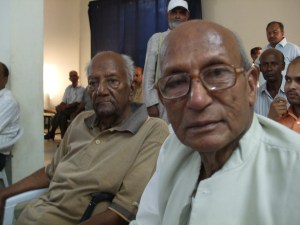
The newspapers on the PIA flight back from New Delhi on April 20 reported the shocking news about Justice Sabihuddin Ahmed’s death. Various thoughts jostled with sadness at his untimely departure. I remembered him as a lawyer, one of the Human Rights Commission of Pakistan’s founder members in 1986 and HRCP’s first Vice Chairperson for Sindh. My first term on the HRCP Council coincided with his last as he resigned in 1997, after being appointed as a judge of the Sindh High Court to the jubilation of human rights activists. Colleagues, activists and professionals revered him as a lawyer and later as a brilliant judge for his consistently compassionate and principled stands.

Twenty years ago, as a lawyer, he drafted a groundbreaking legislation regarding organ donations. His colleague and fellow advocate Syed Iqbal Haider twice presented the draft law as a private members’ bill before the Senate. The powerful vested interests of the commercial transplantation lobby kept getting it shelved. Eventually, years of hard work and lobbying by dedicated visionaries like Dr Adeebul Hasan Rizvi and his colleagues got the bill through as a presidential ordinance in October 2007. The commercial transplantation lobby appealed against it on the grounds that it was against Islam. On April 18, 2009, after extensive deliberations, the Federal Shariat Court ruled that organ donations are compatible with Islam, and outlawed commercial transplantations. That was also the day that Justice Sabih breathed his last.

His judgments strengthened human rights principles and gave relief to the aggrieved. His ruling of 1997 ordering the payment of monetary compensation to a detenu in a habeas corpus petition made judicial history in Pakistan. As chief justice of the Sindh High Court he encouraged out-of-the-box thinking, like allowing a judge of the Sindh High Court to take up appeals in interior Sindh as an experiment in 2007. Sitting at the Sukkur High Court, the judge (Justice Rehmat Shah Jafri) found that people had been in prison for 25-30 years on average. Refusing adjournments, he dealt with 300 appeals and disposed of 70 per cent of the murder cases in two months.

Women’s rights organisations always found Justice Sabih sympathetic. In one instance, he got the hearings of two rape cases transferred to Karachi from interior Sindh where the rape survivors felt threatened by the accused.

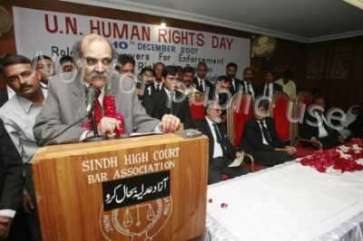
He was among the judges who refused to take oath under Musharraf’s PCO following the Emergency declaration of Nov 3, 2007. His steadfastness was an example to his brother judges. At one of the judge’s homes in Karachi, where civil society activists presented flowers to the dissenting judges, Justice Sabihuddin succinctly explained why they should be supported even if they had taken oath under an earlier PCO.

The military twice displaced civil power after the promulgation of the 1973 Constitution and took extra-constitutional judicial action through a PCO that required judges to take fresh oath: 1981 (under General Zia) and 2000 (under General Musharraf). After Musharraf seized power (Oct 1999) several judges refused to take oath under the PCO of 2000. The Supreme Court gave the military regime de facto recognition on condition that the judicial organ of the state remained uninterrupted. It also declared that independence of the judiciary was part of the basic structure of the Constitution, which the parliament could not amend. The self-styled chief executive was given power to amend, but not alter, the basic features of the Constitution. Also, extra-constitutional measures would be permissible only when the Constitution did not provide a remedy and the action taken was proportionate to the emergency situation.

In November 2007, an unprecedented 59 out of nearly 94 judges in the higher judiciary refused to take oath under the PCO. They stuck to their guns until after the elections. Over the past year, most ‘deposed’ judges returned to the courts, some like Justice Sabih in elevated positions. Many among civil society who had been active in the movement for the restoration of Chief Justice Iftikhar Mohammed Chaudhry saw this as a great betrayal.

One of them was on the PIA flight from New Delhi with me, anguished at Justice Sabih’s death. We talked about the lawyers’ movement and the divergent strands within civil society.

An early division within ‘civil society’ was over the general elections. Dominant opinion in discussions over the Internet and on television talk shows advocated boycotting forthcoming polls, with no answer to the question ‘and then what?’ (One Islamabad-based activist told me that his organisation planned to stop people from voting, and he himself planned to pour ink into ballot boxes on election day. If he wanted to boycott the polls that was his right, I responded, but he had no right to spoil other people’s votes.)

Another dominant civil society stand was that the new government should straightaway restore the judges through executive order. The government’s waffling on the issue notwithstanding, those who thought that the judges’ restoration should not be the be-all and end-all of the movement and that it should be debated and decided in parliament were dismissed as government apologists.

When many judges went back into the fold, this dominant civil society opinion saw it as a betrayal of the cause for the restoration of the chief justice, even terming them as ‘PCO judges’. Given the track records of people like Justice Sabihuddin an attempt to understand their move would have been in order, even if people disagreed.

So great was the divide that some virtually ostracised them socially. “I last met him at the Boat Club some months ago,” said my grieving activist friend on the flight, who had known the late judge for over forty years. “He asked me to come and see him but I was too angry. He asked me a couple of times again through someone to see him … I didn’t. I will always regret that.”

When he finally did go, it was too late. Justice Sabihuddin was unconscious in an intensive care unit. I could feel his pain at not having made his peace in time. Many also felt similar ‘too late’ anguish when Benazir Bhutto was assassinated, having pilloried and castigated her for making a ‘deal’ with a military dictator and then contesting elections.

“I have learnt a lesson from this. I will never take such a rigid position again,” he added.

Maybe somewhere, somehow, Justice Sabihuddin understands. Certainly he would forgive. This can be but of small comfort to those who wish they had given him a hearing, as he gave so many others.

Remembering Victor Kiernan

kiernanWhen Victor Gordon Kiernan passed away in February this year aged 95, the Pakistani media took surprisingly little notice (or perhaps not so surprising, given what we’re grappling with) of the death of the Scottish Marxist professor famous for his translations of Faiz and Iqbal, and whose “immense contributions to the post-war flowering of British Marxist historiography …transformed the understanding of social history,” as John Trumpbour (Jack) put it in his obituary for India’s Frontline magazine.

kiernan-new-imperialism-cover

I remain grateful to Jack – one of the few relics of the ‘left’ left at Harvard – for his kindness to me while I was in Cambridge, MA (and to the documentary filmmaker B.J. Bullert in Seattle who introduced us – see http://www.fishermensterminal.net/). I was particularly thrilled when Jack gave me a copy of ‘America: The New Imperialism: From White Settlement to World Hegemony’ (Verso, 2005) when it was just hot off the press.

Jack mentioned at the time that Kiernan had got him to write the epilogue (which I read later and really liked). That, in fact, is how I learnt that V.G. Kiernan was in fact at that point very much alive and kicking in Edinburgh.

On hearing of his death, I wrote a note of condolence to Jack. He replied that Frontline magazine in India had given him 3000 words to discuss Victor Kiernan’s life and work. “So India came through. Both Tariq Ali and Eric Hobsbawm have done articles in the UK. Sadly that outpost of liberal humanitarian imperialism The New York Times seems determined to refuse to do an obituary.”

His article, ‘Ideological warrior against Empire’, is up at http://tinyurl.com/ddcvph

I responded commenting on the strange silence in Pakistan, thinking I’d take it up with someone. Never got around to it. So I was happy to see Hassan Gardezi’s belated but much needed profile of the great man in last week’s Books & Letters section of Dawn – “PROFILE: Remembering Victor Kiernan”, 03 May, 2009 – http://tinyurl.com/cen66z.

Prof Gardezi is co-editor, with Prof. Jamil Rashid of the seminal publication, ‘Pakistan, the roots of dictatorship : the political economy of a praetorian state’ (Zed Press, 1983). Both are based in Canada.

The Taliban are coming….??? Myths and other realities

The Swat flogging video led to an alarmist, emotional, knee jerk response devoid of any political and historical context among the `bloggeratti’ (to borrow a term from Dr Omar Ali of Asiapeace), sms’ing crowd and TV talk shows. Those who are now calling for decisive action were not so long ago justifying the Taliban’s actions as an `anti-imperialist’ force.

Other `civil society’ attempts at countering Talibanisation include
demonstrations and even a signature campaign to the President against
Talibanisation initiated by a friend in Karachi and picked up all over the
country – a well meaning effort available at http://www.sacw.net (direct link
http://tinyurl.com/c6yj4d).

Women’s Action Forum is planning a broad-based meeting on May 8 at Karachi Press Club, 5 pm, on `Women to Reclaim Our Public Spaces’. WAF stands for:
– One constitution and one set of laws for all of Pakistan
– The writ of the government must prevail on the basis of moral authority
premised on protection, health, education, livelihood and security of all
persons equally
– Urgent de-weaponisation of society
– No special accords compromising the rights of one group of citizens of
Pakistan over others

In the end, however, `Talibanisation’ is a political problem that has taken
decades to develop. It calls for long term political solutions. There are no
short cuts. Recognising this, I.A. Rehman advocates two immediate steps in
`Pakistan’s neo-Taliban’ (Dawn, Apr 30) – http://tinyurl.com/ctyl3l – the
government must reduce its trust deficit with the people, and people must see evidence that the army is able and willing to earn its keep.

Also see Dr Hassan Abbas’ report on police reforms in Pakistan as an urgent measure to counter terrorism.  A PDF is available at his excellent blog watandost.blogspot.com
Direct link to the pdf file – http://tinyurl.com/codh8d

Also, three other articles that provide another perspective:

– THE ROVING EYE, The myth of Talibanistan, By Pepe Escobar, Asia Times, May 1, 2009 – http://tinyurl.com/cp8zdr
Sent by S.M. Naseem with the note: “To reassure you that Islamabad is not going to fall to the Talibans any time soon. The rumours are about as credible as those about the USA becoming a socialist state during Obama’s presidency.”

– How Pakistan Is Countering the Taliban – The pacification model that worked in Iraq can work in the Swat Valley, By Husain Haqqani, WSJ, April 30 2009 –
http://tinyurl.com/dmk6py

– Between two fundamentalists, By Dr Mubashir Hasan, The Nation (Pakistan) April 30, 2009 – http://tinyurl.com/da8syr

Finally, a widely circulated article `I want my country back’ by Sehar Tariq, a development studies student, published in The News on April 17 –
http://tinyurl.com/dg2nwn

Below, Seerat Hazir’s response to Sehar Tariq’s article (minus some distracting personal barbs):

“I am curious to find out which Pakistan she wants back. The one created by the British with the help of wealthy and influential feudals and nawabs as a gift to the Americans to serve as a pawn in the cold-war games after the 2nd world war? The one ruled successively by military dictators, aided and abetted by a conniving nexus of corrupt bureaucrats, politicians, industrialists, and devious feudals that many of us were privileged enough to be related to, getting our passports and driving licences made without standing in sweaty queues? The one that created a two-class system: the haves and the have-nots?

“…We are being over-simplistic by focusing just on the Taliban phenomenon, conveniently just mentioning in passing – almost as an after-thought, almost as something you pick up from a souvenir shop at the end of a trip to tell friends back home that you had been there – the real problem stemming from the imperialist greed – the fountain-head of all this violence and self-destructive frenzy which seems to have taken over the  dispossessed of the world. It doesn’t take much intelligence… to understand what’s happening here in Pakistan at the moment. Here is how it goes, more or less:

“The US and allies decide to cut the Pak army and ISI down to size (re-read
Washington Post, since Obama). Obama admin decides to deal directly with the civilian govt and bully the army into playing second fiddle. Aid is made
conditional. Transparency is demanded. Pak Army tells the US, well, then let the civi govt take care of the war on terror. Within weeks things begin to happen:
Taliban blow up 200 Nato trucks, and practically force the Nato command into looking for alternative supply routes into Afghanistan. They can’t be stopped for some mysterious reason. Taliban take over Swat and are seen patrolling cities and towns with impunity, and they can’t be stopped for some reason. FM radio stations start spewing out extremist propaganda and they can’t be jammed for some odd reason. Girl schools are burnt down, video of a young girl being flogged ruthlessly by frothing fanatics pops up to remind everyone what Taliban are capable of. Rumours are sown in diplomatic circles in Islamabad that Taliban are just behind the peaceful Margallas, a mere 100 km from the diplomatic enclave, and, more disturbingly, Kahuta. Nazam-e-adl is given the nod. All this is stage-managed by the Army in connivance with a puppet parliament, to remind
the Americans and their allies how things will look if the army is not supported and financed the way they want it. This was a trailer shown to the men on the Capitol Hill who already have their ears cocked for such news from Pakiland. Officials and generals scurry back and forth. A deal is struck. and Hallelujah! General Kayani appears on the front pages on April 25, reiterating his resolve to fight the war on terror to the bitter end. The Taliban Tide begins to ebb back to its mysterious origins. Thanks be to Allah, the All Merciful.

“Pakistan (read pak army) again points the gun to its head and gets its demands. Only someone with eyes misted over by April showers can fail to see that Taliban of Swat is the other side of the ruling elite led by the army: the side that will flip into broad view once the US decides to take on Pakistan a la Afghanistan and Iraq. I don’t know whether it’s misguided sincerity or plain escapist ideology that defines the activism of most of our more enlightened academics here and abroad. I only wish if all that painstakingly acquired scholarly wisdom were focused on unmasking the real culprits and their local and foreign cohorts, and identifying ways and means to move towards some kind of a  solution, rather than joining the popular chorus written and directed by the western media. and which is sure to bring the crowd to its feet. The only solution lies in paving the way, through word and deed, for greater provincial autonomy and breaking the colossus of a corrupt federation controlled and manipulated by a greedy, all-powerful army.
“You and I are a sorry, confused product of a somewhat privileged class which directly or indirectly benefitted from the elitist culture cultivated by the establishment in cahoots with their foreign masters; a product of the unjust system which gave us an unfair advantage over the marginalized masses. Time now, if there’s still any left, to look back at all the injustices we had partnered in silence; raising our voice only where and when it suited us, as long as we could scamper back to our privileged existence, to the 6 O’clock appointment with the dentist after the 4 sweaty hours spent in robust activism at Regal chowk. The real question is not what we should do about Talibanisation: it’s what we should be doing to challenge and change the system which serves as a nursery for such carnivorous flora. But, sadly, we can’t tear ourselves away from our `qatil’ (killer) that Faiz wrote about, because he is our ‘hamdam’, our benefactor, too: Better blame a bunch of misguided, bearded fanatics with their shalwars hitched up above the ankles, sporting a Gotcha jacket, and be done with it.

“Wake up and smell the shit in our own pyjamas, and don’t be fooled by the
Taliban Cafe smell that the western machinery and its vendors in Pakistan so eagerly want us to wake up to.”

‘Talibanisation’: Backwards, forward, twisted around

A journalist’s notebook

By Beena Sarwar

In November 1999, like many others, I thought that the Taliban were the ‘last gasp of a dying order’. They were isolated in Afghanistan. The world largely turned a blind eye to their oppressive system imposed in the name of religion — public floggings, limb amputations and executions – for alleged moral transgressions that the Taliban saw as crimes, like adultery. Such punishments were not entirely an aberration in the last decade of the 20th century: USA’s most allied ally, oil-rich Saudi Arabia, routinely meted out similar punishments (and continues to do so). The Taliban in Afghanistan controlled an area across which America wanted to build an oil pipeline. Until they refused to allow this, their ‘barbarism’ received little notice in the West, particularly America.

The Taliban’s attitude towards women was an extreme version of attitudes generally prevalent in the context of this region. Women across South Asia are verbally and physically abused every minute of the day, every day of the year. ‘Honour killings’ in one form or other are common all over the Middle East as well as South Asia, in addition to the ‘dowry deaths’ and female foeticide prevalent in India. At least 1,210 women were killed in Pakistan during 2008, including at least 612 in so-called ‘honour killings’ and at least 185 over domestic issues, according to the recent annual report of the Human Rights Commission of Pakistan (HRCP).

“The malaise is more widespread than we care to acknowledge,” wrote Jawed Naqvi in his column My fanatic versus your fanatic (Dawn, reproduced in www.hardnewsmedia.com), after the ‘Swat flogging video’ came to public notice. Highlighting gender violence in various societies including India, he comments, “What goes for religious fanaticism elsewhere can easily mutate into caste bigotry in a country like India. Although caste-based zealotry goes largely unnoticed because of its prevalence in under-televised rural areas, it works with the brutality associated elsewhere with honour killings and violence against women generally.”

In Pakistan, as well as in India and other societies where there is gender violence on the pretext of ‘honour’, the perpetrators tend to be family members. People often overlook or condone such violence as an internal, domestic matter. The culprits are rarely punished, particularly if they have acted against a daughter who eloped against their wishes with someone and that too from a different or ‘lesser’ community.

The difference is that the Taliban in Pakistan, in their role of extra-judicial vigilantes, punish women they are not related to, assuming the role of the State. Their Hindu counterparts may aspire to similar levels of vigilantism, judging by the Rightwing threats and attacks on women who transgress conservative norms in India – “Indian Taliban” as one Indian minister termed Hindu vigilantes who beat up women in a pub in Mangalore.

The comparison is not too far-fetched. Five years ago, I remember the US-based Indian filmmaker, Lalit Vachani, saying that many leaders of the Hindu Right “want a mirror image of Islam” – they want to manufacture, “a religion where a (spiritual) leader will give fatwas that the faithful will follow blindly.” He was speaking at a discussion after the screening of his documentary about the RSS, The Men in the Tree (2002) in Delhi.

Writing about the event that I happened to have attended, his words reminded me of an Australian PhD candidate working on a comparison of Hindu and Muslim Rightwing organisations some years ago, mainly in Mumbai and Lahore. She found that the Hindu organisation actually studied the tactics of the Islamic organisation, including pamphlets, literature, and video recordings of their rallies. (Having received various threats from their representatives in Australia when she returned, she preferred to remain anonymous).

In the same article, I quoted TV journalist Rajdeep Sardesai, who, during a live talk show on Geo TV during the Saarc summit in Islamabad in January 2004, had told the Jamaat-e-Islami chief Qazi Hussain Ahmed during a heated debate on Kashmir and religious extremism, “Qazi sahib, mujhe lagta hai ke aap aur Bal Thackeray ek hi sikkey ki do sides hain” (it seems to me that you and Bal Thackeray are just two sides of the same coin). Qazi had no answer. (The commonality of ‘fundamentalisms, October 10, 2004). More from that article:

“Sardesai’s brief remark pinpoints a fundamental and universal truth: the commonality of ‘fundamentalisms’, no matter how much at odds they appear to be. Unfortunately, they tend not to stick to the actual ‘fundamentals’ that are common to all religions – truth, justice, and compassion. As a result, another commonality is how their respective ideologies contribute towards a culture that condones and engages in violence – a point underscored decisively in Vachani’s film…

“In general though, there is little acceptance in India for such homogenisation, that many oppose, because it leads to violence that, in turn, will isolate the country. Vachani’s The Men in the Tree, in fact, makes the case that this homogenisation also prepares the ground for incidents like the Babri Masjid demolition, and beyond, to the horrors of Gujarat (2002). This brings up another commonality between extremist groups: their attempts to construct and strengthen their own identity by demonising ‘the other’ even if this means distorting history.”

In Pakistan, the growth of the Religious Right and subsequently the Taliban’s revival has much to do with the military’s continuous meddling in politics. Impatient with bungling and corrupt politics, sections of the population welcome or at least wearily accept military takeovers instead of pushing for the political process to continue.

When the citizenry is allowed to have a voice, it blunts the edges of extremisms, as we have seen in America and India. Elected leaders can sometimes be disastrous, but being in the political mainstream forces them to compromise, dialogue, negotiate, and step down from hardline positions – except when they sound the drums of war, a situation that allows for the revival of extreme positions based in manufactured notions of nationalism. Even so, when the political process is allowed to continue, every few years the people have the power to vote out an elected representative who has exploited nationalist or religious sentiments. A military man who takes over is accountable to no one. He cannot be dislodged by elections and stays on until he is forced out – in Pakistan, after an average of ten years. The presence of a military strong man at the helm of affairs keeps the lid on simmering discontents, allowing extremism to grow.

If the law and order situation is simultaneously allowed to grow out of control, criminalisation feeds into this extremism. Citizens feel emasculated and powerless; aggression and violence is one way of self-assertion. In Pakistan, since September 2001, the focus on the ‘law on terror’ at the expense of the police force and the criminal justice system, has allowed ‘religious militancy’ and extremism, already strengthened in the name of ‘jihad’ since the Afghan war against the Soviets, to dig deeper into society. These trends were reinforced and institutionalised by discriminatory laws enacted in the name of religion by the previous military ruler, Gen Zia-ul-Haq, propped up by America for his role in that war.

“This has led not just to greater discrimination against religious minorities, it has caused sectarian confrontation within the Muslim population, conflict between the orthodoxy and liberals over observance of social mores, and a running polarisation between the political Right and Left. Today, we are faced with two stark choices: modernisation and development, or regression into tribalism,” this reporter wrote in a comment on November 1999 (The Democracy Debate). Here’s more from that article:

“The country Gen. Pervez Musharraf has taken upon himself to lead, faces a conflict between these two trends that is intensified by increasing exposure to the outside world, access to the satellite dish and the internet, and education, particularly of girls and women even in remote villages and rural areas. On the other hand is ‘Talibanisation’ – fed by thousands of religious seminaries across the country, functioning with government sanction and even money, besides covert funds from other Islamic countries. The last gasp of a dying order?

“… ‘Talibanisation’ is still a serious threat, but it needs to be addressed beyond the surface – deprivation and the denial of basics like health, education and employment opportunities are among the factors behind the increasing number of boys being sent into madrasas where they are at least guaranteed food, shelter, education and even employment later as fighters. “The sectarian nature of most of these madrasas has contributed to the increasing sectarian violence in the country. The only thing that they agree upon is that the others are infidels, along with Ahmedis and pro-democracy, pro-human rights workers; many consider it legitimate to wipe out these ‘ideological enemies of the State’. “…Lack of participatory decision-making, the lack of freedom of information and expression, combined with the State’s own tendency to use violent methods to crush dissent, has contributed to a culture of fear and aggression.

“It is a combination of all these factors that endangers democracy in Pakistan. Short-sighted policies implemented for political expediency will lead to the strengthening of a Taliban-like order, with long-term negative impacts not just for Pakistan but for the entire region and beyond. For Pakistan, it will spell economic disaster and isolate it as a pariah in the world community. A nuclear pariah, which the world cannot afford to ignore. “This is why the world must link demands for guarantees of democracy in Pakistan with economic cooperation, and this is why the people of Pakistan must demand a return to the democratic process.”

Last year, Pakistan again took a step towards the democratic process. But the forces that now hold the country hostage had gained in strength over the previous three decades of military rule (Gen Zia), followed by a decade of musical chairs in which four elected governments were dismissed, followed by yet another decade under military rule (Gen Musharraf). During this time, these forces have consolidated their hold on areas of Pakistan and extracted a heavy price for political short-sightedness and insistence on ‘strategic depth’: the life of Benazir Bhutto. Had it not been for her insistence on electoral politics, Musharraf was unlikely to have shed his uniform and eventually stepped aside – the first military ruler of Pakistan to ‘voluntarily’ relinquish his position.

Still, the results of the February 2008 elections gave room for optimism as, despite threats of violence, the electorate categorically voted against those playing the religious card and those propped up by the military. The events of the past year are eroding that optimism, now overshadowed by the all-too familiar impatience and frustration with the political process. But the last thing we now need is another military takeover or a change of government. Whoever is at the helm of affairs will face the same challenges as the present regime. The fanaticism in the name of religion, developed and cultivated for decades by the powers that be, will not disappear overnight with the restoration of democratic politics.

Whatever its weaknesses and faults, the present government is the first in Pakistan that is really committed to combating this menace, recognising that it will consume us if we do not end it. For the first time, the army chief has spoken out about the Swat deal, terming it an “operational pause”. The Taliban’s continuous reneging from agreements made with the government may yet turn the tide against them and enable the military to move decisively against them, which it has so far been unable, or unwilling, to do.

Meanwhile, for the bulk of the population, the primary concerns remain how to feed, clothe and house themselves and their families, educate their children, get clean drinking water and adequate medical help. This is unlikely to change for the better anytime soon, no matter which way the political winds blow. But a sustained political process, at least, offers a chance for positive change – eventually. The alternative is too grim to contemplate.

Arundhati ‘Pakistani’ and right-wingers ‘patriotic’

The FMP panel in Delhi, April 15, 2009

The FMP panel in Delhi, April 15, 2009. Photo: FMP

Panel members Arundhati Roy & Aniruddha Bahal. Photo: B. Sarwar

Panel members Arundhati Roy & Aniruddha Bahal. Photo: B. Sarwar

PERSONAL POLITICAL

Beena Sarwar

“Shouldn’t Arundhati Roy come from Pakistan?” sarcastically asked a Delhi freelance journalist, commenting on the Facebook posting about a panel discussion, ‘Does Media Jingoism Fan India Pakistan Tensions?’ The cynical remark stemmed from his annoyance, shared by many, at Roy’s consistent exposure of India’s ‘warts’.

The panel, organised by the recently formed Forum of Media Professionals (www.fmp.org.in ), included four journalists from India besides the celebrated writer and activist Arundhati Roy as well as four Pakistani journalists and The Hindu’s Islamabad correspondent Nirupama Subramanian.

Delhi is far cleaner and greener since I was last there nearly five years go, thanks to laws (that are actually implemented) banning diesel and making CNG compulsory. On a more intangible level, another kind of pollution remains, reminiscent of a phenomenon we face in Pakistan: right-wing jingoism fuelled by emotional appeals to religion and nationalism.

The jibe about Arundhati Roy, disguised under an urbane sarcasm, is just one aspect of bigoted nationalism. Going by that logic, those in Pakistan who fight for justice — a struggle that necessitates exposing wrongdoings, or ‘washing dirty linen in public’ according to our critics — should represent India. Another aspect of such thinking is evident in the comments back home when I show my documentary ‘Mukhtiar Mai: The Struggle for Justice’, in Pakistan: “Why don’t you make such films about violence against women in India? Women there have these problems too.”

I wonder at this competitiveness that makes us feel self-congratulatory when we can point out how much worse the other is in some way.

Thankfully, not everyone takes this myopic view. In Allahabad, at a crowded meeting of the Pakistan-India People’s Forum for Peace and Democracy (PIPFPD), there was none of this one-upmanship or finger pointing. The audience immediately saw the commonalities of the issues raised in the films I showed, on Pakistan’s flawed and discriminatory Hudood Laws and Mukhtiar Mai. They understood that the phenomenon in Pakistan of Taliban ‘punishing’ women for alleged transgressions is not much different from those who rape, kill or lynch women and couples for the sake of ‘honour’ in India itself or indeed in traditional communities in Pakistan.

The difference is that most of these ‘honour crimes’ are committed by relatives of the women who ‘transgress’, as opposed to the Taliban who are taking it upon themselves to enact these punishments as part of the imposition of their own criminal justice system that flouts the writ of the state.

Another difference is that the family in Haryana who hanged their daughter and the man she eloped with (in their own home) will be charged, tried and probably punished. In Pakistan, the ostensibly Islamic Qisas and Diyat (retribution and blood money) laws imposed by a military dictator in the 1980s allow the murder victim’s family members to ‘forgive’ the perpetrators who are often their own relatives.

As for the Taliban and their sympathisers, none have ever been charged for their criminal transgressions, ranging from blackening women’s faces on billboards, to disrupting public events in that involve women (remember the Gujranwala marathon?), to blowing up schools, killing teachers and dragging women out of their homes and murdering them for alleged ‘immorality’.

At the Allahabad meeting, the tone was set by senior advocate Ravi Kiran Jain in his introduction when he stressed on the need for a stable government in Pakistan, and the desire to remove misunderstandings. His words reminded me of Nirupama Subramanian’s appeal at the panel discussion in Delhi urging Indians to “be sensitive to Pakistan as a country that has problems and show moderation in we respond to these problems.”

Many Indians already understand this, but we don’t hear their voices in the media very often. For instance, Utpala, a women’s rights activist during the discussion in Allahabad talked about the need for Indians and Pakistanis to be allowed to visit each other’s countries. Her own visit to Pakistan many years ago, she said had expanded her ‘angan’ (literally, courtyard). She ended by asking, “How can we in India be happy until there is a pro-people, pro-women government in Pakistan?”

The Delhi panel was disrupted for a minute or so by one man at the back of the auditorium who stood up and shouted anti-Pakistan, pro-war slogans. The organisers threw him out. He turned out to be from the Sri Ram Sene, one of the faces of India’s right-wing ‘Sangh Parivar’, who . Three or four others were outside, whom the organisers had refused to allow entry as they were not signing their names in the register. The SRS, which does not otherwise have much presence in Delhi, later claimed it had sent ‘thirty’ men to disrupt the meeting.

True to form, illustrating the very issues we had been discussing, most media hyped up the disruption which then overshadowed the discussion itself. Pakistani journalists were ‘roughed up’, ‘attacked’, the meeting disrupted for ’15-20 minutes’ and so on. The incident set off a chain reaction across the border, giving right-wing forces in Pakistan the opportunity to condemn the ‘anti-Pakistan feelings in India’. A ‘human rights’ organisation held a demonstration against the ‘attack’. Jamat-e-Islami’s recently elected chief Munawwar Hasan promptly issued a statement saying that it should serve as an eye-opener to those who talk of friendship with India and they should refrain from visiting India (‘ba’az ajana chahiye’).

For such people, obviously the anti-Pakistan slogans raised by one miscreant are paramount over the dozens of people in the IIC auditorium who listened respectfully to the discussion and engaged in a dialogue with the speakers later. The people in Allahabad and at the Delhi Press Club a few days later who came to hear a Pakistani journalist and express their support for a democratic order in Pakistan also don’t count, even if some of them were prepared for a rough time, like Zafar Bakht in Allahabad who had lent his school’s auditorium for the event. “After hearing of the Delhi incident, we rolled up our sleeves and were prepared,” he said later.

In the end, the anti-Pakistan slogans raised by one miscreant hogged the media limelight rather than those who filled the auditorium, heard the speakers respectfully and engaged in dialogue later. This is the nature of the media beast. Who is going to tame it?

India trip, the ‘attack’ and some articles

Allahabad Chapter of PIPFPD: Comrade Kameshwar Prashad Agarwal

No disruptions at the Allahabad Chapter of PIPFPD, attended, among others, by Comrade Kameshwar Prashad Agarwal

Hello everyone, have been traveling with limited access to internet, hence the silence.

I was among the journalists at a panel discussion ‘Does media jingoism fan tensions between India and Pakistan?’ organised by Forum of Media Professionals at the India International Centre in New Delhi on April 15. The event got a lot of play because of misreporting.

The Indian media hyped up a minor disruption, reporting that the Pakistani journalists in the panel were ‘attacked’ or ‘roughed up’. The Pakistani media picked up on the photos and subsequently there were condemnations and even demonstrations in Pakistan about the ‘attack’.

To set the record straight, no one was roughed up or attacked. One man did disrupt the meeting – but very briefly, from the back of the auditorium. The organisers had turned away 3-4 men who refused to sign the register – he must have sneaked in. The discussion was half over when he stood up and started shouting anti-Pakistan, pro-war slogans (someone sitting near him said he’d just come in). The organisers pushed him out. TV cameramen and photographers followed.

Most papers and channels used photos and footage of the scuffle outside, rather than focusing on the discussion inside, which continued, despite the noise we could hear outside for a couple of minutes. The interruption lasted for maybe a minute or so. The discussion started at 10 am and continued till 1.30 pm. It turned out that he was from the Sri Ram Sene, the same group that tried to prevent Valentines Day celebrations in India, to whom thousands of people sent ‘pink chaddis’ in response.

The incident demonstrated what we had been talking about, that TV, being a visual medium, focuses on images rather than words. Hence their running after the scuffle rather than focusing on the discussion. This is the nature of the beast. Those keen to tame it might try organizing mass emails, letters and phone calls to demand meaningful change.

Here is Rahimullah Yusufzai’s article on the incident – `The good, the bad and the ugly’, The News, Apr 21, 2009 <http://tinyurl.com/dxtuo3>

Our visit also involved several other interactions with the media. Rahimullah Yusufzai, the veteran reporter from Peshawar was the most sought after for his views on Talibanisation, living as he does in the heart of the storm. Here is the link to a full page ‘idea exchange’ published April 19, a forum that The Indian Express regularly holds: “I don’t think we have reached a stage when the Taliban will take over Pakistan” – <http://tinyurl.com/dzeyc9>

I showed some of my documentaries at a meeting of the Allahabad chapter of the Pakistan-India Peoples Forum for Peace and Democracy (PIPFPD) and at the Delhi Press Club, organised by Youth4Peace. Here are links to a couple of reports on the Press Club screening:

‘In Pakistan, change has to come from within, says journalist’ -Indian Express, Apr 20, 2009 – <http://tinyurl.com/covts7>

`Pak journalist’s short take on women’s rights’, Mail Today, Apr 20, 2009 – <http://tinyurl.com/cmb7ey>

More later

“No Sazish, No Jang” (No Conspiracy, No War) – a peace song

A young friend, Shahvar Ali Khan in Lahore has composed a song for which he recently launched the audio.  The MP3 is downloadable. Video coming soon.

Download and listen to Mulla na kar tang…. (Mulla, stop bugging us!) at
\”No Sazish, No Jang\” (No Conspiracy, No War) by Shahvar Ali Khan

It is a worthy effort in the midst of total madness, as Asad Jamal in Lahore says.

Some thoughts on ‘Swat flogging video’

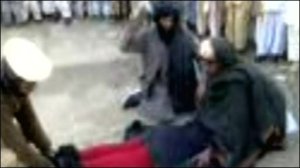
Girl being flogged: Still from the cell phone video circulated on the Internet and broadcast (repeatedly) on the private channels

Girl being flogged: Still from the cell phone video circulated on the Internet and broadcast (repeatedly) on the private channels

The ‘Swat flogging video’ has made headlines all over. Zubeida Mustafa in her excellent article in Dawn today, ‘A catalyst for change? analyses the reasons why

This para jumped out at me: “The Swat flogging video has brought people face to face with the reality of the emergence of extremism in the name of Islam. It has brought to the surface the paradoxes that had until now been swept under the carpet for expediency’s sake. The video has forced difficult choices on the people compelling them to at least think about issues that affect them very personally.”

Zia’s children, by Ayesha Siddiqa in The News, April 05, 2009 highlights the issue of ‘Islamic law’ or ‘Sharia’. She references the recent book by Tahir Wasti ‘Application of Islamic Criminal Law in Pakistan: Sharia in Practice’. Wasti, as she points out, has experience of both Islamic law and British common law. “This is the first detailed research enlisting the ramifications of the application of sharia law in Pakistan. tracing the historical roots of this phenomenon”.

For those who haven’t followed the issue or seen the video (warning, it’s graphic) check out Declan Walsh’s initial report on the issue in The Guardian, April 2, 2009 (two days before TV channels in Pakistan picked it up):

http://tinyurl.com/ck9wf9

Re: my own take – I’ve been swamped with the final editing of another documentary I’m making, but wrote something on the issue the other day that I will share after publication.

Chicago, Shahidul and ‘Three Cups of Tea’

Three Cups of Tea_Mech.indd

Published in Hardnews, New Delhi,April 2, 2009

PERSONAL POLITICAL

Beena Sarwar

I love how connections sometimes just ‘happen’, criss-crossing the world, spanning generations, borders and continents. This particular stream traverses Pakistan’s early progressive struggle to Chicago, an inspiring book by an American who recently received Pakistan’s highest civilian honour, and a Bangladeshi photographer who came to Pakistan to document that moment.

In Chicago for a seminar in May 2007, I stayed with Danial Noorani. He is active with Apna Ghar, a domestic violence shelter for immigrant, primarily South Asian women. His late parents Malik and Mumtaz Noorani were close friends of my parents, active in the Communist Party and city goings-on. Tall jovial Malik Uncle ran a publishing house. ‘Jan-e-Man Phuphi’ (as we called the bright-eyed Mumtaz Noorani because of the endearment she used for us children) was active with Anjuman Jamhooriat Pasand Khawateen (Democratic Women’s Association, headed by Tahira Mazhar Ali, still going strong in Lahore).

There is some symbolism about meeting their son in Chicago. I remembered hearing of Dr Eqbal Ahmad’s disappointment when he found a monument to a policeman rather than the Chicago workers demonstrating for the eight hour day were killed by police fire in 1886. Ironically, the US does not observe May 1 as Labour Day.

Before I left, Danial gave me a paperback titled ‘Three Cups of Tea’ by someone I had vaguely heard of, Greg Mortenson. I couldn’t put it down. It is mandatory reading for anyone interested in education, Pakistan and the ‘war on terror’.

Mortenson builds schools in Pakistan’s remotest areas. The book, co-authored by David Oliver Relin, is sub-titled One Man’s Mission to Promote Peace . . . One School at a Time’– a mission as endangered by the ‘taliban’ as by the militaristic policies of the US and Pakistani governments operating without a political roadmap.

It started in 1993, when Mortenson was recuperating in atiny, unmapped village, Korphe, after being injured while climbing the world’s second highest mountain K2 in the Karakorams. Shocked that the village ‘school’ was a patch of land where children sat in the open scratching their lessons with sticks on the ground, he vowed to build them a school.

Back in the US, he saved rent by sleeping in his car and not taking his girlfriend out to dinner. Not surprisingly, they broke up. Mortenson kept trying to raise funds, manually typing letters to seek help. Two years later he was back at Korphe with a truck-load of building materials.

But he was in for a shock. The villagers told him that they first needed a bridge across the ravine that isolated them. Mortenson nearly went off in a huff. Then he thought about it and realised they were right. An important lesson for aid organizations: ask people what they want and need instead of giving them what you think they should have.

Besides making Korphe more accessible to the world, the bridge enabled the village women to make short trips to visit family on the other side rather than investing days as they used to. And yes, the school was also built. Mortenson has since helped to build some 78 schools in Pakistan (and Afghanistan), providing education to over 28,000 children, including 18,000 girls.

The second part of the book tells a grimmer story: the impact of the mushrooming Wahabi madrassahs and the ‘war on terror’ following ‘9-11’. Mortenson recalls an invitation to the Pentagon to talk about his work, only to realise that they’re not really interested. If they listened to him, perhaps the world would be in less of a mess.

Last August, the Pakistan government announced that Pakistan’s highest civil award, Sitara-e-Pakistan (“Star of Pakistan”) would go to Mortenson for his courage and humanitarian effort to promote education, and literacy in rural areas. The Bangladeshi photographer Shahidul Alam mentioned it when we met last month in Kathmandu. He flew in from Bangladesh especially to record the moment. On March 23rd, 2009, he was in Islamabad with friends of Mortenson watching the awards ceremony live on television.

These are, as Salma Hasan Ali wrote on Shahidul’s blog, “kernels of hope that remind us that all will not be lost to violence and a distorted mindset.”

(ends)

PAKISTAN: Another Terror Attack For TV Cameras

beena-22

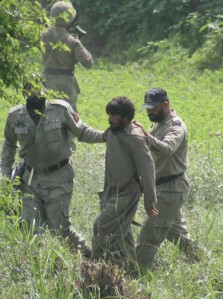
A Taliban militant, part of the group that attacked a police academy near Lahore, being led away by troops. Photo: Rahat Dar

KARACHI, Mar 31 (IPS) – The brazen armed attack on a police academy near Lahore on Monday underlines the danger that the Pakistani state faces from militancy linked to the ‘war on terror’, but with historic roots in the earlier Afghan war of liberation from Soviet occupation, that was converted into a ‘jihad’ against ‘God-less communists’.

The incident is also part of a chain of such attacks that highlight the need for out-of-the-box thinking to a regional, political approach and regional cooperation in this global, border-less conflict.

Eyewitnesses to Monday’s drama said that the gunmen scaled the six-foot high boundary walls of the academy soon after 7 am. They lobbed hand grenades at the 700 or so recruits on parade and ran at them, firing automatic weapons.

Police and paramilitary troops fired aerial bursts in jubilation and shouted ‘Allah-o-Akbar’ (God is great) after they re-gained control of the Academy premises a tense eight hours later.

The final death toll was far lower than the 28 or so initially reported by television channels: eight policemen, one civilian, and four militants who blew themselves up with suicide vests.

Television channels showed heart-rending scenes of distraught relatives at various hospitals where the dead and injured were taken.

The role of the electronic media while covering such incidents has come in for much criticism. In their rush to be first with the news, channels often provide incorrect information – or “lies”, as a press photographer who was at the scene of the Mar 30 drama put it more bluntly.

The al- Qaeda-linked Taliban leader Baitullah Mehsud, based in Waziristan Agency in Pakistan’s north-west tribal areas, claimed responsibility for the latest attack, the second this month in Lahore, capital of Punjab, Pakistan’s most populous and powerful province.

On Mar. 3, some dozen gunmen ambushed the visiting Sri Lankan cricket team in uptown Lahore, injuring several cricketers and killing six policemen and a driver. The gunmen disappeared after the shooting spree and have yet to be apprehended.

On Mar. 27 a suicide bomber killed dozens of worshippers at a crowded mosque near the north-western town of Jamrud on the highway to Afghanistan. Unconfirmed reports suggest that the motive may have been related to money as criminal elements operate freely in the area.

However, the Lahore attacks, taking place in an urban metropolis with dozens of television channels, were far more spectacular and effective, as Asha’ar Rehman, Resident Editor of daily Dawn in Lahore commented.

“A suicide bombing, in the eye of the terrorist perhaps, is too fleeting a moment in the life of a people who have become so used to the occurrence,” said Rehman.

“It is obvious that the terrorist is looking for more than momentary fame. He now wants to stretch the harrowing experience for as long as he possibly can, to the chagrin of onlookers who cannot keep their eyes off the television.”

The attack on the three-storey police school on the outskirts of Lahore a few kilometres from the Wagah checkpoint on Pakistan’s eastern border with India also bore other similarities with the ambush on the cricketers.

Underlining huge security lapses and intelligence failures, both took place in the early morning hours, with well-equipped, well-trained militants attacking supposedly well-protected targets. The Sri Lankan cricketers should have been extended presidential level security while the police school was peopled with – well, policemen, under training though they were.

Their commonalities include the possibility of local support that must have existed in order to facilitate them.

Both attacks drew comparisons to the Nov 2008 attacks in Mumbai, India. Some commentators accused India of being behind them in retaliation for the Pakistani link that emerged in the Mumbai tragedy.

The Mumbai attacks were in turn compared with the suicide attack on Marriott Hotel in Pakistan’s capital Islamabad on Sept 20, 2008. The attack was heavily symbolic given its high-security status and proximity to the corridors of power.

Earlier, militants had eliminated a much more symbolic and high value target – former Prime Minister Benazir Bhutto, as she left an election rally in Rawalpindi on Dec 27, 2007.

Other high-profile attacks, in the recent past, include the suicide car bombing at a police checkpoint in Peshawar that kills 35 and injured about 80 people last September.

In August 2008 twin suicide bombings at the gates of a weapons factory in the town of Wah near Islamabad left 67 dead. Earlier in March 2008, suicide bombers targeted a police headquarters in Lahore, leaving some 24 dead.

But Monday’s attack was so far “the biggest and potentially the most dangerous attack on a state facility in Pakistan,” noted Asha’ar Rehman.

“There were hundreds of trainee policemen inside the compound – trainees among a police force that, according to adviser on interior Rehman Malik, lacks basic training to combat terrorism. They were ill-equipped to stop the advance of a handful of visibly skilled gunmen. It could have been far worse.”

The drama ended with an unexpected twist, again a throwback to Mumbai, when security forces captured some militants alive.

One of them, a bearded man with an expressionless face, was nabbed while heading towards the helipad in the fields behind the Police Academy. He was carrying hand-grenades apparently to attack the helicopters with.

News photographer Rahat Dar told IPS that he was perched along with other media persons on the rooftop of a nearby building watching events unfold at the academy in front of them. “We turned around towards the back when we heard shouts of ‘Got him, got him!’” he said.

Security personnel yanked off the man’s shalwar, baggy trousers to ensure that he was not armed. They also beat him up, prompting Islamabad-based journalist Mariana Baabar to question whether police are actually trained to capture a live terrorist.

“It was the Punjab police in action – doing what comes to them naturally. Obviously, they cannot differentiate between a rare live person who could give them tons of information and an ordinary criminal,” she wrote in a front page comment in daily The News. “Nothing amazing or new except that this was a rare chance to see it live on our screen”.

Police repeatedly kicked the man, apparently having “decided that they would keep kicking him with their boots till he was no more…,” wrote Baabar. “It took an army guy… to stop the angry and out of control police from this brutal kicking. At least someone realised that it was essential to get this suspect alive.”

Identified as an Afghan named Hijratullah, the encircled man presented a pathetic sight as he struggled to cover himself with his shirt.

The other three suspected militants in custody have not yet been identified. They were captured when trying to escape from the premises wearing police uniforms.

Political analysts have long been warning that there are no easy military solutions to the ‘war on terror’. The al- Qaeda and Taliban now appear to have converged with Pakistan’s ‘home-grown’ militancy that American and Saudi dollars cultivated during the Afghan war against Soviet occupation.

Analysts hope that the interactions between global leaders at the high-powered meetings in Europe this week will help initiate a change in the global approach to these issues.

The U.N.-backed conference at the Hague on Mar. 31 to discuss the future of Afghanistan, participated in by about 80 countries including Iran and the United States, is expected to also discuss a regional approach to the issue, says Marjan Lucas of the Dutch Peace Organisation (IKV).

“It is important that America understands what they’ve done to the region and develop partners with civil society and elected representatives rather than the army as they have been doing,” she told IPS in Karachi, having arrived from Lahore the day before the police academy was attacked.

The Hague conference will be followed by the G20 and NATO Summits where U.S. President Barrack Obama is expected to hold bilateral meetings with several world leaders.

What is certain is that there are no easy answers, and that there are likely to be more such links in the terrorist chain before things get any better.