Save Nepal’s Edhi, Dr Govinda KC, on hunger strike for pro-poor medical reforms

10312598_680559888652418_5037150779787727315_n

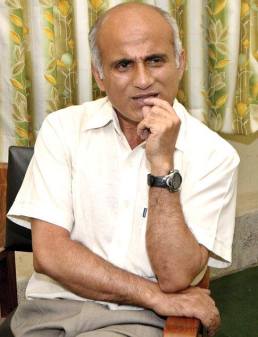
Dr Govinda KC: fighting for pro-poor medical reforms

UPDATE: Sign the online petition

If South Asia has a viable public health icon after the passing of Edhi in Pakistan, this man is it,” says a Nepali friend. 

Dr. Govinda KC is a man who is considered a saint in Nepal –  a middle-class doctor who on his own expense offers medical help wherever there is a disaster: Haiti, the Kashmir earthquake in Pakistan, Bangladesh floods. 

By all accounts an incredible human being, he is entering the third week of his hunger strike, a fast unto the death for reforms in the medical education sector. His demands: lower the cost of medical education and create a public health system that allows access of all to quality care, in the place of Nepal’s present highly privatised and centralised system.  Continue reading

Titillate us, entertain us, even educate us, but please, don’t talk about rights

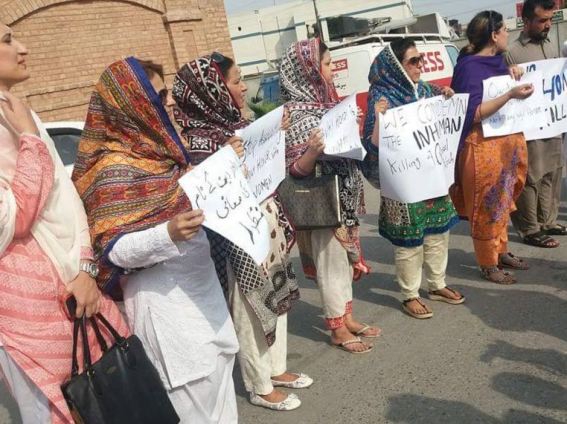
Women Protest Qandeel murder

Women and men in Peshawar protest Qandeel Baloch’s murder. Photo via Javed Aziz Khan

Pakistani model and social media icon Qandeel Baloch rocked the boat with outrageous antics like offering to strip if Shahid Afridi led the Pakistan cricket team to victory against India in the T20 match a few months ago. Yesterday, her brother in Multan strangled her to death in apparently because she was bringing a bad name to the family — a family she financially supported. Continue reading

Call me unpatriotic, or even a traitor…

Respect to and solidarity with those who refuse to fall in line with the oppressive narratives peddled by hyper nationalists and security establishments. Sharing a post here by senior journalist Saleem Asmi, former Editor of Dawn and a dear friend of my late father:

Call me unpatriotic, even a traitor if you like, but I must say this straight, without mincing words that we have no right, absolutely no right at all, to condemn what the Indian occupation troops are doing in Kashmir, as long as we are ourselves guilty of committing the same, even worse, crimes in Balochistan. Now look at this: 1) The Indian army has invaded and occupied Kashmir, 2) They brutally oppress the Kashmiri people, and call the freedom fighters ‘terrorists’, 3) We invaded and occupied Balochistan in 1948, 4) We brutally oppress the Baloch people, and call the freedom fighters ‘terrorists’. If anything, we surpass the Indians in kidnapping young Baloch by their thousands without trace. Then their brutally tortured bodies appear under flyovers, by the roads, anywhere.

Also see – by Hasan Raza in Pakistan: Kashmiris continue to be the biggest victims of the Indo-Pak tussle for Kashmir – and Nirupama Subramanian in India: Face the disillusion


The importance of history and being human

With rising racial tensions in the USA exacerbated by bigots like Trump and easy availability of weapons, I wanted to share my friend Jaspal Singh’s recent ‘Reflections’ that he emailed to a few friends from his base in Cambridge MA (visuals added). Also see this post by Partha Banerjee, an activist friend in New York City, on the racism of South Asians (he talks about Indians but it applies equally to others in the region) and the need to contexualise injustice and violence and demand “justice for all the sufferers” and “punishment for all the criminals”.

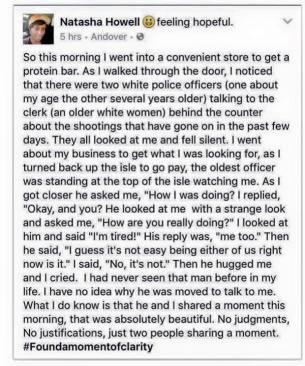
Andover PD-Jul 8-2016

#Edhism #BlackLivesMatter #Kashmir #Police We could all use a bit more humanity. A powerful little story shared on Facebook by the Andover Police Department about what happens when we see each other as human beings first.

REFLECTIONS

July 10,2016

By Jaspal Singh

A wave of protests against police brutality has engulfed the US. Thousands of people have come out in the streets against the killing of black men by police in several cities. In Dallas Texas, a sniper killed five police officers.People are demanding that these police officers who are killing black men with impunity , be brought to justice and be punished. The Black Lives Matter movement has highlighted the plight of the black people in the US.They can be killed by the law enforcement officers without any accountability as black lives are not considered to have any value. Every year hundreds of black men are killed in police shootings and nothing comes out of it, no police officer is punished. People are incensed against this kind of impunity. Continue reading

Another assassination in Pakistan; just have to ‘keep on keepin’ on’

My article in PRI’s The World, June 25, 2016

pakistan_singer

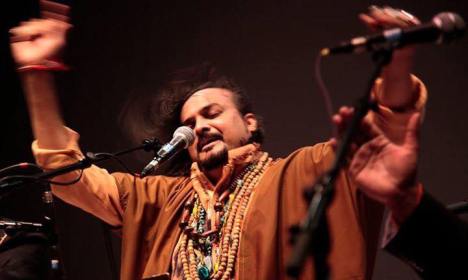
Thousands of people attend the funeral procession of Amjad Sabri. Photo: Akhtar Soomro/Reuters

“They’ve shot dead Amjad Sabri” — the first words I heard on Wednesday morning marked news of yet another assassination in my beloved Karachi, still “home” despite living in the Boston area since 2011.

Sabri was one of the world’s most famous exponents of the devotional music known as Qawwali. On Wednesday, two gunmen intercepted his car and shot him dead at close range in the crowded locality near his house. Continue reading

RIP Amjad Sabri, symbol of a syncretic Sufi culture increasingly under attack

Amjad SabriA sad, sad day. Rest in peace, Amjad Sabri, qawwal, shot dead in a target killing in Karachi today. Shortly afterwards, the young naat-khwan, Farhan Ali Waris escaped a murderous attack on his way home from a recording where he had in fact waiting for Amjad Sabri to join him.  A continuation of the trend of killing Shia and Ahmadi doctors for their faith, now musicians…? But Amjad Sabri was not just a ‘musician’.

Continue reading

Harsh Mander and his vision of “a world of new solidarity”

My column in Himal Southasian, published 10 June 2016 –  Harsh Mander on why we should raise our voice against injustice

By Beena Sarwar

Harsh Mander: Committed, consistent and soft-spoken. Photo: Beena Sarwar

Cross-border solidarity isn’t exactly a new idea. The rallying cry, “Proletarians of all countries, unite!…” that emerged in 1848 from The Communist Manifesto has resounded around the globe in many forms since it was first articulated.

Meeting Harsh Mander, one of India’s foremost activist-intellectuals and a courageous former civil servant, again revived the idea for me, but this time, beyond workers. I had first met the soft-spoken Mander in Karachi, when I worked for Geo TV. He had been part of a small delegation from India visiting Pakistan in early 2004, a visit aimed at improving understanding between India and Pakistan, organised by the social-cultural group Act Now for Harmony and Democracy (ANHAD).

Continue reading

Nergis Mavalvala to be keynote for TCF Boston fundraiser

Nergis Mavalvala

Nergis Mavalvala: “The key to my success is the education I got as a girl in Pakistan”

Mavalvala to be keynote speaker at fundraiser for high-quality, low-income schools in Pakistan

BOSTON, May 04: Nergis Mavalvala, the Pakistani-American astrophysicist at MIT known for the part she played in the breakthrough on gravitational waves, will be a keynote speaker at the Third Annual The Citizen’s Foundation (TCF) Boston Fundraiser on Saturday, May 7, 2016. Continue reading

Sabeen Mahmud: Inclusive spaces and #tree4Sabeen

In Karachi last week, I wrote about Sabeen Mahmud and the Creative Karachi Festival held to commemorate her life and work. PRI published it with the title Remembering a Pakistani woman who died because she wanted everyone to have a space to speak freely along with my radio interview with Marco Werman of PRI’s The World. Below is the unabridged text including with more links and photos. Also see our friend Afia Salam’s tribute to Sabeen in The Wire, Why Sabeen Mahmud Will Always Matter.

ckf-stalls20partition

A poster with Sabeen’s photo at CKF 2016 on a divider between a stall and walkway at the Alliance Francaise. Photo: Beena Sarwar

Beena Sarwar

Early on Sunday morning in Karachi, a small, eclectic crowd converged at The Second Floor, the iconic coffee shop-cultural hub founded by my young friend Sabeen Mahmud in 2007.  Continue reading

Fact sheet on Kanak Dixit’s arrest

Fact sheet on Kanak Dixit’s arrest – used as the basis for an online petition to CIAA Nepal Lok Man Singh Karki

Opposition to the current investigation by the CIAA into alleged corruption by Mr Kanak Mani Dixit is based on the grounds that the process has been flawed as demonstrated by facts:

1. Mr Kanak Mani Dixit had opposed the appointment of Lokman Singh Karki as the head of the CIAA (Commission for Investigation of Abuse of Authority) at the time of the appointment in 2013 on the grounds that Mr Karki had been indicted by the Rayamajhi Commission for suppressing the people’s movement: Under well-established principles of jurisprudence a judge or investigator with a personal bias or interest in a case should not be carrying out an investigation or pronouncing on a case, and in fact should recuse himself or herself from such a case to prevent prejudice. However though Mr Karki himself was the individual criticised by Mr Dixit, in a public campaign, Mr Karki continues to drive the investigations. Continue reading