Sapan shines at the WISCOMP Saahas awards in Delhi – a video and a report

Hello friends – I’m still in Boston, waiting for permission to visit India. The WISCOMP Saahas (courage) awards ceremony I wanted to attend on 16 December is over, but I am still like to go and visit my friends and family, and show my Sri Lanka documentary at various places including the Bangalore International Center, the IIC, Delhi, and in Chennai – police in all three cities have given clearance as far as I know.

Sharing the edited version of the WISCOMP awards ceremony below – they had taken it offline to edit out the Afghan and Bangladeshi activists who were kept anonymous. Don’t miss the inspirational speeches by the awardees and thoughtprovoking documentary on the courageous journalist Patricia Mukhim from India’s North-East (I love her singing in it and now I know where her love for plants and nature comes from).

Here is a report about the event in The Wire – I’m delighted they used a photo of featuring the wonderful community of Southasia Peace Action Network (Sapan) Peacemongers who joined my dear friend and colleague, journalist Mandira Nayar on stage after she accepted the award on my behalf from Dr Syeda Hameed, a Sapan founder member and advisor. It was wonderful and moving to see Aekta Kapoor, Ruchira Gupta (also a Saahas awardee), Parshu Narayan, Reema Amin, and the veteran peace activist O.P. Shah from Kolkata come together – thank you WISCOMP for inviting them.

Other wonderful members of our community were present but remained seated, like the inspirational activist Harsh Mander of Carvan-e-Mohabbat, poet and writer Sagari Chhabra, and journalist and activist Rita Manchanda.

Mukta Lall, daughter of the poet Jagannath Azad, was also present but had to leave before my name was called. We’ve been been in communication with for years but never met. It was Mukta ji who provided me with a scan of her father’s Urdu poem that served as Pakistan’s first national anthem – well documented, although there is no official record.

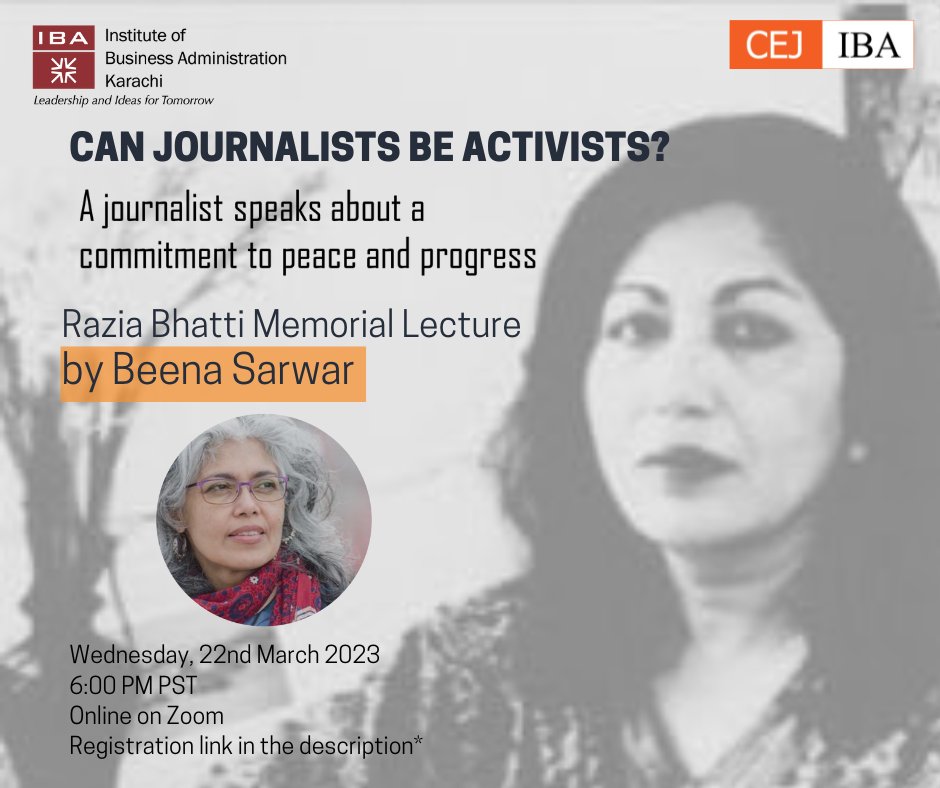
‘Can Journalists be Activists?’ Razia Bhatti Memorial Lecture 2023

Wednesday, 22 March 2023, 6 pm Pakistan time / 9 am ET

Register at this link

Honoured and humbled to be invited to present this year’s Razia Bhatti Memorial Lecture, named for someone who remains a role model for so many journalists and women, someone I knew personally and admired greatly.

Time: Wednesday, March 22, 2023 06:00 PM (Pakistan)

Agenda

  • 5:50 – 6pm Producer at CEJ to admit registered attendees
  • 6:00 pm: Amber Shamsie, CEJ director, – Welcome and introduction to Razia Bhatti Memorial Lecture lecture series
  • 6:05 pm: Remarks by Dr Akbar Zaidi, IBA Executive Director
  • 6:10 pm: Umber Khairi, Coordinator RBMI Lecture Series, introduces lecture and speaker
  • 6:18 -7:00 Beena Sarwar
  • 7:00: Umber Khairi moderates Q&A session and discussion (questions sent via zoom chat)
  • 7:30 pm: Umber Khairi will conclude and thank

I believe the session will be broadcast live at the CEJ-IBA YouTube channel. If not, the recording will be available there later anyway,

Opinion / India: A tale of two pardons

The latest Sapan News syndicated feature, by Ramon Magsaysay awardee Dr Sandeep Pandey on the difference between the release of convicts in Rajiv Gandhi’s assassination case and those convicted in the Bilkis Bano case. He argues that the premature release of one set of convicts cannot be used to justify another — one was set free by the courts, while administrative decree was behind the other. One poses no threat to the victim’s family, while the other has sent witnesses into hiding.

Read more at Sapan News Network.

Available for use with credit to Sapan News Network.

Sara Suleri bows out

Sharing personal memories of the brilliant Sara Suleri whose genre-defying book Meatless Days inspired generations of writers, feminists, memoirists and dislocated Southasians. Thanks Ailia Zehra at The Friday Times for asking me to write this piece. Published as a Sapan syndicated feature in TFT, The Wire, Geo TV blog, South Asia Monitor and The Print – shared here with additional pix and links.

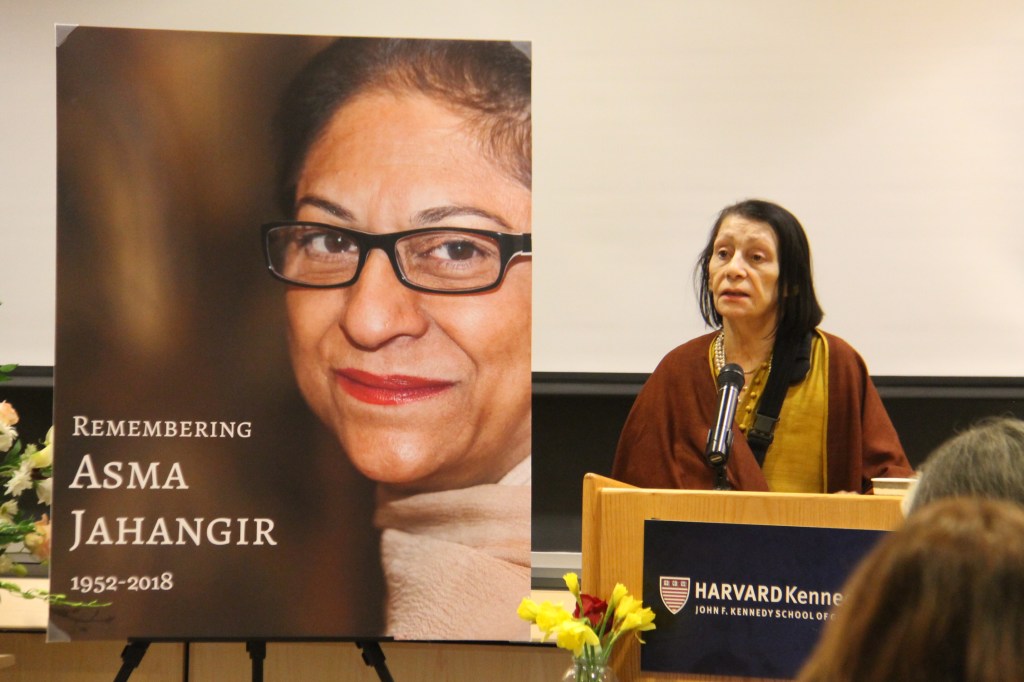
February 2018: Sara Suleri pays tribute to Asma Jahangir. Photo: Beena Sarwar.

PERSONAL-POLITICAL

By Beena Sarwar

March 25, 2022, Sapan News Service:

Aur bataiye” – tell me more, a polite invitation to keep talking. I can hear her voice, perhaps naturally husky, made deeper with years of cigarette smoking and perhaps more recently with pain and other medications.

She’d send her love to Pakistan whenever I’d call before flying out from Boston, where we had both ended up around ten years ago – she after retiring as Professor Emeritus of English from Yale University. I had transplanted myself from my home city Karachi where I was editing Aman Ki Asha, hope for peace – between India and Pakistan.

“Dream on!” I hear Sara say. And yet, she agrees, it’s important to keep going. She’s also a hundred percent supportive of our push for a regional approach – the South Asia Peace Action Network, or Sapan, the more recent endeavour, launched last year with a wonderful group of inter-generational, cross-border peacemongers.

Continue reading

The outrage culture about rape masks a landscape of pervasive child abuse

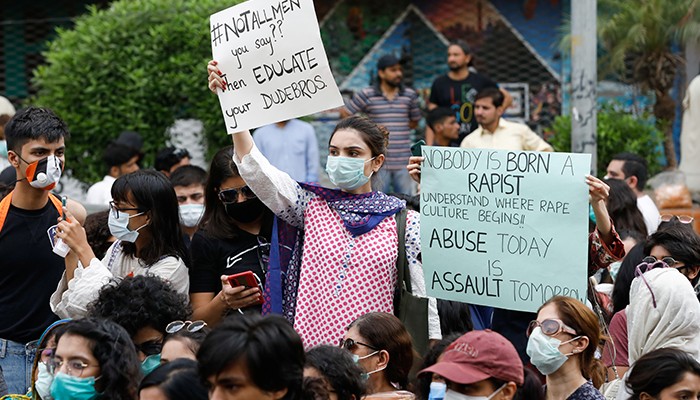
Protest in Karachi over the ‘motorway gang rape’ incident. 12 September 2020. Reuters photo.

I haven’t updated this site for a while, caught up with teaching two journalism courses at Emerson College this semester – prepping for the courses, training for the unprecedented online situation, then assignment-setting, student feedback, grading – it’s been hard to do much else. But when Mehr Mustafa at The News on Sunday asked me to contribute to their special report on rape culture, I couldn’t refuse. Was up till 3 am to meet the deadline for the piece – The outrage culture masks a landscape of pervasive abuse (TNS Special Report, 27 September 2020).

They asked me to define ‘rape culture’ as a lens to view the issue as a social/political construct rather than individual/isolated events, and to address the systematic nature of sexual violence. That rang some bells. Among the things it got me thinking about was systemic oppression – visible in the racial injustice in the USA highlighted over recent months. I revisited the piece I did last year, Moving towards a cycle of healing, focusing on the need for preventive rather than reactive measures and the concept of restorative rather than retributive justice (thanks Anita Wadhwa and Dina Kraft for expanding on my understanding of this). And just found my 2012 post: We must move beyond outrage against selected rape cases.

As I was working on the piece, the rape of a Dalit teenager in India (#Hathras) and then another, began making headlines. Here’s the powerful piece Dr Syeda Hameed wrote about that: ‘She Was A Dalit Child from Boolgarhi Village, She Was Mine and Yours’. Yes, India seems particularly horrific right now but it’s a regional issue: Pakistan/India: There is no honour in killing… End the culture of impunity.

My article for the TNS special report on rape culture below.

Continue reading

Fragile Egos, Fragile States: COVID-19 Doesn’t Care

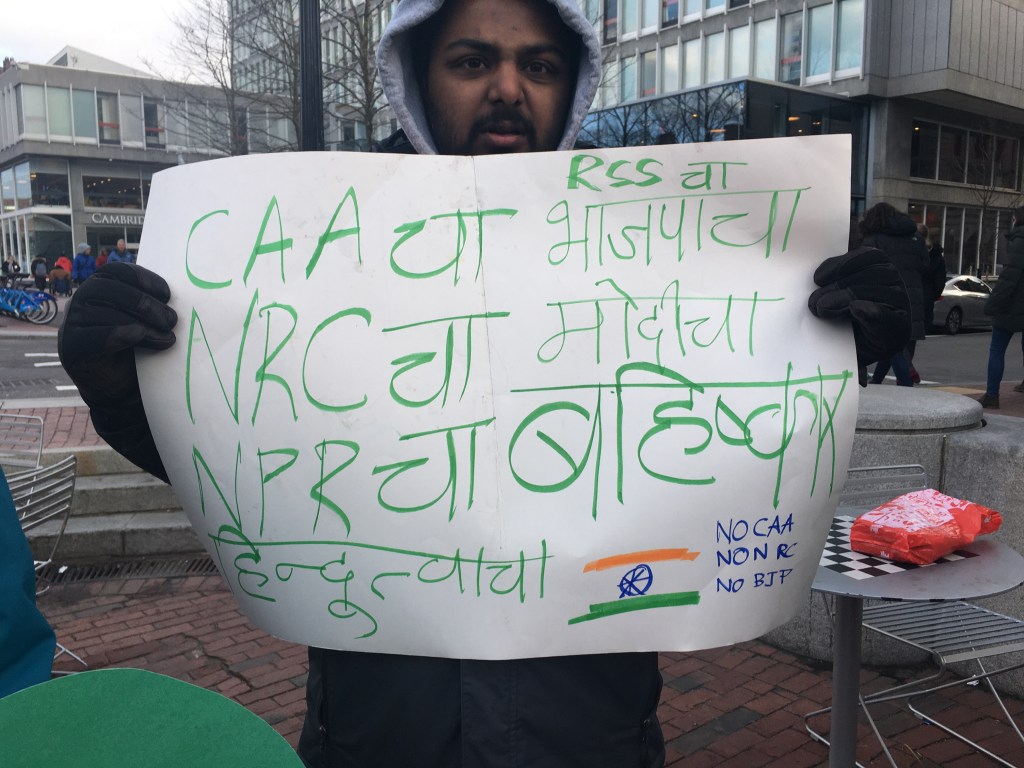
Two demonstrations involving Indians and Pakistanis in Massachusetts once again foregrounded the common issues that the people of the two countries, and elsewhere, face

Wrote this piece published in The Wire some days back – feels like forever now, given the fast pace with which ‘coronamadness’ seems to be taking over the world. Sharing it here anyway.

Boycott CAA, NRC, NPR, RSS, BJP, Modi, Hindutva.
Continue reading

‘Patriotic Trolling’ to ‘Astro-Turfing’: Lessons from Maria Ressa on dealing with online hate

Last Thursday, I attended a talk by journalist Maria Ressa at Harvard. She talked about the “pounding” journalists get on social media and “trends” set by fake accounts. Women are attacked online at least 10 times more than men, and research shows online violence leads to actual violence on the ground. It reminded me not only of the challenges journalists face in Pakistan but also what organisers of the forthcoming Aurat March commemorating International Women’s Day are up against. Here’s what I wrote, published in The News International, Pakistan and The Wire, India.

Continue reading

#AuratMarch: The polarity of narratives

The News on Sunday last week asked me to write a piece on the narratives surrounding gender in mainstream and social media, the space to take up the debate on the subject and whether that has increased or shrunk over the years, and what sort of narratives are emerging from movements like the Aurat March (the impact and social deconstruction of certain slogans deemed ‘controversial’ and ‘immoral’ by right wing quarters within the society). I began writing this just before the controversy over ‘Mera jism meri marzi’ (my body, my choice) kicked off that I mention, in the piece below, part of the TNS Special Report on the issue published 8 March 2020, which includes several related pieces worth reading.

Continue reading

Muna’s ordeal

Wom-violence-Pakistan-Getty-2010

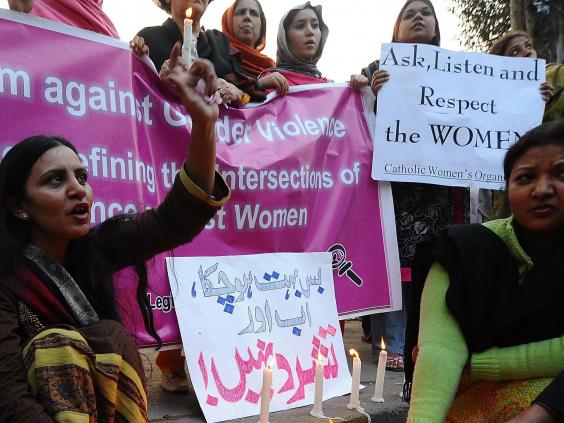
Women mark the International Day for the Elimination of Violence against Women, Lahore, November 25, 2010. (Getty)

Found this old report I wrote about a young woman who miraculously survived horrific domestic violence, published in The News on Sunday, 18 January 2004. What has changed in Pakistan since I reported on it and what hasn’t? Posting it here as I couldn’t find it online.
Continue reading

#MeToo: Moving towards a cycle of healing

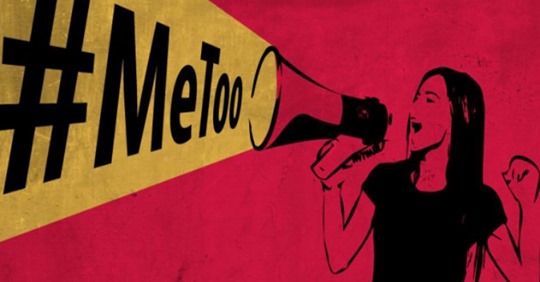
Something I wrote about sexual harassment and abuse, published in The News on Sunday. It was a difficult piece to write, took a lot of thought, time, and research, and forced me to introspect on uncomfortable ideas. I went through a learning process that I’ve have tried to share. One idea links to the concept of restorative justice. Another is that, regardless of whether or not guilt is proven, such cases are forcing society to re-evaluate acceptable behaviour. This, in fact, may be the #MeToo movement’s most enduring contribution. 

me2-tns

Continue reading