I wrote this for the Huffington Post after the attack on the Lahore park on Easter Sunday.
How Pakistan’s Religious Right Uses ‘Blasphemy’ to (try and) Usurp Political Power
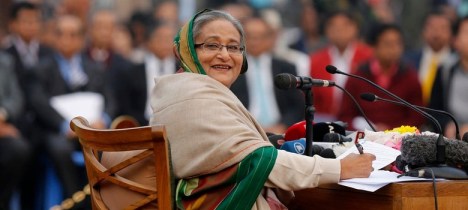
Aamir Qureshi/Getty Images
The horrific suicide bombing at a park in Lahore on Sunday that killed over 70 people, mostly women and children, is one of many assaults by religious hardliners in Pakistan who are striving to remain politically relevant and in the media limelight.
Something I wrote last month about how sedition and blasphemy are the two sides of the same hyper-nationalist coin in India and Pakistan. Updated after the tragic bombing at a park in Lahore on Easter Sunday, published in Himal Southasian on March 30, 2016.
People vote in the February 2008 elections in Lahore Photo: Wikimedia Commons / boellstiftung – Flickr
From Pakistan there is mixed news. Recent headlines on the country juxtaposed with news from India prompts the thought that the kind of fascism that Pakistanis have been fighting against is now erupting across India. The encouraging news from Pakistan includes its second award at the Oscars, the execution of convicted killer Mumtaz Qadri (arguments against the death penalty notwithstanding) despite the militant rightwing support for him, and the recovery of the kidnapped son of Qadri’s victim Salmaan Taseer, killed for alleged blasphemy. The bad news includes the horrific suicide attack, allegedly by Tehreek-i-Taliban Pakistan Jamaatul Ahrar, on Gulshan-i-Iqbal Park in Lahore on 27 March 2016.
I earlier posted about resistance to the stifling of dissent in India, and why as a Pakistani it matters to me. The trend is visible in other parts of Southasia too, including of course Pakistan about which I’ve written a fair amount. Here’s an update from Bangladesh, where defamation, sedition cases and the attempts to silence the independent media are underway, as well as Chattisgarh, India.
I wrote this piece a couple of days ago for Scroll.in on why I, as a Pakistani, am bothered about what’s happening in India – and also what people like me have to deal with from hyper-nationalists on both sides of the border. Also see this post from New Pakistan raising the question of whether the applause in Pakistan for political dissent in India means that such dissent is acceptable in Pakistan too – with reference to the young cricket enthusiast Umar Daraz in Pakistan, arrested for raising an Indian flag. Also see this excellent piece by Rubeena Mahato in Nepali Times raising alarm bells about South Asia’s constricted freedoms.
For the past few days, the row between those who stand for free speech and those who don’t has intensified in India. As a journalist from Pakistan, I stand unequivocally with the students and journalists in India who are being vilified and targeted by hyper-nationalists. In the process, I am getting more than my usual share of nasty comments from Indians – and Pakistanis – on social media. Continue reading →
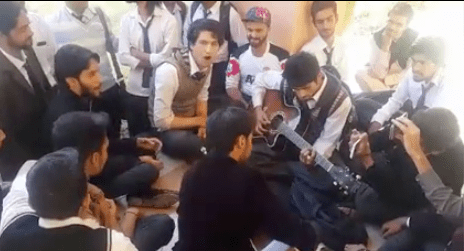
Still from the cellphone video of an impromptu performance by students in Quetta.
This little music video just made my day when a friend sent it to me yesterday: a Spanish love song by his cousin Hamza Khan, with co-singer Syed Zaryab and guitarist Naveed Ahmed. Students at Balochistan University of Information Technology Engineering and Management Sciences, BUITEMS, a leading private university in Quetta, they are also members of the Artists’ League Quetta (ALQ), a platform for the arts started by fellow student and self-taught dancer Farrukh Shaikh earlier this year. The group includes students from different departments in the University – including girls.
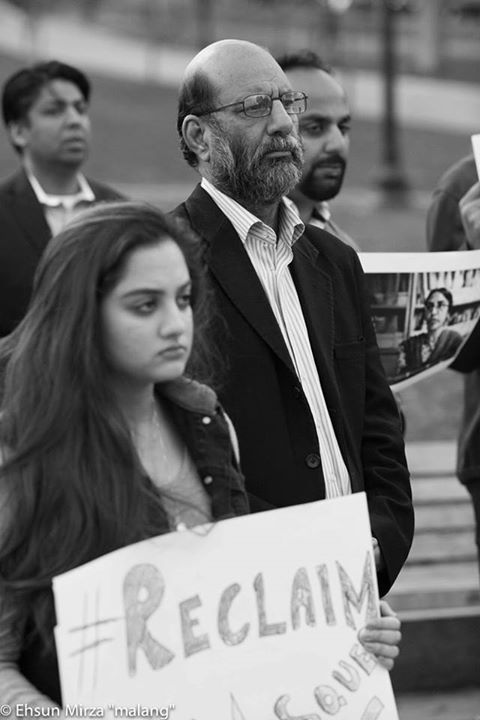
Jimmy Engineer stands with protestors at the 4th monthly remembrance for Peshawar school massacre, in Boston. Photo: Ehsun Mirza
An article I wrote for The News on Sunday about the artist, humanitarian and peace worker Jimmy Engineer, The artist and more, May 3, 2015. Reproduced here with additional links and photos.
“There is a long list of people who are activists and who take up causes who get killed. It’s an endless list, and it’s a senseless list,” says Jimmy Engineer.
I’m talking to this Pakistani artist and philanthropist on the phone, having him met a few times in the Boston area. Based in Karachi, he’s visiting the USA, currently in Houston where his parents live. I’ve called to ask if he heard about the murder of activist-entrepreneur Sabeen Mahmud in Karachi.
He puts the tragedy in perspective as part of the perennial struggle between good and evil. “There will always be those who try to improve things and raise a voice to create awareness. There will always be those who want to destroy them. This happens everywhere in the world. Nature also takes its toll. Along with all the positive, there’s always a negative, like the Nepal earthquake.”
Sabeen herself well understood herself and exemplified this philosophy, accepting that negativity and evil exist but yet continuing to strive to do what is possible on a personal level. Life is a never-ending struggle and we each need to do what we can.Continue reading →
“Unsilencing Pakistan” was an idea first articulated in 2011. It has been revived following the recent murder of Sabeen Mahmud, who had attempted to create a space where Pakistanis could discuss contentious issues–like the human rights violations in Balochistan–without fear. Can Pakistan’s intellectuals and human rights activists survive the “intellecticide” being perpetrated?
By Beena Sarwar
When the prestigious Lahore University of Management Sciences (LUMS) announced that it was organising a seminar titled “Un-Silencing Balochistan” on 9 April 2015, it reminded me of the “Unsilencing Pakistan” initiative of the summer of 2011.Continue reading →
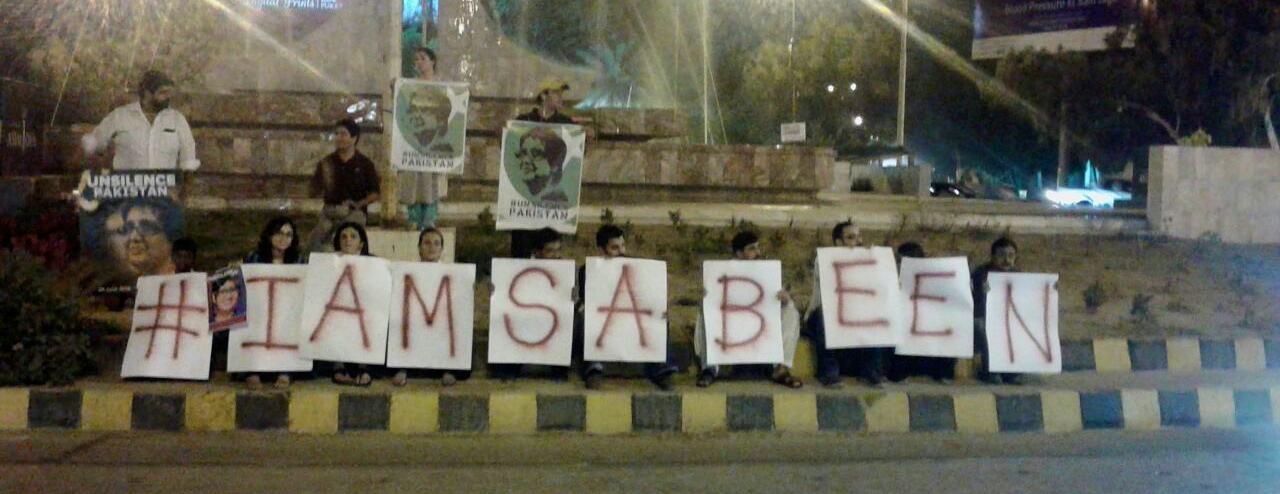
Daily vigil for Sabeen Mahmud in Karachi, 8-9 pm at Do Talwar
Protestors holding daily public protest vigils in Karachi demanding justice for Sabeen Mahmud hold placards calling to #unsilencePakistan and end the culture of impunity. Today’s vigil, marking give months of the Peshawar Army School massacre, also incorporates the carnage at Safoora Chowk in Karachi where armed men in police uniforms killed 45 of the 60 Ismailis on a bus.
Protestors at the Fifth Global Vigil this weekend in various cities are demanding an end to impunity and against terrorism in Pakistan.
Karachi – 16th May – assemble at Danish Gah, Punjab Chowrangi at 5:30pm and march to Do Talwar.
Islamabad – 16th May – 5.30 pm at Press Club
Boston – 16th May – 4 pm – Boston Common (near the fountain by the Part St. T)
Toronto/Mississauga – 6 pm, 7880 Keele Street, Unit #14, Vaughan, ON L4K 4G7
London – 17th May – 3-5 pm in front of Pakistan High Commission
Below, an extract from something I wrote recently about the Unsilencing Balochistan events in Islamabad, Lahore and Karachi:
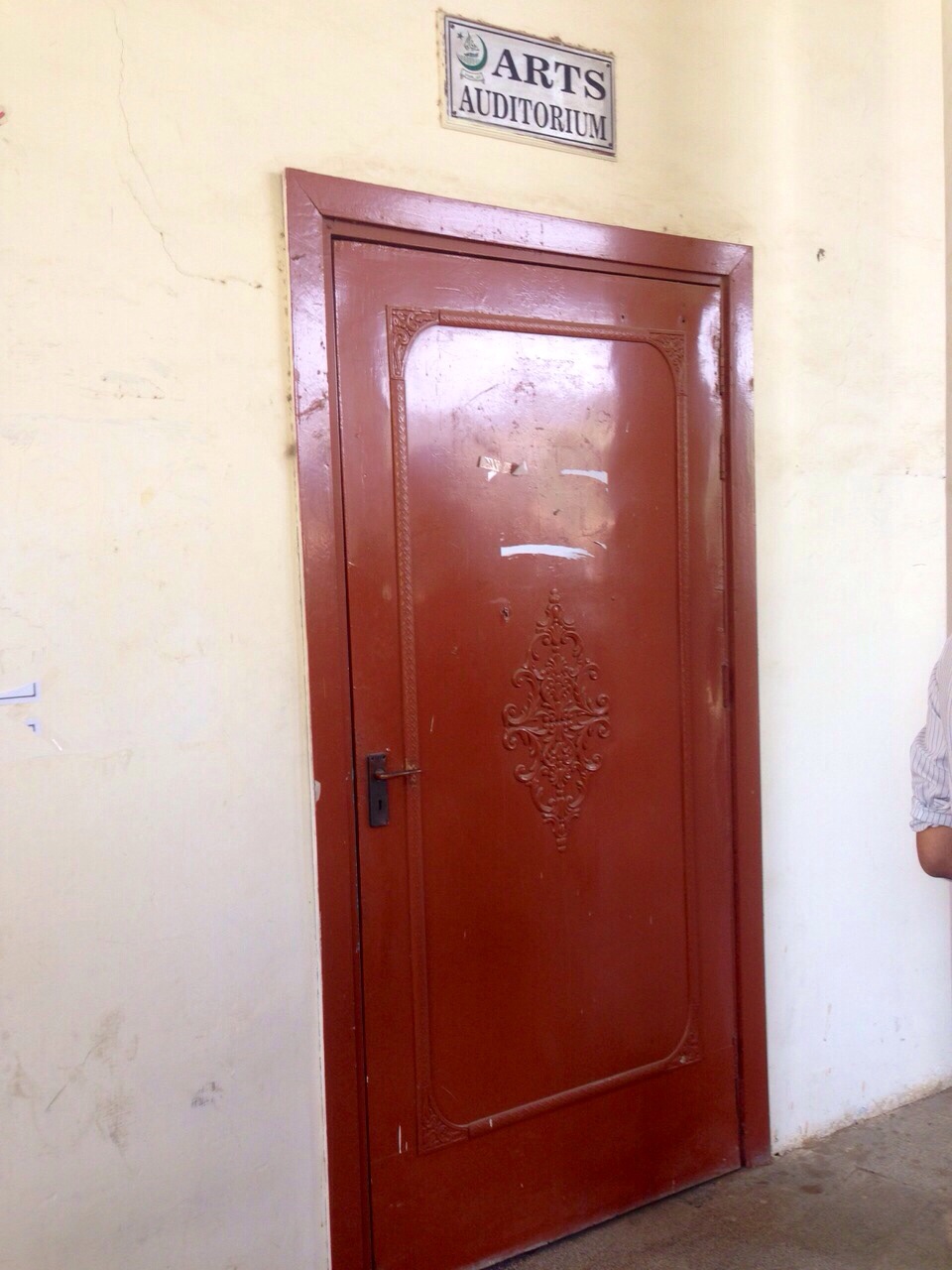
The KU administration locked the door of the Arts Auditorium to prevent the seminar from taking place…
The signs of hope I saw in 2011 included the unprecedented number of people speaking out. These voices have increased in number, demanding accountability for the violence and urging the government to address Balochistan’s long-standing grievances about economic and political disenfranchisement, and human rights abuses.
…It is not so easy to silence people any more. On 11 April, three days after the Balochistan seminar was cancelled at LUMS, it was held at Kuch Khaas, a popular gallery-café in Islamabad, featuring only one of the original speakers, Mir Mohammad Ali Talpur, a columnist and Baloch rights activist. Talpur also addressed students at LUMS a few days later, on 15 April (audio, in English, here). Both these well attended events were followed by another one in Karachi, on 24 April, hosted by Sabeen Mahmud at T2F (partial transcript of the event here). Shot dead that night, Sabeen joins the ongoing, and lengthy list of Pakistan’s enlightenment martyrs.
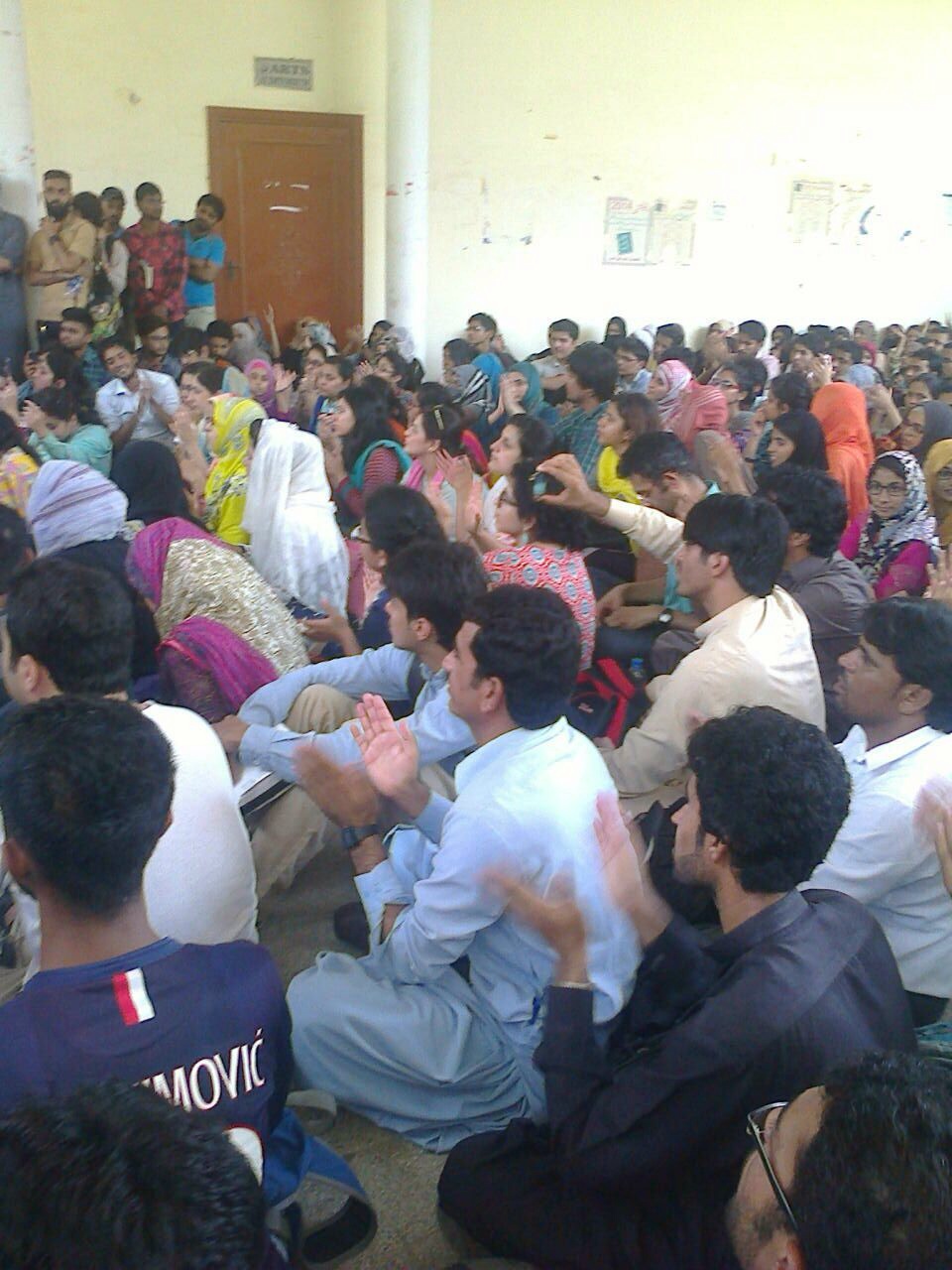
…but the students and faculty went ahead with the event, crowding the lobby in front of the locked door. May 6, 2015.
But less than two weeks after Sabeen’s murder, a larger event on the issue was held on 6 May, organised by Karachi University Teachers Against War and Oppression. The event had been announced weeks earlier and the organisers went ahead with it despite threats and intimidation, even after the university management, apparently on its own accord – perhaps following the lead of the private university LUMS that had backed down, and frightened by Sabeen Mahmud’s murder — revoked permission for the event. The administration blocked outsiders from entering university premises and locked the auditorium of the Arts Lobby where the seminar was to be held.
Students and faculty defiantly crowded the hallway and held the seminar anyway, outside the locked auditorium. They sneaked in members of the public in their own transport. The presenters who had been refused permission at LUMS, and who had spoken at Sabeen’s T2F, addressed this gathering (Audio of the proceedings here).