“TO BE HOPEFUL in bad times is not just foolishly romantic. It is based on the fact that human history is a history not only of cruelty, but also of compassion, sacrifice, courage, and kindness. What we choose to emphasize in this complex history will determine our lives. If we see only the worst, it destroys our capacity to do something. If we remember those times and places — and there are so many — where people have behaved magnificently, this gives us the energy to act, and at least the possibility of sending this spinning top of a world in a different direction. And if we do act, in however small a way, we don’t have to wait for some grand utopian future. The future is an infinite succession of presents, and to live now as we think human beings should live, in defiance of all that is bad around us, is itself a marvelous victory.” ― Howard Zinn
This quote at the end of an email from the great broadcaster David Barsamian of Alternative Radio is from Howard Zinn’s collection of essays published in, ‘A Power Governments Cannot Suppress’(City Lights Books, 2007) and also published on ZNet as “The Optimism of Uncertainty.”.
Thought to share here. Salute, Howard Zinn. Salute, David ji. And revisiting my precious meeting with Howard Zinn in Cambridge MA some years ago, thanks to the wonderful filmmaker B.J. Bullert in Seattle WA.
It has been a decade since we lost Sabeen Mahmud to a targeted attack in Karachi and since we lost Shayan “Poppy” Afzal Khan to cancer. It is also 20 years since the pioneering environmental journalist Saneeya Hussain died in Brazil. Their peacemongering legacies live on.
Personal Political Beena Sarwar / Sapan News
On 24 April 2015, a valiant crusader for peace, social justice, creativity and human dignity was killed in Karachi. That tragedy ten years ago deprived a mother of her only child, and many of us of a dear friend.
Social entrepreneur Sabeen Mahmud, 40, was driving home with her mother Mahenaz next to her. A motorcyclist approached while they were stopped at a red light, and shot Sabeen at point blank range. She died on the spot.
Sabeen. Photo by Zaheer Alam Kidvai.
Mahenaz at Creative Karachi Festival 2016: Sabeen would hate for any of us to give up. Photo: Beena Sarwar
A poster with Sabeen’s photo at Creative Karachi Festival, 2016, Alliance Francaise. Photo: Beena Sarwar
Pakistan: Countrywide demonstrations for Sabeen, 2015
Protest for Sabeen in Delhi, 2015. File photo
I had known Sabeen since she was a teenager. We were comrades together in several peace initiatives – part of a large, cross-border tribe of ‘peacemongers’ as I call our community.
Wrote this piece a couple of weeks ago, on one of Pakistan’s most versatile composers who continues to produce a genre embedded in Southasian traditional music, to get the younger generation to appreciate classical poetry and music — and provide a platform for new talent. A Sapan News syndicated feature also published in other outlets.
Personal Political By Beena Sarwar / Sapan News
Arshad Mahmud in Such Gup, PTV, 1970s. Screenshot.
Will there be singing In dark times? Yes, there will be singing About dark times
— Bertolt Brecht, Germany, 1939
Arshad Mahmud is one of Pakistan’s most prolific and talented composers, the man whose music launched singing sensations like Nayyar Noor and Tina Sani.
He made his debut with the children’s television show Akkar Bakkar, 1972, along with Nayyara Noor and the pioneering puppeteer Farooq Qaiser, produced by Shoaib Hashmi, then an economics professor at Government College (now University) Lahore.
Behind the ustad (teacher) Hashmi’s booming voice, gruff manner and handlebar moustache was a brilliant writer and satirist who went on to write and produce the groundbreaking, now legendary satirical television shows Such Gup and Tal Matol. We would use these as the titles of Shoaib Hashmi’s columns for The Frontier Post later and The News on Sunday that I edited in Lahore, starting in the 1990s. His daughter Mira Hashmi has uploaded many of the videos to her YouTube channel.
Film screenings byAnand Patwardhanin Cambridge MA TODAY and tomorrow. My documentary at Tufts on Wednesday. The sublime musical play ‘Madho’ at Wellesley next weekend. The latest Sapan Alliance newsletter has more events and info about other events, including in Colombo. Scroll below for my conversation with Mayank Chhaya on the Sri Lanka elections, plus pix from ‘Democracy in Debt’ Global Community Screenings – some 40 events in 14 countries across 5 continents – and my notes on recent Sapan News features.
Off-Kendrik started over 16 years ago, “committed to building a broad platform for South Asian theatre groups and the next generation of South Asian Americans through theatre and storytelling”.
PERSONAL POLITICAL By Beena Sarwar
I went to see ‘Madho’ last night with my mother at the Third South Asia Theatre festival, SAATh 2024, in the Boston area. A musical play set in Lahore, it is written and directed by Sarbpreet Singh, an engineer by profession whose passion is music and storytelling.
Kathy Gannon shares an iconic photo by Anja Niedringhaus during a talk at Emerson College, Boston, 2022. Photo by Beena Sarwar
“If France and Germany can be part of the European Union, why can’t Pakistan and India be part of a Southasian Union?” asked Dr Mubashir Hasan, former finance minister of Pakistan, a hawk-turned-dove who co-founded the Pakistan-India People’s Forum for Peace and Democracy (PIPFPD). He had roped me into it when I was a young journalist in Lahore in the mid-1990s. When he said these words to me some years ago, and I replied that this was impossible, he responded, “Par hum baat toh kar sakte haiN” – but we can at least talk about it.
Years later, in 2021, during a time of renewed tensions between Pakistan and India, his words inspired the foundation of the Southasia Peace Action Network, Sapan, that we now write like a word, Sapan, rather than in all caps, conveys the meaning of a dream.
“This is a dream that connects millions, giving hope for solidarity, peace, and friendship in the region. The network, which encourages dialogue and connections amongst Southasians and across various issues, has managed to virtually overcome borders and build bridges between those who have historically been divided” writes young peacebuilder Mansi Chandna from Jaipur, who attended the event from her current base in Manchester.
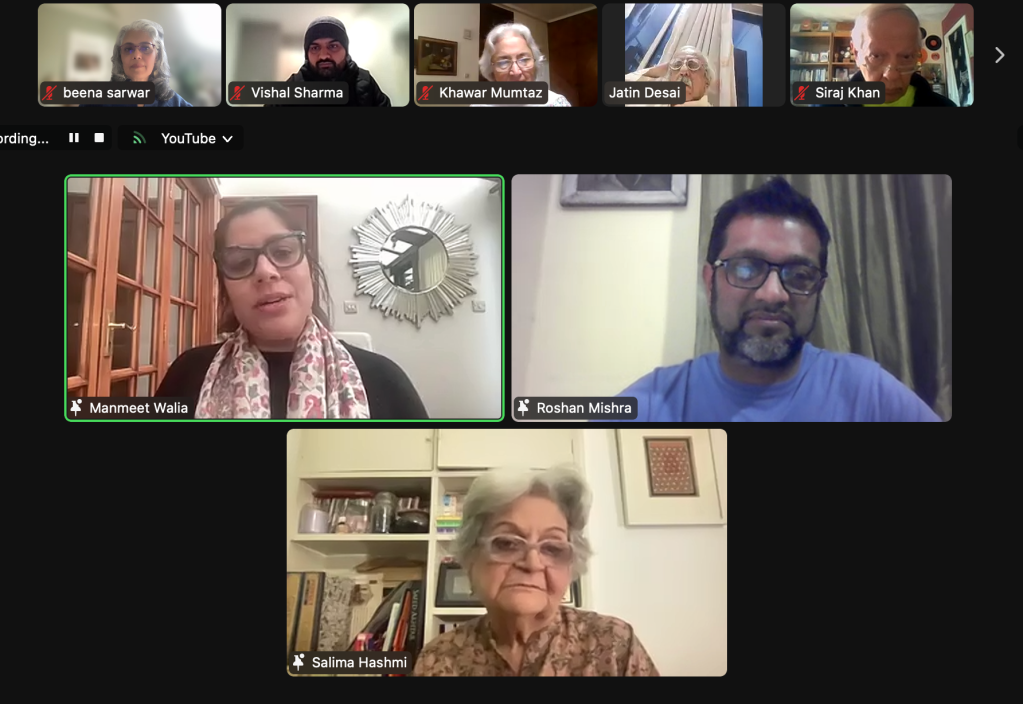
Art and Southasian Voices panel at the Sapan third anniversary event: Manmeet K. Walia, Roshan Mishra, Salima Hashmi. Screenshot from video recording.
Sharing my curtainraiser for Sapan News about a poignant photo exhibition opening at the Bronx Documentary Center in New York today, featuring the work of the acclaimed photojournalist Anja Niedringhaus. She covered Afghanistan and Pakistan at the height of the war between the Taliban and the USA, and was killed ten years ago, on 4 April 2014.
An Afghan police commander walked up to the car she sat in with Kathy Gannon outside a government compound in Khost, where they were covering the presidential election for the AP. Anja, 48, died instantly. Seven bullets shattered Kathy’s arms and shoulders. The Afghan doctor who initially operated on her saved her arm, using various ‘jugaRs‘ (improvisations). Doctors at the French military hospital in Kabul where she was later medi-evaced said they would have amputated it had she reached them first.
In all the years I’ve known Kathy, I’d never heard her complain or mention her injuries or trauma. When I hesitantly asked about it now, for this piece, she detailed the information matter-of-factly, even cheerfully, focuses more on Anja, her courage, and her spirit. All that applies to Kathy herself.
Kathy, who also on the Sapan News Advisory Council, has co-curated the show and its accompanying book.
Anja Niedringhaus’ photos showcased in a tribute posted by her colleagues at AP
The exhibition will travel to Cambridge MA, 9-10 May 2024, co-sponsored by the Nieman Foundation and the Shorenstein Center at Harvard University. Anja was a Nieman Fellow 2007.
Exhibition information: Bronx Documentary Center 614 Courtlandt Ave, Bronx, NY 10451 On View: April 4 – May 5, 2024 Gallery hours: Thurs-Fri 3-7PM, Sat-Sun 1-5PM
Book information: Anja Niedringhaus By Ami Beckmann, Kathy Gannon, and Muhammed Muheisen Hardcover, 80 pages, 44 images Release date: April 2024 Published by Fort Orange Press Price: USD 30
Note: We have been doing this work voluntarily for the past three years and need support of all kinds – like, share, encourage.
And donate – thank you to those who contributed to help Sapan News meet our NewsMatch goal by December 31. We made it!
We now need to raise $3,000 more in the next three weeks. Will you help? Here is the link to share with friends who might want to contribute – no amount is too small: www.sapannews.com/donate
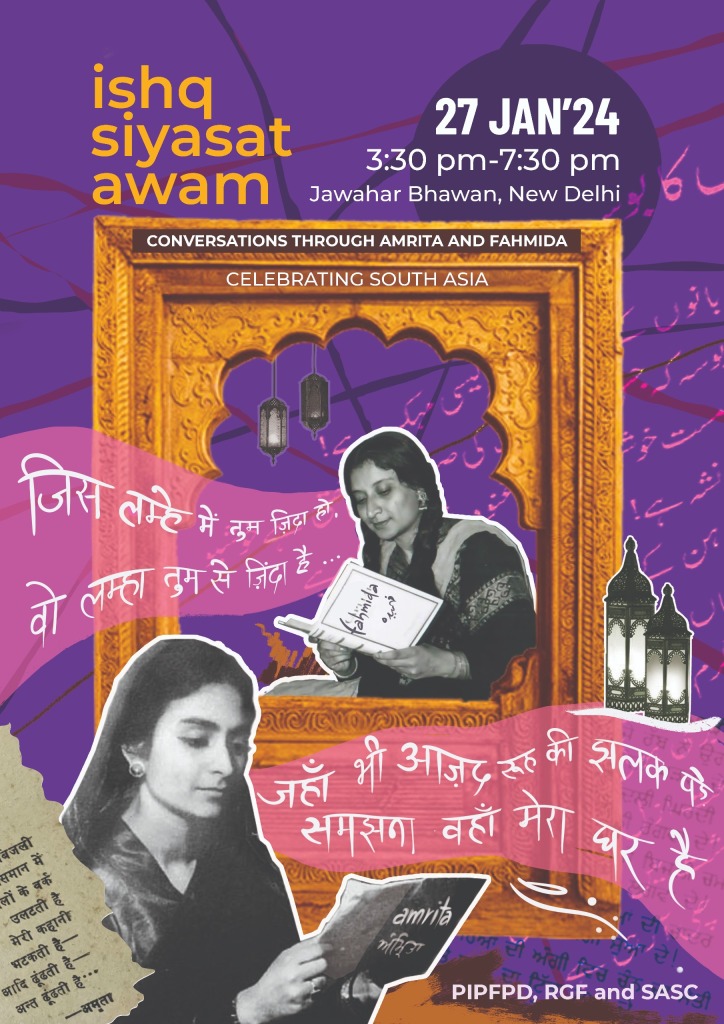
Radical love, epitomised by the late Amrita Pritam and Fahmida Riaz is ‘one of the seeds of the revolutionary thought process’, to quote the Pakistan India People’s Forum for Peace and Democracy (PIPFPD) stalwarts who organised the event – Vijayan MJ, Tapan Bose, and Dr Syeda Hameed. Their consistent work over the decades for peace and justice is truly inspirational, and I feel privileged to know them personally.
I was also privileged to know one of the late poets personally, Fahmida ‘Khala’ (aunt) to me, who was close to my father Dr. M. Sarwar. He led the Democratic Students Federation (DSF), Pakistan’s first student movement while at Dow Medical College in Karachi, 1949-54.
I’ve uploaded archives about the movement here: drsarwar.wordpress.com. Principles of that struggle continue to show the way, like the importance of coming together across divides for a minimum common agenda. For DSF, it was student rights. For Sapan, it’s Southasia Peace. We need it now, for the sake of the people of the region, and beyond.
The Videos section of the Dr Sarwar blog includes a playlist of video clipsfrom the event held at the Karachi Arts Council in January 2010 to commemorate DSF and the student movement, a few months after my father passed on.
Compered by the actor Rahat Kazmi, the event featured speeches from young activists, students, and academics like Amar Sindhu, Alia Amirali,Ali Cheema, and Varda Nisar, as well as veterans like I.A. Rehman, besides the singer Tina Sani, Taimur Rahman and his band Laal, and Fahmida Riaz.
Fahmida Khala recited her poem ‘Palwashey Muskurao’ (Palvasha, smile), dedicated to daughter of late Afzal Bangash of the Mazdoor Kissan Party (Workers’ and Peasants’ Party), and the followers of other late leftist leaders. They may no longer be on this earth, but their principles and aspirations for human rights and dignity continue to show the way.
I woke up on Wednesday morning wondering if people would take time out to be still for 10-15 min on the same day, to collectively visualise peace, to engage in prayer, meditation, or just breathe and be calm in the midst of strife and violence. And maybe that stillness, if echoed by around the world on the same day will have an effect.
This developed into the global virtual vigil by Southasia Peace Action Network, or Sapan, taking place this Sunday across different time zones. We asked people to spare 10 minutes to #be4peace, in their own way, anytime between 10am-12 noon in their own time zones.
Old friend and fellow peacemonger Mazher Hussain in Hyderabad, India, who runs the Confederation of Voluntary Associations, India, activated his contacts. Interfaith scholar and activist Urmi Chanda in Mumbai made a visual, tweaked by another volunteer, Srinivas at COVA.
#be4peace image by Urmi Chanda: The watermelon as a symbol of resistance.
By Saturday night, over 40 organisations had endorsed the call, along with dozens of peacemongers around the world, from Australia to the U.S. west coast. We even got pledges from Tel Aviv, France, and Croatia. See list of public endorsements at the Sapan website.
On another note, I am thrilled that the latest Sapan News features includes a piece by Rumi Nagpal, a high school student in Colombo on learnings from an uprising and his late grandmother who was a theatre artist. And Rajeev Soneja in Boston shares his take on India-Pakistan cricket drawing from a great archive of cricket books, with some historic photos shared by my old friend, news photographer Rahat Ali Dar in Lahore.
Lastly, sharing below a compilation of what I’ve been reading and watching, in no particular order.
A compilation of offerings from our Sapan network, including my latest venture Sapan News syndicated features. Together, we aim to further the narrative of regionalism, peace, and dialogue. What can you do? Read on
Visual: Aekta Kapoor/Sapan
Delighted to have acclaimed actor and director Sarmad Khoosat join us Sunday July 16 for Sapan’s first fundraiser, hosted by poet Dr Arvinder Chamak in Amritsar. Sarmad will be in conversation with the wonderful journalists Malinda Seneviratne in Colombo, Mandira Nayar in Delhi; and Lubna Jerar in Karachi.
Hello all, check out the work we’re doing at Sapan News, providing behind-the-headlines information with context and nuance, and syndicating pieces out to a growing media network.
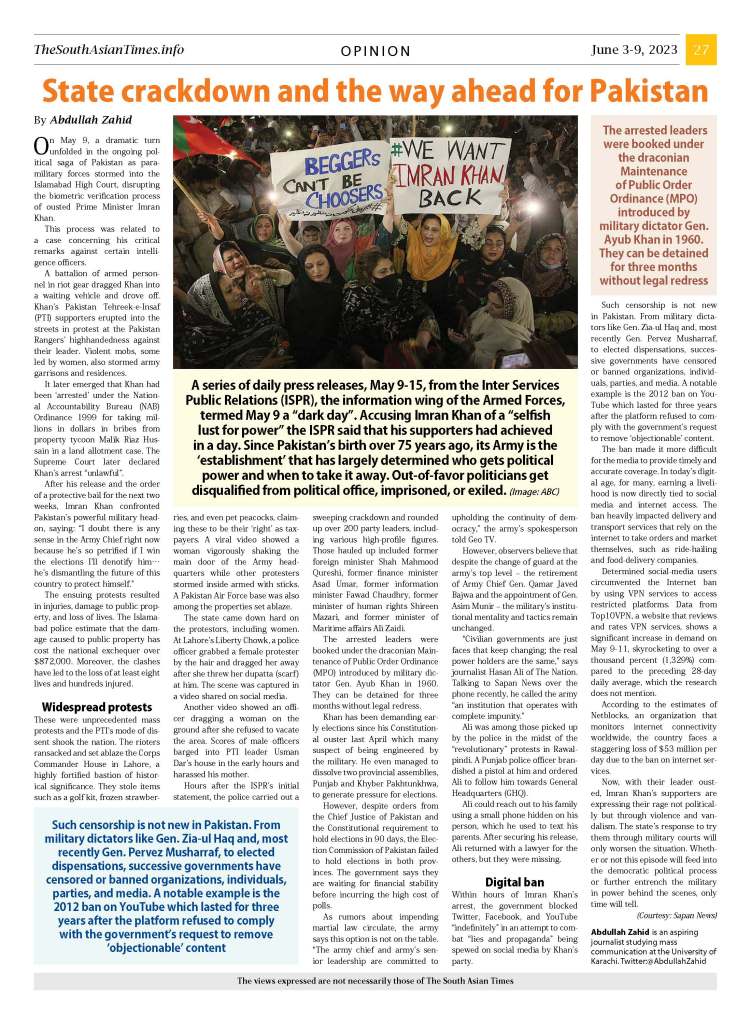
Sapan News syndicated feature in The South Asia Times, page 27, 3-9 June.
NOTE: If you like/support our work, please contribute what’s possible – no amount is too big or too small. Will be so grateful. We need to raise $15k by year end at a minimum. You can make tax-free donations at this link.
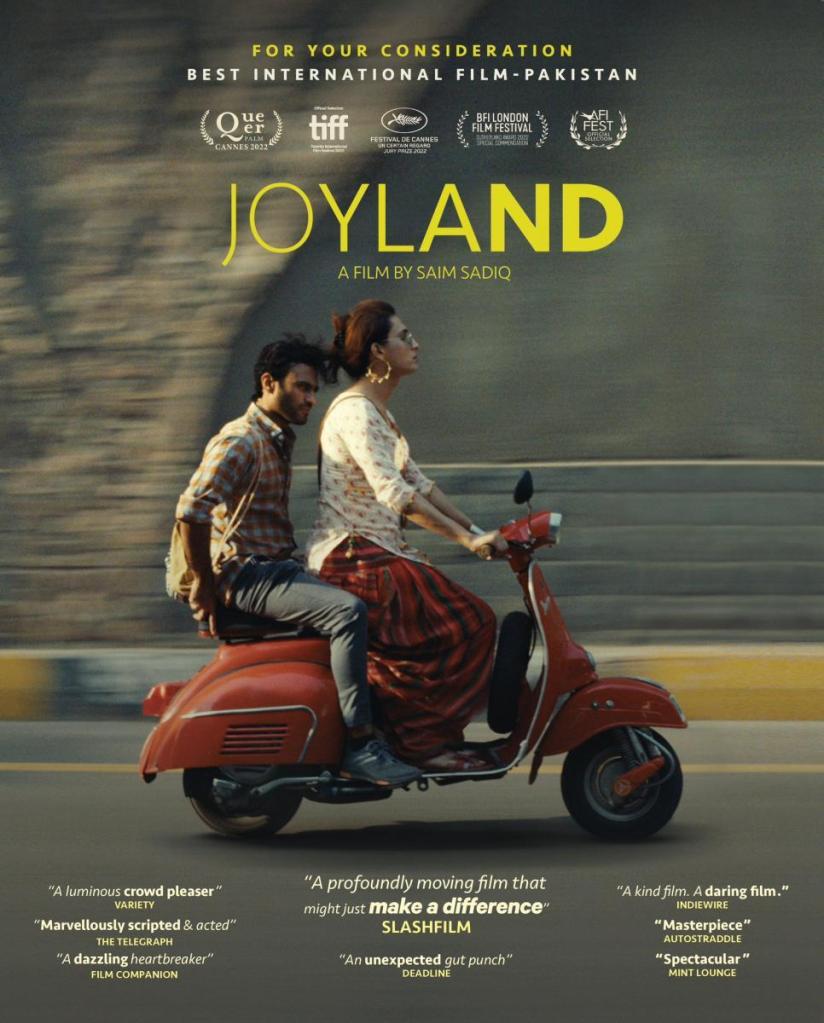
Joyland poster
On another note, I saw the banned-unbanned-censored (still banned in Punjab?) Joyland in Karachi a few weeks ago, and it haunted me – and my cousins who I saw it with – for days. This is the first feature film from Pakistan to screen at Cannes where it won two awards.
“What began as a small independent production among friends at Columbia University’s graduate film program became one of the year’s biggest success stories in world cinema — and a ground-breaking film about queer desire in a traditional Muslim society” reports NPR.
The film is showing at Coolidge Corner Theatre in the Boston area this week– writer-director Saim Sadiq has said the cuts made for the film’s showing in Pakistan were insignificant but I am curious to see the uncensored version.
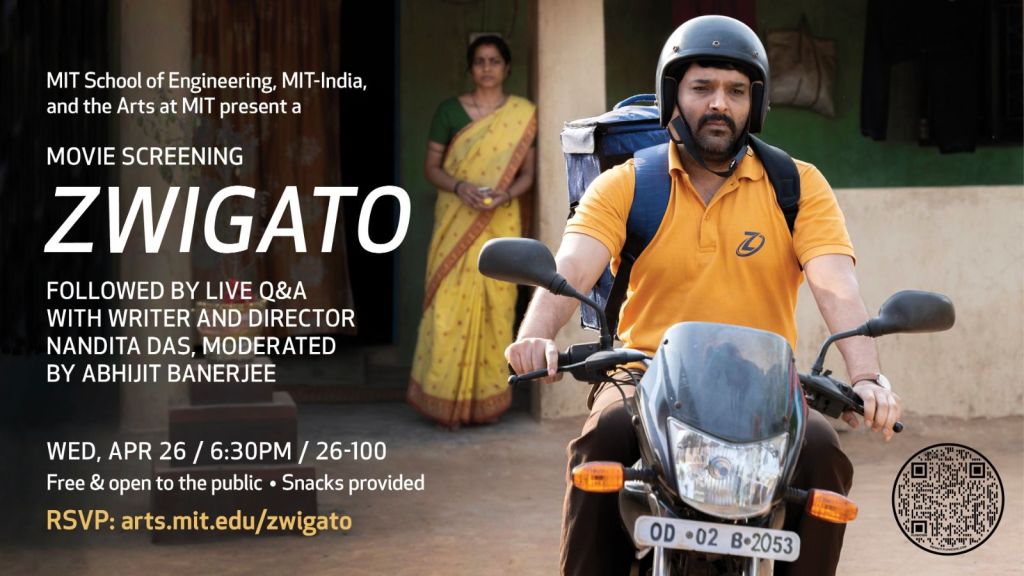
A film I saw recently and enjoyed was Nandita Das’ Zwigato, that she showed in person at various cities in the US.
Even on the small screen I found it thought-provoking and beautifully done, with many layers, a great commentary on the changing society, its challenges and opportunities. Sensitively depicted relationships, humanity, and aspirations. Great poetry and soundtrack, with many nuggets and vignettes sprinkled throughout. The end credits with animations are particularly creative and a story in themselves.
This is the third feature film by Nandita Das that I’ve seen, after Firaaq and Manto. Each of them a labour of love, executed with courage and clarity.
Interesting that the posters for both films feature two-wheelers…
Ending on a sad note – the triple train crash in India that has claimed nearly 300 lives. As expected, authorities are trying to pass it off as ‘human error’ rather than admit to the systematic problems with the railways or the government’s financial choices.






 Journeys to democracy