As news of Noam Chomsky’s failing health makes the rounds, I share some learnings from my interactions with a trailblazing public intellectual whose moral compass has impacted the world
PERSONAL POLITICAL By Beena Sarwar
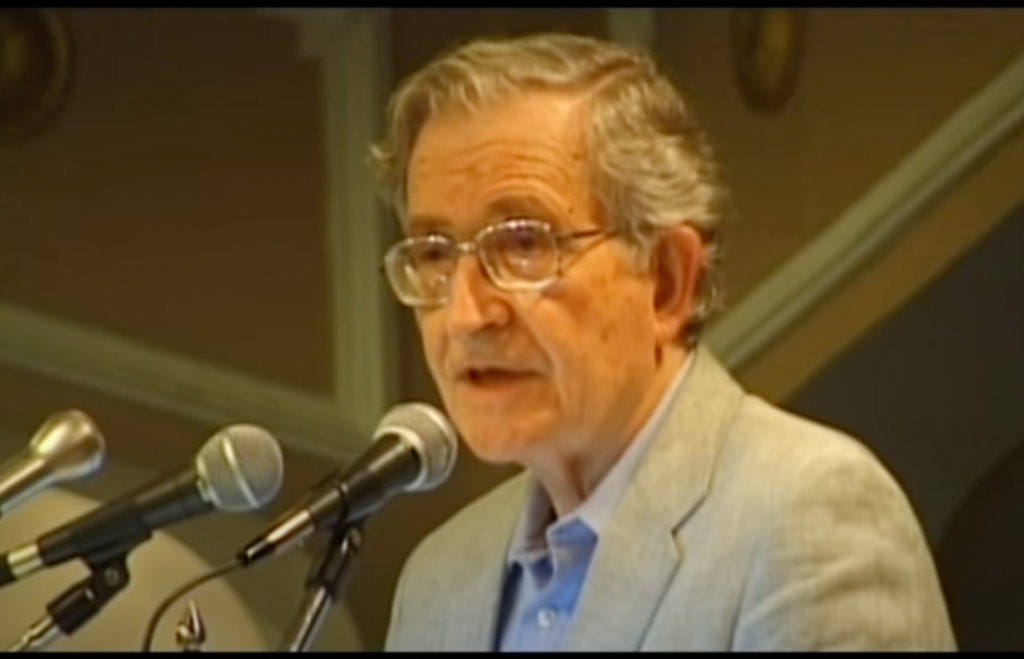
Noam Chomsky in Pakistan, 2001. Screenshot from VPRO news report by Beena Sarwar.
I once asked Noam Chomsky how he manages to remember so many facts and figures and hold audience attention. He replied that he didn’t convey any new information, that his talks are based on materials already in the public domain, and that he simply joins the dots – providing context – and repeats the information consistently and in different ways.
His response was typical of his humility as well as his courtesy towards a much younger person to whom he owed nothing.
Chomsky teaches us that it is not necessary to be loud and sensationalist in order to be heard. This, together with the clear and courageous moral compass he has provided over decades, is a most valuable lesson.
Noam Chomsky was already a legend when I first met him over two decades ago in December 2001 when he visited Pakistan for the inaugural Eqbal Ahmad Memorial lecture series.
A tribute to the spirit of Anja – and the courage of journalists
The story behind a poignant photo exhibition that opens at Harvard today featuring the work of the late photojournalist Anja Niedringhaus who covered Afghanistan and Pakistan at the height of the war between the Taliban and the USA. The show, and its accompanying book, are co-curated by the reporter Kathy Gannon who was injured in the attack that killed Anja.
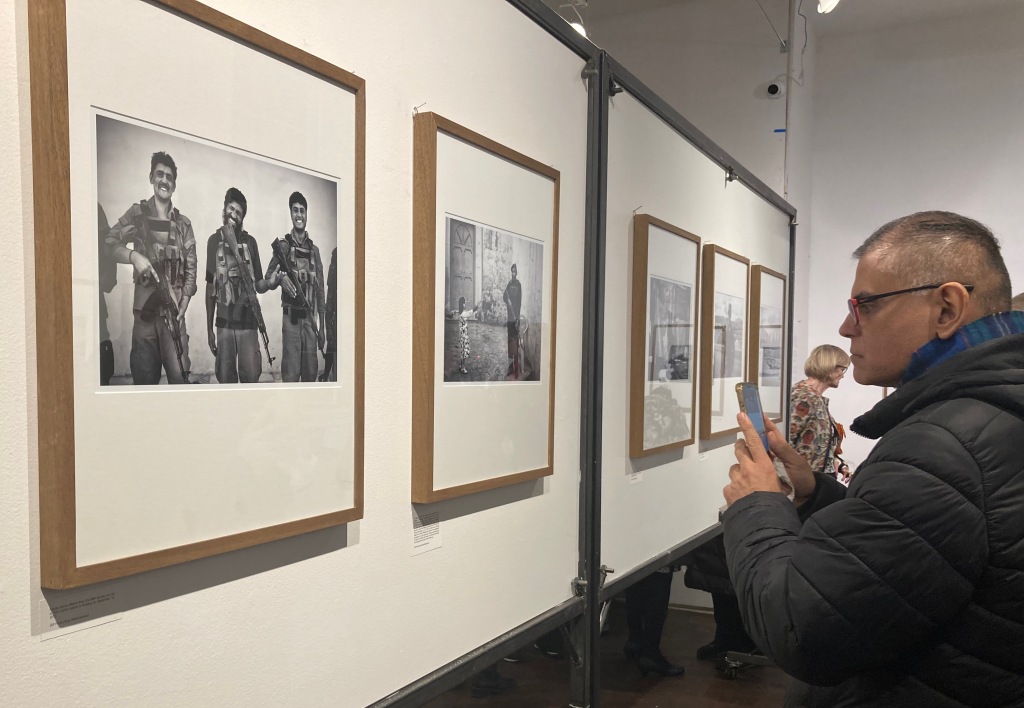
Pakistani journalist Raza Rumi at the exhibit opening at the Bronx Documentary Center last month. Photo: Beena Sarwar
PERSONAL POLITICAL By Beena Sarwar
An exhibition of powerful images from Afghanistan and Pakistan by the late Pulitzer-prize winning photojournalist Anja Niedringhaus opens in the Boston area today.
Kathy Gannon shares an iconic photo by Anja Niedringhaus during a talk at Emerson College, Boston, 2022. Photo by Beena Sarwar
“If France and Germany can be part of the European Union, why can’t Pakistan and India be part of a Southasian Union?” asked Dr Mubashir Hasan, former finance minister of Pakistan, a hawk-turned-dove who co-founded the Pakistan-India People’s Forum for Peace and Democracy (PIPFPD). He had roped me into it when I was a young journalist in Lahore in the mid-1990s. When he said these words to me some years ago, and I replied that this was impossible, he responded, “Par hum baat toh kar sakte haiN” – but we can at least talk about it.
Years later, in 2021, during a time of renewed tensions between Pakistan and India, his words inspired the foundation of the Southasia Peace Action Network, Sapan, that we now write like a word, Sapan, rather than in all caps, conveys the meaning of a dream.
“This is a dream that connects millions, giving hope for solidarity, peace, and friendship in the region. The network, which encourages dialogue and connections amongst Southasians and across various issues, has managed to virtually overcome borders and build bridges between those who have historically been divided” writes young peacebuilder Mansi Chandna from Jaipur, who attended the event from her current base in Manchester.
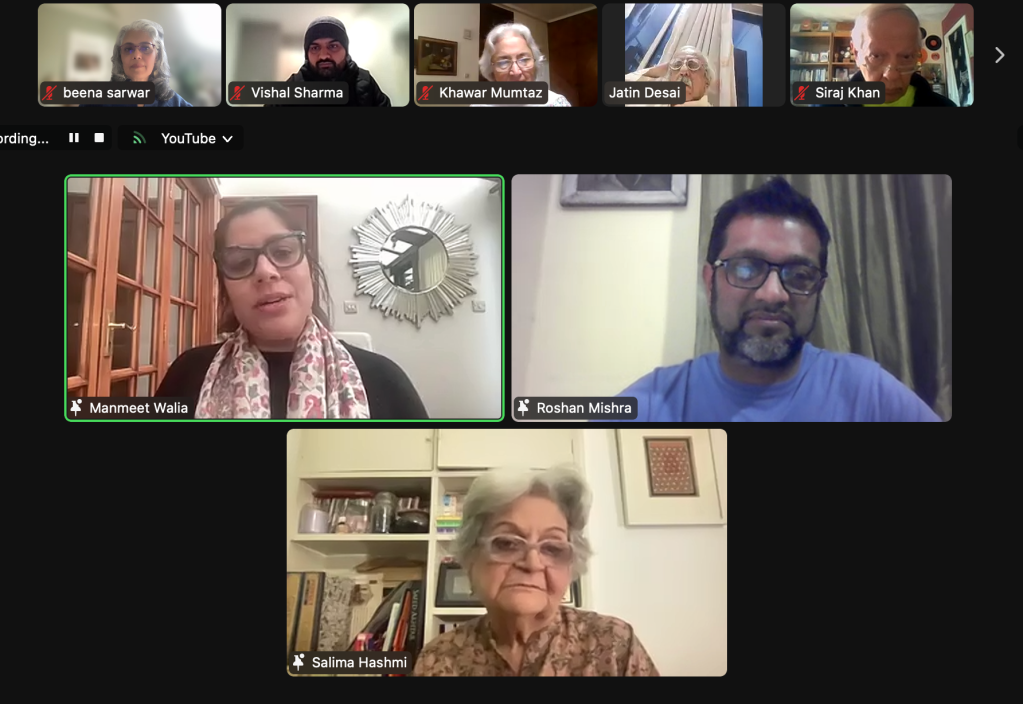
Art and Southasian Voices panel at the Sapan third anniversary event: Manmeet K. Walia, Roshan Mishra, Salima Hashmi. Screenshot from video recording.
Sharing my curtainraiser for Sapan News about a poignant photo exhibition opening at the Bronx Documentary Center in New York today, featuring the work of the acclaimed photojournalist Anja Niedringhaus. She covered Afghanistan and Pakistan at the height of the war between the Taliban and the USA, and was killed ten years ago, on 4 April 2014.
An Afghan police commander walked up to the car she sat in with Kathy Gannon outside a government compound in Khost, where they were covering the presidential election for the AP. Anja, 48, died instantly. Seven bullets shattered Kathy’s arms and shoulders. The Afghan doctor who initially operated on her saved her arm, using various ‘jugaRs‘ (improvisations). Doctors at the French military hospital in Kabul where she was later medi-evaced said they would have amputated it had she reached them first.
In all the years I’ve known Kathy, I’d never heard her complain or mention her injuries or trauma. When I hesitantly asked about it now, for this piece, she detailed the information matter-of-factly, even cheerfully, focuses more on Anja, her courage, and her spirit. All that applies to Kathy herself.
Kathy, who also on the Sapan News Advisory Council, has co-curated the show and its accompanying book.
Anja Niedringhaus’ photos showcased in a tribute posted by her colleagues at AP
The exhibition will travel to Cambridge MA, 9-10 May 2024, co-sponsored by the Nieman Foundation and the Shorenstein Center at Harvard University. Anja was a Nieman Fellow 2007.
Exhibition information: Bronx Documentary Center 614 Courtlandt Ave, Bronx, NY 10451 On View: April 4 – May 5, 2024 Gallery hours: Thurs-Fri 3-7PM, Sat-Sun 1-5PM
Book information: Anja Niedringhaus By Ami Beckmann, Kathy Gannon, and Muhammed Muheisen Hardcover, 80 pages, 44 images Release date: April 2024 Published by Fort Orange Press Price: USD 30
Note: We have been doing this work voluntarily for the past three years and need support of all kinds – like, share, encourage.
And donate – thank you to those who contributed to help Sapan News meet our NewsMatch goal by December 31. We made it!
We now need to raise $3,000 more in the next three weeks. Will you help? Here is the link to share with friends who might want to contribute – no amount is too small: www.sapannews.com/donate
Excited for the second anniversary event up this Sunday, hosted by the amazing Khushi Kabir in Dhaka, taking forward the legacy of our late friend Kamla Bhasin at Sangat.
We’ll review what we’ve done over the past two years – the collaborations, the discussions, the film club and more. Taking up all kinds of cross-cutting and cutting-edge topics. It’s been thought-provoking, inspiring, and fun.
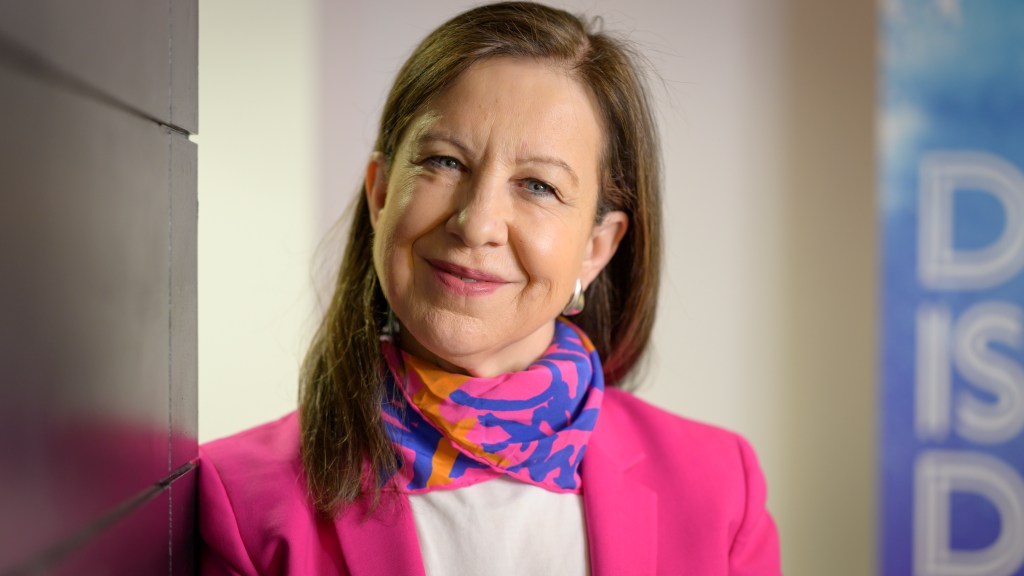
We will honour the inspiring journalist Lyse Doucet for her humanitarian reporting, an award initiated by Dr Tayyaba Hasan presenting it from the Sapan platform. Dr Hasan heads the Hasan Laboratory at Harvard Medical School – the bio at the link does not convey why she is doing this — you’ll have to tune in to find out.
Sapan honours Lyse Doucet: A lifetime of humanitarian reporting.Photo: Amanda Benson
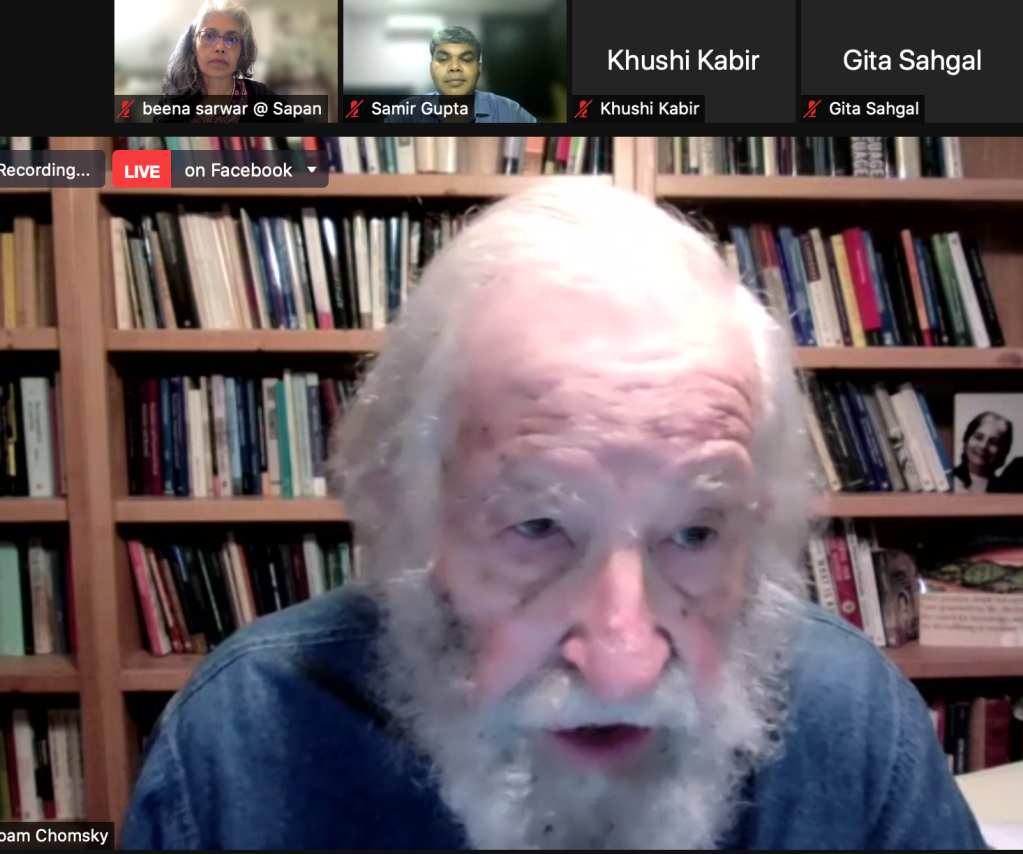
The United States and India should join with other regional powers to deal with the Taliban and help the Afghan people – Noam Chomsky
BOSTON, 27 September: Prominent academic Noam Chomsky has urged the United States and India to engage with the Taliban, work towards overcoming differences with other regional powers, and help the Afghan people rather than blocking ”the best of the options that are available”.
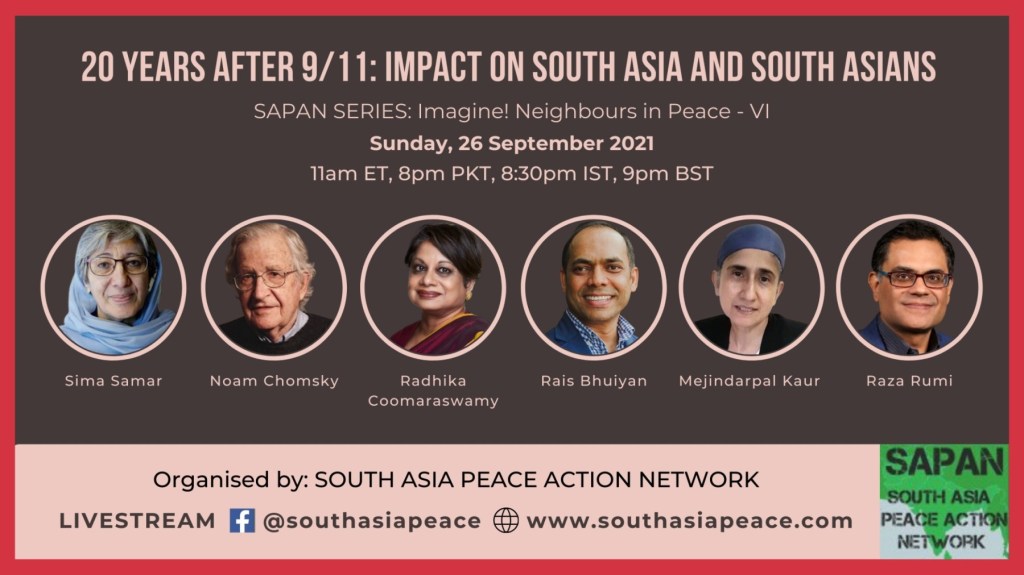
He was speaking last Sunday at the tail end of a webinar titled “20 Years After 9/11: Impact on South Asia and South Asians” organised by the recently launched South Asia Peace Action Network, Sapan. Speakers shared stories of hope and inspiration, besides those of distress and challenges.
Noam Chomsky: Put the Afghan people first. Screenshot from Sapan webinar, 26 September 2021.
Marking two decades of the September 2001 attacks on New York City, global thought leaders and activists from across South Asia and the diaspora will meet across time zones this Sunday to discuss the impact of “9/11” on the region and its people.
The online event also commemorates the global International Peace Day, September 21.
Journalists are under fire (literally) around the world, particularly in conflict zones like Afghanistan, where every day news comes in about journalists attacked, abducted, or killed. We stand with our colleagues as they fight the forces unleashed by decades of not only of deliberate fostering of extremist ideologies but also neglect in building systems and infrastructure.
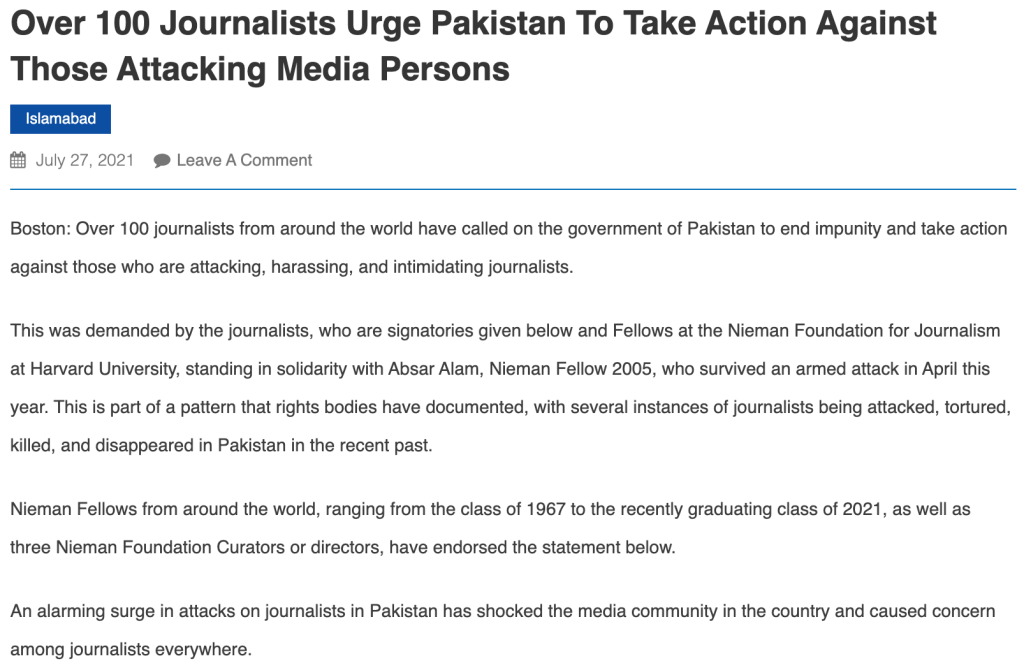
Meanwhile, sharing a statement below signed by over 100 journalists around the world in support of colleagues in Pakistan. The signatories are Fellows at the Nieman Foundation for Journalism at Harvard University joining hands to condemn the April assassination attempt on journalist Absar Alam, a Nieman alumnus from the class of 2005.
The class of 1967 is represented by three Fellows, including Zawwar Hasan, 95, former sports reporter with APP and Dawn and oped writer with Morning News, Pakistan (he’s my mamoo and I’m grateful to him for prodding me to do this). Signatories include members of the recently graduating Nieman class of 2021, as well as three Nieman Foundation directors (oddly known as Curators).
More than 100 Nieman Fellows have joined together to condemn the April assassination attempt on journalist and 2005 Nieman alum @AbsarAlamHaider. They call on Pakistan's government to take action against all those who are attacking & harassing journalists. https://t.co/JvKJptfspc
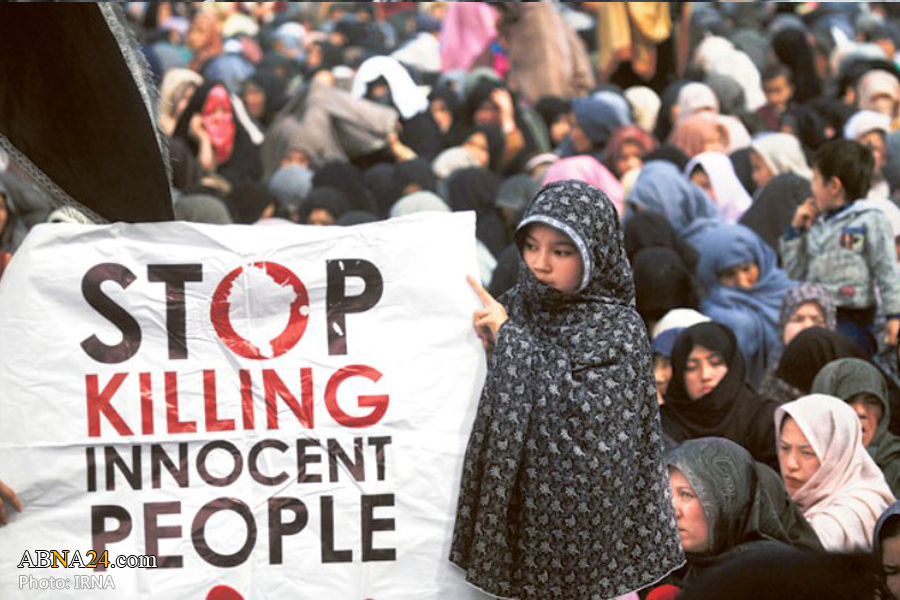
The Hazara community’s sit-in, Quetta, protesting their target killing. Photo: IRNA
Had the Hazaras who were killed in a bomb blast in Quetta died in the Notre Dame fire instead, there might be more outrage about their persecution and targeted killing in Pakistan, comments a designer friend disgusted by the apathy of Pakistan’s elites to the Hazara community’s ongoing sit-in, braving the rain and cold of Quetta while his “timeline is on fire with pix of the burning cathedral and people’s pictures in front of it”. Continue reading →
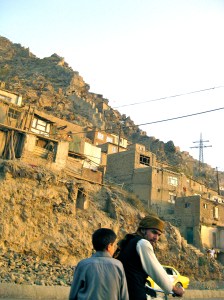
Kabul looks battered. Dusty brown hills form the backdrop wherever the eye turns. Yet it is a city struggling to regain its former glory
By Beena Sarwar
Locals cycle past the ancient wall of Kabul
It was once known as the city of flowers, said Zahira Khattak, the ANP activist who grew up in Kabul. Now, the only flowers visible in the city provide splashes of colour through the all-pervasive dust at a few isolated roundabouts — and at the splendid, renovated Bagh-e-Babar (Babar’s Garden) on the city outskirts, the last resting place of the first Mughal emperor.
The city still looks battered — but often that’s because old buildings are being knocked down to make way for high-rises. Some gracious old buildings still stand tall in the midst of the dust and rubble. A series of upmarket high-rise apartment blocks emerge from the dust on the road from the airport. Air-conditioned shopping malls and boutique restaurants cater to the crowds of expatriate workers resident in Kabul, and the Afghani rupee has a better value than the Pakistani rupee. Noisy, unruly traffic bumps non-stop over the unpaved streets. Traffic lights are conspicuous by their absence. There are security barriers everywhere and few women are visible on the streets. The markets close early, but this city is nowhere close to giving up. Continue reading →





 Journeys to democracy