Local votes to regional destiny? The future of democracy in South Asia

I meant to share this when it was first published on Sapan News recently, my article co-authored with Dr Serena Hussain and Vishal Sharma, but was caught up with the Colombo screening of my Sri Lanka documentary. Thought I’d post now – the piece is still relevant especially given a recent article in an influential foreign policy magazine debunking the idea of Southasia

Images from various SAARC summits sourced from copyright-free photos. Collage by Pragayan Srivastava

Why the regimes ushered in through the democratic political process need to collaborate for a better future for the peoples of the region

By Dr Serena Hussain, Vishal Sharma and Beena Sarwar

The recent elections in Britain, France, and India are a reminder of the power of the people – and also of the importance of regional cooperation.

Pakistani PM Benazir Bhutto with her Indian counterpart Rajiv Gandhi at 1988 SAARC Summit in Islamabad. Source: Dawn

The Indian elections were the third electoral exercise in South Asia this year, after Bangladesh in January  and Pakistan in February. Sri Lanka is also required to hold presidential elections before October.

As part of the democratic political process, elections determine the leadership that will shape not only a nation’s destiny, but also in closely connected regions.

The governments may choose to be isolationist, or follow the will of foreign powers, or cooperate and collaborate with neighbouring nations. Can and will South Asia’s regimes cooperate to promote regional peace, prosperity and progress as they have done in previous decades such as, during the 1950s, 1980s, and 2000s?

Such collaboration is essential for the sake of the peoples of the region.

Continue reading

Khan, Sidhu, Vajpayee, and India Pakistan relations

Sidhu-Khan

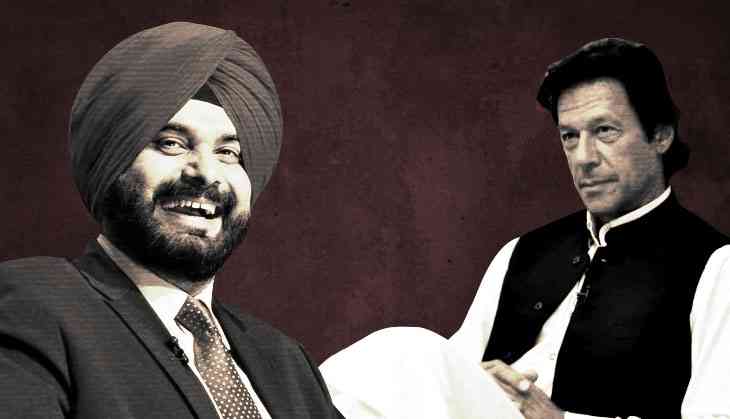
Navjot Singh Sidhu has a visa to attend Imran Khan’s swearing in ceremony. Why can’t visas be easy for everyone? Image courtesy: CatchNews

August 17 this year marks 30 years since the mid-air explosion that killed the military dictator General Ziaul Haq in 1988. This year, Zia’s death anniversary ironically took a back seat to the election of the country’s new prime minister. Today, the 342-seat National Assembly voted on the prime minister, who of course was Imran Khan. His speech and that of Shahbaz Sharif were sadly marred by sloganeering in the gallery from their opponents. Everyone listened attentively to Bilawal Bhutto’s maiden speech in parliament – well spoken, reminded the speaker and prime minister-elect of their responsibilities and paid tribute to those who have given their lives for democracy. Very much hope both PTI and PML-N observe more decorum in coming sessions. Also worth listening to: Mohsin Dawar’s maiden speech, courageously calling for accountability beyond politicians and parliament. Tomorrow, Imran Khan’s oath-taking ceremony will be attended, among others, by Indian Punjab minister for culture and tourism, Navjot Singh Sidhu, himself a former cricketer. That, and former Indian Prime Minister Atal Bihari Vajpayee’s passing away yesterday are sharp reminders of the urgent need for peace between the two countries. I wrote about Vajpayee and his significance in terms of this issue for the India Today Group Digital, published in Daily O today (text below).  Whatever his flaws and political moorings, when it came to building peace in the region, Vajpayee showed the kind of moral courage and political will that today’s leaders would do well to learn from.

Continue reading

CONVERSATIONS-3: Let’s introspect

Printed in the aman ki asha page of Political Economy, The News on Sunday, March 7, 2010

Dilip D’Souza and Beena Sarwar continue their email exchange, attempting to share thoughts honestly, without fear and hostility, seeking ways to bridge the gulf between Pakistan and India

Mar 2 2010

Dear Beena,

Since we’ve started on this path of exploring the anti-the-other-country feelings, let’s take it a little further and see where it goes.

First, you draw a distinction between the (sometimes) elected Pakistani governments and what you call the “establishment” – the army/bureaucracy nexus, if you will. Nawaz Sharif was, you tell us, pro-India, but this establishment undermined his government’s efforts in that direction. Continue reading