Deconstructing `We, the Mothers of Lashkar-e-Tayyaba’

Ham Ma’en Lashkar-e-Taiba Ki (`We, the Mothers of Lashkar-e-Tayyaba’), a series of Lashkar-e-Tayyaba propaganda publications – very appropriate to post ahead of the whole commercial mother’s day hype.

“…the Lashkar-e-Taiba uses mothers’ grief to create an emotionally charged arena that, it hopes, will both justify its mission and help increase volunteers for its mission” writes Farhat Haq in her analysis, published in Economic & Political Weekly, India – See http://snurl.com/hlil7 for the link

C.M. Naim in Outlook weekly, India, gives a detailed commentary on the three volumes have(they all “have the same garish cover, showing a large pink rose, blood dripping from it, superimposed on a landscape of mountains and pine trees”), published between November 1998 and October 2003. See – http://snurl.com/hliu5

The Taliban are coming….??? Myths and other realities

The Swat flogging video led to an alarmist, emotional, knee jerk response devoid of any political and historical context among the `bloggeratti’ (to borrow a term from Dr Omar Ali of Asiapeace), sms’ing crowd and TV talk shows. Those who are now calling for decisive action were not so long ago justifying the Taliban’s actions as an `anti-imperialist’ force.

Other `civil society’ attempts at countering Talibanisation include
demonstrations and even a signature campaign to the President against
Talibanisation initiated by a friend in Karachi and picked up all over the
country – a well meaning effort available at http://www.sacw.net (direct link
http://tinyurl.com/c6yj4d).

Women’s Action Forum is planning a broad-based meeting on May 8 at Karachi Press Club, 5 pm, on `Women to Reclaim Our Public Spaces’. WAF stands for:
– One constitution and one set of laws for all of Pakistan
– The writ of the government must prevail on the basis of moral authority
premised on protection, health, education, livelihood and security of all
persons equally
– Urgent de-weaponisation of society
– No special accords compromising the rights of one group of citizens of
Pakistan over others

In the end, however, `Talibanisation’ is a political problem that has taken
decades to develop. It calls for long term political solutions. There are no
short cuts. Recognising this, I.A. Rehman advocates two immediate steps in
`Pakistan’s neo-Taliban’ (Dawn, Apr 30) – http://tinyurl.com/ctyl3l – the
government must reduce its trust deficit with the people, and people must see evidence that the army is able and willing to earn its keep.

Also see Dr Hassan Abbas’ report on police reforms in Pakistan as an urgent measure to counter terrorism.  A PDF is available at his excellent blog watandost.blogspot.com
Direct link to the pdf file – http://tinyurl.com/codh8d

Also, three other articles that provide another perspective:

– THE ROVING EYE, The myth of Talibanistan, By Pepe Escobar, Asia Times, May 1, 2009 – http://tinyurl.com/cp8zdr
Sent by S.M. Naseem with the note: “To reassure you that Islamabad is not going to fall to the Talibans any time soon. The rumours are about as credible as those about the USA becoming a socialist state during Obama’s presidency.”

– How Pakistan Is Countering the Taliban – The pacification model that worked in Iraq can work in the Swat Valley, By Husain Haqqani, WSJ, April 30 2009 –
http://tinyurl.com/dmk6py

– Between two fundamentalists, By Dr Mubashir Hasan, The Nation (Pakistan) April 30, 2009 – http://tinyurl.com/da8syr

Finally, a widely circulated article `I want my country back’ by Sehar Tariq, a development studies student, published in The News on April 17 –
http://tinyurl.com/dg2nwn

Below, Seerat Hazir’s response to Sehar Tariq’s article (minus some distracting personal barbs):

“I am curious to find out which Pakistan she wants back. The one created by the British with the help of wealthy and influential feudals and nawabs as a gift to the Americans to serve as a pawn in the cold-war games after the 2nd world war? The one ruled successively by military dictators, aided and abetted by a conniving nexus of corrupt bureaucrats, politicians, industrialists, and devious feudals that many of us were privileged enough to be related to, getting our passports and driving licences made without standing in sweaty queues? The one that created a two-class system: the haves and the have-nots?

“…We are being over-simplistic by focusing just on the Taliban phenomenon, conveniently just mentioning in passing – almost as an after-thought, almost as something you pick up from a souvenir shop at the end of a trip to tell friends back home that you had been there – the real problem stemming from the imperialist greed – the fountain-head of all this violence and self-destructive frenzy which seems to have taken over the  dispossessed of the world. It doesn’t take much intelligence… to understand what’s happening here in Pakistan at the moment. Here is how it goes, more or less:

“The US and allies decide to cut the Pak army and ISI down to size (re-read
Washington Post, since Obama). Obama admin decides to deal directly with the civilian govt and bully the army into playing second fiddle. Aid is made
conditional. Transparency is demanded. Pak Army tells the US, well, then let the civi govt take care of the war on terror. Within weeks things begin to happen:
Taliban blow up 200 Nato trucks, and practically force the Nato command into looking for alternative supply routes into Afghanistan. They can’t be stopped for some mysterious reason. Taliban take over Swat and are seen patrolling cities and towns with impunity, and they can’t be stopped for some reason. FM radio stations start spewing out extremist propaganda and they can’t be jammed for some odd reason. Girl schools are burnt down, video of a young girl being flogged ruthlessly by frothing fanatics pops up to remind everyone what Taliban are capable of. Rumours are sown in diplomatic circles in Islamabad that Taliban are just behind the peaceful Margallas, a mere 100 km from the diplomatic enclave, and, more disturbingly, Kahuta. Nazam-e-adl is given the nod. All this is stage-managed by the Army in connivance with a puppet parliament, to remind
the Americans and their allies how things will look if the army is not supported and financed the way they want it. This was a trailer shown to the men on the Capitol Hill who already have their ears cocked for such news from Pakiland. Officials and generals scurry back and forth. A deal is struck. and Hallelujah! General Kayani appears on the front pages on April 25, reiterating his resolve to fight the war on terror to the bitter end. The Taliban Tide begins to ebb back to its mysterious origins. Thanks be to Allah, the All Merciful.

“Pakistan (read pak army) again points the gun to its head and gets its demands. Only someone with eyes misted over by April showers can fail to see that Taliban of Swat is the other side of the ruling elite led by the army: the side that will flip into broad view once the US decides to take on Pakistan a la Afghanistan and Iraq. I don’t know whether it’s misguided sincerity or plain escapist ideology that defines the activism of most of our more enlightened academics here and abroad. I only wish if all that painstakingly acquired scholarly wisdom were focused on unmasking the real culprits and their local and foreign cohorts, and identifying ways and means to move towards some kind of a  solution, rather than joining the popular chorus written and directed by the western media. and which is sure to bring the crowd to its feet. The only solution lies in paving the way, through word and deed, for greater provincial autonomy and breaking the colossus of a corrupt federation controlled and manipulated by a greedy, all-powerful army.
“You and I are a sorry, confused product of a somewhat privileged class which directly or indirectly benefitted from the elitist culture cultivated by the establishment in cahoots with their foreign masters; a product of the unjust system which gave us an unfair advantage over the marginalized masses. Time now, if there’s still any left, to look back at all the injustices we had partnered in silence; raising our voice only where and when it suited us, as long as we could scamper back to our privileged existence, to the 6 O’clock appointment with the dentist after the 4 sweaty hours spent in robust activism at Regal chowk. The real question is not what we should do about Talibanisation: it’s what we should be doing to challenge and change the system which serves as a nursery for such carnivorous flora. But, sadly, we can’t tear ourselves away from our `qatil’ (killer) that Faiz wrote about, because he is our ‘hamdam’, our benefactor, too: Better blame a bunch of misguided, bearded fanatics with their shalwars hitched up above the ankles, sporting a Gotcha jacket, and be done with it.

“Wake up and smell the shit in our own pyjamas, and don’t be fooled by the
Taliban Cafe smell that the western machinery and its vendors in Pakistan so eagerly want us to wake up to.”

Arundhati ‘Pakistani’ and right-wingers ‘patriotic’

The FMP panel in Delhi, April 15, 2009

The FMP panel in Delhi, April 15, 2009. Photo: FMP

Panel members Arundhati Roy & Aniruddha Bahal. Photo: B. Sarwar

Panel members Arundhati Roy & Aniruddha Bahal. Photo: B. Sarwar

PERSONAL POLITICAL

Beena Sarwar

“Shouldn’t Arundhati Roy come from Pakistan?” sarcastically asked a Delhi freelance journalist, commenting on the Facebook posting about a panel discussion, ‘Does Media Jingoism Fan India Pakistan Tensions?’ The cynical remark stemmed from his annoyance, shared by many, at Roy’s consistent exposure of India’s ‘warts’.

The panel, organised by the recently formed Forum of Media Professionals (www.fmp.org.in ), included four journalists from India besides the celebrated writer and activist Arundhati Roy as well as four Pakistani journalists and The Hindu’s Islamabad correspondent Nirupama Subramanian.

Delhi is far cleaner and greener since I was last there nearly five years go, thanks to laws (that are actually implemented) banning diesel and making CNG compulsory. On a more intangible level, another kind of pollution remains, reminiscent of a phenomenon we face in Pakistan: right-wing jingoism fuelled by emotional appeals to religion and nationalism.

The jibe about Arundhati Roy, disguised under an urbane sarcasm, is just one aspect of bigoted nationalism. Going by that logic, those in Pakistan who fight for justice — a struggle that necessitates exposing wrongdoings, or ‘washing dirty linen in public’ according to our critics — should represent India. Another aspect of such thinking is evident in the comments back home when I show my documentary ‘Mukhtiar Mai: The Struggle for Justice’, in Pakistan: “Why don’t you make such films about violence against women in India? Women there have these problems too.”

I wonder at this competitiveness that makes us feel self-congratulatory when we can point out how much worse the other is in some way.

Thankfully, not everyone takes this myopic view. In Allahabad, at a crowded meeting of the Pakistan-India People’s Forum for Peace and Democracy (PIPFPD), there was none of this one-upmanship or finger pointing. The audience immediately saw the commonalities of the issues raised in the films I showed, on Pakistan’s flawed and discriminatory Hudood Laws and Mukhtiar Mai. They understood that the phenomenon in Pakistan of Taliban ‘punishing’ women for alleged transgressions is not much different from those who rape, kill or lynch women and couples for the sake of ‘honour’ in India itself or indeed in traditional communities in Pakistan.

The difference is that most of these ‘honour crimes’ are committed by relatives of the women who ‘transgress’, as opposed to the Taliban who are taking it upon themselves to enact these punishments as part of the imposition of their own criminal justice system that flouts the writ of the state.

Another difference is that the family in Haryana who hanged their daughter and the man she eloped with (in their own home) will be charged, tried and probably punished. In Pakistan, the ostensibly Islamic Qisas and Diyat (retribution and blood money) laws imposed by a military dictator in the 1980s allow the murder victim’s family members to ‘forgive’ the perpetrators who are often their own relatives.

As for the Taliban and their sympathisers, none have ever been charged for their criminal transgressions, ranging from blackening women’s faces on billboards, to disrupting public events in that involve women (remember the Gujranwala marathon?), to blowing up schools, killing teachers and dragging women out of their homes and murdering them for alleged ‘immorality’.

At the Allahabad meeting, the tone was set by senior advocate Ravi Kiran Jain in his introduction when he stressed on the need for a stable government in Pakistan, and the desire to remove misunderstandings. His words reminded me of Nirupama Subramanian’s appeal at the panel discussion in Delhi urging Indians to “be sensitive to Pakistan as a country that has problems and show moderation in we respond to these problems.”

Many Indians already understand this, but we don’t hear their voices in the media very often. For instance, Utpala, a women’s rights activist during the discussion in Allahabad talked about the need for Indians and Pakistanis to be allowed to visit each other’s countries. Her own visit to Pakistan many years ago, she said had expanded her ‘angan’ (literally, courtyard). She ended by asking, “How can we in India be happy until there is a pro-people, pro-women government in Pakistan?”

The Delhi panel was disrupted for a minute or so by one man at the back of the auditorium who stood up and shouted anti-Pakistan, pro-war slogans. The organisers threw him out. He turned out to be from the Sri Ram Sene, one of the faces of India’s right-wing ‘Sangh Parivar’, who . Three or four others were outside, whom the organisers had refused to allow entry as they were not signing their names in the register. The SRS, which does not otherwise have much presence in Delhi, later claimed it had sent ‘thirty’ men to disrupt the meeting.

True to form, illustrating the very issues we had been discussing, most media hyped up the disruption which then overshadowed the discussion itself. Pakistani journalists were ‘roughed up’, ‘attacked’, the meeting disrupted for ’15-20 minutes’ and so on. The incident set off a chain reaction across the border, giving right-wing forces in Pakistan the opportunity to condemn the ‘anti-Pakistan feelings in India’. A ‘human rights’ organisation held a demonstration against the ‘attack’. Jamat-e-Islami’s recently elected chief Munawwar Hasan promptly issued a statement saying that it should serve as an eye-opener to those who talk of friendship with India and they should refrain from visiting India (‘ba’az ajana chahiye’).

For such people, obviously the anti-Pakistan slogans raised by one miscreant are paramount over the dozens of people in the IIC auditorium who listened respectfully to the discussion and engaged in a dialogue with the speakers later. The people in Allahabad and at the Delhi Press Club a few days later who came to hear a Pakistani journalist and express their support for a democratic order in Pakistan also don’t count, even if some of them were prepared for a rough time, like Zafar Bakht in Allahabad who had lent his school’s auditorium for the event. “After hearing of the Delhi incident, we rolled up our sleeves and were prepared,” he said later.

In the end, the anti-Pakistan slogans raised by one miscreant hogged the media limelight rather than those who filled the auditorium, heard the speakers respectfully and engaged in dialogue later. This is the nature of the media beast. Who is going to tame it?

Some thoughts on ‘Swat flogging video’

Girl being flogged: Still from the cell phone video circulated on the Internet and broadcast (repeatedly) on the private channels

Girl being flogged: Still from the cell phone video circulated on the Internet and broadcast (repeatedly) on the private channels

The ‘Swat flogging video’ has made headlines all over. Zubeida Mustafa in her excellent article in Dawn today, ‘A catalyst for change? analyses the reasons why

This para jumped out at me: “The Swat flogging video has brought people face to face with the reality of the emergence of extremism in the name of Islam. It has brought to the surface the paradoxes that had until now been swept under the carpet for expediency’s sake. The video has forced difficult choices on the people compelling them to at least think about issues that affect them very personally.”

Zia’s children, by Ayesha Siddiqa in The News, April 05, 2009 highlights the issue of ‘Islamic law’ or ‘Sharia’. She references the recent book by Tahir Wasti ‘Application of Islamic Criminal Law in Pakistan: Sharia in Practice’. Wasti, as she points out, has experience of both Islamic law and British common law. “This is the first detailed research enlisting the ramifications of the application of sharia law in Pakistan. tracing the historical roots of this phenomenon”.

For those who haven’t followed the issue or seen the video (warning, it’s graphic) check out Declan Walsh’s initial report on the issue in The Guardian, April 2, 2009 (two days before TV channels in Pakistan picked it up):

http://tinyurl.com/ck9wf9

Re: my own take – I’ve been swamped with the final editing of another documentary I’m making, but wrote something on the issue the other day that I will share after publication.

Chicago, Shahidul and ‘Three Cups of Tea’

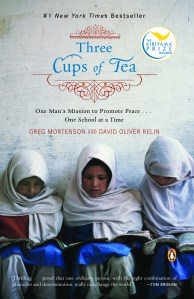
Three Cups of Tea_Mech.indd

Published in Hardnews, New Delhi,April 2, 2009

PERSONAL POLITICAL

Beena Sarwar

I love how connections sometimes just ‘happen’, criss-crossing the world, spanning generations, borders and continents. This particular stream traverses Pakistan’s early progressive struggle to Chicago, an inspiring book by an American who recently received Pakistan’s highest civilian honour, and a Bangladeshi photographer who came to Pakistan to document that moment.

In Chicago for a seminar in May 2007, I stayed with Danial Noorani. He is active with Apna Ghar, a domestic violence shelter for immigrant, primarily South Asian women. His late parents Malik and Mumtaz Noorani were close friends of my parents, active in the Communist Party and city goings-on. Tall jovial Malik Uncle ran a publishing house. ‘Jan-e-Man Phuphi’ (as we called the bright-eyed Mumtaz Noorani because of the endearment she used for us children) was active with Anjuman Jamhooriat Pasand Khawateen (Democratic Women’s Association, headed by Tahira Mazhar Ali, still going strong in Lahore).

There is some symbolism about meeting their son in Chicago. I remembered hearing of Dr Eqbal Ahmad’s disappointment when he found a monument to a policeman rather than the Chicago workers demonstrating for the eight hour day were killed by police fire in 1886. Ironically, the US does not observe May 1 as Labour Day.

Before I left, Danial gave me a paperback titled ‘Three Cups of Tea’ by someone I had vaguely heard of, Greg Mortenson. I couldn’t put it down. It is mandatory reading for anyone interested in education, Pakistan and the ‘war on terror’.

Mortenson builds schools in Pakistan’s remotest areas. The book, co-authored by David Oliver Relin, is sub-titled One Man’s Mission to Promote Peace . . . One School at a Time’– a mission as endangered by the ‘taliban’ as by the militaristic policies of the US and Pakistani governments operating without a political roadmap.

It started in 1993, when Mortenson was recuperating in atiny, unmapped village, Korphe, after being injured while climbing the world’s second highest mountain K2 in the Karakorams. Shocked that the village ‘school’ was a patch of land where children sat in the open scratching their lessons with sticks on the ground, he vowed to build them a school.

Back in the US, he saved rent by sleeping in his car and not taking his girlfriend out to dinner. Not surprisingly, they broke up. Mortenson kept trying to raise funds, manually typing letters to seek help. Two years later he was back at Korphe with a truck-load of building materials.

But he was in for a shock. The villagers told him that they first needed a bridge across the ravine that isolated them. Mortenson nearly went off in a huff. Then he thought about it and realised they were right. An important lesson for aid organizations: ask people what they want and need instead of giving them what you think they should have.

Besides making Korphe more accessible to the world, the bridge enabled the village women to make short trips to visit family on the other side rather than investing days as they used to. And yes, the school was also built. Mortenson has since helped to build some 78 schools in Pakistan (and Afghanistan), providing education to over 28,000 children, including 18,000 girls.

The second part of the book tells a grimmer story: the impact of the mushrooming Wahabi madrassahs and the ‘war on terror’ following ‘9-11’. Mortenson recalls an invitation to the Pentagon to talk about his work, only to realise that they’re not really interested. If they listened to him, perhaps the world would be in less of a mess.

Last August, the Pakistan government announced that Pakistan’s highest civil award, Sitara-e-Pakistan (“Star of Pakistan”) would go to Mortenson for his courage and humanitarian effort to promote education, and literacy in rural areas. The Bangladeshi photographer Shahidul Alam mentioned it when we met last month in Kathmandu. He flew in from Bangladesh especially to record the moment. On March 23rd, 2009, he was in Islamabad with friends of Mortenson watching the awards ceremony live on television.

These are, as Salma Hasan Ali wrote on Shahidul’s blog, “kernels of hope that remind us that all will not be lost to violence and a distorted mindset.”

(ends)

PAKISTAN: Another Terror Attack For TV Cameras

beena-22

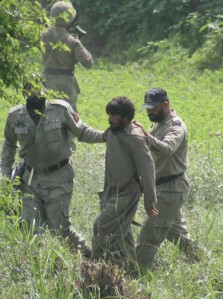
A Taliban militant, part of the group that attacked a police academy near Lahore, being led away by troops. Photo: Rahat Dar

KARACHI, Mar 31 (IPS) – The brazen armed attack on a police academy near Lahore on Monday underlines the danger that the Pakistani state faces from militancy linked to the ‘war on terror’, but with historic roots in the earlier Afghan war of liberation from Soviet occupation, that was converted into a ‘jihad’ against ‘God-less communists’.

The incident is also part of a chain of such attacks that highlight the need for out-of-the-box thinking to a regional, political approach and regional cooperation in this global, border-less conflict.

Eyewitnesses to Monday’s drama said that the gunmen scaled the six-foot high boundary walls of the academy soon after 7 am. They lobbed hand grenades at the 700 or so recruits on parade and ran at them, firing automatic weapons.

Police and paramilitary troops fired aerial bursts in jubilation and shouted ‘Allah-o-Akbar’ (God is great) after they re-gained control of the Academy premises a tense eight hours later.

The final death toll was far lower than the 28 or so initially reported by television channels: eight policemen, one civilian, and four militants who blew themselves up with suicide vests.

Television channels showed heart-rending scenes of distraught relatives at various hospitals where the dead and injured were taken.

The role of the electronic media while covering such incidents has come in for much criticism. In their rush to be first with the news, channels often provide incorrect information – or “lies”, as a press photographer who was at the scene of the Mar 30 drama put it more bluntly.

The al- Qaeda-linked Taliban leader Baitullah Mehsud, based in Waziristan Agency in Pakistan’s north-west tribal areas, claimed responsibility for the latest attack, the second this month in Lahore, capital of Punjab, Pakistan’s most populous and powerful province.

On Mar. 3, some dozen gunmen ambushed the visiting Sri Lankan cricket team in uptown Lahore, injuring several cricketers and killing six policemen and a driver. The gunmen disappeared after the shooting spree and have yet to be apprehended.

On Mar. 27 a suicide bomber killed dozens of worshippers at a crowded mosque near the north-western town of Jamrud on the highway to Afghanistan. Unconfirmed reports suggest that the motive may have been related to money as criminal elements operate freely in the area.

However, the Lahore attacks, taking place in an urban metropolis with dozens of television channels, were far more spectacular and effective, as Asha’ar Rehman, Resident Editor of daily Dawn in Lahore commented.

“A suicide bombing, in the eye of the terrorist perhaps, is too fleeting a moment in the life of a people who have become so used to the occurrence,” said Rehman.

“It is obvious that the terrorist is looking for more than momentary fame. He now wants to stretch the harrowing experience for as long as he possibly can, to the chagrin of onlookers who cannot keep their eyes off the television.”

The attack on the three-storey police school on the outskirts of Lahore a few kilometres from the Wagah checkpoint on Pakistan’s eastern border with India also bore other similarities with the ambush on the cricketers.

Underlining huge security lapses and intelligence failures, both took place in the early morning hours, with well-equipped, well-trained militants attacking supposedly well-protected targets. The Sri Lankan cricketers should have been extended presidential level security while the police school was peopled with – well, policemen, under training though they were.

Their commonalities include the possibility of local support that must have existed in order to facilitate them.

Both attacks drew comparisons to the Nov 2008 attacks in Mumbai, India. Some commentators accused India of being behind them in retaliation for the Pakistani link that emerged in the Mumbai tragedy.

The Mumbai attacks were in turn compared with the suicide attack on Marriott Hotel in Pakistan’s capital Islamabad on Sept 20, 2008. The attack was heavily symbolic given its high-security status and proximity to the corridors of power.

Earlier, militants had eliminated a much more symbolic and high value target – former Prime Minister Benazir Bhutto, as she left an election rally in Rawalpindi on Dec 27, 2007.

Other high-profile attacks, in the recent past, include the suicide car bombing at a police checkpoint in Peshawar that kills 35 and injured about 80 people last September.

In August 2008 twin suicide bombings at the gates of a weapons factory in the town of Wah near Islamabad left 67 dead. Earlier in March 2008, suicide bombers targeted a police headquarters in Lahore, leaving some 24 dead.

But Monday’s attack was so far “the biggest and potentially the most dangerous attack on a state facility in Pakistan,” noted Asha’ar Rehman.

“There were hundreds of trainee policemen inside the compound – trainees among a police force that, according to adviser on interior Rehman Malik, lacks basic training to combat terrorism. They were ill-equipped to stop the advance of a handful of visibly skilled gunmen. It could have been far worse.”

The drama ended with an unexpected twist, again a throwback to Mumbai, when security forces captured some militants alive.

One of them, a bearded man with an expressionless face, was nabbed while heading towards the helipad in the fields behind the Police Academy. He was carrying hand-grenades apparently to attack the helicopters with.

News photographer Rahat Dar told IPS that he was perched along with other media persons on the rooftop of a nearby building watching events unfold at the academy in front of them. “We turned around towards the back when we heard shouts of ‘Got him, got him!’” he said.

Security personnel yanked off the man’s shalwar, baggy trousers to ensure that he was not armed. They also beat him up, prompting Islamabad-based journalist Mariana Baabar to question whether police are actually trained to capture a live terrorist.

“It was the Punjab police in action – doing what comes to them naturally. Obviously, they cannot differentiate between a rare live person who could give them tons of information and an ordinary criminal,” she wrote in a front page comment in daily The News. “Nothing amazing or new except that this was a rare chance to see it live on our screen”.

Police repeatedly kicked the man, apparently having “decided that they would keep kicking him with their boots till he was no more…,” wrote Baabar. “It took an army guy… to stop the angry and out of control police from this brutal kicking. At least someone realised that it was essential to get this suspect alive.”

Identified as an Afghan named Hijratullah, the encircled man presented a pathetic sight as he struggled to cover himself with his shirt.

The other three suspected militants in custody have not yet been identified. They were captured when trying to escape from the premises wearing police uniforms.

Political analysts have long been warning that there are no easy military solutions to the ‘war on terror’. The al- Qaeda and Taliban now appear to have converged with Pakistan’s ‘home-grown’ militancy that American and Saudi dollars cultivated during the Afghan war against Soviet occupation.

Analysts hope that the interactions between global leaders at the high-powered meetings in Europe this week will help initiate a change in the global approach to these issues.

The U.N.-backed conference at the Hague on Mar. 31 to discuss the future of Afghanistan, participated in by about 80 countries including Iran and the United States, is expected to also discuss a regional approach to the issue, says Marjan Lucas of the Dutch Peace Organisation (IKV).

“It is important that America understands what they’ve done to the region and develop partners with civil society and elected representatives rather than the army as they have been doing,” she told IPS in Karachi, having arrived from Lahore the day before the police academy was attacked.

The Hague conference will be followed by the G20 and NATO Summits where U.S. President Barrack Obama is expected to hold bilateral meetings with several world leaders.

What is certain is that there are no easy answers, and that there are likely to be more such links in the terrorist chain before things get any better.

More on women – and Rahman Baba

Sangota Girls Public School, Swat, destroyed by militants. Photo by Kamran Arif

Sangota Girls Public School, Swat, destroyed by militants. Photo by Kamran Arif

Forgot to include the following in my posting focusing on women

AMMU JOSEPH’s article ‘Our freedom is at stake’ is linked to the issues Kalpana Sharma identified in her article on the attacks women in India are facing, which as I wrote, looks like an Indian version of the Vice & Virtue dept of the Taliban that we are facing here in Pakistan. Ammu’s Bangalore Mirror article of Feb 12 (but still very relevant) at

http://tinyurl.com/clhdzy

And now to RAHMAN BABA: As the political confrontation heats up in Pakistan ahead of the lawyers’ long march, joined by the Sharifs who were disqualified from politics recently, before all this reaches a stage where it overtakes all other discourse (which it already seems to have, to an extent), wanted to post a few items related to the disturbing attack on Rahman Baba’s shrine near Peshawar on March 5. The attack caused widespread outrage and practically every paper took it up. The incident took place just two days after the March 3 attack on the Sri Lankan cricketers in Lahore that led to a knee-jerk reaction among many Pakistanis blaming India for the attack.

Countering the culture of blame-counter blame, Siddharth Varadarajan, Associate Editor The Hindu, wrote on March 4 that finding ways to “encourage Pakistani cooperation and, more generally, to stabilise that country, are the most important challenges facing Indian diplomacy”. See his article ‘Lahore attack shows urgency of joint action on terror’ – Forget the conspiracies, the threat to Pakistan and India is the same – http://tinyurl.com/au8xhy

I thought he was spot on, on the whole and had a comment to add to his statement that “Cricket is the most visible icon of secular Pakistan, and perhaps the only competitor militant Islam faces in its struggle to tame the wayward Pakistani mind.”

I wrote: “There is another, even more deep-rooted competitor militant Islam faces – the widespread adherence to Sufi Islam and values, superstition, taweez dhaga (tying threads, getting amulets) etc. I fear (hope hope hope I am wrong) a major attack on any urs (birthday celebrations of Sufi saints) taking place at any of the major shrines any time soon…”

The following day, militants bombed the shrine of the 17th century Sufi poet Rahman Baba. An AP report in the Independent commented that the attack highlighted “the gulf between hard-line Muslims and many in the region who follow a traditional, mystical brand of Islam… A professor at Peshawar University told a local TV station that in many Pashtun homes, Baba’s poems are kept alongside the Islamic holy book, the Quran.” http://tinyurl.com/b45yo5

The caretaker of the shrine said he had got a letter three days before the attack warning against the perpetration of this “shrine culture” and objecting to the fact that women were coming to pray at the shrine. Militants used remote control bombs that destroyed the outer wall of the Mausoleum and partially damaged the building one month ahead of Baba’s urs, scheduled for April 5.

According to Pashtun Post <www.pashtunpost.com/>, Yousaf Ali Dilsoz, President of Rahman Baba Adabi Jirga says that Rahman Baba is the icon of Pashtuns spirituality and their love for peace and tolerance. “Saidu Baba, a revered saint from Swat valley, is known to have said that if the Pashtuns were ever asked to pray on a book other than the Koran, they would undoubtedly go for Rahman Baba’s work.”

Pashtun Post contains translations of some of Baba’s verses – http://tinyurl.com/c6neqy

Some excerpts:

Sow flowers so your surroundings become a garden
Don’t sow thorns; for they will prick your feet

If you shoot arrows at others,
Know that the same arrow will come back to hit you.

Humans are all one body,
Whoever tortures another, wounds himself.

(ends)

SOUTH ASIA: Terrorists Aim for Destabilisation, Media Attention

SOUTH ASIA: Terrorists Aim for Destabilisation, Media Attention

Analysis by Beena Sarwar

KARACHI, Mar 4 (IPS) – South Asia seems to be caught in a vortex of violence as the countries that form this region – from Sri Lanka at the southern-most tip, Bangladesh to the east, Nepal crowning the north, Pakistan along the west and India in the middle – deal with internal nightmares that their governments routinely blame on neighbours.

Tuesday’s armed attack on the Sri Lankan cricket team in the historic city of Lahore in Pakistan has sent shockwaves through a country already racked by regular suicide and other attacks.

Eight Pakistani policemen died and several were injured saving the Sri Lankan cricketers, six of whom were wounded in the attack.

At the other end of the sub-continent, Bangladesh is still reeling from the shock of a border guards’ mutiny over pay and working conditions, resulting in soldiers massacring over 70 officers, including some of their wives.

Some analysts fear that the horrific incident might elicit copycat responses elsewhere too, where soldiers are unhappy with the tasks they are made to do.

Meanwhile, India has yet to recover from the horror of the attacks in Mumbai that claimed some 180 lives. New Delhi had, as a direct result of the attacks, called off participation of the Indian cricket team in the Pakistan tests.

Sri Lanka, in the last stages of a heavy-handed army operation against the Tamil separatists who have been fighting a guerrilla war against the state for over two decades, could hardly have imagined that its cricket team would come under fire in Pakistan, a friendly country.

Still, as the Sri Lankans told journalists after the Lahore attack, they had come here “well aware of the risks”.

Analysts point out that Tamil separatists are unlikely to be responsible for the attack, given the back foot that they are operating from.

The Sri Lankan team, in Lahore for a five-day test match where they already played for the first two days, were en route from their hotel to the stadium early in the morning on Mar. 3 when the gunmen attacked.

The firing reportedly began from three directions as the van slowed down near a roundabout close to the red-brick cricket stadium. Shaky television footage showed men with guns and backpacks taking position and firing. Their first target was the police escort.

According to the van driver, one of them flung a hand grenade which rolled under the van without damaging it. He said that the cricketers flung themselves to the floor of the van as he accelerated to escape the gunfire, managing to get the bullet-riddled van with the cricketers to the stadium.

There is universal condemnation for an act which many believe is an attempt to further discredit and isolate Pakistan. Many are praying for the quick recovery of the injured cricketers who were airlifted to Sri Lanka.

“They were our guests, they came to Pakistan when most people were not willing to come,” one man in Peshawar told a television journalist.

“We are a friendly and cricket-loving nation,” said another passer-by. “Now no cricket team will want to play here.”

The incident has more or less put paid to Pakistan’s aspirations of hosting the next World Cup in 2011, say observers.

The attackers struck at a sport that is hugely popular across South Asia, a quick throwback to a common colonial past (for all the countries except Nepal which was never under British rule), a legacy that includes the English language, administrative systems and railways.

In normal times, India and Pakistan’s cricket teams on the wicket pitch elicit responses akin to surrogate battlefields. A Pakistan-India game is referred to in parts of India as ‘Qayamat’ (doomsday).

Despite the keen rivalry, love of the sport is a unifier. ‘Cricket diplomacy’ has featured among the permissible people-to-people contacts that have grown immensely over the past decade or so.

“Cricket is not the bone of discord between the two countries,” Gul Hameed Bhatti, group editor sports of the country’s largest media group, Jang told IPS. “Basically the problem is the tensions between both countries, and cricket becomes the casualty. This incident has thrown cricket and other sports back into the dark ages. I don’t see anyone agreeing to come and play here now.”

Bhatti added that he had long “feared that this was a disaster waiting to happen because the situation in the rest of the country is so volatile. It was unrealistic to think that sportsmen could remain isolated from it’’.

Nor, say analysts, can other areas of society, like culture. In early November, explosions on the penultimate night of a major international performing arts festival in Lahore caused panic. There were no casualties although some people sustained minor injuries. Artists, foreign and local, defiantly rallied around to make the festival’s last day a resounding success.

Ironically, the festival was held in the cultural complex next to the Gaddafi cricket stadium where the Sri Lankans were headed when they were attacked.

Most people, said Bhatti, “had become complacent, thinking they would never target sportsmen.”

They included Pakistani cricket hero turned politician Imran Khan who shortly after the Mumbai attacks categorically told an Indian newspaper, “There is no problem about the security of cricketers in Pakistan. The terrorists will never target cricketers knowing that they will then lose the battle of hearts and minds of the people. Cricketers are safe in Pakistan.”

The audacious attack in an upmarket Lahore locality is now being compared to the Mumbai attacks, where ten gunmen targeted symbols of national strength. Police are saying that about a dozen gunmen were involved in the Lahore attacks.

Cricket is an area where Pakistan has traditionally shone as a global power with a huge fan following around the world.

Security fears have, however, massively dented enjoyment of the sport as many foreign teams have over the past years cancelled tours, including India after the Mumbai attacks that similarly cast a shadow over ‘India shining’, raising doubts about internal security.

Pakistan, already beset by multiple political problems, has for some time been facing a deadly threat from the ‘jehadi’ forces – regional players like the Taliban (from Afghanistan and Pakistan), the international al-Qaeda, and local militant outfits like the banned Laskhar-e-Tayyaba and the Jaish-e-Mohammed, many of whom with roots in the southern Punjab and links to Pakistan’s intelligence agencies that nurtured them during the Afghan war of the 1980s.

Following the events of 9/11, these forces have converged, to emerge as a greater threat than ever before, not just for Pakistan, but for world peace, say analysts.

Their agenda is not just to enforce what they consider to be an Islamic system, but to overrun and destabilise the state itself. Pakistanis have suffered heavily under this agenda, paying a heavy price for the policies of military rulers – who have run the country for more than half its 60 years of existence – that civilian governments have been unable to change.

These policies include cultivating ‘Islamic warriors’ to fight against the Soviet occupation in Afghanistan during the 1980s, supporting the Taliban in order to create ‘strategic depth’ in Afghanistan (citing the threat of a hostile India on the eastern border), and using some of these elements to bleed India in the disputed region of Kashmir.

No elected government in Pakistan has ever completed its tenure. They are routinely overthrown either by the army or dismissed by various Presidents using the powers invested in that office by the military dictator Gen. Ziaul Haq who also got himself appointed as President.

The current elected government, say analysts, is the first that is actually serious about fighting the jehadi threat which it recognises as endangering the country’s very existence. “But it appears that various elements within the establishment are still bogged down in the old policies and are unwilling to give democracy a chance,” said an observer.

Just as enraged Indians had “jumped on the blame Pakistan bandwagon” immediately following the Mumbai attacks of November, “some here are now blaming the Indian hand,” says Bhatti.

Many see the attack on the Sri Lankan team as an attempt to take ‘revenge’ for Mumbai and an attempt to isolate Pakistan internationally.

Lt. Gen. (retd.) Hameed Gul, former head of Pakistan’s shadowy Inter Services Intelligence (ISI) and a known hawk, was on television saying that “India wants to declare Pakistan a terrorist state”. The attack on the Sri Lankan team, he declared, “is related to that conspiracy.”

The Pakistan government itself has been more circumspect as have other analysts, including retired army officers like Maj. Gen. (retd) Jamshed Ayaz Khan who cautioned against such accusations “without a full investigation”.

The Sri Lankan government’s response has been conciliatory. “Pakistan’s cricket team was willing to visit our country when others weren’t because of security worries,” said Palitha T.B. Kohona, Sri Lanka’s foreign secretary, “and his government was pleased to reciprocate. The game must not be affected by a lunatic fringe”.

Ironically, media proliferation, particularly the 24/7 television news channels, has increased the intensity and probability of such dramatic high-profile attacks, say analysts. Terrorism thrives in the media spotlight which terrorists successfully attracted in Mumbai last November and now with the Lahore attack.

Ultimately, those who suffer the most after such incidents are ordinary people in India and Pakistan, say observers. The Lahore attack is bound to generate further tension between the two countries which have still not resumed the composite dialogue process stalled after the Mumbai attacks in November.

Rather than cooperating to solve a common problem, India and Pakistan remain prisoners of their hostile pasts. The ultimate winners in this game, note analysts, will only be the terrorists whose aim is destablisation and creation of tension around the world.

(END/2009)