‘I want India and Pakistan to make peace in my lifetime’ – Zehra Nigah

Some thoughts emerging from a chance encounter with one of Pakistan’s most respected and iconic progressive poets.

Indian and Pakistani writers and a filmmaker at the Faiz Festival, Lahore: (l-r) Dr Saif Mahmood, Atul Tiwari, Dr Arfa Sayeda Zehra, Dr Arvinder Chaman, Nandita Das and Zehra Nigah. Photo by Zarminae Ansari / The Joy of Urdu

Personal Political
By Beena Sarwar / Sapan News

“It’s the girls that give me hope,” says the celebrated poet and writer Zehra Nigah.

She leads a quiet life at her home in Karachi, without a mobile phone or email. Yet those who seek her are able to find her. Besides the school and college students who look to her for guidance, there are advertising companies looking for classy jingles. And there are organisers of literary festivals wanting to invite her.

These include Jashn-e-Rekhta, the three-day annual festival that celebrates Urdu — subtly countering the rightwing narrative that Urdu is a ‘Muslim’ language while Hindi is for ‘Hindus’.

When it started in 2015, Rekhta invited several prominent Pakistani poets and writers to participate. Its third edition in 2017 was the first time that there was no Pakistani participation in its sessions – due to the “prevailing atmosphere” in India, the organisers took “a considered decision” to not invite Pakistanis as “participants” but only as “guests”, reported Anita Joshua in the Telegraph, India. 

“Some see in this an instance of self-censorship to avoid trouble of the sort that has recently beset Bollywood films starring Pakistani actors,” commented Joshua.

The only Pakistani who accepted the invitation was Kishwar Naheed, then 77, another iconic Pakistani poet, for whom being invited as a ‘guest’ meant that she would at least be able to recite at the ‘mushaira’, the poetry recital session addressed by several poets, as she told me later. 

Continue reading

What I’ve learned from Noam Chomsky

As news of Noam Chomsky’s failing health makes the rounds, I share some learnings from my interactions with a trailblazing public intellectual whose moral compass has impacted the world


PERSONAL POLITICAL
By Beena Sarwar

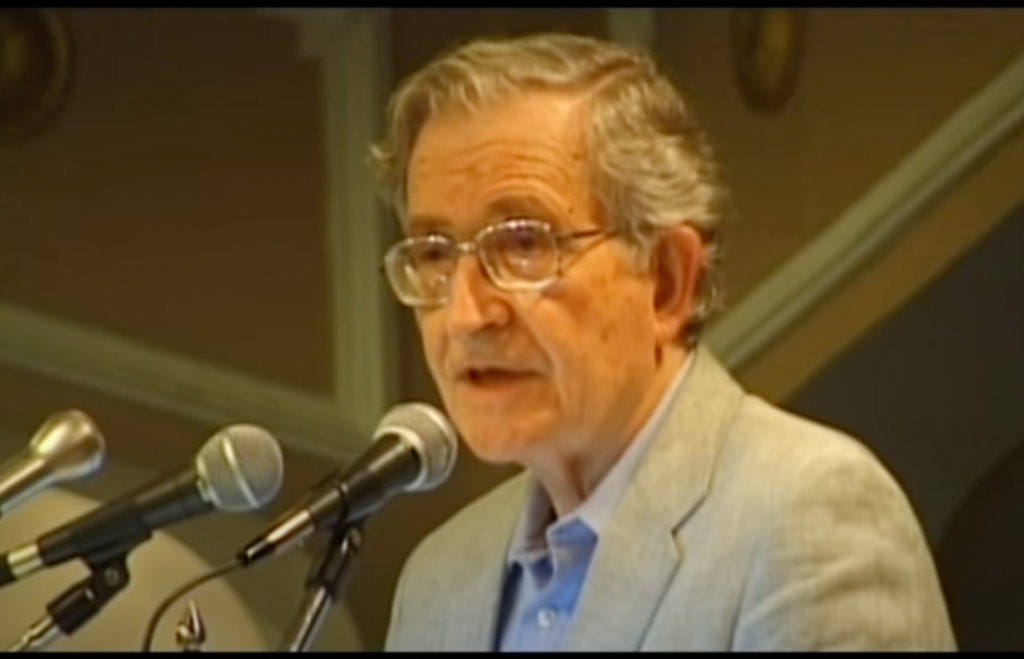
Noam Chomsky in Pakistan, 2001. Screenshot from VPRO news report by Beena Sarwar.

I once asked Noam Chomsky how he manages to remember so many facts and figures and hold audience attention. He replied that he didn’t convey any new information, that his talks are based on materials already in the public domain, and that he simply joins the dots – providing context – and repeats the information consistently and in different ways.

His response was typical of his humility as well as his courtesy towards a much younger person to whom he owed nothing.

Chomsky teaches us that it is not necessary to be loud and sensationalist in order to be heard. This, together with the clear and courageous moral compass he has provided over decades, is a most valuable lesson.

Noam Chomsky was already a legend when I first met him over two decades ago in December 2001 when he visited Pakistan for the inaugural Eqbal Ahmad Memorial lecture series.

Continue reading

Pakistan’s media wars – my article for Himal Southasian

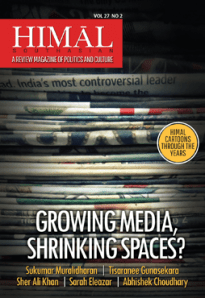
Himal-Growing media, shrinking spaces?Himal Southasian, a publication I’m proud to have been associated with since its inception in 1996, has a new issue on the media. My piece Pakistan’s media wars (below) and Mass media and the Modi ‘wave’ by Paranjoy Guha Thakurta are web exclusives. Two additional points to my article:  1. Corporate media owners in Pakistan have always been part of reactionary and anti-democratic forces in general. Their disputes with censoring governments have almost always had commercial motivations. 2. Journalists have played a positive role whenever they remained united in their professionalism. They compromise this unity when they allow journalistic standards to slip and try to become power brokers themselves.

By Beena Sarwar

4 July 2014

What is the political fallout of the battle between a media behemoth and Pakistan’s largest security agency?
Continue reading

Peace hankies + trade + business = reduce hostilities

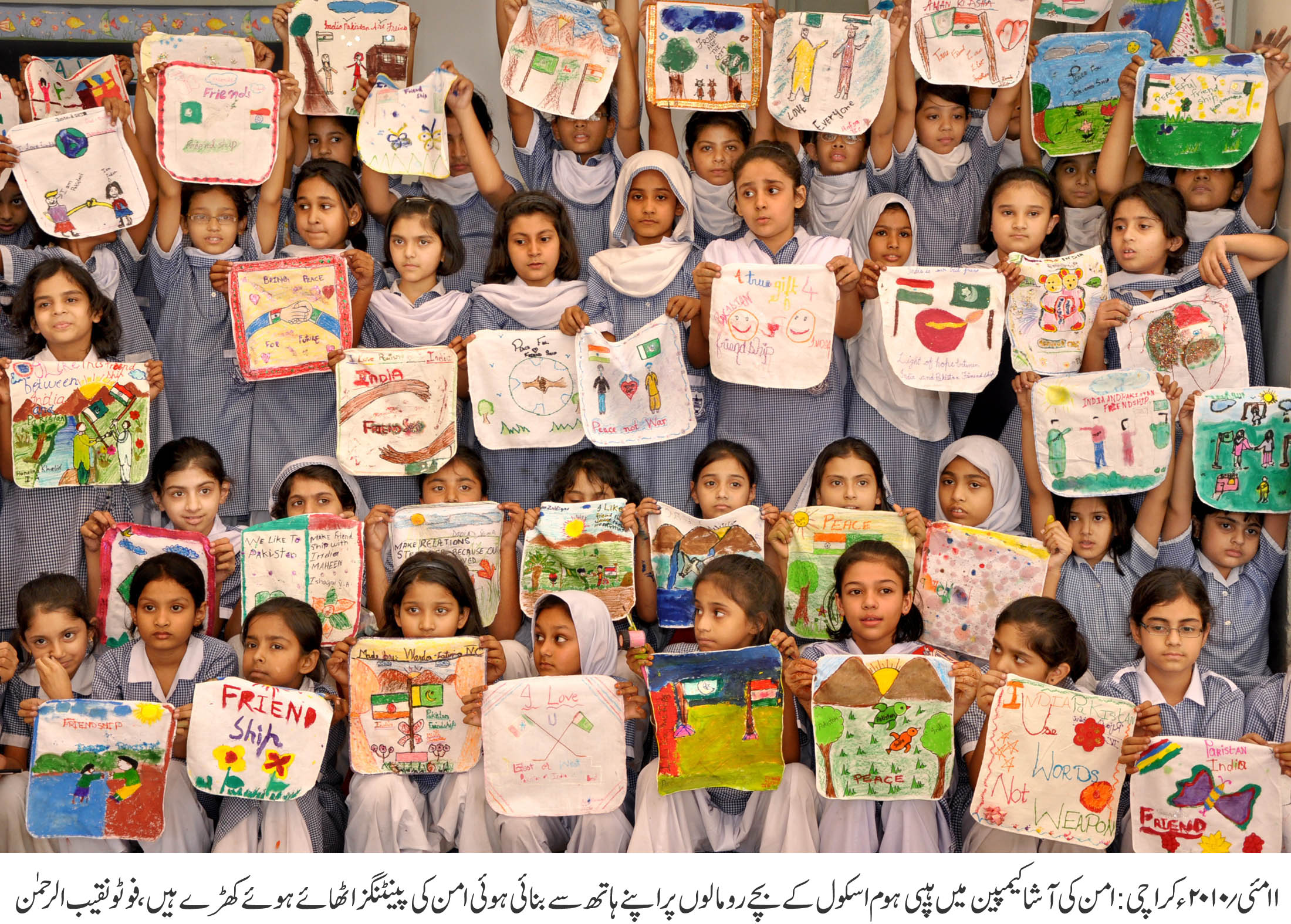
Happy Home School students display their Aman ki Asha 'peace hankies'. Photo: Naqeebur Rehman

Another Aman ki Asha event in the offing -‘Partners in peace and progress‘, the trade and investment meeting between top Indian and Pakistani business executives, taking place in Delhi May 18-19, 2010. This is the latest in the chain of events since the initiative was launched on Jan 1, 2010, by two media giants of Pakistan and India. Since then, there have been several events in both countries – literary festivals, music concerts, mushaira, editors and anchors’ meeting, a seminar on strategic issues, the ongoing peace hankies campaign, and now this major economic conference. The coverage of these events in the media, especially the sponsoring media groups Jang, News, Times of India and Geo TV, has created a buzz around peace. Crucially, it has helped to create ‘an enabling environment’, as Geo TV President Imran Aslam terms it, that may well have contributed to the thaw in India Pakistan relations. (For more peace hankies photos see my Flickr site). For those cynics and the critics – yes we all know peace is not going to happen overnight, but when the critical mass of people is clearly for it, it might not be so far away as it once had seemed.

Media scandalising… Meera; Jack Lew’s briefing on Pakistan

Filmstar Meera - blitzed by hypocritical, misogynistic journalists (courtesy Open magazine)

Filmstar Meera - blitzed by hypocritical, misogynistic journalists (photo courtesy Open magazine)

Many journalists in Pakistan appear to have forgotten their responsibility to fairness and ethics. In one ongoing drama, they are going overboard about the ‘scandal’ of film actress Meera’s ‘marriage’, with anchor persons relishing her lack of sophistication and Geo going as far as to broadcast her interview AFTER she’s asked for the camera to be turned off. She may be lying but should anchors sneer? And should producers allow the camera to continue rolling after the subject has asked it to be turned off? But then, she’s a woman, she’s a film actress, she’s considered fair game… Is that fair? Here’s a sound antidote to all the drivel about Meera – A Girl Called Meera by Faiza S. Khan.

Continue reading