Moving out of the downward spiral

@salmaantaseer: I was under huge pressure sure 2 cow down b4 rightest pressure on blasphemy. Refused. Even if I'm the last man standing

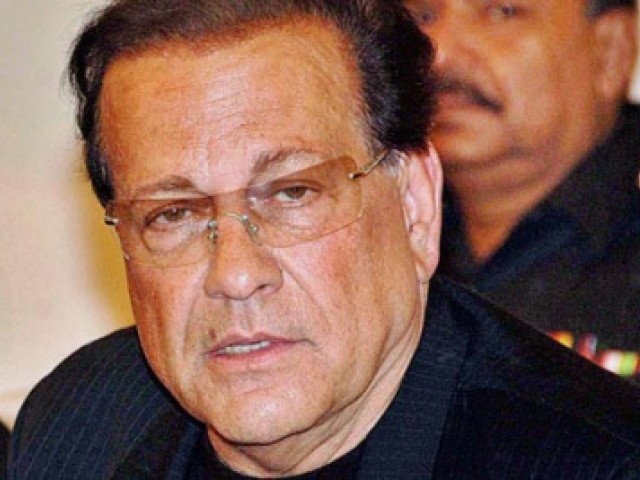
I wrote this on Jan 5, 2010 for Tehelka (published today as ‘Salmaan Taseer’s death is liberal Pakistan’s loss‘), the day after Salmaan Taseer was gunned down in cold blood by his own bodyguard whose cowardly action of firing at the Governor’s back has deprived us of a man of courage and conviction, wit and wisdom. ST, you are not “the last man standing”.

Moving out of the downward spiral

Beena Sarwar

“There are no less than 24 groups as of now supporting Qadri on FB and 1 against what he did, that says it all. #salmaantaseer”.

So went a tweet from a fellow Pakistani early morning on Jan 5, the day after the assassination of Salmaan Taseer, the governor of Punjab who took a courageous stand against religious extremists in Pakistan.

The facebook pages cropping up don’t quite say it all. Facebook is usually quite slow to take action against pages that users consider abusive (unless they have to do with Israel). In this case, many of those pages (mostly started by young men who like western shows like Sex and the City, support Pervez Musharraf and say they follow Islam – any contradictions here?) were taken down within 24 hours – which means that enough people reported them as abusive.

When it comes to religion, there is confusion in people’s minds in Pakistan. This confusion has been building up over the years, particularly since America, Saudi Arabia, Pakistan and their allies took up cudgels against the Communist threat in Afghanistan and injected religion into the Afghans’ war of liberation against the Soviet invasion. Calling it a ‘jihad’ or a holy war enabled them to draw in Muslim fighters from around the world. The late Eqbal Ahmad warned against this long before the horrific events of 9/11 and US President Bush’s immature response sent the world into a downward spiral of violence, especially Pakistan, the frontline state in America’s war first against the Communists and then against extremist Islam.

The questions arising from Taseer’s assassination indicate that some forces in Pakistan are continuing along the old trajectory.  The assassin, 26-year old Malik Hussain Qadri, was assigned to the elite force guarding the Punjab Governor. It now emerges that he had been removed from the Special Branch because he was perceived as a security threat – so how did he end up on the security detail of a Governor who was already receiving death threats?

According to the post-mortem, he fired 41 bullets into Taseer’s back while the Governor was getting into his car. He then threw down his weapon and raised his arms in surrender.

Standard operating procedures in VIP guard duty require the other guards to immediately open fire even if the assailant is one of them, explains my military analyst friend Ejaz Haider. So why did the other guards not follow the SOP?

Chillingly, Qadri has revealed that he had told his colleagues what he was going to do and asked them not to open fire, as he would surrender. Which means that he was confident of getting away with it.

“Now the judicial process will take over,” predicts Haider. “The judge/prosecutors will be threatened, and the murderer will be declared a hero.”

This is of course already happening, as the facebook pages show. Some of them have referred to him as a ‘ghazi’ (conqueror) and are justifying and glorifying his murderous act – including several religious organisations. In fact, some have gone so far as to say that because he was ‘guilty’ of ‘blasphemy’, no Muslim should lead or attend his funeral prayers.

Qadri’s smiling face was flashed on television channels, along with his comments that “Salmaan Taseer is a blasphemer and this is the punishment for a blasphemer”. He is reported to have told interrogators that the Governor had called the blasphemy laws ‘black’ and had defended Aasia Noreen, the Christian woman sentenced to death for ‘blasphemy’.

Taseer’s role in highlighting the Aasia Bibi case, as it came to be known, was significant although some have criticised his high-profile visit to her jail cell and his promise to obtain a presidential pardon for her, which circumvented due process. According to due process, the President’s pardon would have been sought after the Supreme Court confirmed the death sentence following the High Court’s confirmation of it.

The Pakistani state has not executed any blasphemy convicts because so far, the High Courts or the Supreme Court have acquitted those accused under this law (295-C, imposed by Gen. Ziaul Haq to add to 295-A that existed since British times). Yet the mere allegation of ‘blasphemy’ has been enough to incite the murder of over 30 people so far. Taseer’s is the most high profile such murder.

Given the current climate, it is unlikely to be the last. For things to significantly change, ‘deep state’ will have to change its policies of support for ‘jihadis’ and jihadi mind-sets.

Meanwhile, those who have been opposing the blasphemy laws and other injustices perpetuated in the name of religion will continue to protest, as they have been doing for decades.

(ends)

Personal Political: Dear Abhijeet, please come to Pakistan

Yes, we do have theatre in Pakistan. Sania Saeed in 'Mein Adakara Banoongi'. Many other listings at http://www.danka.com.pk/

My monthly column Personal Political in The News on Sunday (Political Economy section, as ‘Going beyond ‘nothing’ in Pakistan’) and in Hard News, New Delhi

Good music too: Zeb and Haniya. See their interview at http://bit.ly/zebhania

Oct 24, 2010 Personal Political

Going beyond ‘nothing in Pakistan’

Beena Sarwar

“There is nothing in Pakistan,” said the Indian playback singer with finality. “They have no auditoriums, no facilities, there is nothing there. Everything is here (in India).”

Another example of the misconceptions about Pakistan, I thought, waiting to respond. The playback singer, Abhijeet Bhattacharya, and I were participating in a talk show for NewsX TV in New Delhi. Participating from a hired studio in Karachi, I could hear, but not see, the others.

When I tried to reply to this comment, the Indians couldn’t hear me, although I could still hear them through my earpiece connected to a phone line. I was no longer on air. NewsX had booked a live uplink from Pakistan for 20 minutes, which was over. Symbolic? Continue reading

‘Students who set the tone’


Thanks to Zubeida Mustafa for her well-researched and timely article in Dawn today Students who set the tone. Just a small clarification re the comment that “Most of the founders gave up their activism — as daughter Beena confirms for Dr Sarwar”. This is only partly true. These students did not become “professional student activists” or go into active politics. As Zubeida Mustafa notes, many of them did carry on their work in other ways. Speaking of Dr Sarwar – besides supporting progressive causes in whatever way he could, he was involved with the professional body of doctors, the Pakistan Medical Association (PMA), was a member of the PMA delegation to then East Pakistan, wrote regularly for the Pakistan Medical Gazette (that he and other colleagues founded, at a meeting in Quetta), was twice elected PMA Secretary General and worked for a health policy along with his colleagues during the Zia years – a time when PMA was a significant platform for dissent against military rule (see Dr Badar Siddiqi’s citation) at the May 31st meeting at PMA House.

Details of the Jan 9, 2010 event mentioned in Zubeida Mustafa’s article are available the Dr Sarwar blog as well as at the Facebook Event. We particularly invite young people and students to attend the event in order learn about this little-known part of our history, at a time when student unions have been restored in principle.

Dr Sarwar passes on – memorial meeting May 31st

200701-Sarwar-Banner image

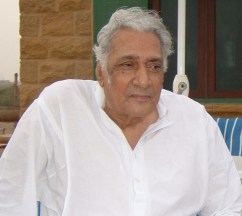
Sarwar, Jan 2007. Photo: Anwar Sen Roy

He passed on peacefully in his sleep with his characteristic calm and dignity, shortly after we said goodnight… Here is the note we sent to the press that day (forgot to mention his role in the Medical Gazette, one of the founding members of a publication that provided a platform for progressive political views in dark times):

Dr M. Sarwar passes on

KARACHI, May 26: One of Karachi’s oldest general practitioners, well known physician and former student leader Dr Mohammad Sarwar passed away peacefully in his sleep at home early this morning, May 26 in Karachi, after a prolonged bout with cancer. He was 79.

A memorial meeting is scheduled at PMA House on Sunday, May 31 at 6.30 pm.

Dr Sarwar, Karachi, 2004

Dr Sarwar, Karachi, 2004

Brief bio:

Born in Allahabad, he came to Karachi for ‘sightseeing’ in 1948 and stayed on when he got admission in Dow Medical College. He was instrumental in forming Pakistan’s first student union, the Democratic Students Federation (DSF). He served as DSF’s President and Secretary General before the Mohammad Ali Bogra government banned it in 1954. He was also the driving force behind the Inter-Collegiate Body (ICB) comprising student unions in different colleges and the All Pakistan Students Organisation (APSO), established in 1953.

Sarwar spearheaded the January 8, 1953 ‘Demands Day’ that spelled out the needs of students, including the establishment of a full-fledged university campus (now Karachi University). He tried to prevent the students from surging forward in the face of the police threat when the procession reached Saddar. Sarwar was injured in the police firing that killed seven students that day, commemorated for years as a ‘Black Day’.

APSO brought together college students from all over the country to demand students’ rights regardless of their politics or ideology. The organisation’s influence was visible in the 1954 elections in former East Pakistan when a student leader defeated seasoned politician Noor-ul-Amin.

DSF also published the fortnightly award-winning journal Students’ Herald, edited by the well-known economist S.M. Naseem, then a student activist.

Dr Sarwar received his final medical college results in 1954 while he was in prison for a year — the McCarthy era in the United States impacted Pakistan as well and progressive elements here were rounded up and incarcerated. His elder brother, journalist Mohammad Akhtar (1926-58) was arrested shortly afterwards. Fakhruddin G. Ebrahim, then an upcoming lawyer, defended many of these political prisoners, including their friend Hasan Nasir who was tortured to death later.

After graduation, Dr Sarwar worked as a general physician with various health services until setting up his own clinic in Gulbahar (New Golimar) where he practiced for over forty years. He was also one of the pioneers of the Pakistan Medical Association (PMA) where he was twice elected general secretary. PMA played a vital role in progressive politics during the 1980s. During the Zia years, the PMA was one of the important ‘civil society’ organisations that consistently stood for democratic politics.

Dr Sarwar will be remembered for his inspirational leadership, generosity of spirit, warmth of character and clear-headed political vision.

He is survived by his wife, well known educationist and teacher trainer Zakia Sarwar, and three children, Beena Sarwar, Sehba Sarwar, and Salman Sarwar and three granddaughters, Maha, Myah and Minal.

Some news reports:

In memory of Dr Mohammad Sarwar, Wednesday, May 27, 2009
By Shahid Husain – 
http://tinyurl.com/sarwar-news

By Ahmed Reza, BBC Urdu, 26 may, 2009 – http://tinyurl.com/sarwar-bbc

Student politics pioneer Dr M Sarwar passes on, Dawn, Tuesday, 26 May, 2009 – http://tinyurl.com/sarwar-dawn

In memory of Dr Mohammad Sarwar Wednesday, May 27, 2009

By Shahid Husain

http://tinyurl.com/sarwar-news

Ahmed Reza, BBC Urdu, 26 may, 2009

http://tinyurl.com/sarwar-bbc

Thanks for your message. We’re grateful he passed on peacefully in his sleep with his characteristic calm and dignity, shortly after we said goodnight…

Here’s a link to a news report about him

Student politics pioneer Dr M Sarwar passes on, Tuesday, 26 May, 2009

http://tinyurl.com/sarwar-dawn