Dr Sarwar Reference, Aug 8, HRCP, Lahore

Press Release

Reference for pioneering student leader Dr Sarwar

For favour of publication

Lahore August 6: A Reference for the pioneering student leader Dr. Muhammad Sarwar will be held here at HRCP’s Dorab Patel Auditorium on Saturday August 8 at 5 p.m.

Dr. Muhammad Sarwar was amongst founding leaders of the Democratic Students Federation (DSF) and the All Pakistan Students Organisation (APSO). He was also instrumental in the formation of Inter-Collegiate Body of Karachi (ICB) which along with DSF spearheaded the students struggle for the acceptance of students charter of demands in 1953.

Twice elected to the office of General Secretary (national), Pakistan Medical Association (PMA) that continues to play a leading role in the affairs of medical profession, Dr. Muhammad Sarwar was amongst those who had formulated a people-friendly health policy. It was unfortunate that the policy, duly presented to the concerned quarters by the PMA, remains unimplemented.

Born at Allahabad, Dr. Sarwar came to Pakistan in 1948 and joined Dow Medical College,Karachi. After graduation he practiced for over forty (40) years at his clinic in the lower middle class locality, Golimar,

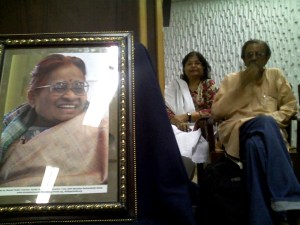
Coinciding with his Birthday, the Reference for Dr.Muhammmad Sarwar, will be addressed by Mr. Hameed Akhtar; Mr.I.A. Rehman;Mr. Abid Hasan Minto;Dr. Haroon Ahmad, Dr. M. Ilyas, Prof. Afzal Tauseef, Ms. Salima Hashmi; Dr.Izhar Chaudhry General Secretary PMA,Punjab, Mr.Farooq Tariq LPP leader,Mr.S.M. Naseem former editor “Students’ Herald”, Zaman Khan, Ammar Ali Jan, Dr. Farrukh Gulzar and Zakia Sarwar.

The Reference will be followed by tea. Later, participants may join discussion to be facilitated by Mr. S.M. Naseem, Beena Sarwar and Ali Cheema.

Issued on behalf of: Friends and Admirers of Dr. Muhammad Sarwar

By (Husain Naqi)

NOTE: MR MINHAJ BARNA AND DR ENVER SAJJAD ARE ALSO EXPECTED TO ARRIVE IN LAHORE FOR THE REFERENCE

Simply repealing 295-C will not stop the rot

Since it was introduced by Gen. Zia, the ‘blasphemy law’ 295-C has been used to settle scores, including financial rivalries, as umpteen fact-finding missions have recorded (included several I have participated in), much as the Zina laws have been used for revenge.

Now, simply repealing 295-C will not stop the rot. That must be done, but along with it we have to demand strict enforcement of law and order.

Those who incite violence and murder (eg mullahs who used loudspeakers) must be held culpable as well, charged, tried and punished in accordance with the law.

Ditto those who desecrate a holy book or symbol, no matter of what religion.

Below, links to some reports that provide a perspective on the issue:

PAKISTANI CHRISTIANS-THE VICTIMS OF HALF LAW IN GOJRA, by Brigadier Samson Simon Sharaf (Retired), Aug 5, 2009

http://chowk.com/ilogs/73055/47736

An Eyewitness Account from Gojra – Faris Kasim.  August 7, 2009

http://www.chowk.com/articles/an-eyewitness-account-from-gojra-faris-kasim.htm

Edited version in The News Op-Ed, Aug 8, 2009

http://www.thenews.com.pk/daily_detail.asp?id=191978

HRCP press releases, Aug 4 & Aug 1
http://hrcpblog.wordpress.com/2009/08/06/gojra-admin-knew-about-pre-planned-attacks-hrcp/

http://hrcpblog.wordpress.com/2009/08/06/hrcp-press-release-on-gojra-and-korian-incident/

Lethal Law, Newsline Sept 2001
http://www.newsline.com.pk/NewsSept2001/newsbeat.htm

Urgent appeal for potable water in monsoon-affected areas of coastal Sindh

Appeal from A Ercelan, Pakistan Labour Trust

People in monsoon affected areas of coastal Sindh urgently need potable water.

Their dire condition is the direct result of decades of deprivation of fresh water, drainage of upstream pollution, and destruction of mangroves — with consequent depletion and degradation of ground water reserves specially through sea water intrusion. State policies of which many if not all of us are beneficiaries.

Please help by donating for Musaffa (brand name for water-filter bags developed by the Pakistan Council of Scientific and Industrial Research (PCSIR)). Musaffa bags contain mostly sand with some silver as the active steriliser, which kills e-coli about an hour after immersion.

Direct purchase of Musaffa bags for delivery to Pakistan Fisherfolk Forum (PPF) would be appreciated. You can collect money and go to Musaffa supplier directly, or have a PPF representative pick up the contribution and deliver a sale invoice from Musaffa supplier. An a/c payee check is preferred to cash. Pakistan Labour Trust

(PLT) has donated Rs 50,000 to deliver Musaffa filter bags to the Pakistan Fisherfolk Forum. The Musaffa supplier has made an additional donation of about half this amount through a discount.

Please join this PLT-PFF effort to provide at least 1000 families in emergency need of potable drinking water.

Contacts:

Faiz Saheb at +92-21-4534356 (off Amir Khusro Road, Karachi) to purchase.

Pakistan Fisherfolk Forum M Ali Shah +92-21-5090543 in Ibrahim Hyderi, Karachi).

Zardari: two articles and a comment

Meant to do this earlier but didn’t get around to it – two interesting articles about Zardari and a comment

July 12, 2009 ‘The advent of Asif Zardari’ by Kunwar Idris http://tinyurl.com/ksbydc

Shaheryar Azhar posted this to his group The Forum with the comment: “A very good article. This moderator to the dismay of some forum members has not focused on the ‘governance’ issue in Pakistan ever since the departure of the Musharraf government. This, of course, was by design.

“We must first decisively emerge victorious in our civil war – as long as Zardari’s government is doing a credible job on this front they deserve our full support. There will, however, come a time when we will shift our complete focus on ‘governance’, ‘corruption, ‘efficiency’ etc.-type make-or-break issues. Here we must acknowledge that what is different from the 90’s is not just more maturity being shown by the politicians or the existence of the Charter of Democracy or the working coalitions in all the four provinces or much greater consensus amongst politicians of consequence on key national issues – all of which individually and collectively is the big and surprise story of 2008 and 2009 but the existence of two empowered institutions, which were conspicuously missing then – independent judiciary and media. So rest assured, there will be time (soon inshalla) when our focus will shift laser-like to the bread-and-butter issues.

“There is one big caveat: as always military dictatorship, including military manipulation from the background will always be fought against. In Pakistan what is true is the following: Corrupt democracy anytime over any kind of military dictatorship.”

A follow up article at – http://tinyurl.com/m6zuva

July 15, 2009, ‘Meeting the president’, by Sayed Naseer Ahmad, Dawn:

“Never before had a head of state invited so many retired bureaucrats and asked them to speak their mind on national issues. The mere fact that several dozen retired bureaucrats, who could no longer influence decision-making, were invited to the presidency for a frank discussion showed that the incumbent valued good counsel.

“…Zardari said he thought that the militants and extremists had emerged on the national scene not because the civil bureaucracy was weak. In fact, they had been deliberately created and nurtured with the help of the international community as an instrument of policy in the 1980s. He then went on to advise the former bureaucrats to be “truthful to ourselves and make a candid admission of the realities”.”

DR SARWAR: New photos and articles

DR SARWAR: New updates and uploads www.drsarwar.wordpress.com

– ‘Hasan Nasir’s case should also be reopened’ – article by Shafqat Tanvir Mirza

– a couple of writings by Dr Sarwar (paper on democracy & letter to Editor)

– article by women’s rights and health activist and friend Hilda Saeed

– photos from Dr Sarwar’s student activist days & during his days as a PMA office bearer – also up at http://tinyurl.com/sarwar-pix

– poetic invite by Dr Farrukh Gulzar who is the driving force behind the Reference for Dr Sarwar on Aug 8 at HRCP Lahore (5-8 pm)

PAKISTAN/INDIA: Citizens Push for Peace

By Beena Sarwar

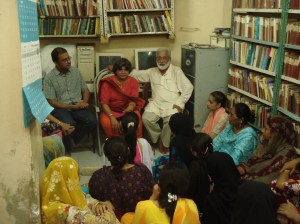
India's Kavita Srivastava meets Pakistan's Rajasthani women. Also pictured Haris Gazdar (left) and Karamat Ali. Photo: YPC

India’s Kavita Srivastava meets Pakistan’s Rajasthani women. Also pictured Haris Gazdar (left) and Karamat Ali. Photo: YPC

KARACHI, Jul 8 (IPS) – The months following last year’s Mumbai terror attacks have seen a renewed sense of urgency among peace activists in Pakistan and India. Citizens are pushing their governments to resume the composite dialogue process between the two nuclear-rival nations.

India suspended the process after the Mumbai attacks, accusing Islamabad of not doing “enough” to contain terrorism. But activists argue that terrorism is not Pakistan’s problem alone.

“Both countries are going through a critical phase,” says Jatin Desai, a veteran Mumbai-based journalist.

A frequent visitor to Pakistan, he was in the country with two other Indians, meeting community-based organisations, political leaders and media persons in Karachi, Lahore and Hyderabad to take the push for peace to the people. His proposal to ‘twin’ the press clubs of Karachi and Mumbai was positively received.

“After the Mumbai terror attacks, Mumbai residents sent a clear message – No to war, No to violence, No to terror,” said Desai. “Thousands joined hands for a hundred kilometre long ‘human chain for peace’ on Dec. 10, 2008, to say this and urge a resumption of the peace process.”
Zahida Hina and Jatin Desai at the seminar for Nirmala Didi. Photo: beena sarwar

Zahida Hina and Jatin Desai at the seminar for Nirmala Didi. Photo: beena sarwar

He was speaking at a seminar in Karachi to underline the need for peace in South Asia and to honour Nirmala Deshpande, a prominent peace lobbyist, who passed away in May 2008.

A majority of participants in the seminar were women from low income localities whose husbands work as daily wage labourers. Mumtaz, a young woman suckling her toddler, told IPS that this was the second such event she had attended.

“I understand what it’s about,” she said. “They want peace between India and Pakistan. We should live in peace with our neighbours. Maybe then our lot will improve. We all want that.”

Breakthroughs between India and Pakistan are routinely subverted by violence like the Mumbai attacks.

The security establishments and military machines also have vested interests in keeping tensions simmering.

“There will be no peace until the arms race ends,” said Mohammad Ali Shah of the Pakistan Fisherfolk Forum, representing a community severely impacted by the hostilities, with whom the Indian delegates spent an evening.

“There are currently over 500 Indian fishermen in Pakistani prisons, and over 150 Pakistani fishermen in Indian prisons,” Shah told IPS. “Fishermen on both sides caught violating the maritime borders are treated as prisoners of war.”

A consular access agreement of May 2008 – aimed at facilitating early release of prisoners – requires both sides to exchange updated lists of each other’s nationals in their custody every Jan. 1 and Jul. 1.

Pakistan handed over its list to the Indian government. “But India defaulted both times this year, and has been unable, for unspecified reasons, to provide Pakistan with a list of Pakistani prisoners in Indian jails,” reported The Hindu on Jul. 2.

The lists in any case are incomplete, with many prisoners unaccounted for.

Jaipur-based Kavita Srivastava of India’s People’s Union for Civil Liberties (PUCL), on her maiden visit to Pakistan, wanted information about five Indian prisoners incarcerated in Pakistani prisons since 1991.

“Only two are in touch with their families, we don’t even know if the other three are alive,” she told IPS. “When they heard that I got my visa, their families walked for a whole day to meet me. With tears in their eyes they begged me to bring any information I could.”

She was unable to ascertain their whereabouts but left with a promise from the provincial minister for prisons that “next time” she would be allowed to visit the prisons and verify for herself.

“Such visits are important to increase contacts. After all, we are one region. We should be able to meet,” Shakeel Silawat of the Youth Progressive Council told IPS, after arranging a visit for Srivastava with girls and women from his community. Silawats are Rajasthanis who often have families on both sides of the border.

“If there was dual citizenship for Indians and Pakistanis, believe me, many would take it,” asserts award-winning social activist Sandeep Pandey from Lucknow.

Pandey participated in the 2005 peace march from Delhi to Multan in the south of Pakistan’s Punjab province. The marchers had also received enthusiastic welcomes from Pakistani villagers along the way.

Karamat Ali from the Pakistan Peace Coalition which organised the visit said that the Indians left with “a sense of the urgency for peace with India which appears to be greater among Pakistanis”.

“They realise that they need to push the Indian government to change its attitude towards the elected government of Pakistan, go beyond pressurising the Pakistani government to ‘take action’, in order to break the grip of the establishment here,” he told IPS.

Such visits may not yield immediate results, but the fact that the governments allow them to take place is in itself a step, if not forward, then at least not backwards. And in the context of India and Pakistan, that can only be seen as positive.

(END/2009)

http://www.ipsnews.net/news.asp?idnews=47575

‘This wonderful Doc…’

NOTE: A slightly longer version of this article was published in ‘The News on Sunday’, July 5 2009 – http://tinyurl.com/tns-doc – also uploaded at This wonderful doc (2) at the Dr Sarwar website . The title is borrowed from Ali Jafari’s tribute posted at the Dr Sarwar site which also contains contributions by I.A. Rehman, Dr Badar Siddiqi, S.M. Naseem, Eric Rahim, Salima Hashmi, Drs Anwar and Abdullah Mangi and Dr Asif Ali Hameedi and others.

PERSONAL POLITICAL

Beena Sarwar

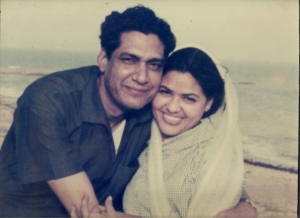
Newly weds circa 1962: Zakia and Sarwar at Karachi beach

Newly weds circa 1962: Zakia and Sarwar at Karachi beach

She is not the grave-visiting sort. A white-haired dynamo with luminous eyes she pioneered teacher training and teaching English as a second language in large classrooms with limited resources. The activism she brought with her from Pratapgarh in UP, India, to Pakistan in the late 1950s has remained, nurtured and encouraged by the life partner she found.

Zakia met Sarwar after moving to Karachi from Lahore in 1961. The unconventional, dashing, long-limbed Allahabad-born doctor was known as the ‘hero of the January movement’. He came to Karachi after Partition and joined Dow Medical College. There, he started Pakistan’s first student union, catalysing the first nation-wide inter-collegiate students’ body. When the government ignored their demands related to fees, lab and hostel facilities, the students held a ‘Demands Day’ procession on January 8, 1953. Confronted by armed police, Sarwar tried to stop the students from surging ahead. Police opened fire. Seven students died on that ‘Black Day’. Several, including Sarwar, were injured.

Sarwar and his even taller older brother Akhtar were jailed (Sarwar received his final MBBS results in 1954 while in prison for a year) during the crackdown on progressive forces, after Pakistan and America signed a military pact.

Akhtar’s sudden death (pneumonia) in 1958 at the peak of his career devastated his circle of progressive writers, poets, activists and journalists. Sarwar, who had been particularly close to Akhtar, insisted that everyone get on with their work and not sit around mourning.

Zakia’s older brother Zawwar Hasan was also close to Akhtar. They had played field hockey for rival college teams in Allahabad, re-connecting as sports journalists in Karachi. Some years later, when Zawwar’s young children were ill, Zakia would take them to Sarwar’s clinic nearby.

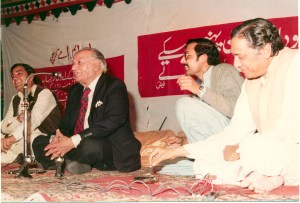
1983 mushaira at PMA House: Dr Badar Siddiqi, Faiz, Dr Tipu Sultan & Dr M. Sarwar (then General Secretary PMA)

Defying the dictatorship: 1983 mushaira at PMA House – Dr Badar Siddiqi, Faiz, Dr Tipu Sultan & Dr M. Sarwar (then General Secretary PMA)

Their romance included outings like seeing off the poet Faiz Ahmed Faiz to receive the Lenin Peace Prize. “As a comrade, his relationship with Abba was an unspoken clear bond based on a shared understanding of the universal struggle for a just human order,” says Salima Hashmi, Faiz’s daughter.

Sarwar and Zakia married in September 1962, overcoming parental apprehensions about religious differences (Shi’a, Sunni). Neither was religious. Akhtar would have approved, as Zawwar did.

As their eldest child, one of my earliest memories is Zakia and other college teachers on hunger strike, demanding an end to the exploitation of teachers. Sarwar supported her against the muttered disapproval (‘women from good families out on the streets’), as always, giving her the space to develop her potential.

He practiced as a general physician for nearly fifty years from a modest clinic in a low-income area, treating struggling workers, journalists, artists and writers free. He was contemptuous of doctors who charged high fees, prescribing costly tests and medicines where less expensive ones would do. He helped launch the Pakistan Medical Association and its affiliated Medical Gazette – platforms that have played a significant role in Pakistan’s progressive politics.

Diagnosed with cancer in August 2007 (‘stage four’, pancreas, metastasis to the lungs), he remained characteristically calm and good humoured. “Look,” he reasoned, “everyone has to die. If this is how I have to go, so be it.”

He refused to give up drinking or smoking, reminding us of friends who died early despite giving up such habits. When a cousin’s mother-in-law was diagnosed with lung cancer, he asked wryly, “And does she also smoke?”

He defied doctors’ predictions of ‘maybe six months…’. “To look into the eyes of  a killer disease, and yet not roll over is something that the bravest could envy,” wrote Zawwar in October last year.

Friends flocked to ‘Doc’, hosting parties at his home when he was too weak to go out. Emerging from anaesthesia after getting a blocked bile duct cleared this April, one of his first questions was about the Indian elections. At home, when his breathing became dangerously obstructed, doctors suggested suctioning out excess fluid in intensive care, with the risk of lung collapse and life support if the procedure failed. He waved his hand and pronounced, ‘No point, no point’.

He died peacefully in his sleep that night, half an hour after I kissed him goodnight. “Sleep well Babba,” I said.

“Goodnight,” he replied, clasping my hand back. “Go to sleep.”

Zakia now takes time out from her work to sit by his last resting place. It gives her peace.

This article was first published in HardNews, New Delhi – http://www.hardnewsmedia.com/2009/07/3060

1983 mushaira at PMA House: Dr Badar Siddiqi, Faiz, Dr Tipu Sultan & Dr M. Sarwar (then General Secretary PMA)

1983 mushaira at PMA House: Dr Badar Siddiqi, Faiz, Dr Tipu Sultan & Dr M. Sarwar (then General Secretary PMA)

`Pakistan: Chaos unto Order?’ and ‘syllabus of hate’

1. `Pakistan: Chaos unto Order?’ by Haris Gazdar in EPW (Economic & Political Weekly, June 6, 2009 vol XLIV no 23).

Extract: The Pakistani military finally appears to have embraced the war against jihadi militancy as its own. If so, an
important shift in perception and policy has taken place. Past experience, however, demands caution before coming to any hasty conclusions.
Comment by Shaheryar Azhar in the Forum: “this is an excellent article – cuts through the fog of confusion. Those who have denied it can perhaps now understand what the big deal was about the ‘deal’ bravely made by both parties –
PPP and General Musharraf, which is what put into motion where we are now. Million dollar question remains whether overtime there will remain the political will that will be crucially required on a sustained basis within the military, politicians and the general public to fight this to the bitter end?”

PakTeaHouse link: http://tinyurl.com/gazdar-epw

2. `Awaiting changes to a syllabus of hate’ by Nirupama Subramanian, Islamabad correspondent for The Hindu, June 09, 2009

Extract: In April, the federal Cabinet put off approving the draft indefinitely, …until the Education Ministry makes the policy “more comprehensive, covering every aspect of education sector which needs improvement along with an
implementable work plan.” But no urgency is visible in the Ministry to get cracking on this task. Another concern is that the Education Minister is not known for his progressive views, especially on gender issues.

http://tinyurl.com/syll-hate

Doc’s blog; Madrassas vs Pvt schools; Hoodbhoy on Pk; Cost of war and more

Condolences: Lourdes Joseph, longtime activist and office secretary of the Human Rights Commission of Pakistan (HRCP) passed away today in Dubai of a heart attack. Funeral on June 10, 4 pm, at St Anthony’s Church in Karachi; burial at ‘gora qabristan’ 5 pm.

1. New blog – www.drsarwar.wordpress.com – with photos and remembrances, including by I.A. Rehman, Salima Hashmi, Dr Badar Siddiqui, S.M. Naseem, Ali Jafari, Mohsin Tejani and others

2. The Madrasa Myth op-ed co-authored by Tahir Andrabi, Jishnu Das, C. Christine Fair, and Asim Ijaz Khwaja, published June 3, 2009 –  http://www.foreignpolicy.com

Extract: `Rather than focusing on madrasas and public schools, the donor community should take note of a striking change in the Pakistani educational landscape: the emergence of mainstream and affordable private schools.’

Note from Tahir Andrabi (Professor of Economics, Pomona College, Claremont, CA):
“Trying to inject some sense in the mainstream of the Washington policy debate on Pakistan. Would like for once to having facts as a basis for conversation on Pakistan”. (The other Pakistani co-author Asim Ijaz Khwaja teaches at Harvard Kennedy School). http://tinyurl.com/lxlbrs

3. `Whither Pakistan? A five-year forecast’ by Pervez Hoodbhoy in the Bulletin of Atomic Scientists, 3 June 2009. Article Highlights
• U.S. government officials and media outlets have exaggerated how close Pakistan is to collapse.
• That said, the speed of Pakistan’s societal decline has surprised many inside in the country who have long warned of the effects of religious extremism.
• The first step toward calming the situation–Pakistan’s political leadership and army must squarely face the extremist threat, something they’ve finally begun to do.
http://tinyurl.com/Pk-PH-5yr

4. The Women of Swat and `Mullah Radio’, Tuesday, 02 June 2009,
From a group of NWFP women, report published in http://khyberwatch.com
Extract: “Islam started as soon as we fled from Malakand. People outside Swat think we had Islam and Shariat. There is no Islam in Swat. The Taliban have finished it.’ -woman from Mingawera, Swat, in a Sawabai camp
Full report at – http://tinyurl.com/lrnvo4

5. HRCP report on the situation of the internally displaced, plus the Commission’s conclusions and recommendations at:  http://hrcpblog.wordpress.com
`A tragedy of errors and Cover-ups – The IDPs and outcome of military actions in FATA and Malakand Division’
The cost of the insurgency in the Malakand Division has been increased manifold by the shortsightedness and indecisiveness of the non-representative institutions and their policy of appeasing the militants and cohorting with them. While the ongoing military operation had become unavoidable, it was not adopted as a measure of the last resort. Further, the plight of the internally displaced people has been aggravated by lack of planning and coordination by the agencies concerned, and the methods of evacuation of towns/villages and the arrangements for the stranded people have left much to be desired….

Based on reports by HRCP activists in Malakand Division and other parts of NWFP/Pakhtunkhwa, visits to camps by its activists and senior board members, and talks with many displaced people and several Nazims and public figures
Direct link to report – http://tinyurl.com/mpy7et

6. From Isa Daudpota: Bill Moyers sits down with award-winning investigative journalist Jeremy Scahill to examine the human and financial costs of America’s wars.
http://www.pbs.org/moyers/journal/06052009/watch.html
Plus a new website he suggests checking out: www.whowhatwhy.com

Celebrating Dr Sarwar

A few days before he passed on, I had a visual image of Dr Sarwar being welcomed by many of his close friends who had passed on earlier – Faiz Ahmed Faiz, Ahmad Faraz, Habib Jalib, Suroor Barabankvi, his brother Akhtar… There are of course so many others. One thing is for sure – they’re together and they’re having a party.

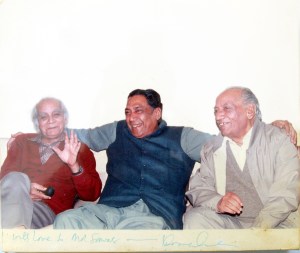
Dr Sarwar with his friends Syed Sibte Hasan and Faiz Ahmed Faiz.    Photo by Dr Haroon Ahmed

Dr Sarwar with his friends Syed Sibte Hasan and Faiz Ahmed Faiz. Photo by Dr Haroon Ahmed

We had our own party here in Karachi on May 31 – Pakistan Medical Association held a reference at PMA House for Dr Sarwar titled ‘Celebrating Dr Sarwar’. The event was initiated by his old friend Iqbal Alavi of Irtiqa, who had been one of his jailmates in 1953.

Some 200 people attended. Doc would have enjoyed the gathering, and the music (his favourite jugalbandi by Ustad Bismillah Khan and Ustab Vilayat Khan), the photos (we put together a slide show), the videos (including a clip from the last interview he did, the week before being admitted to hospital and a few clips from a discussion with Dr Yusuf Ali & Dr Ghalib in London I’d recorded in 2001), the tributes and the resolve to move ahead and continue the struggle.

Mairaj Mohammed Khan, Fakhruddin G. Ebrahim, Salima Hashmi, Dr Badar Siddiqui, Dr Tipu Sultan and others spoke very movingly and from the heart. Tina Sani sang a Faiz poem she had composed, and Arshad Mahmud recited a couple of other Faiz poems for Doc. Aisha Gazdar video taped the event and so did Samaa TV. His Zakia Sarwar also spoke towards the end, very bravely, on what he had meant to her.

Links to a couple of reports about the event:

Progressive student leader remembered – http://tinyurl.com/sarwar-pma-dawn

‘Time to create a left-oriented think tank’ – http://tinyurl.com/sarwar-pma-news

And some earlier reports
In memory of Dr Mohammad Sarwar, The News, May 27, 2009
By Shahid Husain – http://tinyurl.com/sarwar-news

Ahmed Reza, BBC Urdu, 26 may, 2009
http://tinyurl.com/sarwar-bbc

Student politics pioneer Dr M Sarwar passes on, Tuesday, 26 May, 2009
http://tinyurl.com/sarwar-dawn