Film screenings byAnand Patwardhanin Cambridge MA TODAY and tomorrow. My documentary at Tufts on Wednesday. The sublime musical play ‘Madho’ at Wellesley next weekend. The latest Sapan Alliance newsletter has more events and info about other events, including in Colombo. Scroll below for my conversation with Mayank Chhaya on the Sri Lanka elections, plus pix from ‘Democracy in Debt’ Global Community Screenings – some 40 events in 14 countries across 5 continents – and my notes on recent Sapan News features.
I meant to share this when it was first published on Sapan News recently, my article co-authored with Dr Serena Hussain and Vishal Sharma, but was caught up with the Colombo screening of my Sri Lanka documentary. Thought I’d post now – the piece is still relevant especially given a recent article in an influential foreign policy magazine debunking the idea of Southasia
Images from various SAARC summits sourced from copyright-free photos. Collage by Pragayan Srivastava
Why the regimes ushered in through the democratic political process need to collaborate for a better future for the peoples of the region
By Dr Serena Hussain, Vishal Sharma and Beena Sarwar
The recent elections in Britain, France, and India are a reminder of the power of the people – and also of the importance of regional cooperation.
Pakistani PM Benazir Bhutto with her Indian counterpart Rajiv Gandhi at 1988 SAARC Summit in Islamabad. Source: Dawn
The Indian elections were the third electoral exercise in South Asia this year, after Bangladesh in January and Pakistan in February. Sri Lanka is also required to hold presidential elections before October.
As part of the democratic political process, elections determine the leadership that will shape not only a nation’s destiny, but also in closely connected regions.
The governments may choose to be isolationist, or follow the will of foreign powers, or cooperate and collaborate with neighbouring nations. Can and will South Asia’s regimes cooperate to promote regional peace, prosperity and progress as they have done in previous decades such as, during the 1950s, 1980s, and 2000s?
Such collaboration is essential for the sake of the peoples of the region.
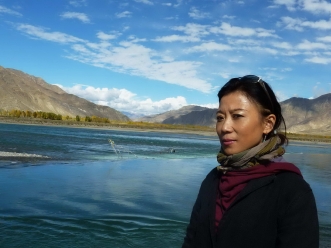
“Allow Woeser the freedom to express and to travel”: Prominent Asian intellectuals appeal for Tsering Woeser
Chinese authorities have not only prevented the Tibetan writer and historian Tsering Woeser from receiving the prestigious Prince Claus Award for 2011 in Beijing (being awarded by the Dutch Ambassador to China) but her movements within Beijing have been restricted, says a statement issued from Kathmandu by Prince Claus laureates Arif Hasan (Karachi, Pakistan), Ganesh Devy (Vadodara, India), Jyotindra Jain (New Delhi, India), Kanak Mani Dixit (Kathmandu, Nepal) and Mehrdad Oskouei (Tehran, Iran).Continue reading →




 Journeys to democracy