Suicide Democrats

http://thenews.jang.com.pk/print1.asp?id=165518

Op-ed, The News Wednesday, March 04, 2009

Suicide Democrats

Raza Rumi

I am appalled by the recent events that have yet again stirred instability and uncertainty into Pakistani politics. Those of us who voted in last year’s elections expected that the political leaders and Pakistan’s political elites would learn a lesson from our unfortunate history.

We also expected the lawyers’ movement, headed by men of extraordinary calibre, to display sagacity and vision and contribute to the consolidation of a democratic culture. However, what we witnessed was a complete rejection of the Feb 18 polls by the leading lights of the movement, and a few other naïve political actors. When the electorate voted in large numbers and returned the two mainstream political parties to the parliament, the lawyers, instead of accepting that they were wrong to boycott elections, insisted on their narrow and bourgeois interpretation of the term “rule of law.”

Sadly, law, rights and constitutionalism are personalised through the idolisation of the deposed chief justice, as if Pakistan were still a mediaeval kingdom, where the bad King (Musharraf) had to be overthrown, and the good Qazi (Justice Iftikhar) had to be “restored” and vested with all moral, political, executive, military and judicial powers.

The rightwing media has further whipped this game and brought the popular and well-meaning Sharif in direct confrontation with the federal government on this single issue. President Zardari, whom we all hoped had learned his lessons from jail, endless court trials and exile, would act with vision and leadership. Similarly, the Supreme Court, led by Justice Dogar, might have gone an extra mile to prove its neutrality. Alas, how wrong we were!

It is amazing that the long marches, threats of violence and agitation, and questionable imposition of the governor’s rule in the largest province of the country are taking place at a time when the Taliban are capturing one district after another. The media and civil society, instead of bringing down the creaky edifice of democracy, should be pressurising political leaders to act with maturity and not wrangle.

Given the hysteria of the last few days, since the disqualification of the Sharif brothers, the media is portraying the situation as one with no solution. Enemies of democracy, the traditional forces that have always sabotaged civilian rule, are smiling at this imbroglio. There is no paucity of solutions: there are legal and constitutional means whereby the legislature can amend the Constitution on the eligibility of politicians to contest elections and hold offices. A review petition can always be filed that could look at the questions of law pertaining to this matter. Similarly, the promulgation of another NRO is not beyond the realm of the possible. Politics is about bargains and adjustments to strengthen the representative system, rather than bringing it down at every inconvenient juncture.

The PPP must take the initiative to avoid further fissures in the tenuous federation called Pakistan. The current posturing and gung-ho behaviour of the PPP’s Punjab leaders need to be arrested by the central leadership. The PML-N and, in particular, its Quaid, Mian Nawaz Sharif, should also rise above the rhetoric of the 1990s and display flexibility that is essential to a functional democracy. The PML-N has little support in the three smaller provinces of Pakistan and its current rhetoric and thundering against President Zardari, who represents the smaller federating units, is not a good omen. A group of political activists torched the memorial of Benazir Bhutto in Rawalpindi, and there have been strong reactions across the country, especially in Sindh. Why blame the bomb blasts at funerals and mosques when such is the prevalent culture of protest.

If the deposed chief justice has to be restored then the matter must be brought before the parliament and solved through constitutional means. One cannot play the politics of constitutionalism and find solutions in executive orders. If Mr Sharif will lead an agitation with the lawyers who are now placed on the other side of the democratic divide, he will not only engineer the fall of the central government, and the PPP, but will also sign the deed of death for the future of democratic politics in Pakistan.

Over fifty deposed judges have taken fresh oaths under the policy of the sitting government. When the incumbent judiciary is trampled and defamed, the detractors forget that it includes all those judges who resisted Musharraf’s emergency. Once an individual is restored to the top slot, will it become legitimate overnight or the incumbent judges would be fired for being part of the “naqli” judiciary?

The civic activism since 2007 was a harbinger of change in Pakistan. The lawyers’ movement is de-legitimising democracy and political parties (including the largest and perhaps the only national party). One may ask whose purpose is being served here. Is it not what the leaders of the Taliban and other extremist groups maintain about democracy by calling it “kufr”?

The establishment and its proxies must not win this game. At present it seems that both the mainstream political parties and their obstinate leaders are bound to create a situation similar to 1958, 1977 and 1999. However, this time the cost of unrest and confrontation will be detrimental to our future. The vicious cycle, emanating from our inability to handle political squabbles, will this time give way to erosion of democratic space won today with sacrifices, toils and struggles.

The writer blogs at razarumi.com and edits two e-zines: Pak Tea House and Lahore Nama. Email: razarumi@gmail.com

SOUTH ASIA: Terrorists Aim for Destabilisation, Media Attention

SOUTH ASIA: Terrorists Aim for Destabilisation, Media Attention

Analysis by Beena Sarwar

KARACHI, Mar 4 (IPS) – South Asia seems to be caught in a vortex of violence as the countries that form this region – from Sri Lanka at the southern-most tip, Bangladesh to the east, Nepal crowning the north, Pakistan along the west and India in the middle – deal with internal nightmares that their governments routinely blame on neighbours.

Tuesday’s armed attack on the Sri Lankan cricket team in the historic city of Lahore in Pakistan has sent shockwaves through a country already racked by regular suicide and other attacks.

Eight Pakistani policemen died and several were injured saving the Sri Lankan cricketers, six of whom were wounded in the attack.

At the other end of the sub-continent, Bangladesh is still reeling from the shock of a border guards’ mutiny over pay and working conditions, resulting in soldiers massacring over 70 officers, including some of their wives.

Some analysts fear that the horrific incident might elicit copycat responses elsewhere too, where soldiers are unhappy with the tasks they are made to do.

Meanwhile, India has yet to recover from the horror of the attacks in Mumbai that claimed some 180 lives. New Delhi had, as a direct result of the attacks, called off participation of the Indian cricket team in the Pakistan tests.

Sri Lanka, in the last stages of a heavy-handed army operation against the Tamil separatists who have been fighting a guerrilla war against the state for over two decades, could hardly have imagined that its cricket team would come under fire in Pakistan, a friendly country.

Still, as the Sri Lankans told journalists after the Lahore attack, they had come here “well aware of the risks”.

Analysts point out that Tamil separatists are unlikely to be responsible for the attack, given the back foot that they are operating from.

The Sri Lankan team, in Lahore for a five-day test match where they already played for the first two days, were en route from their hotel to the stadium early in the morning on Mar. 3 when the gunmen attacked.

The firing reportedly began from three directions as the van slowed down near a roundabout close to the red-brick cricket stadium. Shaky television footage showed men with guns and backpacks taking position and firing. Their first target was the police escort.

According to the van driver, one of them flung a hand grenade which rolled under the van without damaging it. He said that the cricketers flung themselves to the floor of the van as he accelerated to escape the gunfire, managing to get the bullet-riddled van with the cricketers to the stadium.

There is universal condemnation for an act which many believe is an attempt to further discredit and isolate Pakistan. Many are praying for the quick recovery of the injured cricketers who were airlifted to Sri Lanka.

“They were our guests, they came to Pakistan when most people were not willing to come,” one man in Peshawar told a television journalist.

“We are a friendly and cricket-loving nation,” said another passer-by. “Now no cricket team will want to play here.”

The incident has more or less put paid to Pakistan’s aspirations of hosting the next World Cup in 2011, say observers.

The attackers struck at a sport that is hugely popular across South Asia, a quick throwback to a common colonial past (for all the countries except Nepal which was never under British rule), a legacy that includes the English language, administrative systems and railways.

In normal times, India and Pakistan’s cricket teams on the wicket pitch elicit responses akin to surrogate battlefields. A Pakistan-India game is referred to in parts of India as ‘Qayamat’ (doomsday).

Despite the keen rivalry, love of the sport is a unifier. ‘Cricket diplomacy’ has featured among the permissible people-to-people contacts that have grown immensely over the past decade or so.

“Cricket is not the bone of discord between the two countries,” Gul Hameed Bhatti, group editor sports of the country’s largest media group, Jang told IPS. “Basically the problem is the tensions between both countries, and cricket becomes the casualty. This incident has thrown cricket and other sports back into the dark ages. I don’t see anyone agreeing to come and play here now.”

Bhatti added that he had long “feared that this was a disaster waiting to happen because the situation in the rest of the country is so volatile. It was unrealistic to think that sportsmen could remain isolated from it’’.

Nor, say analysts, can other areas of society, like culture. In early November, explosions on the penultimate night of a major international performing arts festival in Lahore caused panic. There were no casualties although some people sustained minor injuries. Artists, foreign and local, defiantly rallied around to make the festival’s last day a resounding success.

Ironically, the festival was held in the cultural complex next to the Gaddafi cricket stadium where the Sri Lankans were headed when they were attacked.

Most people, said Bhatti, “had become complacent, thinking they would never target sportsmen.”

They included Pakistani cricket hero turned politician Imran Khan who shortly after the Mumbai attacks categorically told an Indian newspaper, “There is no problem about the security of cricketers in Pakistan. The terrorists will never target cricketers knowing that they will then lose the battle of hearts and minds of the people. Cricketers are safe in Pakistan.”

The audacious attack in an upmarket Lahore locality is now being compared to the Mumbai attacks, where ten gunmen targeted symbols of national strength. Police are saying that about a dozen gunmen were involved in the Lahore attacks.

Cricket is an area where Pakistan has traditionally shone as a global power with a huge fan following around the world.

Security fears have, however, massively dented enjoyment of the sport as many foreign teams have over the past years cancelled tours, including India after the Mumbai attacks that similarly cast a shadow over ‘India shining’, raising doubts about internal security.

Pakistan, already beset by multiple political problems, has for some time been facing a deadly threat from the ‘jehadi’ forces – regional players like the Taliban (from Afghanistan and Pakistan), the international al-Qaeda, and local militant outfits like the banned Laskhar-e-Tayyaba and the Jaish-e-Mohammed, many of whom with roots in the southern Punjab and links to Pakistan’s intelligence agencies that nurtured them during the Afghan war of the 1980s.

Following the events of 9/11, these forces have converged, to emerge as a greater threat than ever before, not just for Pakistan, but for world peace, say analysts.

Their agenda is not just to enforce what they consider to be an Islamic system, but to overrun and destabilise the state itself. Pakistanis have suffered heavily under this agenda, paying a heavy price for the policies of military rulers – who have run the country for more than half its 60 years of existence – that civilian governments have been unable to change.

These policies include cultivating ‘Islamic warriors’ to fight against the Soviet occupation in Afghanistan during the 1980s, supporting the Taliban in order to create ‘strategic depth’ in Afghanistan (citing the threat of a hostile India on the eastern border), and using some of these elements to bleed India in the disputed region of Kashmir.

No elected government in Pakistan has ever completed its tenure. They are routinely overthrown either by the army or dismissed by various Presidents using the powers invested in that office by the military dictator Gen. Ziaul Haq who also got himself appointed as President.

The current elected government, say analysts, is the first that is actually serious about fighting the jehadi threat which it recognises as endangering the country’s very existence. “But it appears that various elements within the establishment are still bogged down in the old policies and are unwilling to give democracy a chance,” said an observer.

Just as enraged Indians had “jumped on the blame Pakistan bandwagon” immediately following the Mumbai attacks of November, “some here are now blaming the Indian hand,” says Bhatti.

Many see the attack on the Sri Lankan team as an attempt to take ‘revenge’ for Mumbai and an attempt to isolate Pakistan internationally.

Lt. Gen. (retd.) Hameed Gul, former head of Pakistan’s shadowy Inter Services Intelligence (ISI) and a known hawk, was on television saying that “India wants to declare Pakistan a terrorist state”. The attack on the Sri Lankan team, he declared, “is related to that conspiracy.”

The Pakistan government itself has been more circumspect as have other analysts, including retired army officers like Maj. Gen. (retd) Jamshed Ayaz Khan who cautioned against such accusations “without a full investigation”.

The Sri Lankan government’s response has been conciliatory. “Pakistan’s cricket team was willing to visit our country when others weren’t because of security worries,” said Palitha T.B. Kohona, Sri Lanka’s foreign secretary, “and his government was pleased to reciprocate. The game must not be affected by a lunatic fringe”.

Ironically, media proliferation, particularly the 24/7 television news channels, has increased the intensity and probability of such dramatic high-profile attacks, say analysts. Terrorism thrives in the media spotlight which terrorists successfully attracted in Mumbai last November and now with the Lahore attack.

Ultimately, those who suffer the most after such incidents are ordinary people in India and Pakistan, say observers. The Lahore attack is bound to generate further tension between the two countries which have still not resumed the composite dialogue process stalled after the Mumbai attacks in November.

Rather than cooperating to solve a common problem, India and Pakistan remain prisoners of their hostile pasts. The ultimate winners in this game, note analysts, will only be the terrorists whose aim is destablisation and creation of tension around the world.

(END/2009)

POLITICS-PAKISTAN: Court Ruling May Deepen Political Crisis

http://www.ipsnews.net/news.asp?idnews=45893

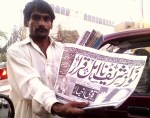
"Nawaz Sharif disqualified" reads the headline

Analysis by Beena Sarwar

KARACHI, Feb 26 (IPS) – The political chasm in crisis-riddled Pakistan has deepened after a Supreme Court ruling barred from political office opposition leader Nawaz Sharif and his younger brother Shahbaz Sharif, chief minister of Punjab – the country’s most populous and powerful province.

The Sharifs’ Pakistan Muslim League – Nawaz (PML-N) party had joined hands with President Asif Ali Zardari’s Pakistan People’s Party (PPP) to defeat political parties supporting former president Pervez Musharraf in elections last February, and force his resignation six months later.

But the alliance between Pakistan’s two main political parties fell apart, mainly over the restoration to office of chief justice Iftikhar Mohammed Choudhry – whose dismissal by Musharraf in 2007 sparked unrest led by the legal fraternity.

“The move [Wednesday’s apex court ruling] plunges Pakistan back into familiar territory,” said PML-N parliamentarian Ayaz Amir, talking to IPS on the phone from the capital Islamabad. “Another crisis, another round of turbulence… We seem to be cursed with the Chinese saying, ‘may you live in interesting times’.”

For most, the Supreme Court ruling – which upheld a lower court verdict, last June, that made Nawaz Sharif ineligible to stand for elections on airplane hijacking charges – has come “like a bolt from the blue,” as Asha’ar Rehman, resident editor of the daily ‘Dawn’ in Lahore put it.

“The political repercussions will be horrific. We were hoping they would show some maturity and let a reconciliation happen,” added Rehman, talking to IPS from Lahore, capital of the Punjab and the stronghold of the Sharifs.

Iqbal Haider, advocate and chairman of the independent Human Rights Commission of Pakistan, termed the decision as being “against democracy, not against the Sharif brothers’’.

In a no-holds barred press conference at his Lahore residence, shortly after the court ruling, a belligerent Nawaz Sharif said he had no problems with the PPP, but held the party head, Zardari, directly responsible for the contentious judgement.

Sharif, a former prime minister, also accused Zardari of offering a “business deal” to Shahbaz Sharif, asking him to support the government in extending the tenure of the current chief justice in return for which the court would provide the brothers with relief.

Presidential spokesman Farhatullah Babar dismissed these charges as a knee-jerk response. “The allegations that PML-N chief has levelled against President Zardari are far from reality and are based on ill intention,” he told a press conference in Islamabad later that evening.

Information Minister Sherry Rehman called for examining the court ruling dispassionately while admitting it had created a problem for the government in its efforts for reconciliation.

Many PPP parliamentarians, although unhappy about the decision, say there is unfortunately nothing the party can do in this regard.

The ruling is seen a “technical knockout” for the Sharif brothers who now also stand barred from contesting elections.

“More than anything, it undermines the democratic legitimacy of the government,” political analyst and economist Asad Sayeed told IPS. “Nawaz Sharif is a popular political leader. This decision will push him to the wall and perhaps further towards the religious parties.”

Within hours, President Asif Ali Zardari imposed direct central rule in the Punjab for two months. Defending the decision, a PPP spokesperson cited potential “anarchy” as angry activists took to the streets after Sharif in a press conference exhorted people to come out in protest.

The government wisely refrained from using police force to prevent the protests, as angry activists in various cities burned tyres, blocked traffic, and attacked property. In Rawalpindi, some even destroyed posters of former prime minister Benazir Bhutto and damaged the memorial at the public park where she was assassinated on Dec. 27, 2008.

‘Religious militants’ are widely believed to be behind her murder, barely two weeks before the scheduled polls which Bhutto had convinced her former rival Nawaz Sharif to contest, instead of boycotting them as he was planning to do.

Both twice-elected and twice-removed prime ministers had then returned from several years of exile abroad. During this time, army chief Pervez Musharraf headed Pakistan, after ousting Nawaz Sharif from the prime ministership in 1999.

Sharif had tried to replace the army chief and prevent the civilian flight bearing Musharraf back from an official visit to Sri Lanka, from landing in Pakistan. This was the ‘hijacking’ case for which Sharif was convicted, grounds now for his disqualification from public office or contesting elections.

Bhutto’s return to politics in Pakistan in October 2007 was widely seen as part of a ‘deal’ brokered by Washington to restore civilian rule in Pakistan in order to better handle the ‘war on terror’ – for which policy makers were by now prescribing a political rather than a military solution.

The widespread secular movement led by lawyers to restore chief justice Choudhry had also presented the possibility of progressive political change in Pakistan.

After the general elections of Feb. 18, 2008, the PPP and PML-N had agreed to form government as well as to restore the judges whom Musharraf had removed when he imposed emergency rule on Nov. 3, 2007.

“What people forget about the agreement was that it was also about government formation – the other two clauses were how the federal and the provincial governments were going to be formed,” said Asad Sayeed.

“Nawaz Sharif insisted on the judges’ restoration in order to undermine the PPP. They could not have moved towards forming government if Zardari had not agreed on this clause because Sharif was not willing to talk about it.”

Sharif continued to push for the restoration of chief justice Iftikhar Mohammed Choudhry. Most of the other judges ousted after Musharraf’s November 2007 emergency have since been reinstated after taking fresh oath of office.

The country was bracing for a lawyers’ ‘long march’ to restore Choudhry, scheduled to kick off on Mar. 12 and ending with a sit-in or ‘dharna’ in Islamabad. The PML-N has enthusiastically supported the move.

Ayaz Amir, who has warned against making the restoration of Choudhry the “be all and end all” of politics, told IPS he felt his PML-N party had “stuck its horns too much into this one issue”.

The planned long march, Amir predicted, ”will get more momentum now, but it won’t restore the judges. There will be more instability and tumult, with politicians being further discredited in the public eye”.

More ominously, widespread unrest could also leave the army with “no choice” but to step in – something it is, at this point, clearly reluctant to do.

Amir hopes it will not come to that. “We’re not at that point yet. We have to wait and see what happens when the situation plays itself out.”

Bitter political acrimony is not new in Pakistan. However, so far both the PPP and PML-N have kept their main shared goal before them -to keep the army out of politics and let the political process continue. Observers hope that this long view will prevail.