Pervez Hoodbhoy strikes back; More on the NRO ruling

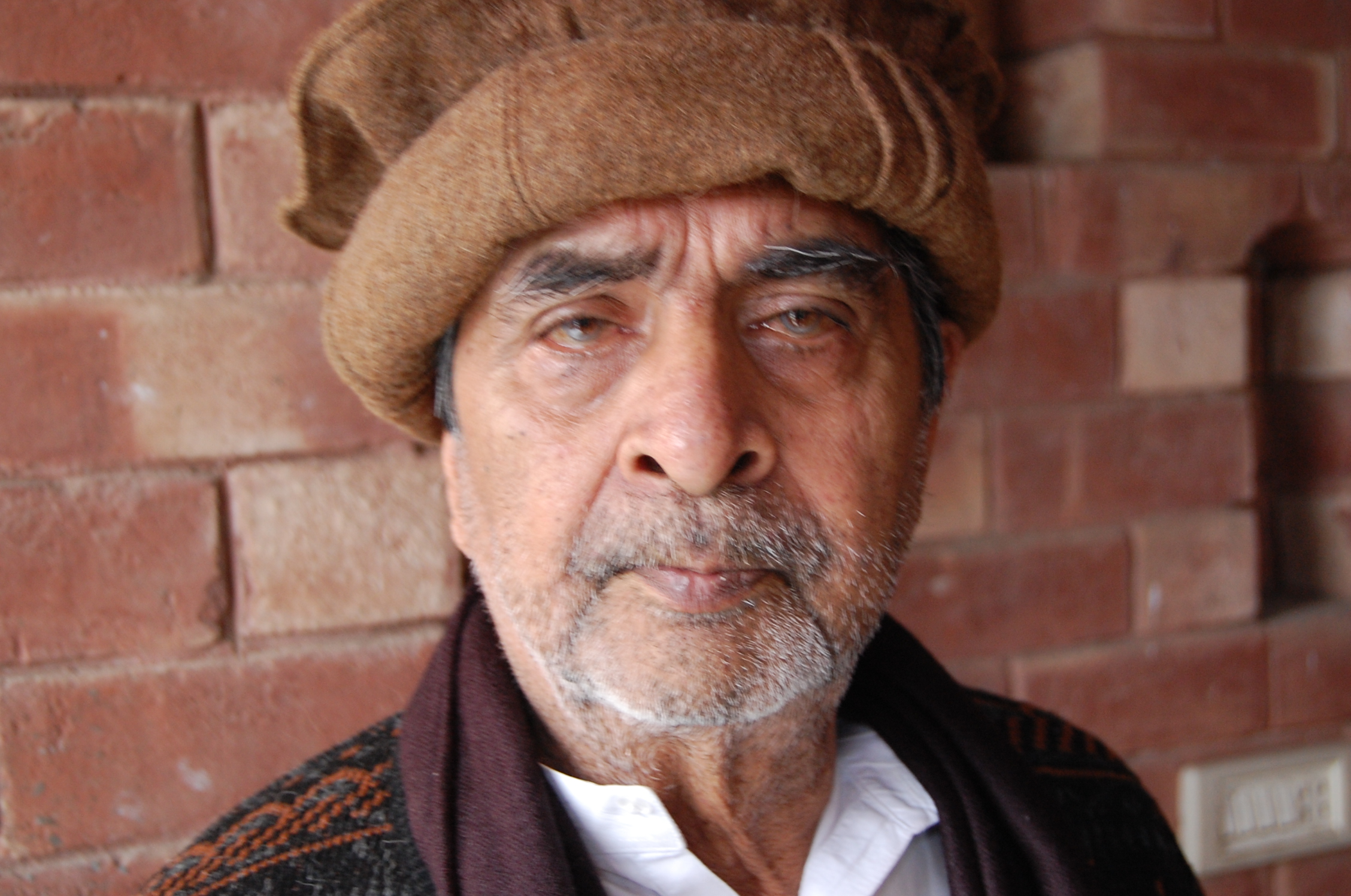
More on the NRO ruling below – but this response by Pervez Hoodbhoy to the scurrilous attack on him by an expat professor deserves mention (he doesn’t usually respond to personal attacks),  published originally in Counterpunch on Dec 14 (later on Chowk on Dec 18) and is worth a read: “Is The Cheque In The Mail? – The Confessions of a Pakistani Native Orientalist”

Below, more about the NRO short order and its implications, including the emphasis on morality and acceptance of the “Islamic provisions” of the Constitution:
1. Two comments on Dec 19 by Asma Jahangir on the NRO ruling, one in a BBC Urdu interview, and “Another aspect of the judgment” oped in Dawn – Extract: “Witch-hunts, rather than the impartial administration of justice, will keep the public amused. The norms of justice will be judged by the level of humiliation meted out to the wrongdoers, rather than strengthening institutions capable of protecting the rights of the people.”

2. Aasim Sajjad Akhtar argues against simplifying the NRO ruling in ‘After the verdict’ (The News on Sunday, Dec 20): “…the structures that produce one bad apple after another need to be interrogated and eventually replaced. There can be no shortcut to justice, and the ‘rule of law’ brigade would do well to bear this in mind.”

3. ‘Legal, moral, political‘ – in this oped (Dawn, Dec 20) Asha’ar Rehman points out some inherent ironies and contradictions, eg “If the legal, political and moral must mingle, how can a lawyer, hailed as the author of the constitution, allow himself to defend a dictator who held the document in abeyance, and also defend his referendum — and then, a few years later, contest an ordinance fashioned by the same dictator?”

4. Letter to Chief Justice Ifitkhar Chaudhury from Bilal Qureshi at Foreign Policy Blogs, December 18, 2009, in which he calls upon the CJ to:

Continue reading

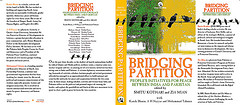
‘Bridging Partition: People’s Initiatives for Peace between India and Pakistan’

Cover art: K.B. Abro; design: Bindia Thapar

JUST PUBLISHED

BRIDGING PARTITION: People’s Intitiatives for Peace Between India and Pakistan

Edited by SMITU KOTHARI and ZIA MIAN

With Kamla Bhasin, A H Nayyar and Mohammad Tahseen
Essays by Shehryar Ahmad, Karamat Ali, Sumanta Banerjee, Kamla Bhasin, Nirupama Dutt, Madeeha Gauhar, Mubashir Hasan, Pervez Hoodboy, Asma Jehangir, Sheema Kirmani, Sanat Mohanty, Kuldip Nayar, Sandeep Pandey, Narendra Panjwani, Anand Patwardhan, Balraj Puri, Laxminarayan Ramdas, Lalita Ramdas, I A Rehman, Beena Sarwar, Jamila Verghese, Achin Vanaik

“Over the past three decades, in the shadow of hostile nationalisms fuelled by radical Islamic and Hindu politics, military crises, a runaway arms race, nuclear weapons and war, an amazing set of civil society initiatives has been taking root in India and Pakistan. A citizens diplomacy movement embracing thousands of activists, scholars, business people and retired government officials has emerged in an unprecedented effort to build national and cross-border networks for peace and cooperation between the two countries.

“In these essays, leading scholars, activists and writers from India and Pakistan reflect on the political and personal impact of crossing the border, and explore the possibilities and limits of this new movement in its quest to chart a path to peace between the two countries.”

Cover design Bindia Thapar
Cover art 60 Years of India Pakistan by K. B. Abro

Published by Orient BlackSwan India

NRO ruling and its fallout

There must and should be accountability, but selective accountability, and cases filed motivated by political victimisation do not serve the cause of justice.

Text messages doing the rounds include the following questions:
– NRO is unconstitutional but the Oct 1999 military coup was constitutional because Supreme Court approved it, and so was the LFO (legal framework order) of 2002?
– The murder of Zulfiqar Ali Bhutto was constitutional because SC approved it?
Hudood Ordinances & 8th Amendment were constitutional?
Provisional Constitution Order (PCO) on which the current CJ took oath was constitutional?
– No larger bench discussed violation of Article 6 of Mehran Bank scandal (in which ISI allegedly gave funds to IJI for the 1990 elections).
– Why has there been no judicial inquiry into Rs 94 billion Mulk Sanwaro Qarz Utaro scheme?

(Re Mehran Bank case – see Foqia Sadiq Khan’s article in TNS in Sept 2009, ‘Far from over’)

Also doing the rounds is a clip of Benazir Bhutto on Youtube, on the Supreme Court and NRO, talking about political victimisation

The Sindh Assembly passed a unanimous resolution in support of Zardari – and Prime Minister Yusuf Raza Gillani just told the Punjab media they are ‘playing to the gallery’…

Ayesha Siddiqa in Dawn today, ‘After the NRO‘ points out that the ruling has weakened the civilian government in relation to the army, a point also made by the senior analyst C. Raja Mohan, in Indian Express, ‘Pakistan: Zardari falls, Kayani rises‘ in which he writes:

Lahore’s lawyers have surely won the point on the illegality of the Musharraf-Bhutto deal, which gave special protection to Benazir and her husband from the many previous charges of corruption. But they might be losing the larger struggle for establishing the civilian primacy over the military in Pakistan, as the nation’s latest experiment with democracy begins to unravel.

(ends)

‘Students who set the tone’


Thanks to Zubeida Mustafa for her well-researched and timely article in Dawn today Students who set the tone. Just a small clarification re the comment that “Most of the founders gave up their activism — as daughter Beena confirms for Dr Sarwar”. This is only partly true. These students did not become “professional student activists” or go into active politics. As Zubeida Mustafa notes, many of them did carry on their work in other ways. Speaking of Dr Sarwar – besides supporting progressive causes in whatever way he could, he was involved with the professional body of doctors, the Pakistan Medical Association (PMA), was a member of the PMA delegation to then East Pakistan, wrote regularly for the Pakistan Medical Gazette (that he and other colleagues founded, at a meeting in Quetta), was twice elected PMA Secretary General and worked for a health policy along with his colleagues during the Zia years – a time when PMA was a significant platform for dissent against military rule (see Dr Badar Siddiqi’s citation) at the May 31st meeting at PMA House.

Details of the Jan 9, 2010 event mentioned in Zubeida Mustafa’s article are available the Dr Sarwar blog as well as at the Facebook Event. We particularly invite young people and students to attend the event in order learn about this little-known part of our history, at a time when student unions have been restored in principle.

‘Under the rubble’ – democracy

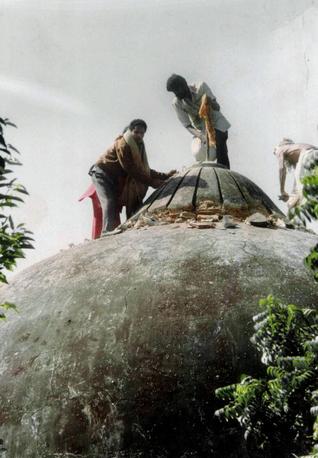
Extract from former Indian civil servant Harsh Mander’s recent article in The Hindu (he left government service after the 2002 communal riots in Gujarat), ‘Under the rubble’

Under the rubble of the fallen mosque lay the idea of India itself.

But in the end, ordinary people of India – Hindu, Muslim and of other faiths – voted resolutely against the politics of hate and division, in general elections of 2004 and 2009. The most passionate votaries of the temple movement admit that it has today lost the power to mobilise voters any longer.

It is impoverished people of India who have picked the pieces of the idea of India from under the rubble of the medieval mosque razed by frenzied mobs in 1992. It is they who have reclaimed once again the inclusive pluralist traditions of this ancient teeming diverse land.

Bottom line: let democratic politics and the cycle of elections prevail, no matter how messy it seems. It will take a long time, but it will sort out. And it will is a continuing process.

A Peace Convention and the wisdom of Ali Nawaz

Article posted to my yahoogroup in June 2002  – the Rs 4000 minimum that Ali Nawaz from Balochistan talked about now would be more like Rs 10,000 (right, economists?). Although little has changed for him and people like him, the ‘Balochistan package’ and the historic NFC award agreed upon on Dec 11 at least offer some hope in terms of more equitable resource distribution and opportunities. This is the difference between dictatorship (no matter how mild) and democracy (no matter how messed up)

The News on Sunday, Jun 16, 2002

A Peace Convention and the wisdom of Ali Nawaz

by Beena Sarwar

Ali Nawaz works at a motorcycle factory at Hub Chowki in Balochistan, near Somiani, the sun-baked coastal area from where Pakistan recently test-fired the nuclear-capable Abdali missile as a warning to a war-ready India. From here, it takes over two hours to get to Karachi, driving east along the coast of the Arabian Sea. On Saturday June 8, along with some two dozen of his fellow workers, Nawaz made this journey using the factory van headed to the noise and rush of Saddar in the heart of Karachi.

The motorcycle workers are not interested in the bazaar; besides the fact that they can’t afford the goods on sale, there are more important things on their mind — like the Peace Convention organized at the Karachi Press Club by the Pakistan India People’s Forum for Peace and Democracy (PIPFPD) and the National Trade Union Federation of Pakistan.

As many as twenty five out of the forty one workers at Nawaz’s factory attended the Convention of their own accord. Why? Continue reading

Two invitations (Jamal Naqvi, Hamza Alavi events) and some uploads

Armed police confronting unarmed students (Students' Herald, Jan 19 1953)

New uploads & pix at Dr Sarwar blog
* Those killed on Jan 7 & 8, 1953 – martyrs’ to the students’ cause
* Article by Saghir Ahmed, High School Students Federation (Students Herald ’53)
* Article by Shahid Husain on the student movement, Editor’s Choice in PKonweb.com

INVITATIONS

An evening with PROF. JAMAL NAQVI
“Defend and Strengthen Democracy”

Fri, Dec 11, 2009, 4:00 p.m., Karachi Press Club
Contact: Nasir Arain, Ph: 0300 8200718

8th Annual HAMZA ALAVI Distinguished Memorial Lecture, “Pakistan and the Nature of the State: Revisionism, Jihad and Governance” by Khaled Ahmed, Consulting Editor, The Friday Times, Lahore.
Wed, Dec 16, 2009, at 5 pm, Jinnah Medical College, Shaheed Millat Road, Karachi.
Contact: Iqbal Alavi, Irtiqa Institute of Social Sciences
0300-927-6504 & 021-3583-1807

The curse of living in ‘interesting times’

My recent column, published in Hardnews, India and The News on Sunday, Pakistan

PERSONAL POLITICAL

The curse of living in ‘interesting times’

Beena Sarwar

Visiting newspaper offices in Sweden some years ago, I was struck by the relative ease and routine manner in which journalists obtained information. Any envy was overtaken by the comforting thought that at least it’s never boring to be a journalist in Pakistan. Someone obviously threw the proverbial Chinese curse at us: “May you live in interesting times” and added, for good measure, “not just interesting, but downright dangerous”.

The roller coaster ride of Pakistan continues, with many passengers unsure whether the seat belts and the mechanisms are in working order. As I write this, speculations are rife about the ‘expected’ change of face in government. But then, if one were to believe the forecasts of newspaper and television pundits, this would have happened months after the first elected government in 12 years took over power in March 2008. Continue reading

TED and Compassion, India-Pakistan joint defence, Zardari and conspiracies

Several links and news items I’ve been wanting to share and finally managed to compile – as well as a belated bit of good news and congratulations to Dr Hassan Abbas, a journalist and then police officer in Lahore before becoming an academic and blogger at Watandost. He has been selected for the QAU Chair at Columbia U, well deserved. He has for years been stressing the need to deal with many of the problems in Pakistan as regular law and order issues, rather than blanketed under the ‘war on terror’, and has suggested reforms to the police sector including better training, pay and equipment – see his recent police reforms paper at the Institute for Social Policy and Understanding (ISPU)

Meanwhile, conspiracy theorists are having a field day in Pakistan, with much unease at how some journalists are (mis) conducting themselves. I say let them fulminate and froth. We’ve had fighting words from Zardari in his latest speech, and he has come out swinging (to use Bilal Qureshi’s term) in his interview to Express TV, posted at Pkonweb

The bottom line is that Pakistan army does not want to be under civilian control – see report by Saeed Shah: ‘Pakistan’s military seen moving to undercut Zardari over his close U.S. ties

One of Zardari’s ‘faults’ in the ‘establishment’s’ eyes is his insistence that India is not the enemy. Continue reading

Commemorating the January 1953 movement and a story about Karachi students inaugurating a Multan hostel

Here is an interesting story from the 1953 student movement, about how they contacted colleagues and supporters in other parts of the country in an age when communication was far slower and more expensive than it is now. Continue reading