Horrific murder of Turkish girl reflects distorted notions of honour

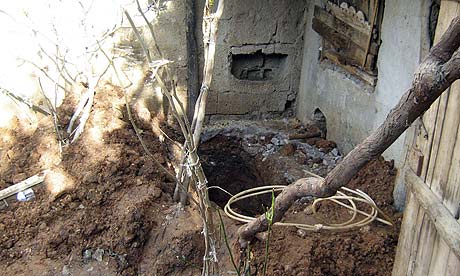
The hole where a 16-year-old girl was buried alive by her relatives in Adiyaman, southeastern Turkey Photograph: HO/REUTERS (courtesy: The Guardian - report below)

Recently there was a report about the horrific murder of a Turkish girl, whose family buried her alive because she was talking to a boy. Turkey’s shame… but she’s not alone. Such incidents take place regularly in conservative, patriarchal societies that face all kinds of conflict in this day and age, among communities that have distorted notions of ‘honour’. ‘Honour killings’ take place in Muslim-majority Pakistan but similar stories also emerge from Hindu-majority India, where such murders take place among those belonging to the Hindu or Sikh faiths (often when the girl or boy involved belongs to a ‘lower’ caste), not just Muslims. I believe the issues are related to power and patriarchy. Religion is just a tool in that game, as are notions of ‘honour’. As I wrote when a similar case emerged in Pakistan (four women buried alive in Balochistan for wanting to marry of their own choice), there is no honour in killing. Below: text of the report that appeared in The Guardian, by Robert Tait in Istanbul, Feb 4, 2010:

Turkish girl, 16, buried alive for talking to boys

Death reopens debate over ‘honour’ killings in Turkey, which account for half of all the country’s murders Continue reading

Dolphin-watching, Karachi, and the fishermen’s lament

PERSONAL POLITICAL article written on Jan 26, 2010, published in The News on Sunday Footloose page Feb 7, as ‘Wild, pure magic of malhars’

Photo by MAHA SARWAR SHAHID, age 13

Beena Sarwar

Out on a fishing boat under a clear blue early morning sky to go dolphin watching, the violence, squabbles and tensions that mark daily life fade into irrelevance – including the recent tensions arising from the Indian Premier League’s refusal to bid for Pakistani cricketers.

We cruise the sparkling azure waters of the Arabian Sea parallel to the lengthy sand spit (imaginatively called ‘Sandspit’) along the Karachi coast. About five kilometres out to sea, we can still clearly see the recreational ‘huts’ that dot Sandspit beach. As we pass another fishing boat, the crews exchange greetings – just as highway truckers and bus drivers do. Continue reading

Adieu Gul Hameed Bhatti

Gul Hameed Bhatti as I will always remember him (photo courtesy GHB Facebook page)

Feb 5, 2010: Sad day. Woke up this morning to the news that Gul Hameed Bhatti had passed away last night. I knew he was not keeping well, but didn’t know how ill he was — dedicated journalist, sports editor, friend, equal rights upholder, and fine human being. Went to the funeral this afternoon and it brought back so many memories – the last time I was there was probably when his wife Razia Bhatti, founder editor of Newsline, died in 1996. I had known them both since 1981, when I was an intern at The Star evening paper, now also sadly no more. Razia was then editor of monthly Herald, down the corridor.

Gullast we spoke was when I called you about a story I was doing on the Pakistan Women’s Swimming Team for IPS, several months ago. Your own reports provided great material on the issue of course, like this 2008 story in The News on Sunday Sports page. My story got delayed several months because my father was very ill and subsequently passed away. I was relieved for him when his suffering was over, and Gul, I am relieved your suffering is over and that you are with your beloved Razia where ever you are, together again.
Continue reading

Combatting corruption with ‘zero’, Bindiya Rana, and more

This post is based on a note I began compiling over a week ago, sent to my yahoogroup the other day, which includes links to some articles on corruption and politics and a somewhat related note on Bindiya Rana, the Khwaja Sira (hijra) who features in Ragni Kidvai’s film ‘Bindiya Chamke Gi’…

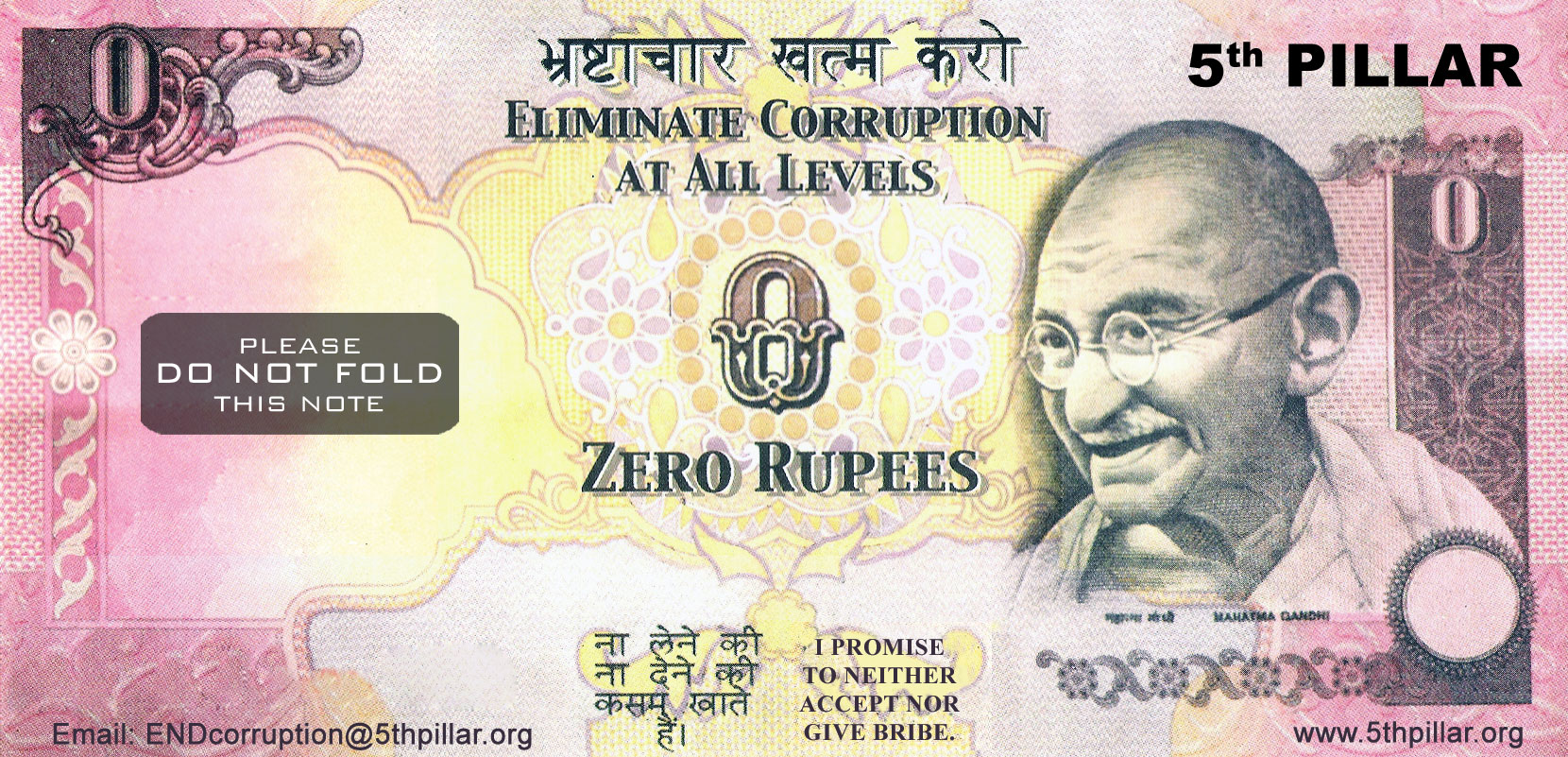
‘Paying Zero for Public Services’: An Indian NGO called 5th Pillar gives the public a powerful ally, an imaginative way to combat petty corruption: a zero rupee note (“eruption against corruption”! – love it). Why can’t we do this in Pakistan?  (thanks Omar Ali)

Speaking of corruption: “The NRO judgment cannot be all about the evil in Asif Zardari. It must be seen on its own. It is a reminder of the time when the military’s illegal acts against Nawab Akbar Bugti were being tolerated because the latter was an unsavoury person” – Flaws in the judgment‘ by Asma Jahangir
Continue reading

A theatrical production by, about, for, students

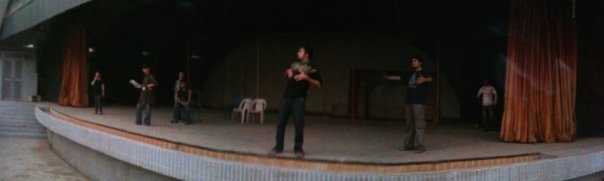
Students rehearse at Arts Council. Photo courtesy: Rukunuddin Aslam

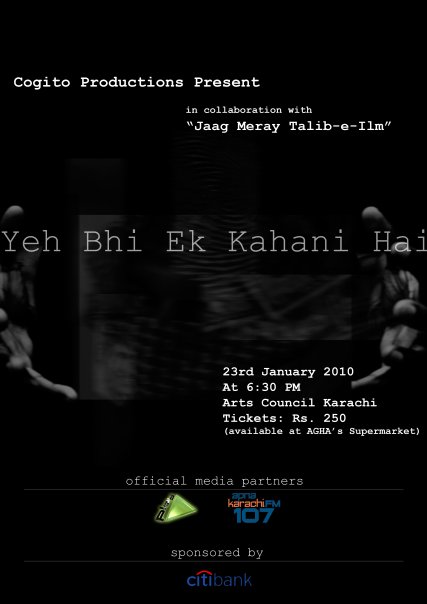
This is a unique theatre production – a combined effort written, directed and produced by students from various institutions in Lahore and Karachi, in collaboration with JAAG TAALIB E ILM a student organization promoting peace.

They promise “A theater performance the like of which Karachi has never seen. A story full of surprises, hilarity and personal tragedy. The story revolves a boy trying to find his identity in the conflicting ideologies facing our generation in this time of national turmoil.” (Tickets Rs. 250 available at Aghas and Shahbaz Subway). RSVP to the FB event.

The institutions involved are: Lahore University of Management Sciences (LUMS), National College of Arts (NCA), National Academy of Performing Arts (NAPA), Lyceum, National University of Science and Technology (NUST), Indus Valley School of Art and Architecture (IVSAA), College of Business Management (CBM), Shaheed Zulfiqar Ali Bhutto Institute of Science and Technology (SZABIST) and Sindh Awami Sangat.

Curtain raiser in The News, Jan 19: ‘Yeh Bhi Ek Kahani Hai’ aims at solidarity Continue reading

POETRY AND POLITICS: Jyoti Basu, Fehmida Riaz, Khushwant Singh, Badri Raina

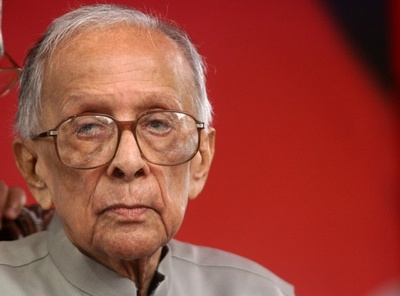
Prof. Badri Raina <badri.raina@gmail.com> sent this heartfelt tribute to Jyoti Basu, the veteran Communist leader of West Bengal, on the night of Jan 17 – which is how I learnt of Basu’s demise. Over to Badri Raina: “a humble tribute with a heavy heart”

Jyoti Basu

Jyoti  Basu

As I write,  you  seem set
To bid adieu—
Your life’s work more than done.
We would be truly greedy
To ask more of you.

What man walked so straight
And for so long
With a single thought in mind—
To do what you could
For  fellow  men and women
At the end of the line.
Continue reading

Asimicus, we will miss you

Metropole corridor: Imtiaz Mughal, Noman Ahmed, Arif Hasan and Asim Butt (red shirt)

Just got back from the Tribute to Asim Butt event at T2F, which was packed to capacity with those who knew and loved Asim, others who knew his work and were inspired by him, and some who happened to be at the café and joined in the Tribute. Sabeen introduced the event, and told the story of how Asim painted that wonderful mural on the walls of T2F.01.

Several people spoke movingly about Asim, providing ancedotes, photos and video that helped bring pieces of Asim the person together with pieces of Asim the artist, the intellectual, the activist and the rebel to form a more complete picture. I had to leave early as it’s a school night, but was there for most of it. Speakers included George Fulton who read out a lovely poem;  artist Ahmed Ali sent an email from Lahore that Mazhar Zaidi read out, Khurram talked about the LUMS days and how Asim was a trailblazer in so many ways even there (thanks to him, the BA in Social Studies is called that, and not ‘Universal Education’; the time he took on the mullah who began giving an azan outside the room where they were studying for their final exams). Naiza Khan talked about Asim as a student at the Indus Valley School, and Sabina Ansari talked about the Asim she’s known since childhood, who kept her company at school when the other kids wouldn’t talk to her – and the legacy he has left, evident in all those who filled the room.

Gul Jafri spoke about her relationship with Asim as an ‘aunty’ (and provided insights into his innocence, typified in his indignation and incredulity at having his things filched from public places – ‘but those were my things’…), Sharmeen Obaid Chinoy talked about Asim’s involvement with Citizens’ Archives of Pakistan (CAP) and showed a video clip of him painting for CAP which I hope they’ll put on the FB group wall. In fact I hope everyone puts whatever they said on a blog or website for Asim. Below, something I wrote today, which I referred to in my comments: Continue reading

RIP Khwaja Masud; Asim Butt tribute live stream

Sad to learn yesterday of the passing away of Prof Khwaja Masud on Saturday, Jan 16, 2010. The well known educationist, newspaper columnist, Marxist intellectual and writer died in Islamabad after a brief illness, aged 88, leaving behind two sons. He played a good innings. See note at Dr Sarwar blog.
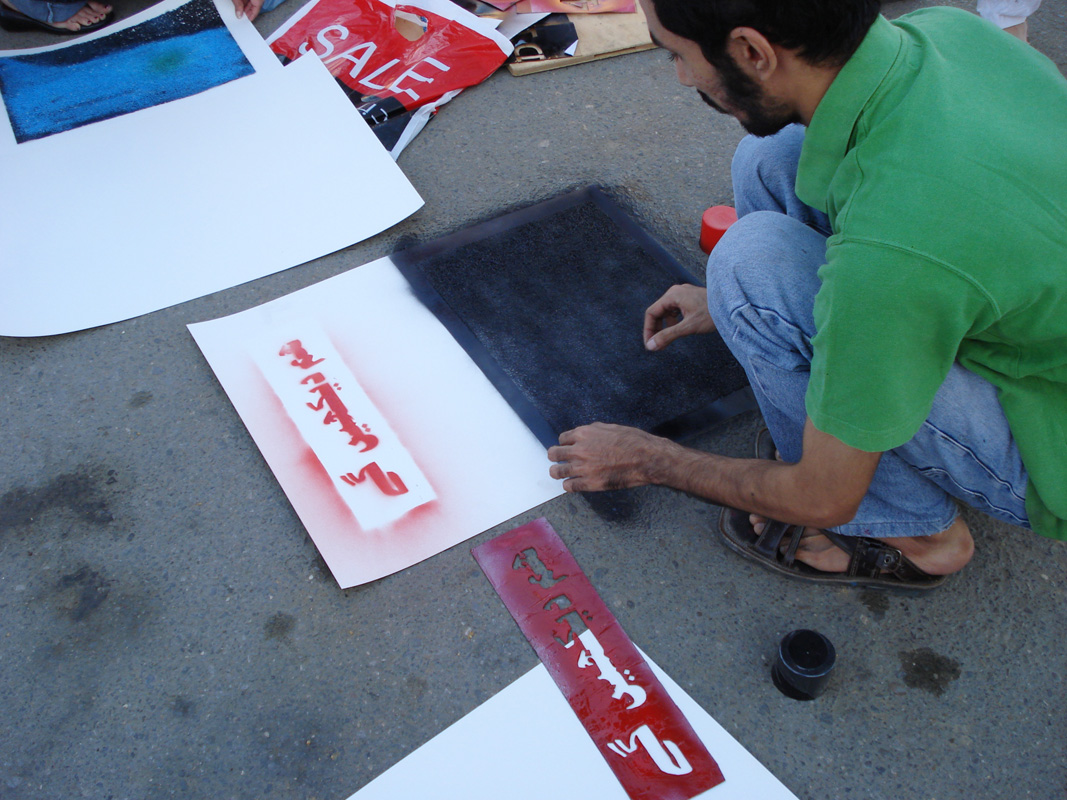
Activism, Dec 2007. Photo K.B. Abro

TRIBUTE TO ASIM BUTT: January 18, 2010, 6:30 pm at T2F 2.0. There will be a live webcast  (thanks Awab Alvi)

  • The stream will go live online at 6:30pm at this link
  • The Online tribute page allows visitors to leave a Text or Video Comment
  • Twitter Hashtag is #AsimButt

Asim Butt. Artist. Activist. Rebel. Karachi lover. RIP

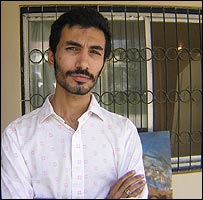
Asim Butt [BBC photo


Asim Butt. Artist. Activist. Rebel. Karachi lover. Peace lover. Asimicus. Saw him last two days ago heading home, he was waiting at a bus stop, we exchanged delighted hellos, I offered him a ride. “It’s all great,” he said with a big smile, gave an “all’s well” thumbs up. Funeral today 4 pm. Why?

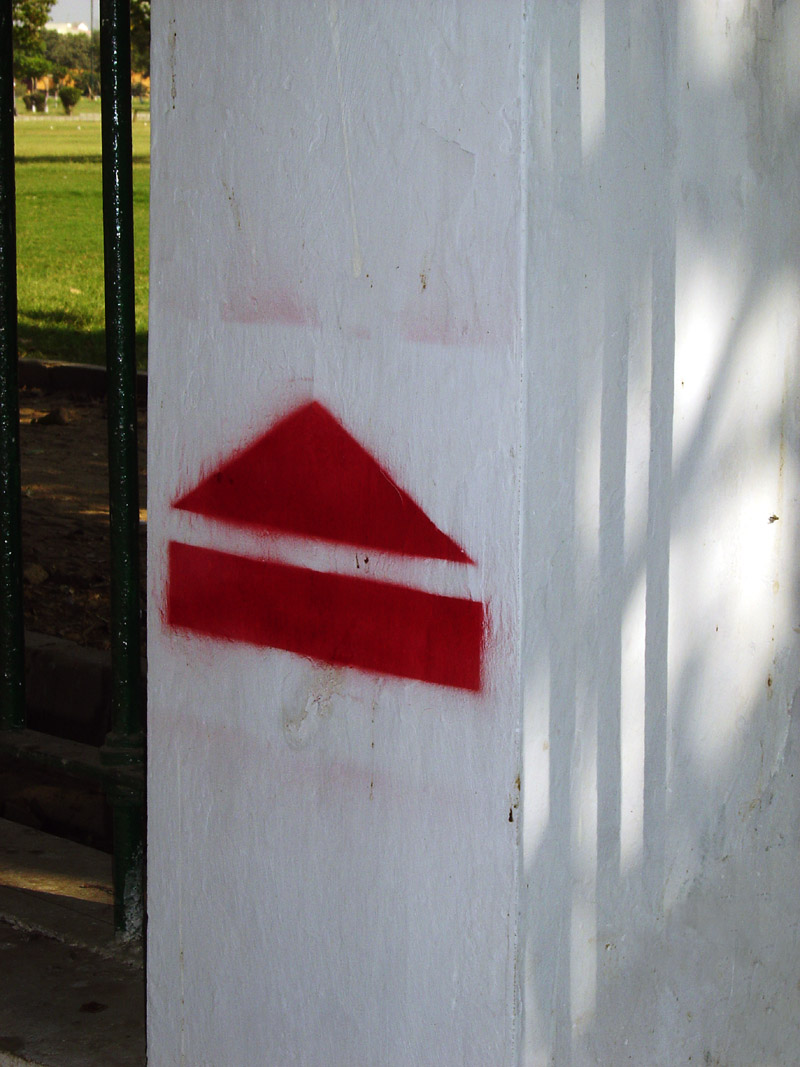
‘Eject’ (military OUT of politics) – graffiti art by Asim Butt (Photo K.B. Abro)

We may never know the answer to this “why”. Meanwhile we can only hope that he is at peace where ever he is. Life does go on, even after such a shock and bereavement. But Karachi will not be the same without ‘Asimicus’, his generous spirit, creative passion and love for the city, for democratic values and peace. He got into these symbols- the ‘eject’ sign, the ‘circle’ –  with great enthusiasm, even missed an anti-Musharraf Emergency  rally to which he was bringing posters – got so involved making them he lost track of time. But that was Asim. Continue reading

HAITI: How and why Pakistanis can help

Excerpts from appeal and joint statement by Todd Shea and Ethan Casey at the Alive and Well in Pakistan blog, addressed to Pakistani-Americans:

The aftermath of the October 8, 2005 earthquake was Pakistan’s finest moment. The nation’s citizens, government, military, and expatriates stepped up together and contributed money, material, time, professional skills and other resources to alleviate the suffering of the survivors of the devastating quake that killed more than 80,000 people.

The 7.0 earthquake that struck Haiti on January 12 has devastated that small, desperately poor country at least as much as the 2005 earthquake devastated Pakistan. Pakistan has resources that Haiti lacks – like a competent, patriotic army and an affluent expatriate community. Continue reading