Pakistanis against terrorism: global protest vigils #ReclaimYourMosque

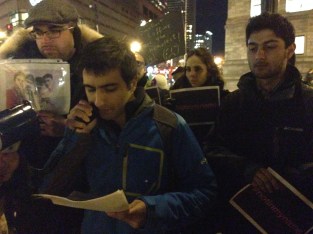
Pakistanis against terrorism: Shehroz Hussain speaking at the global protest vigil on Jan 16, in Boston

Pakistanis against terrorism: Shehroz Hussain speaking at the global protest vigil on Jan 16, in Boston

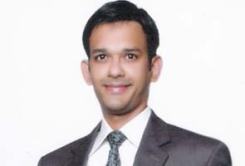
Shehroz Hussain was a foreign student from Pakistan, a freshman at college in the USA, when Taliban or their affiliated groups shot dead his father, Dr Riaz Hussain Shah, in front of his clinic in Peshawar in January, 2013. “In August 2012, as I stood at the airport to say goodbye to my family, I did not know I would never see one person again,” said Shehroz, speaking at a protest vigil last Friday in Boston’s historic Copley Square. “That person was the one with the most tears. He cried so much that relatives joked with him. I will never forget that night when I was woken up in the middle of the night on 9th January, 2013, to the sound of my crying brother on the phone: ‘Baba ko Maar Diya‘. They have killed Baba.”  Continue reading

India, Pakistan: Build on goodwill, not hate

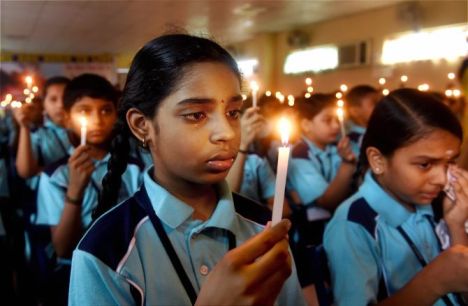
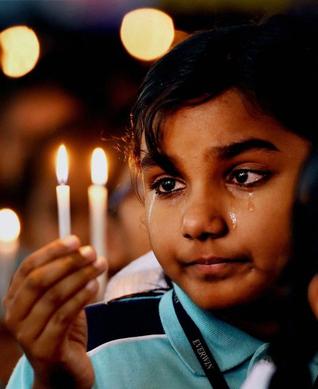
A student in Chennai prays for those killed in Peshawar. Schools across India held a two-minute silence on Wednesday. Photo: R. Senthil Kumar/ PTI

A student in Chennai prays for those killed in Peshawar. Schools across India held a two-minute silence on Wednesday. Photo: R. Senthil Kumar/ PTI 

I wrote this for The News on Sunday’s Jan 11, 2015 issue:

Build on goodwill, not hate

In the wake of escalation of tensions between India and Pakistan, people on both sides of the border continue to express solidarity through peace initiatives

In an unprecedented and heart-warming gesture from India to Pakistan, Indian Prime Minister Modi requested schools in his country to observe a two-minute silence to commemorate the children and teachers killed in the horrific attack on the Army Public School in Peshawar on Dec 16, 2014.

In another unprecedented, spontaneous show of solidarity, Indians began tweeting with the hashtag #IndiaWithPakistan, started by Indian columnist Tehseen Poonawala who tweets from the handle @tehseenp.

The hashtag peaked with over 63,000 tweets on Tuesday, the day of the tragedy. By Friday, the number of tweets containing this tag had crossed the one million with about 600 tweets per minute hash-tagged #IndiaWithPakistan (“IndiaWithPakistan hashtag crosses 1 million on Twitter”, TNN, Dec 20, 2014).

These developments spawned hope that relations between the two countries would improve.

However, India sent a very different signal by refusing to grant visas to 24 prominent Pakistanis invited to a seminar in Delhi on “Understanding Pakistan”, organised by the Pakistan-India People’s Forum for Peace and Democracy (PIPFPD) on December 19-21. Formed in 1994, PIPFPD is the oldest and largest people-to-people group between India and Pakistan that both governments have typically given visas to, leaving a door open even during hostilities.

Soon afterwards, there was a massive knee-jerk reaction in India, officially and in the mainstream media, to a lower court in Pakistan on December 26 announcing bail to Zaki ur Rehman Lakhvi, accused of the November 2008 Mumbai attacks.

The Indian media reacted furiously and with a sense of betrayal to news of the bail, without bothering to notice that this was a court order that the Pakistan government was contesting (Lakhvi is still in prison).

Meanwhile, the hashtag #PakWithIndiaNoToLakhviBail, started by Pakistani lawyer Ahmed Shaikh who tweets at @MohdAhmedShaikh, began trending on twitter in solidarity with the Indians’ sense of betrayal. By the afternoon, there were over 9,000 tweets hash-tagged #PakWithIndiaNoToLakhviBail, according to the data analytics company Frrole.

Indians and Pakistanis continued to express solidarity for each other’s hurt and to connect not just through Aman ki Asha but also initiatives like the peace video selfies (‘velfies’) of the ‘Dear Neigbour Movement’ and the Indo-Pak Peace Calendar launched by the cross-border youth organization Aaghaz-e-Dosti.

But events on the ground continue to test the goodwill. By the end of December, several incidents of cross-border firing were reported along the disputed border that divides Kashmir.

With heavy fog obscuring visibility and no independent observers allowed near the conflict zone, it is hard to tell what really happened. What is clear is that each side blames the other for ‘unprovoked’ firing and the killing of their soldiers and civilians, and that both sides have suffered casualties.

What’s also clear is that escalation of tensions and ‘tit for tat’ firing are causing massive sufferings to the people of the border areas. They also have the potential for long term repercussions as they “provide a greater space to extremist, hawkish and fanatic elements, whilst empowering war mongers on both sides,” to quote Kashmiri analyst and columnist Raja Muzaffar.

These tensions, as he notes, “have the potential to drag the whole region into a new war, destroying hopes of long term peace and economic stability”.

The only information available on what is happening at the border is what the security establishments on either side choose to tell their respective sides. Since we know how trustworthy they are, it makes sense to question the official narratives and obtain more information before jumping to conclusions.

Another case in point is the Pakistani fishing boat said to be carrying explosives that entered Indian waters on the night of December 31 that the Indian Coast Guard intercepted. Initial media reports in India said that the boat was a fishing vessel from Keti Bunder in Pakistan, and there were reportedly four men on board who blew it up when intercepted.

Sceptical of this narrative, Mumbai-based journalist Jatin Desai wrote to friends at the Pakistan Fisherfolk Forum (PFF) asking them to find out whether any fishing boat from Keti Bunder was hijacked or reported missing.

PFF President Muhammad Ali Shah responded within hours, terming the “terror boat” incident as “drama and false information”. He explained that an empty fishing boat from Jati district, Thatta – that is, without crew — had been separated from another boat due to strong winds. The Indian Coast Guard had burnt the empty boat at sea, said Shah. It was this empty boat that had been labelled as a “terrorist boat”.

Indian journalist Praveen Swami also questioned the official narrative in the Indian Express, writing that rather than being terrorists, those on board “might have been small-time liquor and diesel smugglers, ferrying bootleg cargo from the port of Gwadar to other fishing boats which were to have carried it into Karachi’s Keti Bandar harbor”.

He raised the question of “use of disproportionate force since the fishing boat did not have an engine capable of outrunning Indian interceptors”  and the possibility of the incident having occurred “in international waters, some distance from the thousands of Indian and Pakistani fishing boats in the area” since local fishermen said they had not seen the fire on December 31. (“Doubts mount over India’s claims of destroying ‘terror boat’ from Pakistan”).

India’s hyper-nationalist right wing promptly dubbed him as a traitor, held demonstrations against him and burnt his effigy (in Pakistan he would have been in danger for his life). Ironically, Pakistan has in the past denied Swami a visa.

The more commentary in the media, the worse the situation seems to be. In reality, the people in both countries have the same concerns and issues: to earn a decent living, educated their children, and feed, clothe and house their families. Lack of rule of law, gender and caste violence and militancy are common concerns.

Both countries need to capitalise on the goodwill that exists for each other rather than building on hate. The latter only feeds the agenda of those who have a vested interest in perpetuating hostilities. And I am confident that that is not what the people of the region need or want.

(ends)

No country for Shia men!

Mohammad Jibran Nasir's avatarThe Indus Ripple

Image

The bus is stopped. People are pulled out. Without asking any questions armed men start filtering the crowd. Almost everyone is asked to get back inside the bus but your family is left behind. You suddenly realize it is because you look different. As everyone else around you look of Turko-Mongol decent your family and you look Indo-Aryan. In a matter of seconds you feel like you are in a foreign country amidst alien people. But your father and your mother were born and raised here in Pakistan.

Gun Shot! You are too scared to look who fell but you know it’s a kin. Your only fortune is that you won’t have to feel that agony and pain for long as the gun barrel is now pointing at you. Reverse the ethnic equation and that’s just how the Hazaras are made to feel in Balochistan. A pre-dominantly Shia ethnic group…

View original post 957 more words

Who said moderate Muslims are silent? Pakistanis plan rallies to #ReclaimYourMosque

Irfan 'Khudi' Ali: a legacy of love and activism

Irfan ‘Khudi’ Ali: a legacy of love and activism

A series of protests over the next few days will demand the arrest of the head cleric of Islamabad’s Lal Masjid and condemn the Takfiri thinking that has killed innocents in Paris, Peshawar and beyond. My article in Scroll.in, slightly updated below:

By Beena Sarwar

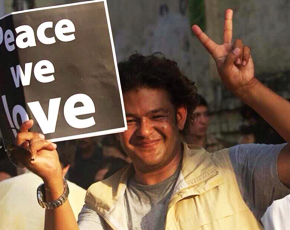
January 10 marks the second death anniversary of the smiling human rights activist Irfan “Khudi” Ali.

The recently married 33-year old was eating dinner at home in Quetta on that day in 2013 when a suicide bomber blew himself up at a snooker club, killing 11. Ali rushed to help the injured and died when a second, more powerful bomb went off nearby minutes later, killing at least 86.

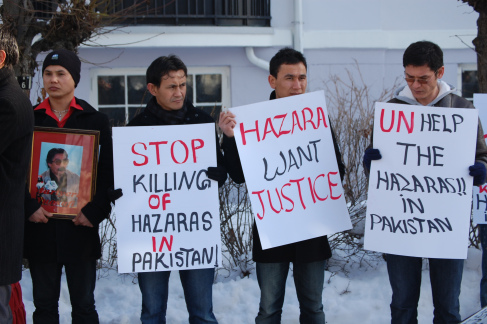
Both blasts targeted the Hazara Shia community of which Ali was a prominent member. He had in fact moved to Islamabad two years earlier due to threats, and was visiting his hometown when he died.

Commemorating his death and celebrating his life, his friends join others at vigils and demonstrations around Pakistan and the world marking other recent, shattering tragedies – the attack on the army public school in Peshawar on December 16 that claimed the lives of 148 innocent souls, most of them children, and the January 7 attack on the Charlie Hebdo office in Paris that killed 12 people, including senior journalists and cartoonists. Continue reading

Who is Shafqat, why is he being hanged, and why should we care?

Shafqat is safe… for now. This is the second time he has received a reprieve at the last minute. Kudos to Justice Project Pakistan and everyone who raised their voices and fought to prevent a terrible injustice from taking place. This is just one of many such cases in Pakistan where the justice system leaves much to be desired. That’s one reason I’m against the death penalty. If even one innocent is sent to the gallows, it is too much. There are too many chances of that happening, even in a ‘good’ system.

On another level, he is the victim of another system, the social and economic inequalities that forced him, as a young boy of 14 to leave his home in Azad Kashmir and go to Karachi looking for work. That was ten years ago. His mother has not seen him since – they are too poor to make the trip.

beenasarwar's avatarJourneys to democracy

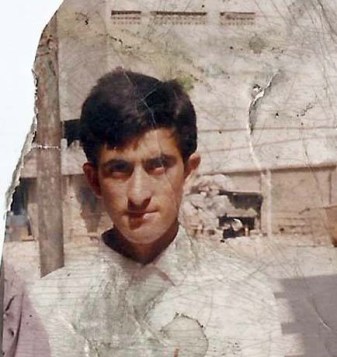
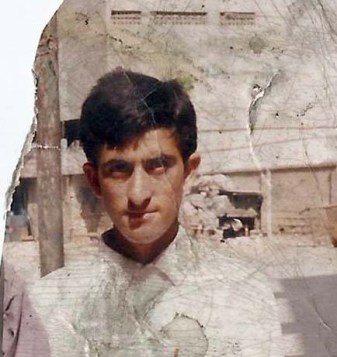
Shafqat Hussain, photo taken before he left Muzaffarabad more than 10 years ago. Shafqat Hussain, photo taken before he left Muzaffarabad more than 10 years ago.

UPDATE: Jan 01, 2014: Funds urgently needed for Shafqat’s defence. Please click this link for details and see what you or your friends can do. Detailed BBC report Justice at risk as Pakistan rushes convicts to the gallows

This is Shafqat Hussain. A poor boy who was arrested for  kidnapping and murder when he was 14 years old. He confessed to the crime after nine days of police torture (they pulled out three fingernails, the cigarette burn marks are still visible on his body). He has been in Karachi jail for over 10 years now and is on the list of ‘terrorists’ to be hung (his date is set for Tues, Dec 23rd). He comes from a very poor family from Muzaffarabad, had a learning disability, had dropped out of school at grade 4, and run…

View original post 218 more words

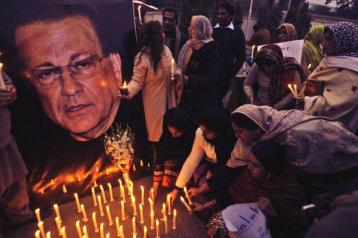
Jan 4, 2015: Remembering Salmaan Taseer

SalmaanTaseer vigil file pic

Vigil for Salmaan Taseer: File photo

On  Jan 4, 2011, the Governor of Punjab Salmaan Taseer was assassinated by his bodyguard who believed in the propaganda that had been orchestrated against Taseer falsely accusing him of ‘blasphemy’ (See: Salmaan Taseer: The political context of a ‘religious’ assassination, my article for Viewpoint). Vigils commemorating him are planned in several cities around Pakistan. Here is the information I have about some of them:

* Islamabad:  Kohsar Market, 5 pm
* Lahore:        Liberty Roundabout, 5 pm – Facebook event
* Karachi:       Do Talwar, 8 pm – Facebook event

Update on Hamid Ansari, Indian national “missing” in Pakistan

Hamid Ansari, 27, MBA, Rotarian from Mumbai... missing since Nov 2012

Hamid Ansari, 27, MBA, Rotarian from Mumbai… missing since Nov 2012

Update to case below: Hamid Ansari was produced in court, tried in a military court and awarded three years’ vigorous imprisonment starting from December 15, 2015. He has appealed to be treated not as a spy.

The police in Pakistan have confirmed that the ISI and MI have custody of Hamid Ansari, the young Indian national who has been missing in Pakistan since 2012. So will we see him produced in court as directed by the honorable judges? See my earlier post Hamid Ansari: Mumbai man missing in Pakistan (we treat each other’s citizens differently). On second thoughts, not that differently. Our security agencies treat their own citizens as badly. Plenty of examples all over both countries — Kashmir, Balochistan, Sindh, Assam, Manipur, to name some areas where such violations take place routinely. The documents below, presented to the Peshawar High Court, provide details of Hamid Nihal Ansari’s case. Continue reading

A tele-evangelist, poison in the body politic and murder most foul

Online petition to AamirLiaquat accountableNote: The TNS article referenced in the first line of the blogpost below is no longer available on the web. Here is the report I did for InterPress Service on the same issue, titled: Pakistan’s Ahmadis: Faced with death or exile

I recently wrote ‘Poison in the body politic’, published in The News on Sunday, on the persecution of Ahmadis in Pakistan, the hate-speech against them in public spaces and the impunity their attackers enjoy. One of the people I spoke to was Farooq Kahloun, an Ahmadi leader and successful businessman in Karachi who had to leave everything behind in Pakistan and take political asylum in the USA after a murderous attempt on his life that killed his son Saad Farooq two years ago. Four bullets lodged in Kahloun’s body are a permanent reminder of the attack (details below) — and of the poison in Pakistan’s body politic, the menace of takfirismContinue reading

Who is Shafqat, why is he being hanged, and why should we care?

Shafqat Hussain, photo taken before he left Muzaffarabad more than 10 years ago.

Shafqat Hussain, photo taken before he left Muzaffarabad more than 10 years ago.

UPDATE: Jan 01, 2014: Funds urgently needed for Shafqat’s defence. Please click this link for details and see what you or your friends can do. Detailed BBC report Justice at risk as Pakistan rushes convicts to the gallows

This is Shafqat Hussain. A poor boy who was arrested for  kidnapping and murder when he was 14 years old. He confessed to the crime after nine days of police torture (they pulled out three fingernails, the cigarette burn marks are still visible on his body). Continue reading

Move beyond conflict and ratings

Tributes to Peshawar terror attack victims

School children in Chennai pay tributes to Peshawar terror attack victims on Wednesday. Photo: R. Senthil Kumar/ PTI

Wrote this on Dec 18, 2014 for Lokmat Media, Pune: Situationer/ Comment on Peshawar attack aftermath in Pakistan, published on Dec 20 in three languages (below).

By Beena Sarwar

Two days after the horrific attack on an army-run school in Peshawar that killed 148 people, most of them schoolchildren, an anti-terrorist court approved bail for Zaki-ur Rehman Lakhvi, leader of the banned terrorist outfit Lashkar-e-Tayyaba (LeT).

Lakhvi is allegedly the mastermind behind the horrific attacks in Mumbai in November 2008 and India has been demanding his extradition. India and Pakistan have not yet signed an extradition treaty though the possibility has been discussed in the past. He is unlikely to walk out on bail anytime soon. Prosecution lawyers said that the ATC decision came despite evidence against Lakhvi, and that they will challenge the decision. Continue reading