“Is this justice?”

“Pakistan`s accession to a sane and tolerant society in which all its sons and daughters are equal before the law and by social standards is going to be a long haul. The process may be started with action against organised abduction-conversion marriage rackets, offering guarantees of prompt and effective police action on complaints of abduction, and firm assurances of evenhanded treatment by the courts of all parties regardless of belief, gender or social status” –– HRCP director and senior journalist I.A. Rehman, ‘Unwelcome conversions‘, March 22, 2012.

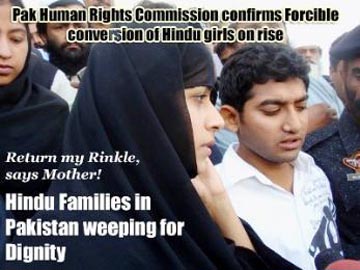
ISLAMABAD, March 25: The Chief Justice of the Supreme Court of Pakistan ordered two adult women who had stated that they were abducted and forcibly converted to Islam, to be sent back to the Karachi shelter home where they had been lodged since being ‘recovered’, for three more weeks to give them time to “consider” their views.

The Hindu community in Pakistan is asking if he would have done that if these women — Rinkal Kumari and Dr Lata Kumari –had given statements in favour of their kidnappers? Continue reading

No to vigil-aunties: thousands protest media’s moral policing in Pakistan

A morning show broadcast in Pakistan on Jan 17, 2012, on Samaa, a Pakistani television channel, has catalysed what could well be the beginning of a media consumer rights movement.

In the show, Subah Saverey Maya kay Sath (Early Morning with Maya), the host Maya Khan, charges through a public park looking for dating couples to interrogate. With her is a battalion of other women, who join her in self-righteously lecturing the couples they come across – does your family know you are here, why don’t you meet at home if you are engaged, and, most outrageously, if you are married, where is your nikahnama (marriage certificate)?

When the harassed couples ask for the camera to be turned off, the Samaa team pretends to acquiesce but carries on filming with sound. As several people have pointed out, this intrusive behaviour could result in putting those couples in life-threatening situations in a country where forced marriages and ‘honour killings’ continue to be the norm. Continue reading

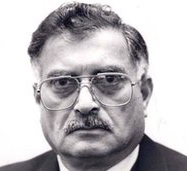
PMA condemns colleague’s murder | Dr Baqir Shah

The Pakistan Medical Association, Karachi has strongly condemned the brutal murder of Dr. Baqir Shah, Police Surgeon, Quetta… The reason for his killing is obvious: that he was the key witness of the Kharotabad incident. He had conducted the post-mortem examination of the victims and had given the factual version that the victims had died due to the indiscriminate firing of the LEAs and not due to an explosion… PMA condemns colleague’s murder | Dr Baqir Shah.

Baloch Hal Editorial: War Against Baloch Doctors

It is an outrage and a violation of freedom of expression that Pakistan Telecommunication Authority (PTA) continues to block Baloch Hal in Pakistan at a time when this voice needs to be heard across the country now, more than ever.  Reproduced below, BH editorial pegged on the target killing of Dr Baqir Shah (emphasis added):

Editorial: War Against Baloch Doctors

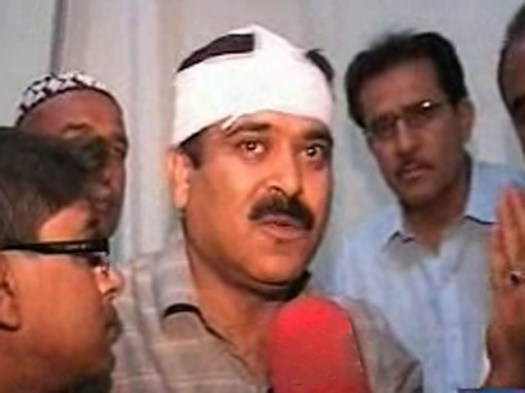
baqir shah attacked-2011-06-14

File photo of Dr Baqir Shah after being injured in an earlier attack 14 June 2011. Dr Shah was the police surgeon who conducted the autopsy on five foreigners shot dead by police and FC personnel on 17 May at the Kharotabad checkpost, Quetta.

The late police surgeon was somewhat an easy target for terrorists for a host of reasons. His situation could enable any murderer to immediately vanish in thin air because of the circumstances that shrouded the late doctor. He gained enormous national and international media attention after conducting the postmortem of five foreigners who were killed on May 17 in what is now remembered as the infamous and tragic Kharotabad incident. Continue reading

HRW response to ‘Memogate’: a litmus test for all actors – particularly judiciary and army

Dec 30, 2011, Human Rights Watch press statement received today: “As the “Memogate” case proceeds, all arms of the state must act within their constitutionally determined ambit and in aid of legitimate civilian rule. In this context, justice must both be done and be seen to be done. Pakistan desperately needs a full democratic cycle and a peaceful transfer of power from one civilian administration to another. Should this process be derailed, the constitutional safeguards and legal rights protections created since 2008 may suffer irreparable damage.  Continue reading

Who Was Dr. Baqir Shah?

Since the Pakistan Telecommunications Authority (PTA) continues to block Baloch Hal in Pakistan, I’m posting these news items from their website here. The saga of Pakistan’s ‘enlightenment’ martyrs continues…

Who Was Dr. Baqir Shah?

The Baloch Hal News

QUETTA: Dr. Baqir Shah, a police surgeon, had conducted the postmortem of the five foreigners, including three women who were brutally killed by the firing of security forces in Kharotabad area on May 17 this year. He had come up with a report that the victims were killed by the bullets that contradicted to the claims of security forces that the foreigners were killed due to explosion Continue reading

Zarteef Khan Afridi: The tribesman who showed the way

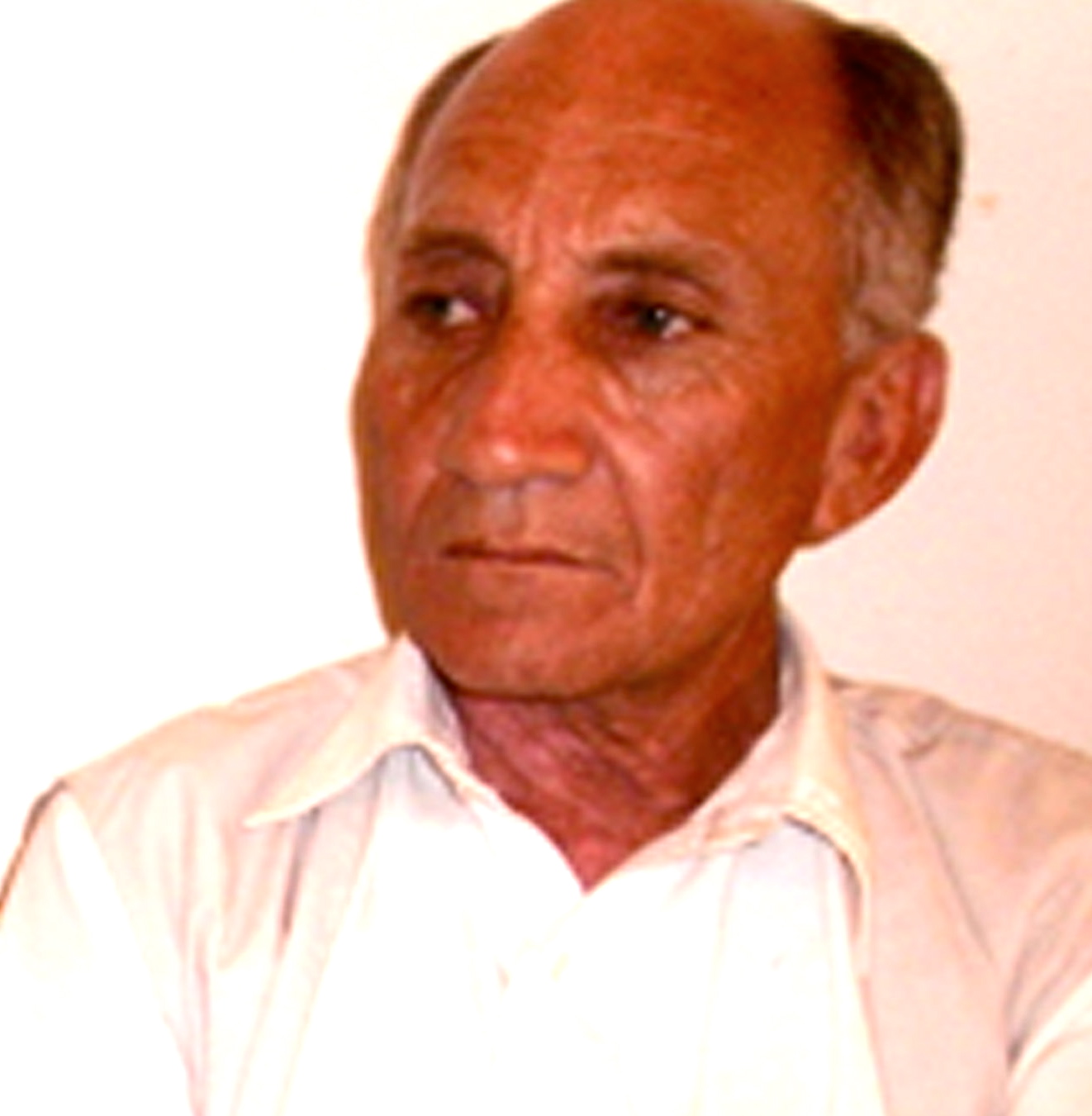
Zarteef Afridi's latest photo. Courtesy: HRCP

A tribute to the human rights activist Zarteef Khan Afridi who was shot dead recently – my article in The News on Sunday. Latitude News earlier published a shorter, different version titled In Pakistan, an unlikely hero dies for his cause. Also see my earlier article: Pakistan’s ‘enlightenment’ martyrs

The tribesman who showed the way

There was the letter from an anonymous writer saying he was going to hunt down and kill her. And then there was the letter from an Afridi tribesman offering to come down and protect her.

This was in the mid-1990s. The recipient of the letters was the fiery human rights lawyer Asma Jahangir, under threat for having taken on the case of Salamat Masih, the illiterate Christian boy sentenced to death for ‘blasphemy’ for having allegedly written sacrilegious words on the walls of a village mosque. Continue reading

On Dec 16, 2011, remembering Anthony Mascarenhas

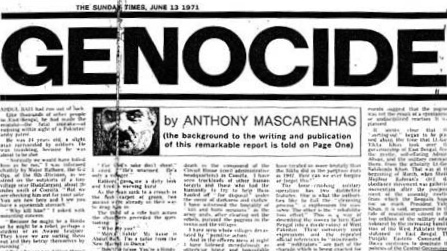
Thank you Mark Dummett, for the report in BBC today paying tribute to Anthony Mascarenhas, the brilliant and courageous Pakistani journalist who had to flee abroad in order to be able to tell the truth – Bangladesh war: The article that changed history.

Mascarenhas

“Eight journalists, including Mascarenhas, were given a 10-day tour of the province (East Pakistan). When they returned home, seven of them duly wrote what they were told to,” writes Dummett.

“But one of them refused.”

That was Mascarenhas, who died in 1986 in London.

His wife Yvonne Mascarenhas told Dummett that she remembers him coming back distraught: “I’d never seen my husband looking in such a state. Continue reading

“We want to attend universities, not funerals” – Young Women of Balochistan

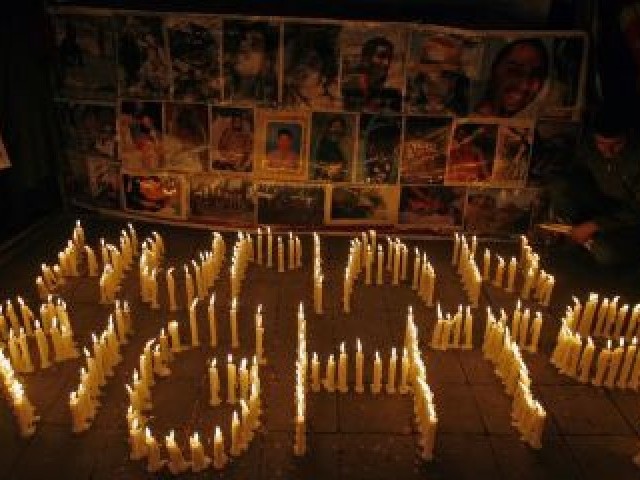
HRCP activist lit candles on Dec 10, Human Rights Day, that they dedicated to Balochistan. But the killings and disappearances continue - as the photos on the wall testify. Photo: Reuters

Below please see a letter from Young Women of Balochistan, forwarded by a friend who received it via email on Dec 10, 2011, Human Rights Day – a day commemorated around the country and dedicated to the people of Balochistan by the Human Rights Commission of Pakistan (See this report by Rabia Ali). Ironically and tragically, that very day, a young Baloch human rights activist, 35-year old Faisal Mengal, was gunned down in Karachi (details in this report). As Rabia Ali reports, from July 2010 to November 2011, around 300 dead bodies were found — some even of 14-year-olds, according to Tahir Hussain, Vice Chairperson of the HRCP’s Balochistan chapter. Those killed include two HRCP activists, while the number of people missing range from 5,000 to 6,000.  Read on for this brief appeal by the Young Women of Balochistan… Continue reading

Journalism and safety in Pakistan (my take, in Asia Society blog)

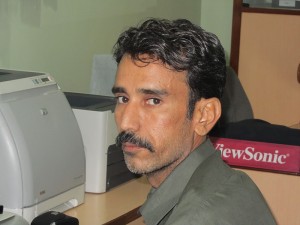
Another one. Javed Naseer Rind

Interview: Beena Sarwar on Journalism and Safety in Pakistan

Published in Asia Society blog, November 8th, 2011

The body of missing Pakistani journalist Javed Naseer Rind was found on Saturday in a remote part of the troubled Pakistani province of Balochistan, marking the seventh death of a Pakistani journalist in 2011 and placing Pakistan on pace to rank as the world’s deadliest place for journalists for the second year in a row, according to a report by The Committee to Protect Journalists.

Rind, an editor and columnist with the Urdu-language newspaper Daily Tawar, was kidnapped in his hometown of Hub in southern Balochistan province. The discovery of his body paints a bleak picture of the working conditions for journalists in the troubled country, who battle pressures on the international front from the war on terror and human rights and ideological issues at home.  Continue reading