Media figures call for release of Himal Editor Kanak Mani Dixit

Kanak 03

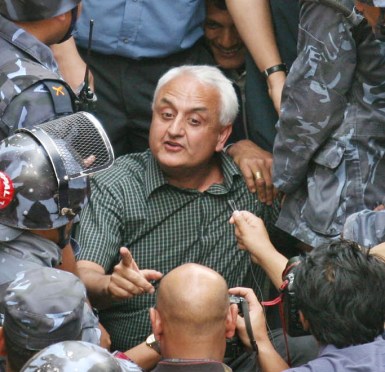
Kanak being arrested at a pro-democracy rally in Nepal, 2006. Photo by Shehab Uddin

Press Statement: media figures call for release of Himal Editor Kanak Mani Dixit

New Delhi, April 23 — Editors and media figures as well as intellectuals and scholars from India, Nepal, Bangladesh, UK, US, Australia and Sri Lanka have called for the release of Himal editor and prominent Nepali journalist Kanak Mani Dixit who was arrested yesterday in Katmandu by anti-graft officials.

The following is the text of the statement:

Continue reading

Lahore attack: a political context

I wrote this for the Huffington Post after the attack on the Lahore park on Easter Sunday.

How Pakistan’s Religious Right Uses ‘Blasphemy’ to (try and) Usurp Political Power

Aamir Qureshi/Getty Images

The horrific suicide bombing at a park in Lahore on Sunday that killed over 70 people, mostly women and children, is one of many assaults by religious hardliners in Pakistan who are striving to remain politically relevant and in the media limelight.

Continue reading

The return of Salmaan Taseer’s abducted son gives Pakistan another ray of hope

Very happy to be able to write about some good news – the recovery of Salmaan’s Taseer’s son Shahbaz Taseer, kidnapped nearly five years ago. Wrote this piece on March 8, 2016, for Scroll.in

The return of Salmaan Taseer's abducted son gives Pakistan another ray of hope

The best news coming out of Pakistan this week was about the recovery on Tuesday of Shahbaz Taseer, the abducted son of slain Punjab Governor Salmaan Taseer. The businessman, in his early thirties, had been kidnapped in August 2011 as he drove to his office in Lahore. Continue reading

Stifling dissent in Southasia

I earlier posted about resistance to the stifling of dissent in India, and why as a Pakistani it matters to me. The trend is visible in other parts of Southasia too, including of course Pakistan about which I’ve written a fair amount. Here’s an update from Bangladesh, where defamation, sedition cases and the attempts to silence the independent media are underway, as well as Chattisgarh, India.

article-jtuxsszald-1455534764

Smiles and sedition. Photo: Andrew Biraj, Reuters

Continue reading

When information and awareness leads to change

The Punjab government has directed the provincial Human Rights department to amend existing service rules (see scan of letter dated Nov 6, 2015) according to which “Only non-Muslims/ Persons who belong to Minorities” are eligible for the position of sanitary workers or sweepers (see attached scan of Service Rules below).

Punjab govt Order-Nov 6-2015Researcher and writer Asif Aqeel who emailed this update today thanks parliamentarian Mary Gill for bringing the issue to the notice of the government and pushing for the change. Continue reading
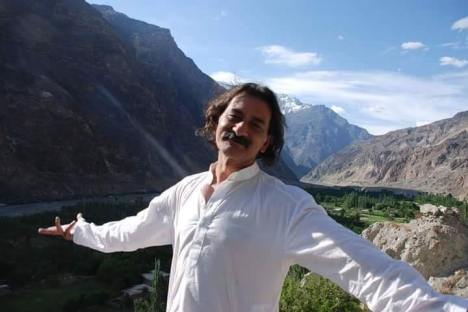
Haider, jigar, are you at peace now?

Haider in Gilgit-fb pageMy article on a journalist, activist, humanist, friend, eternal optimist and conflicted human being who left us forever recently. Illustrations by Feica. Scroll.in published a slightly abbreviated version titled ‘Journalist, optimistic rebel who stood up to General Zia’s excesses’, breaking the text up with sub-heads that I’ve used in the full text below. Their intro: “Haider Rizvi was a Pakistani journalist and activist who passed away in Lahore on October 29. His three-decade-long journalistic career began in Pakistan. He moved to the US in the mid-1990s and covered the United Nations, before returning to Pakistan in 2013 and taking up a job as a lecturer. He was 52.”
Continue reading

PAKISTAN: CAPITAL PUNISHMENT: It’s not just about Shafqat

My oped in The News, Pakistan below. Also see my earlier piece on the issue in in Scroll – Clamour to hang Shafqat Hussain reflects vengeful mood in Pakistan after Peshawar attacks

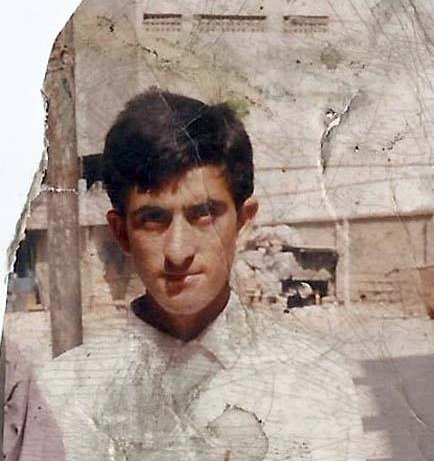
Shafqat Hussain - more than 10 years ago, before he left his village in AJK

Shafqat Hussain – more than 10 years ago, before he left his village in AJK

PAKISTAN: CAPITAL PUNISHMENT
It’s not just about Shafqat

by  Beena Sarwar

Shafqat Hussain is due to be hanged — for the seventh (not fifth, as I wrote earlier) time — at 4.30 am on August 4, 2015. His ‘black warrant’ was issued on July 27, despite a comprehensive 12-page report by the Sindh Human Rights Commission (SHRC) on July 16 that urges the Sindh government to move to stay the execution, and approach the Supreme Court of Pakistan to “consider the evidence which could not be produced at the trial by defence”.

The SHRC’s recommendations cannot be taken lightly. This is a government-appointed statutory body set up in 2013 under the Human Rights Act of 2011 passed by the Sindh government. A respected retired judge of the Supreme Court heads it. At stake is a human life.

Continue reading

‘An honest Pakistan is a better Pakistan’: the ‘unsilencing’ idea and the ongoing intellecticide

Citizens in Lahore at a #Rally4Sabeen. Photo: Farooq Tariq

Citizens in Lahore at a #Rally4Sabeen. Photo: Farooq Tariq

I wrote this piece last week for EPW – Economic and Political Weekly, India; reproduced below with photos and additional links.

“Unsilencing Pakistan” was an idea first articulated in 2011. It has been revived following the recent murder of Sabeen Mahmud, who had attempted to create a space where Pakistanis could discuss contentious issues–like the human rights violations in Balochistan–without fear. Can Pakistan’s intellectuals and human rights activists survive the “intellecticide” being perpetrated?

By Beena Sarwar

When the prestigious Lahore University of Management Sciences (LUMS) announced that it was organising a seminar titled “Un-Silencing Balochistan” on 9 April 2015, it reminded me of the “Unsilencing Pakistan” initiative of the summer of 2011. Continue reading

Pakistan: Protest curbs on academic freedom, freedom of expression and public debate

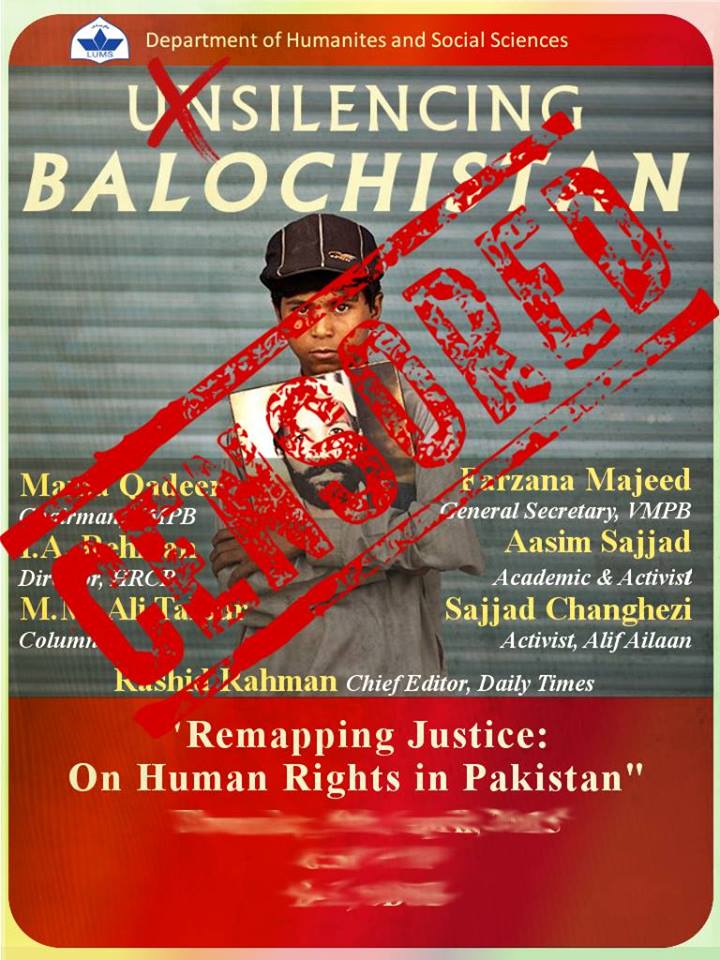
Censored- unsilencing balochistanSTATEMENT OF CONCERNED FACULTY MEMBERS AND STUDENTS OF LUMS REGARDING THE DECISION TO CANCEL THE TALK ON BALOCHISTAN IN KARACHI UNIVERSITY SCHEDULED TO BE HELD WEDNESDAY 6 MAY, 2015:

We, concerned students, alumni and faculty members of LUMS, deeply deplore the decision by the Karachi University administration to cancel the talk on Balochistan titled “Baloch Missing Persons and The Role of State and Society”, planned tomorrow Wednesday 6 May 2015 at Karachi University. This decision comes on the heels of the cancellation of the LUMS roundtable on “Un-Silencing Balochistan”, scheduled to be held on 9 April, and the tragic killing of Ms. Sabeen Mahmud, director of the café T2F in Karachi, right after a debate on the very same issue on 24 April on the premises of T2F. Continue reading

“Unsilencing Pakistan” and the ongoing “intellecticide”

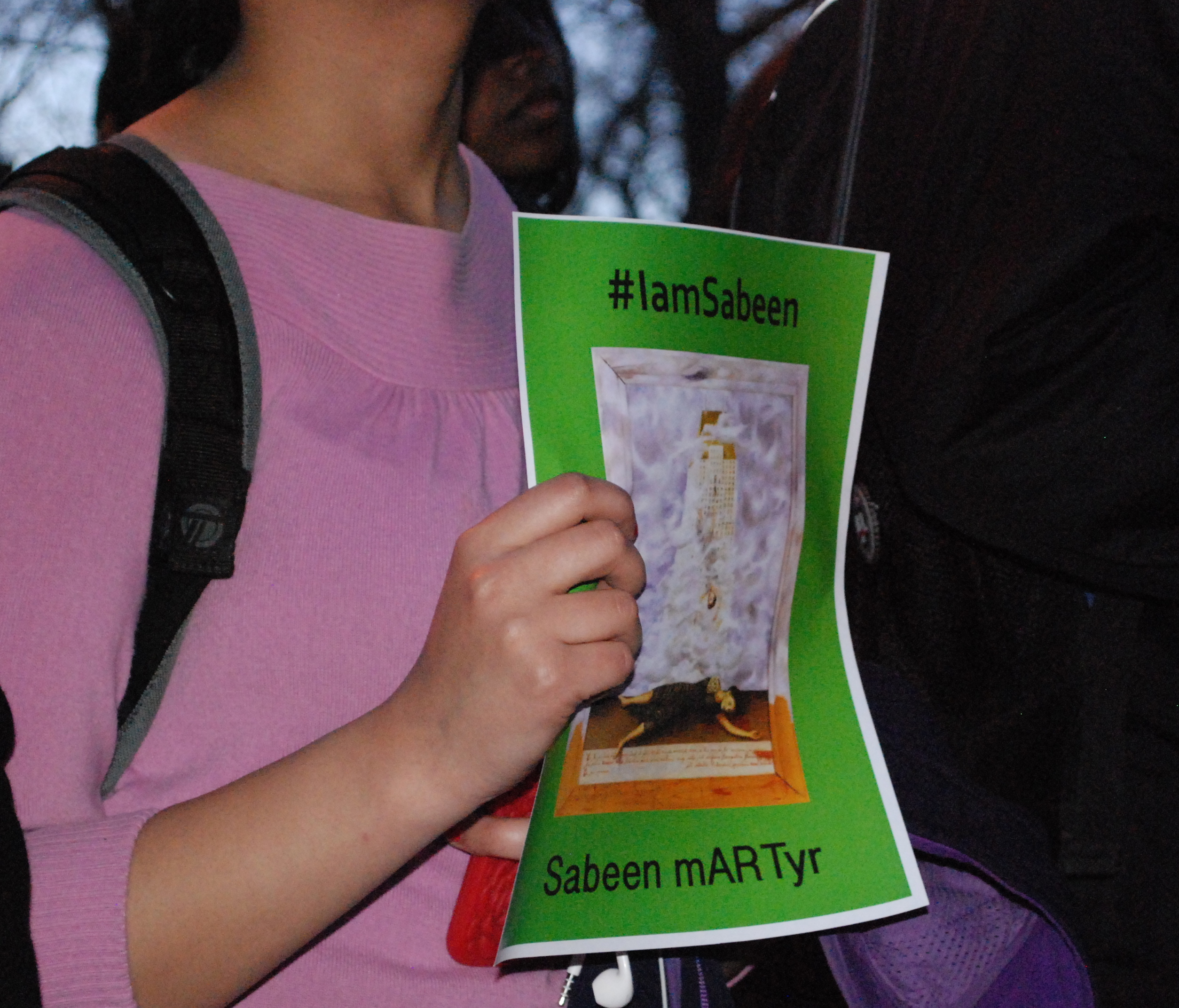
Vigil for Sabeen in Harvard Yard, April 28, 2015. Poster designed by Erum Sattar shows a painting by Frida Kahlo whom Sabeen loved. Photo: Ken Shulman

Vigil for Sabeen in Harvard Yard, April 28, 2015. Poster designed by Erum Sattar shows a painting by Frida Kahlo whom Sabeen loved, with a word play on “mARTyr” she would have enjoyed. Photo: Ken Shulman

In the summer of 2011, young academic Nosheen Ali, and journalists Sahar Habib Ghazi and Malik Siraj Akbar approached me to work on a new initiative they called “Unsilencing Pakistan” that aimed to make an online record of all the journalists, activists, and thinkers in Pakistan who have been harassed, tortured, and/or executed. I had written at the time about those killed as ‘enlightenment martyrs’, part of an ongoing intellecticide. The “Unsilencing Pakistan” idea included a statement that we got several progressive voices to endorse  — Sabeen Mahmud among them (see below). We weren’t able to take the idea forward then but the concept remains critically important as Sabeen’s murder a week ago reminds us. I was also reminded by my friend Huma’s Facebook post today about the vigil for Sabeen uses the term #unsilencePakistan; and by the seminar titled Unsilencing Balochistan that was canceled at LUMS but held at T2F after which Sabeen was killed.  Continue reading