Malala’s injuries and treatment: some details and updates

MalalaYousafzai2

Photo released by QEHB on Oct 19, 2012. Malala, the world is praying for you.

For official updates on Malala Yousufzai’s condition, see this website set up by Queen Elizabeth HospitalBirmingham, where she is being treated. An additional update posted on Friday 19 October 2012, at 13:50 hours (reproduced below), lists details of her injuries and what’s being done to treat them. The latest update is that she is stable, comfortable and responding well. She is communicating through writing notes, and thanks all well-wishers for their support and the doctors and nurses who are treating her. She will need a significant period of rest and recuperation before undergoing reconstructive surgery. Continue reading

Malala Yousufzai – Some updates

Demo for Malala in Mumbai earlier this week

Adapted from the post I sent to my Yahoogroup a little while ago:

No point repeating what happened a week ago in Swat, when Taliban shot Malala Yusufzai, the 14-year old school girl who has been speaking out courageously for the right of girls to be educated, supported by her equally brave father, Ziauddin Yusufzai, principal of the school she was studying at.

Malala was already a hero to many. Now she has become a worldwide symbol of the right of girls to education, as well as of resistance to the Taliban. In this, she represents millions of Pakistanis – and world citizens. Her friend Kainat who was also injured, told CNN from her hospital bed that she hoped to continue her education and that Malala would come back and join her schoolmates soon. “I want to tell all the girls to continue their mission to get an education,” she said. Continue reading

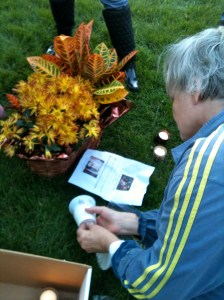
IN SOLIDARITY: Charlestown families honour Malala Yusufzai at Bunker Hill, Boston

Joanne Samuelson lights a candle for Malala

“Families in Charlestown are gathering on Bunker Hill monument on Sunday October 14 at 5:30 pm to hold a vigil for Malala Yousafzai. Please try to attend and spread the word, all welcome,” read the email circulated by the Pakistani Association of Greater Boston on behalf of Joanne Samuelson, a Boston resident who works at M.I.T.

The drizzly weather cleared away allowing the sun to come out in time to endorse the gathering at this historic spot in Charlestown, Boston, the site of a major battle between the revolutionaries and the British colonists. Continue reading

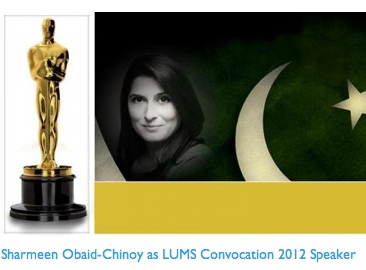
Good news from Pakistan (besides the Oscar award): LUMS to create Abdus Salam Chair

Update to the news below: Professor Asad Abidi Named the Inaugural Holder of the Abdus Salam Chair at LUMS, (Jan. 2017)

Exciting news from Adil Najam, Vice Chancellor of LUMS – for those who don’t know him, Dr. Adil Najam was the Frederick S. Pardee Professor of Global Public Policy at Boston University and served as a Lead Author for the Intergovernmental Panel on Climate Change (IPCC), work for which the IPCC was awarded the 2007 Nobel Peace Prize along with Al Gore. He left BU (where his office had the most gorgeous view overlooking the Charles River) to head the Lahore University of Management Sciences. Continue reading

Pakistan curriculum urgently needs change

The findings of the report “Connecting the Dots:  Education and Religious Discrimination in Pakistan” are dire, but not new (Summary at press release below, forwarded to me by The Mirror, a publication of the Pakistan National Commission for Justice and Peace). Pakistani academics have long been pressing for a reform of the curriculum, for example through reports like The Subtle Subversion (SDPI, 2003). The jihadisation of the curriculum includes inane prerequisites like religious studies for medical students – the Supreme Court recently provisionally allowed a Hindu student to sit for the medical college entry test. All this must change. But lest we forget, the idea of Jehad was incorporated into the Pakistani curriculum after the start of the Afghan war, because it suited Washington, and Pakistan to encourage and glorify the “Mujahideen” (holy warriors) in the war against the Soviets. An American institution of higher education was asked to formulate textbooks for Pakistani schools accordingly. “The institution was University of Nebraska at Omaha, which has a center for Afghan studies which was tasked by CIA in the early eighties to rewrite textbooks for Afghan refugee children. The new books included hate material even in arithmetic. For example, if a man has five bullets and two go into the heads of Russian soldiers, how many are left, kind of stuff. This was exposed in a research thesis from the New School, New York in about 2002,” says Dr A.H. Nayyar, one of the co-editors of the SDPI report, quoted in my article Jehad and the curriculum,’ 2004. Continue reading

Happy 25th Spelt, and good luck with the conference

spelt04

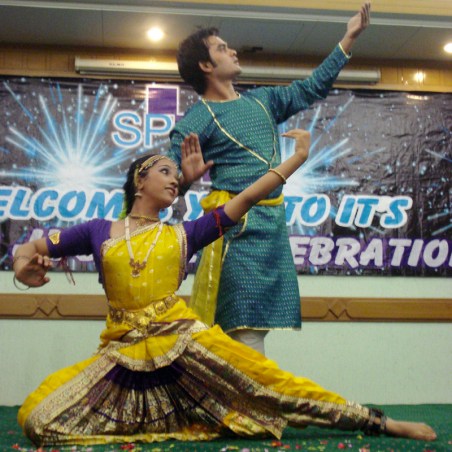
Suhaee and Babar perform at Spelt’s 25th birthday celebrations. Photo: K.B. Abro

DIWALI GREETINGS TO ALL. Here are some observations on the silver jubilee of Pakistan’s first volunteer-based, professional English language teaching organisation, based on my comments at the 25th birthday celebrations of the Society of Pakistan English Language Teachers (Spelt) on July 31 this year. Spelt’s annual international conference begins today in Karachi – an event they have been holding every year since they started and which involves a ‘travelling conference’ at which key plenary speakers address similar conferences in other cities. I think this must be some kind of record.
Continue reading

Doc’s blog; Madrassas vs Pvt schools; Hoodbhoy on Pk; Cost of war and more

Condolences: Lourdes Joseph, longtime activist and office secretary of the Human Rights Commission of Pakistan (HRCP) passed away today in Dubai of a heart attack. Funeral on June 10, 4 pm, at St Anthony’s Church in Karachi; burial at ‘gora qabristan’ 5 pm.

1. New blog – www.drsarwar.wordpress.com – with photos and remembrances, including by I.A. Rehman, Salima Hashmi, Dr Badar Siddiqui, S.M. Naseem, Ali Jafari, Mohsin Tejani and others

2. The Madrasa Myth op-ed co-authored by Tahir Andrabi, Jishnu Das, C. Christine Fair, and Asim Ijaz Khwaja, published June 3, 2009 –  http://www.foreignpolicy.com

Extract: `Rather than focusing on madrasas and public schools, the donor community should take note of a striking change in the Pakistani educational landscape: the emergence of mainstream and affordable private schools.’

Note from Tahir Andrabi (Professor of Economics, Pomona College, Claremont, CA):
“Trying to inject some sense in the mainstream of the Washington policy debate on Pakistan. Would like for once to having facts as a basis for conversation on Pakistan”. (The other Pakistani co-author Asim Ijaz Khwaja teaches at Harvard Kennedy School). http://tinyurl.com/lxlbrs

3. `Whither Pakistan? A five-year forecast’ by Pervez Hoodbhoy in the Bulletin of Atomic Scientists, 3 June 2009. Article Highlights
• U.S. government officials and media outlets have exaggerated how close Pakistan is to collapse.
• That said, the speed of Pakistan’s societal decline has surprised many inside in the country who have long warned of the effects of religious extremism.
• The first step toward calming the situation–Pakistan’s political leadership and army must squarely face the extremist threat, something they’ve finally begun to do.
http://tinyurl.com/Pk-PH-5yr

4. The Women of Swat and `Mullah Radio’, Tuesday, 02 June 2009,
From a group of NWFP women, report published in http://khyberwatch.com
Extract: “Islam started as soon as we fled from Malakand. People outside Swat think we had Islam and Shariat. There is no Islam in Swat. The Taliban have finished it.’ -woman from Mingawera, Swat, in a Sawabai camp
Full report at – http://tinyurl.com/lrnvo4

5. HRCP report on the situation of the internally displaced, plus the Commission’s conclusions and recommendations at:  http://hrcpblog.wordpress.com
`A tragedy of errors and Cover-ups – The IDPs and outcome of military actions in FATA and Malakand Division’
The cost of the insurgency in the Malakand Division has been increased manifold by the shortsightedness and indecisiveness of the non-representative institutions and their policy of appeasing the militants and cohorting with them. While the ongoing military operation had become unavoidable, it was not adopted as a measure of the last resort. Further, the plight of the internally displaced people has been aggravated by lack of planning and coordination by the agencies concerned, and the methods of evacuation of towns/villages and the arrangements for the stranded people have left much to be desired….

Based on reports by HRCP activists in Malakand Division and other parts of NWFP/Pakhtunkhwa, visits to camps by its activists and senior board members, and talks with many displaced people and several Nazims and public figures
Direct link to report – http://tinyurl.com/mpy7et

6. From Isa Daudpota: Bill Moyers sits down with award-winning investigative journalist Jeremy Scahill to examine the human and financial costs of America’s wars.
http://www.pbs.org/moyers/journal/06052009/watch.html
Plus a new website he suggests checking out: www.whowhatwhy.com

Chicago, Shahidul and ‘Three Cups of Tea’

Three Cups of Tea_Mech.indd

Published in Hardnews, New Delhi,April 2, 2009

PERSONAL POLITICAL

Beena Sarwar

I love how connections sometimes just ‘happen’, criss-crossing the world, spanning generations, borders and continents. This particular stream traverses Pakistan’s early progressive struggle to Chicago, an inspiring book by an American who recently received Pakistan’s highest civilian honour, and a Bangladeshi photographer who came to Pakistan to document that moment.

In Chicago for a seminar in May 2007, I stayed with Danial Noorani. He is active with Apna Ghar, a domestic violence shelter for immigrant, primarily South Asian women. His late parents Malik and Mumtaz Noorani were close friends of my parents, active in the Communist Party and city goings-on. Tall jovial Malik Uncle ran a publishing house. ‘Jan-e-Man Phuphi’ (as we called the bright-eyed Mumtaz Noorani because of the endearment she used for us children) was active with Anjuman Jamhooriat Pasand Khawateen (Democratic Women’s Association, headed by Tahira Mazhar Ali, still going strong in Lahore).

There is some symbolism about meeting their son in Chicago. I remembered hearing of Dr Eqbal Ahmad’s disappointment when he found a monument to a policeman rather than the Chicago workers demonstrating for the eight hour day were killed by police fire in 1886. Ironically, the US does not observe May 1 as Labour Day.

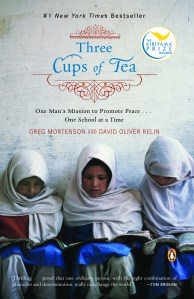
Before I left, Danial gave me a paperback titled ‘Three Cups of Tea’ by someone I had vaguely heard of, Greg Mortenson. I couldn’t put it down. It is mandatory reading for anyone interested in education, Pakistan and the ‘war on terror’.

Mortenson builds schools in Pakistan’s remotest areas. The book, co-authored by David Oliver Relin, is sub-titled One Man’s Mission to Promote Peace . . . One School at a Time’– a mission as endangered by the ‘taliban’ as by the militaristic policies of the US and Pakistani governments operating without a political roadmap.

It started in 1993, when Mortenson was recuperating in atiny, unmapped village, Korphe, after being injured while climbing the world’s second highest mountain K2 in the Karakorams. Shocked that the village ‘school’ was a patch of land where children sat in the open scratching their lessons with sticks on the ground, he vowed to build them a school.

Back in the US, he saved rent by sleeping in his car and not taking his girlfriend out to dinner. Not surprisingly, they broke up. Mortenson kept trying to raise funds, manually typing letters to seek help. Two years later he was back at Korphe with a truck-load of building materials.

But he was in for a shock. The villagers told him that they first needed a bridge across the ravine that isolated them. Mortenson nearly went off in a huff. Then he thought about it and realised they were right. An important lesson for aid organizations: ask people what they want and need instead of giving them what you think they should have.

Besides making Korphe more accessible to the world, the bridge enabled the village women to make short trips to visit family on the other side rather than investing days as they used to. And yes, the school was also built. Mortenson has since helped to build some 78 schools in Pakistan (and Afghanistan), providing education to over 28,000 children, including 18,000 girls.

The second part of the book tells a grimmer story: the impact of the mushrooming Wahabi madrassahs and the ‘war on terror’ following ‘9-11’. Mortenson recalls an invitation to the Pentagon to talk about his work, only to realise that they’re not really interested. If they listened to him, perhaps the world would be in less of a mess.

Last August, the Pakistan government announced that Pakistan’s highest civil award, Sitara-e-Pakistan (“Star of Pakistan”) would go to Mortenson for his courage and humanitarian effort to promote education, and literacy in rural areas. The Bangladeshi photographer Shahidul Alam mentioned it when we met last month in Kathmandu. He flew in from Bangladesh especially to record the moment. On March 23rd, 2009, he was in Islamabad with friends of Mortenson watching the awards ceremony live on television.

These are, as Salma Hasan Ali wrote on Shahidul’s blog, “kernels of hope that remind us that all will not be lost to violence and a distorted mindset.”

(ends)

‘From Pakistan with Love: Saneeya Hussain’

‘Celebrating Saneeya’ – feminist, activist, environmentalist, my former editor, and dear friend. Made this 5-min documentary after she died in Brazil in 2005… Saneeya, we will always miss you and be inspired by you and your infectious laughter… See also Saneeya Hussain Trust
http://saneeyahussaintrust.com/

Three cups of tea and hope in Pakistan

Three Cups of Tea_Mech.inddToday, March 23, Greg Mortenson will receive Pakistan’s highest civilian award, the Sitara-e-Pakistan (Star of Pakistan) for his work on education, especially for girls, in Pakistan’s northern areas.
His book, Three Cups of Tea, is a must read for anyone interested in the area.
Here’s a note I found on Shahidul Alam’s blog:
Pakistan: Hope amidst the chaos
Salma Hasan Ali

Pakistan: Hope amidst the chaos