

Last week, I was honoured to speak at the Community Church of Boston at Copley Square, along with Sanjay Bhagat of the Boston Study Group and Kandeel Javid of Muslims for Progressive Values. The topic was Celebrating Love, unbounded by caste, religion, or sexual orientation.
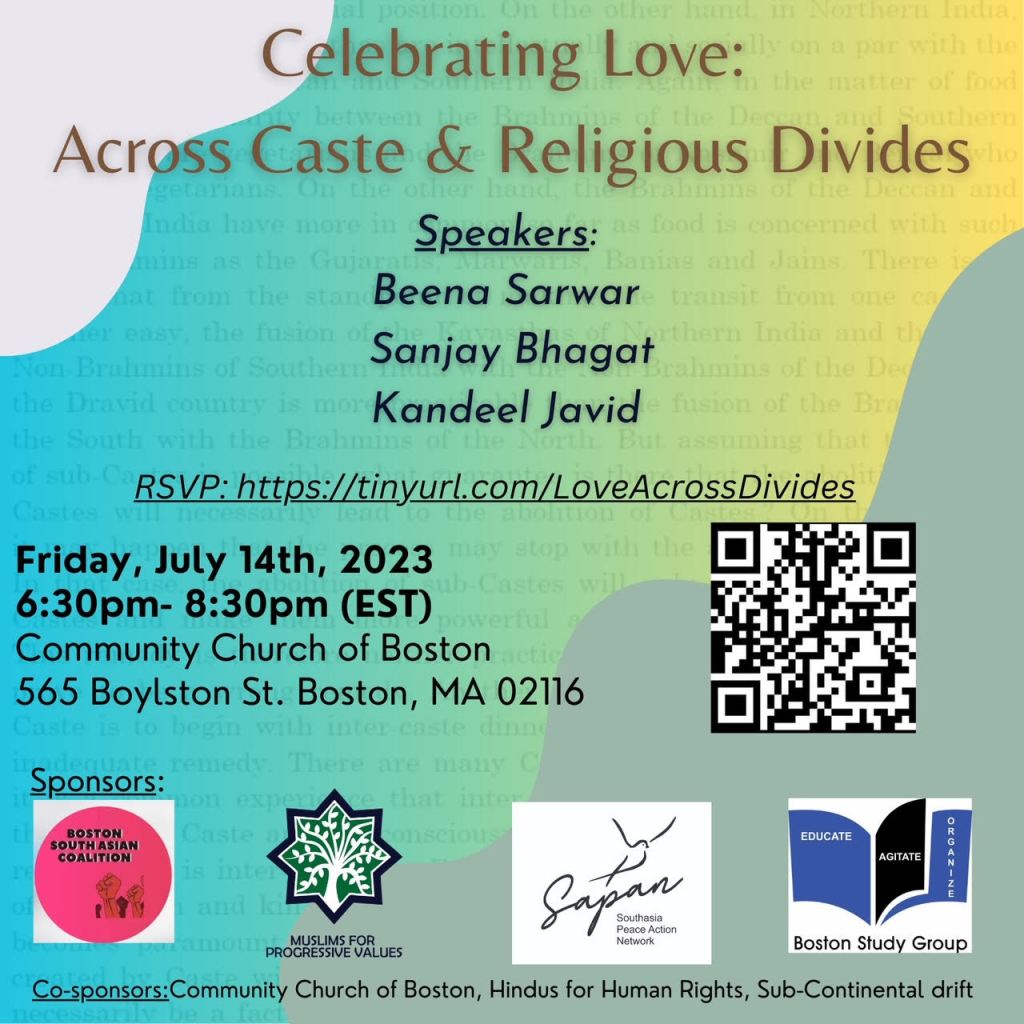
The goal was to talk about challenges faced by interfaith/inter caste couples and families and how to create inclusion across castes and religious divides.
The title derived from an earlier discussion organised by Southasia Peace Action Network or Sapan, a global cross-border, cross-regional, cross-diasporic network that I co-founded in March 2021. See Saman Shaifq’s report Celebrating love: Beyond borders and boundaries of religion, caste, and nationality, published by Sapan News, the syndicated media service that emerged from Sapan.
I was invited to represent Sapan, as well as its local partner, the Boston South Asian Coalition. Introducing the speakers was Manisha Sharma of BSAC, also part of the Sapan network – see the lovely piece on qawwali she wrote for Sapan News.
Inter-religious or inter-caste marriage is against the social dogma around Southasia, as she noted. “In India, only 5% marriages are inter-caste or inter-religious.” Many of these couples, including gay and queer couples are subjected to tremendous social, family, and psychological pressures or lose their lives in what are called ‘honour killings’.
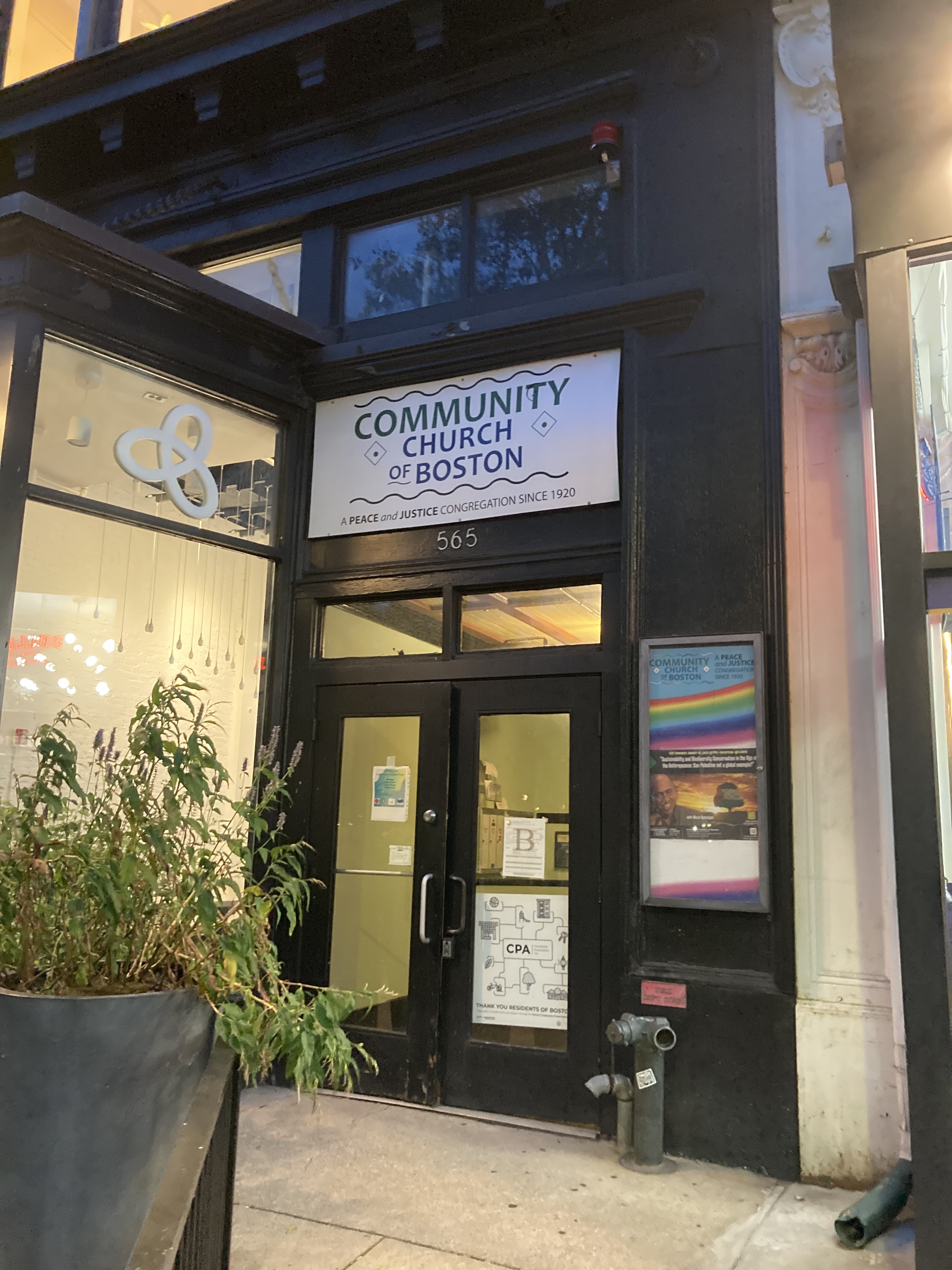
Entrance to the Community Church of Boston: A welcoming space tucked between shops at Copley Square: Promoting “Universal religion” Photo: Beena Sarwar 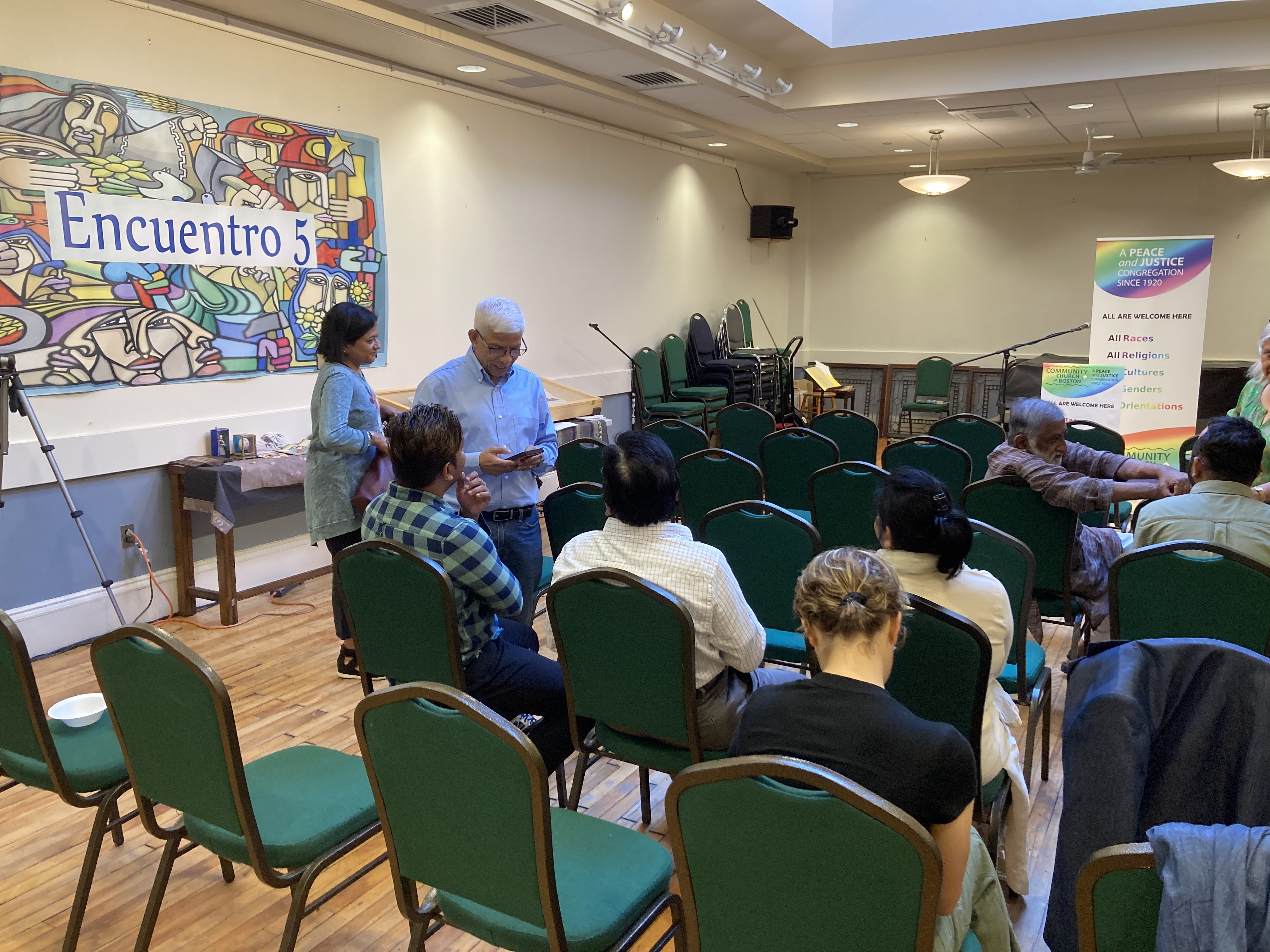
Setting up for the event. Sapan fiscal sponsor Encuentro-5 (e5) banner in background. Photo: Beena Sarwar 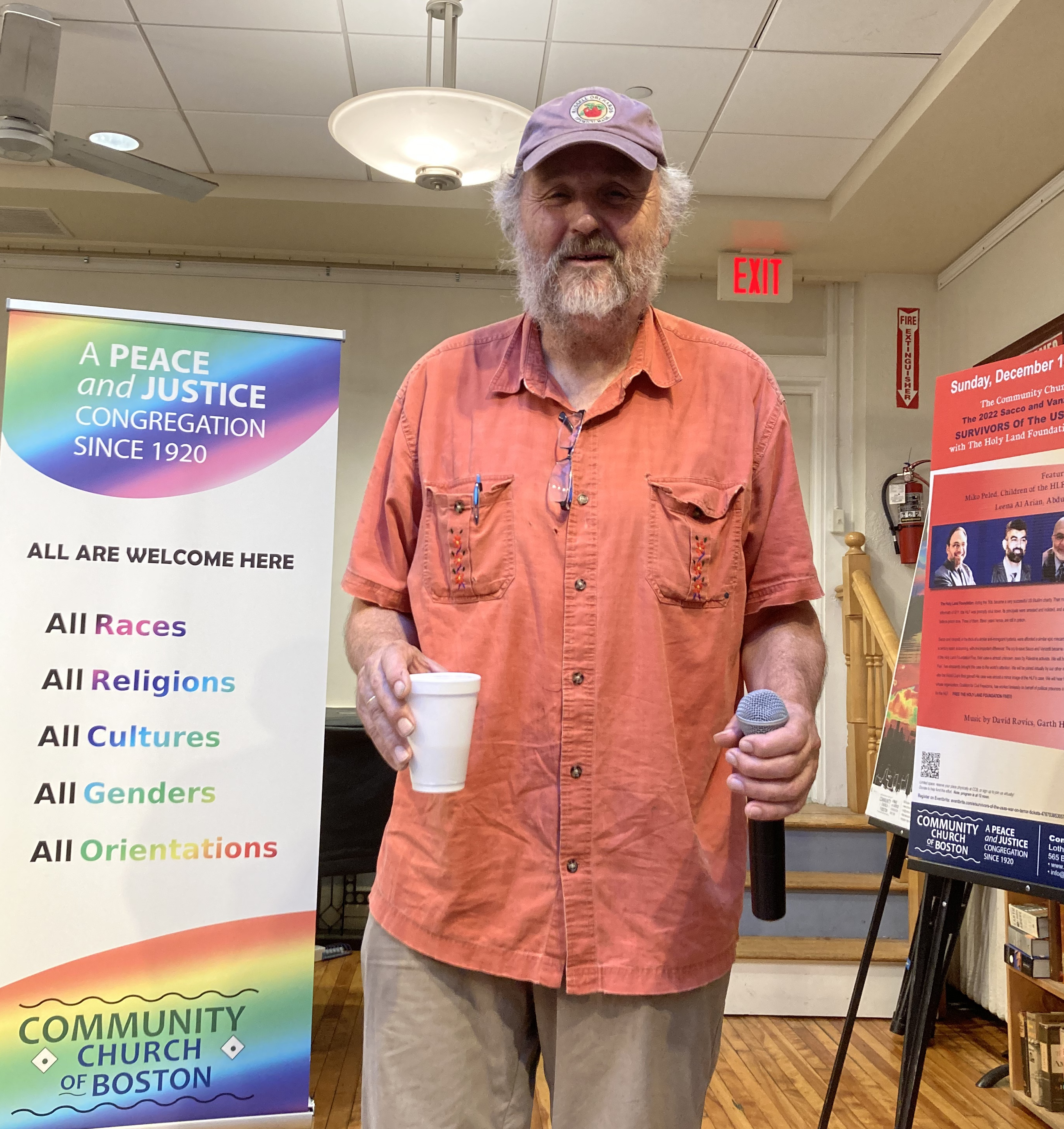
Community Church of Boston coordinator Dean Stevens: Celebrating love, combatting hate and bigotry. Photo: Beena Sarwar 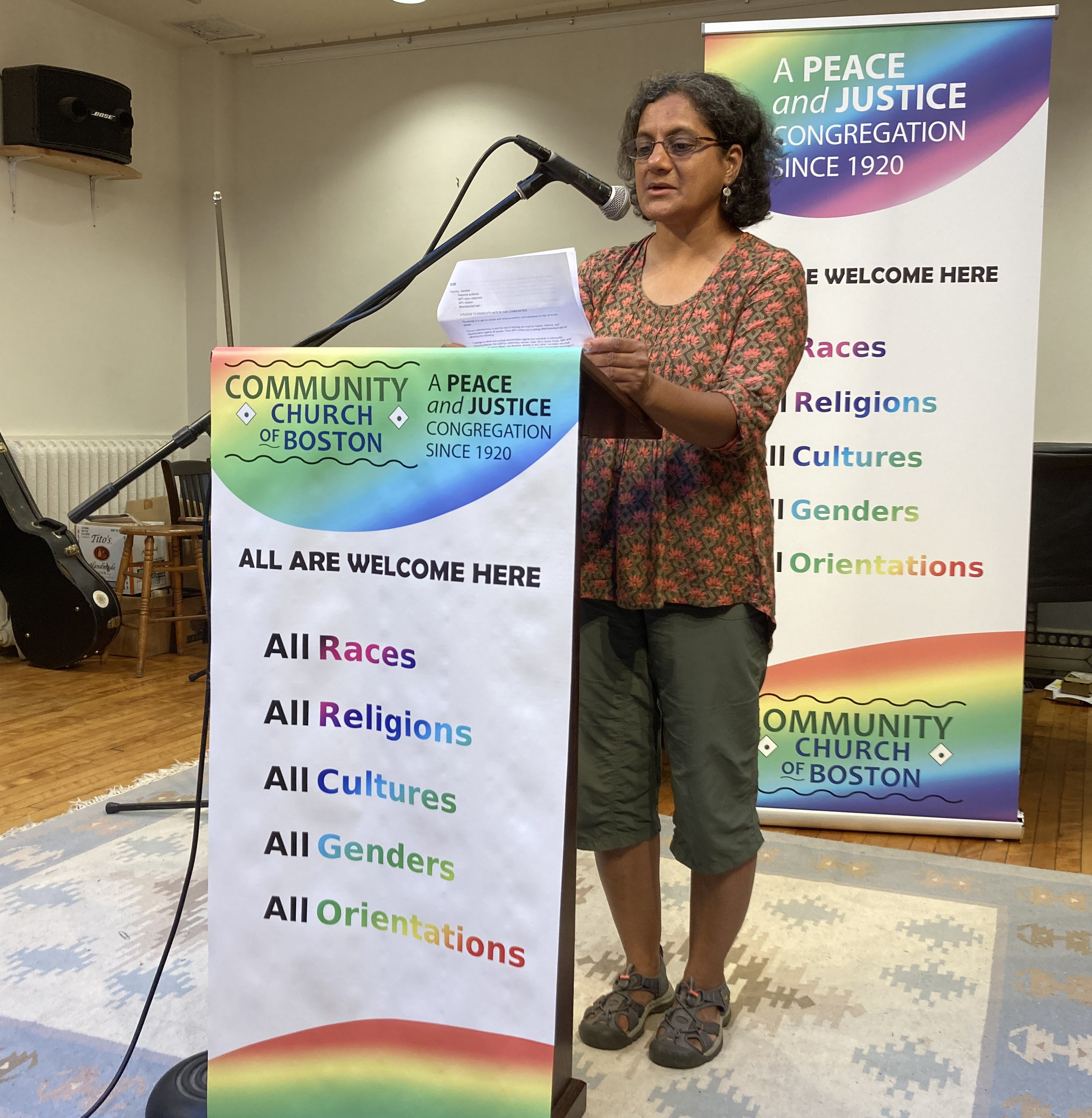
Manisha introducing the speakers and elegantly tying.threads together. Photo: Beena Sarwar 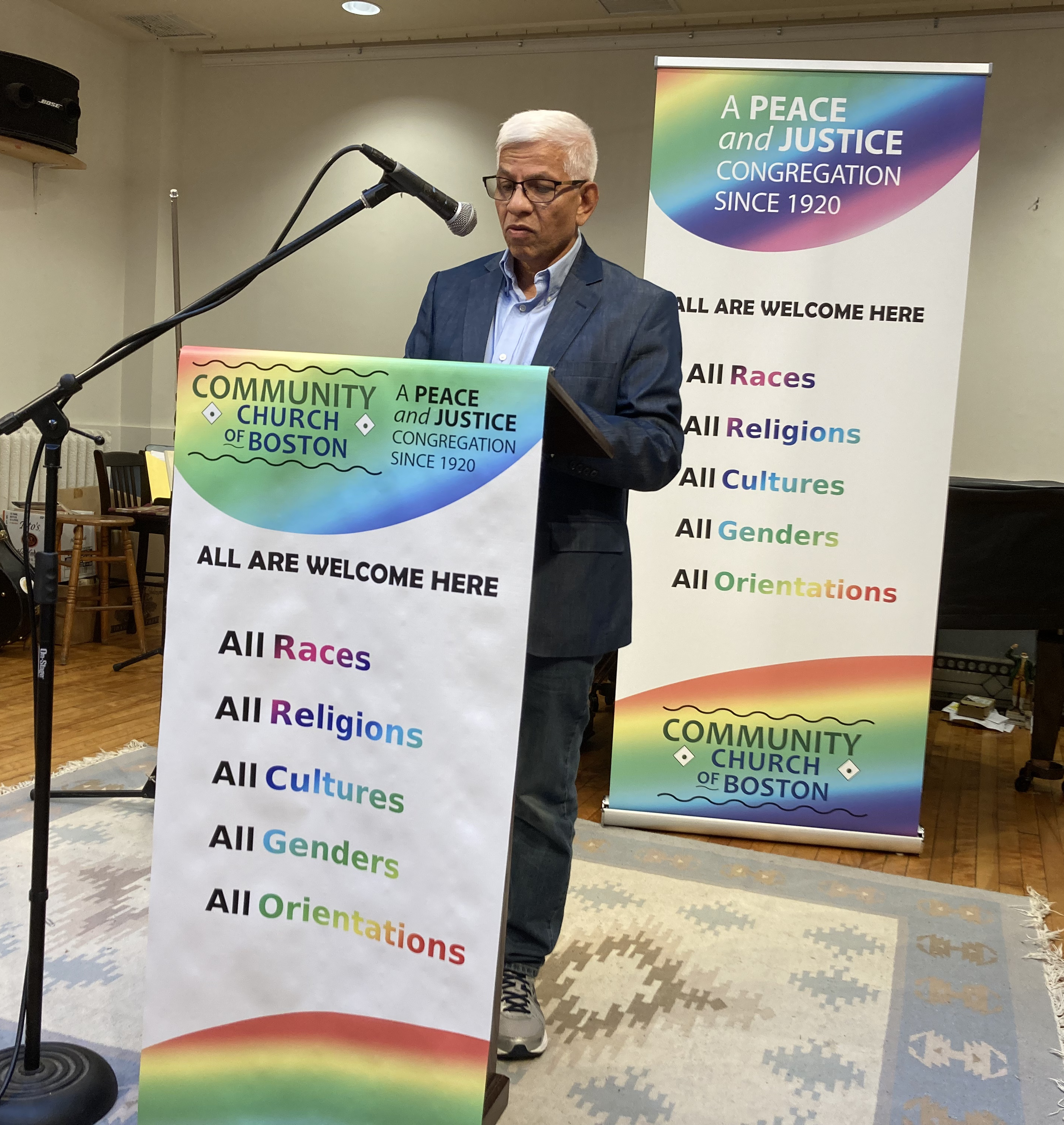
Sanjay Bhagat, a founding member of Boston Study Group: the only Ambedkarite organization in the New England area 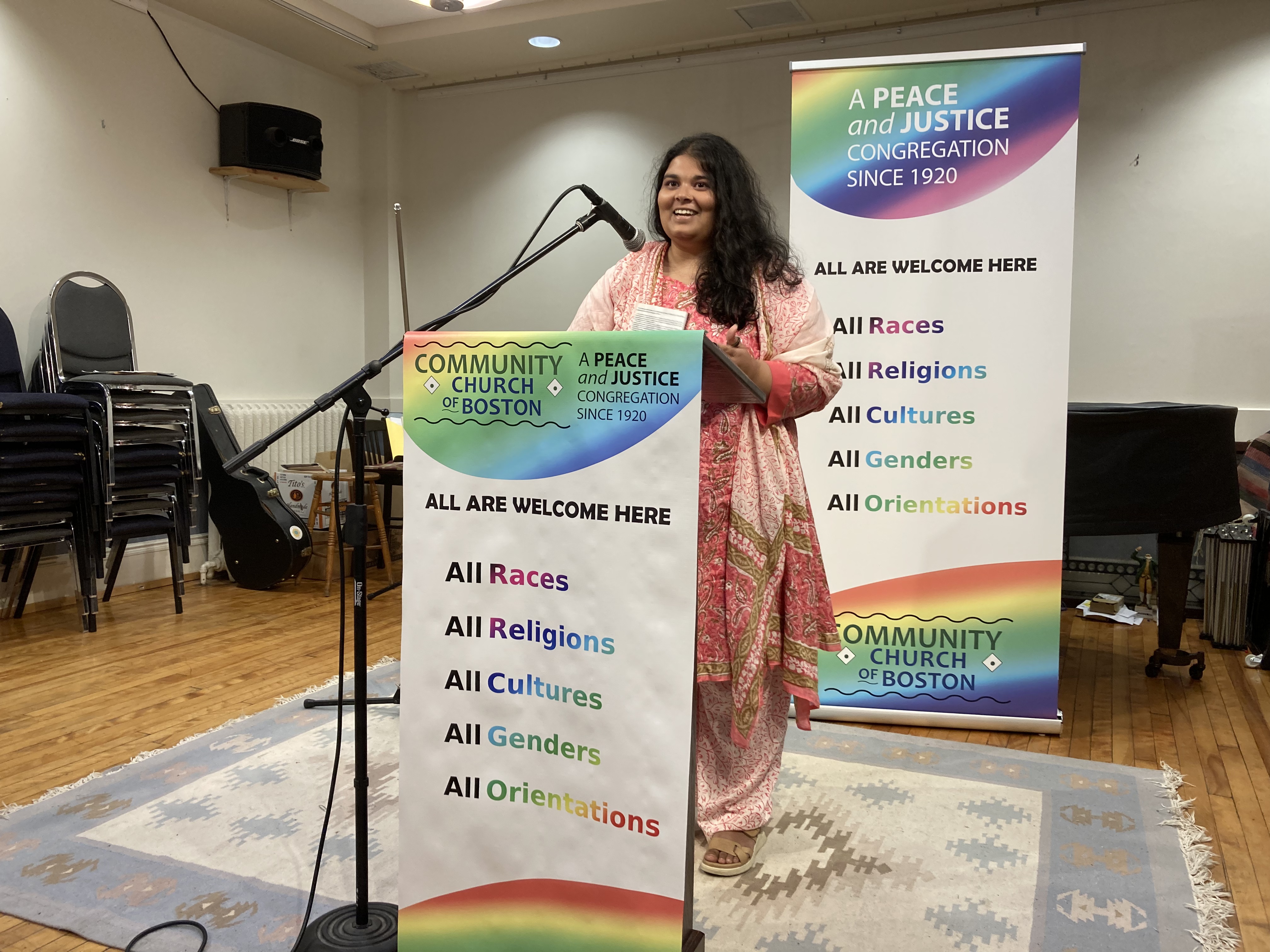
Tamana Syed: Bestselling author, poet, Public Health program coordinator. Check her bio https://linktr.ee/tasyed and book ‘Falcon and the Dove’. Photo: Beena Sarwar 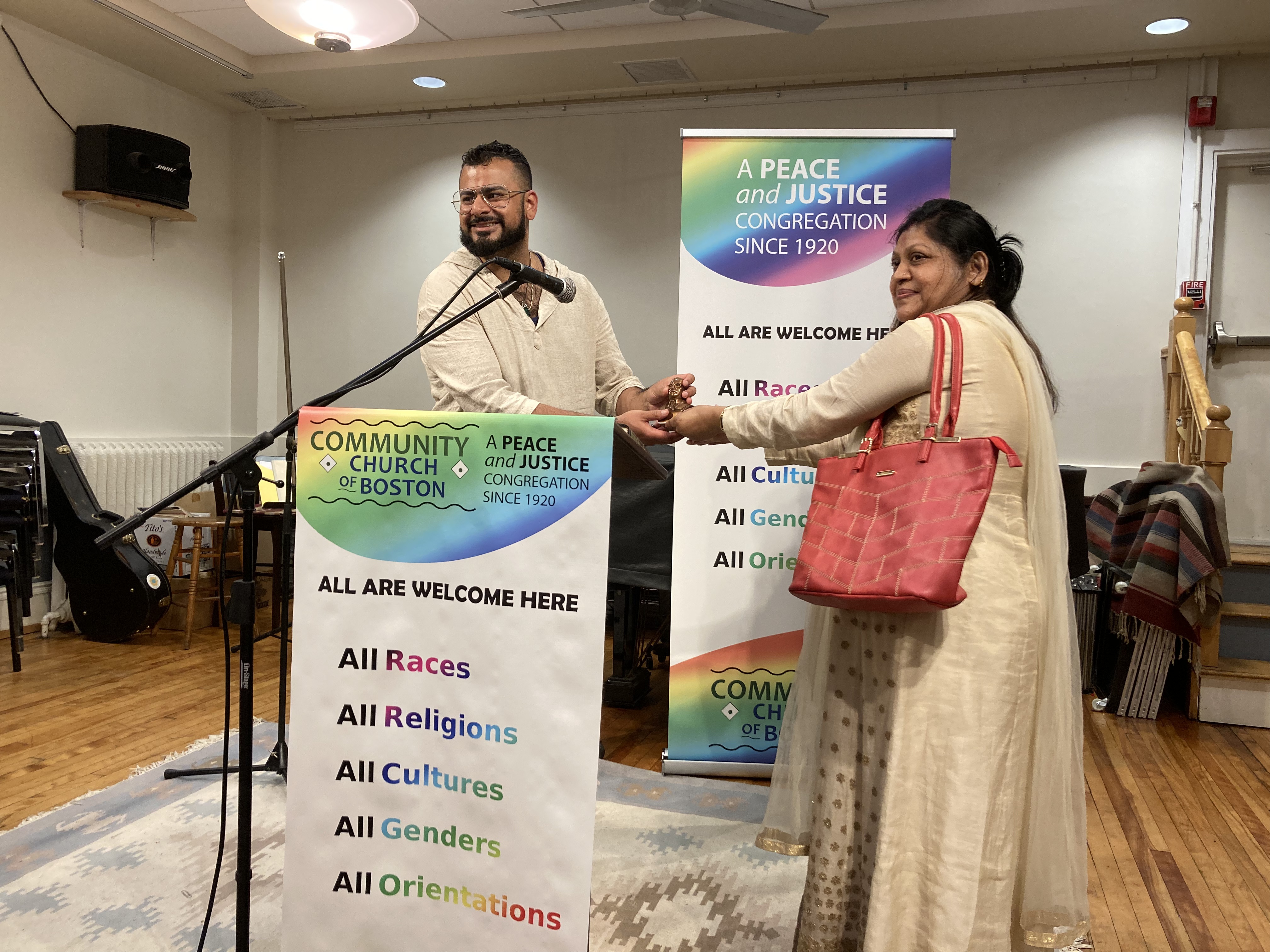
Boston Study Group representatives presenting a bust of Dr Ambedkar to Kandil of Muslims for Progressive Values for his contributions to the cause of interfaith harmony. Photo: Beena Sarwar 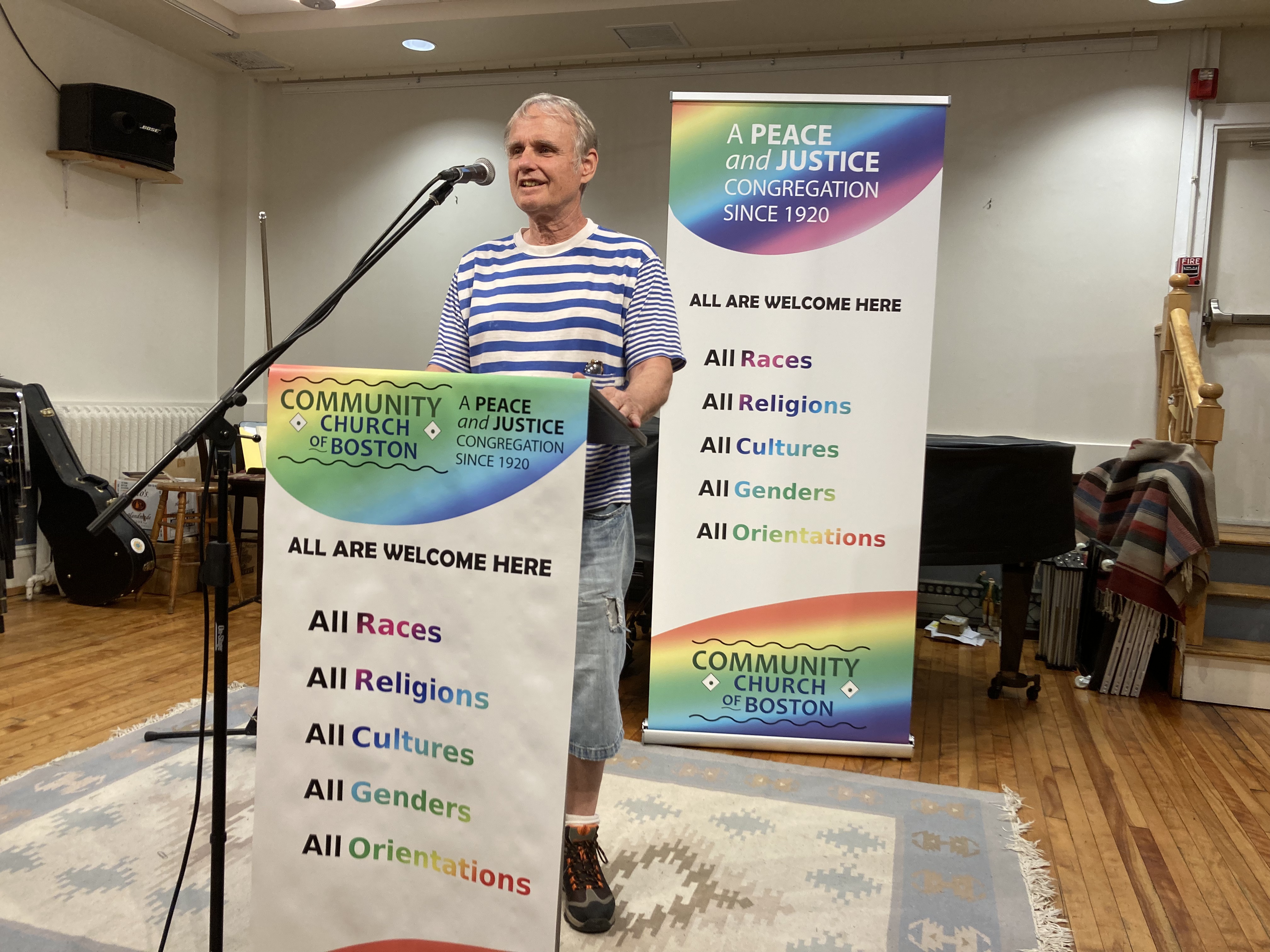
John announcing the upcoming Community Church annual meetup, “a celebration of people’s power, the world, and their resilience”. Photo: Beena Sarwar 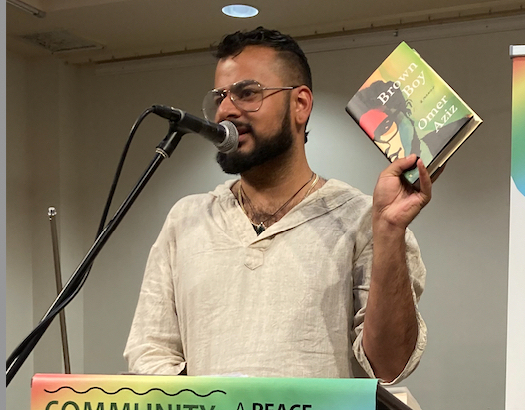
Community announcement: Omar Aziz’s book just-published book Brown Boy. Photo: Beena Sarwar 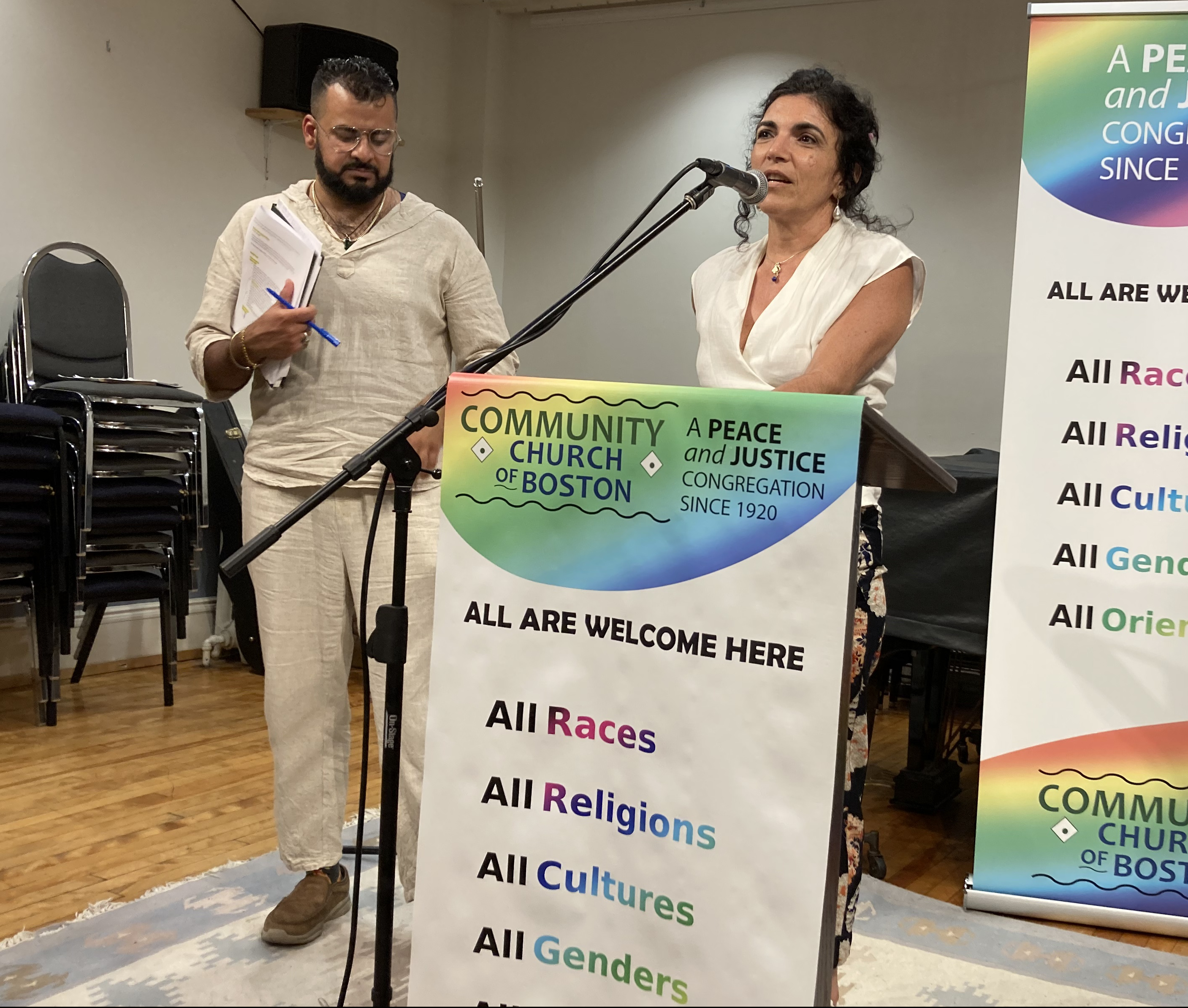
Journalist Sussen announcing the screening of a documentary ‘Five men of Fidel’ coming up on 26 July. Photo: Beena Sarwar
Having followed and written extensively about this issue for years, I tried to provide a broad perspective and context. Sharing below the text of my speech. Here is a link to the video, broadcast live on the Muslims for Progressive Values-Boston Facebook page.
Hello everyone and welcome to this seminar on Celebrating Love, upholding the power of love that is not bound by caste, religion, or sexual orientation.
I am honoured to be here representing two amazing collaborative groups, the Boston South Asian Coalition based in this city, and the Southasia Peace Action Network or Sapan, a global cross-border, cross-regional, cross-diasporic network.
The topic today is one that cuts across borders, and bears relevance to all countries in the Southasian region, and beyond, in the diaspora. It is further relevant to all societies divided along race, class, ethnicity, or caste lines.
Human beings are essentially tribal in nature and want to maintain their identities. All of us here are part of a certain tribe, we believe in certain values, which cuts across the traditional borders and boundaries.
Historically and traditionally, families and communities have determined the life partners of their members.
They want to keep land and inheritance in the family or community.
They want to preserve lineage and culture, prevent it from being diluted or watered down.
They want to control women.
I will speak from the perspective of a Pakistani and a Southasian who has been primarily based in Southasia region for most of my life, and in the USA, in the Boston area, for a little over ten years. I consider myself a transnational rather than an immigrant, a journalist who takes an insider-outsider approach to both cultures.
Relevant to our discussion, I myself am a product of a marriage that took place across communities. My father was a Sunni, my mother is a Shia.
Both are sects of Islam but have been pretty much at war with each other in various parts of the world.
As the child of a mixed Sunni-Shia marriage, I say, “I am a Su-shi.”
How many people here are the product of inter-faith, inter-caste or cross-national unions? Can we see a show of hands?
When you are the product of different communities, you have access to both. You see first-hand the challenges faced by each.
You also see the benefits and the richness of culture such a union brings.
I don’t like to be prescriptive or suggest that people ‘should’ marry across community divides. In fact, let’s make the word ‘should’ obsolete.
The concept that all human beings have the right to live in dignity and the right to agency is a relatively new one. This is a concept that has evolved as human beings have evolved. And so, it is something to aspire towards.
We discussed this at Sapan’s online discussion in February on Celebrating Love: Beyond Borders and Boundaries.
“Love is about the freedom to choose who you want to be with. And this freedom to choose and to think for yourself often scares people from acknowledging love. But once love gets normalised, equality gets normalised because love speaks a universal language. It tends to go beyond boundaries of race and religion,” said one of our speakers, a lawyer, interfaith leader, and human-rights activist in Pakistan and the UK.
No one has the right to interfere with consensual relationships between adults – not the state, or society.
Historically and traditionally of course, this has not been the case.
There is a wonderful novel called The Heart Divided by a political activist from Lahore, Mumtaz Shah Jahan, who died at a young age in an air crash. The novel was posthumously published in Pakistan and later in India by Penguin. It is set in the time leading up to India’s independence from British colonists in 1947 and its simultaneous Partition, as a new country, Pakistan was born.
The story revolves around two families that have been close for generations. One family is Hindu, the other Muslim. They have a lot of love and regard for each other, they even go on holidays together.
But when two young people from either family fall in love, they cross an invisible line.
In Shakespeare’s tragedy, Romeo and Juliet, they knew that their love was forbidden because their families were at war.
Many Southasian folk tales far older than Shakespearean times tell similar stories. Even today, our culture remains much like the old European cultures where marriage was a partnership between families not individuals.
But education and greater world exposure has led to evolving aspirations of human equality.
The young people in Mumtaz Shah Nawaz’s novel set in the 1940s hope that their families’ relationship will prevail over traditional barriers of religion.
They are sadly mistaken.
Decades of love and friendship are swept away as the family elders unite to prevent the union.
You can be best friends, but inter-marriage is not an option. We don’t want the race getting diluted. We don’t want the religion getting diluted. We don’t want the lineage to be polluted.
These views continue to prevail today in traditional societies, and even in those that are considered non-traditional or modern.
The backlash to the acceptance of consensual relationships between adults is visible right here in America. Those who showed their adherence to liberal values by voting for a Black president were not prepared for a law that legalised gay marriage.
It’s fine to be liberal and progressive until it hits home. You may sense that your child is gay, or you have reluctantly accepted that they came out. But you don’t want them openly dating or marrying their gay partner.
Smaller communities or those that face persecution tend to be more conservative in this aspect, due to an existential fear of being wiped out as a community, losing language, religion, culture, traditions.
The greater danger comes not from these smaller communities trying to preserve their culture and heritage.
Currently, the greater danger comes from the majoritarian, hyper-nationalist, hyper-religious forces in countries like India and Pakistan, or White Supremacists here in the USA, who engage in moral policing and violence to enforce their views.
There are horrendous stories in Southasia of inter-caste or inter-religious couples being hunted down, tortured, and killed, something my fellow speakers will elaborate further on. Not so long ago we saw the KKK similarly hunt down inter-racial couples in USA.
But young people and even older ones will always cross all kinds of borders for love. In a recent case, a 19-year old Pakistani woman and a 26-year old Indian man fell in love after interacting online. They couldn’t get visas to each other’s countries so they met and married in Nepal, then went to live in India where the man worked as a security guard.
These are young people from very ordinary backgrounds, not trying to make a political statement. They ended up in jail. The woman was deported out of the country. The man remains in prison for helping a Pakistani enter the country illegally.
They could have been allowed to continue being together. The Pakistani woman could have been given a visa on the basis of her marriage to the Indian man.
But at least they are alive. In many inter-religion or inter-caste cases one or both partners end up dead, killed by their own family members.
Violence against couples in South India is often based on caste identities, as a speaker pointed out during Sapan’s online discussion in February. There are issues of patriarchy and class too. “The perpetrators of violence see a woman’s body as an institution of caste purity.”
The issue of caste oppression in India is reflected in the systemic racism in the USA.
Caste oppression from India also filters into the USA through discrimination practiced by those who migrated here.
Behind this oppression lies fear. Fear that a culture and a way of life is being endangered. The desire to keep the status quo. Letting go of it means entering uncharted territory. What will happen to the children, what religion will they follow? The colours will get diluted, it’s moving away from the old set path, to a new one.
I remember a Hindu-Muslim couple I met in England years ago, who had come from India and Pakistan respectively. They never had children for this very reason.
Evolution is part of life. We can’t see where it will lead to, but we can see that it will be different than the past.
But holding on to harmful past practices because we fear the unknown is not a good option. Letting go entails courage and curiosity. It entails trust that we are becoming better human beings in the process, making the world a better place.
It is not the end of the world. It is climate change and corporate greed that is endangering the world, not lovers who follow their heart.
Those who use violence to prevent them from doing so are on the wrong side of history.
From times immemorial, those who open their hearts have seen beyond the limitations of caste, class, religion and race.
There are countless stories, real and fictional, of lovers dying or being killed for their love. They are the heroes and heroines – from Romeo and Juliet to Sassi Pannu, and Heer Ranjha.
The villains are those who always tried to stop them, the forces of status quo. They may be majoritarian but they are not in the majority. Their numbers seem larger because their violent actions make headlines, while the hundreds of thousands who connect quietly across divides don’t make the news.
That is why we need to keep building solidarities across caste, race, class, sexual orientations, ethnicities, religions, nationalities.
This is the way forward. This is evolution.
Thank you
Filed under: Uncategorized |


 Journeys to democracy
[…] founder editor of Sapan News. Some of the ideas in this piece were initially articulated at a talk on ‘Celebrating Love’, at the Community Church of Boston, 14 July 2023, organised by Boston South Asian Coalition, Boston […]
LikeLike
[…] The way forward is a rainbow of blended colours […]
LikeLike