What I’ve learned from Noam Chomsky

As news of Noam Chomsky’s failing health makes the rounds, I share some learnings from my interactions with a trailblazing public intellectual whose moral compass has impacted the world


PERSONAL POLITICAL
By Beena Sarwar
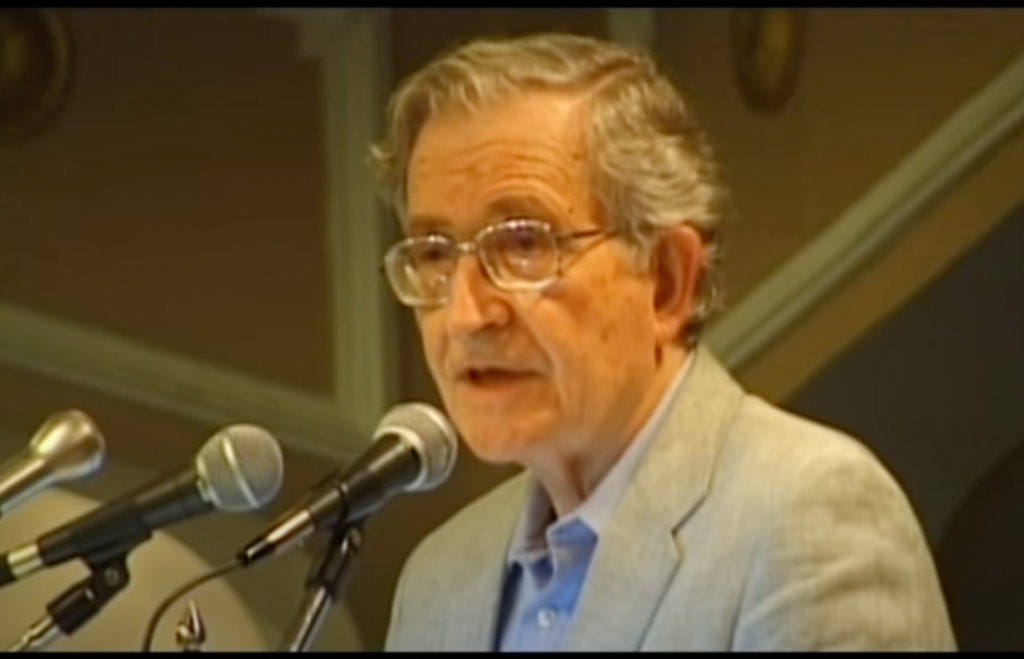
Noam Chomsky in Pakistan, 2001. Screenshot from VPRO news report by Beena Sarwar.

I once asked Noam Chomsky how he manages to remember so many facts and figures and hold audience attention. He replied that he didn’t convey any new information, that his talks are based on materials already in the public domain, and that he simply joins the dots – providing context – and repeats the information consistently and in different ways.

His response was typical of his humility as well as his courtesy towards a much younger person to whom he owed nothing.

Chomsky teaches us that it is not necessary to be loud and sensationalist in order to be heard. This, together with the clear and courageous moral compass he has provided over decades, is a most valuable lesson.

Noam Chomsky was already a legend when I first met him over two decades ago in December 2001 when he visited Pakistan for the inaugural Eqbal Ahmad Memorial lecture series.

Continue reading

How a decades-long connection led to a new collaboration

I have known Rob Vreeken for over 30 years, since we met in Amsterdam in the early 1990s. He worked at the leading Dutch daily newspaper De Volkskrant, that we visited — women journalists from Pakistan, Sri Lanka, India, and Indonesia, in The Netherlands on a month-long fellowship. I have lost contact with the other fellows but Rob and I stayed in touch on email.

The last time we actually met was when he traveled to Pakistan as a foreign correspondent, soon after my daughter was born. He visited our home in Karachi and met my family, thoughtfully bringing along a baby gift. He has also been very supportive of my ventures, from Aman ki Asha, to the Southasia Peace Action Network and Sapan News, , the media outlet I started in August 2021.

Since ‘retiring’ from De Volkskrant a few years ago, Rob has been the paper’s Istanbul correspondent. After the Oct. 7 attacks, he also reported from Israel and the West Bank.

November 11, 2023: Rob Vreeken with Palestinian activist Saleh Diab in East Jerusalem. Photo by Faiz Abu Rmeleh

In November, he shared some photos which I thought would be interesting for my students at Emerson College, where I taught a Global Journalism course last fall. He subsequently shared his experiences with my students, who really appreciated his insights – like, it’s okay to say “I (or we) don’t know” rather than rushing to provide opinion or information, and the importance of acknowledging mistakes that we as journalists and human beings make.

I’m sharing Rob’s first piece written specially for Sapan News. It is a clear and fair analysis of the ICJ hearings at the Hague that he watched live from Istanbul.

You can see the photos I shared with my class in a slideshow embedded in his piece at the Sapan News website. The article, like all our features, is available for syndication with due credit to Sapan News – http://www.sapannews.com.

Read: What Israel fears above all – a Sapan News syndicated feature

Lawyer Vusi Madonsela (left) of the South Africa legal team; looking at him Tal Becker (right), head of Israeli team. Photo by Rob VreekenIstanbul.

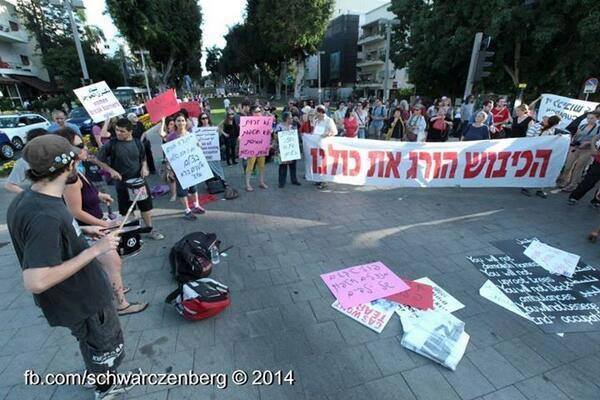
“The Occupation kills us all”: Israelis in Tel Aviv protest Netanyahu’s attack on Gaza

Banner: “The Occupation Kills us All”. Israelis protesting in Tel Aviv against Netanyahu’s assault on Gaza (Thanks Farrukh Abbas for the share). Photo: Haim Schwarczenberg, Israeli photographer living in Jaffa, taking part in the Palestinian struggle against the Israeli occupation and oppression https://www.facebook.com/schwarczenberg

I’m sharing below a slightly edited Facebook comment by Syed Farrukh Abbas, a blogger and a student of media studies, based in Pakistan, that he posted with the photo above. Farrukh is also one of the administrators of the Laal Facebook page, which is where I know him from. To his words below, I just want to add: Respect and salute to, and solidarity with, all those in Israel who stand up and protest Israeli atrocities – including all those I know personally who’ve been doing this consistently for years, termed ‘traitor’ and ‘agent’ by the Israeli right-wing (sound familiar, anyone?). Here’s Farrukh’s note: Continue reading

Sex trafficking snares hundreds of thousands of American children

My report in Global Post on sex trafficking, June 20, 2012 (don’t miss the interactive map at the end) 

Over 80 percent of cases of American sex slavery involve US citizens, not immigrants. It’s a problem this country must find creative solutions to solve through conferences like Demand Abolition, which took place in Boston recently.

Image: Ira Gelb (Flickr)

Beena Sarwar

BOSTON — She was only 15 when she escaped, but she had already been sold for sex up to nine times a day since she was two years old. Her parents pimped her out and beat her severely, but Mary (not her real name) is a survivor – no longer a victim.  Twelve years later, she helps other survivors in the US and abroad, volunteering with the Not For Sale Campaign.

I met Mary over lunch at a convention on sex trafficking in Boston recently and she told me her story. It has taken “a lot of healing and hard work” to get this far,” she said.

Besides survivors like Mary, activists, government officials and law enforcement officers gathered at the intense, two-day event in Boston in May, organized by Demand Abolition, a program of Hunt Alternatives Fund. The focus of the conference was on abolishing the demand for commercial sex. Continue reading