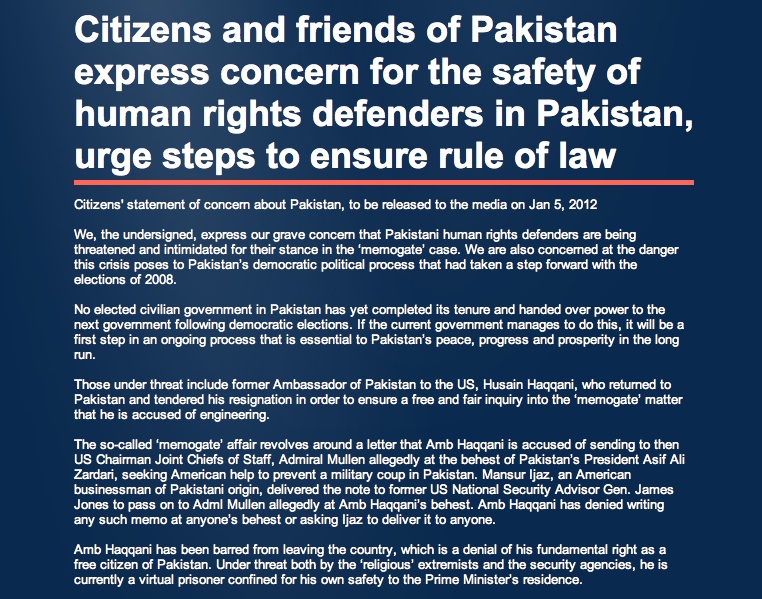
Citizens’ statement of concern about the democratic process in Pakistan democratic and safety of human rights defenders, to be released to the media on Jan 5, 2012 (to endorse, please enter your information in the form at this link)
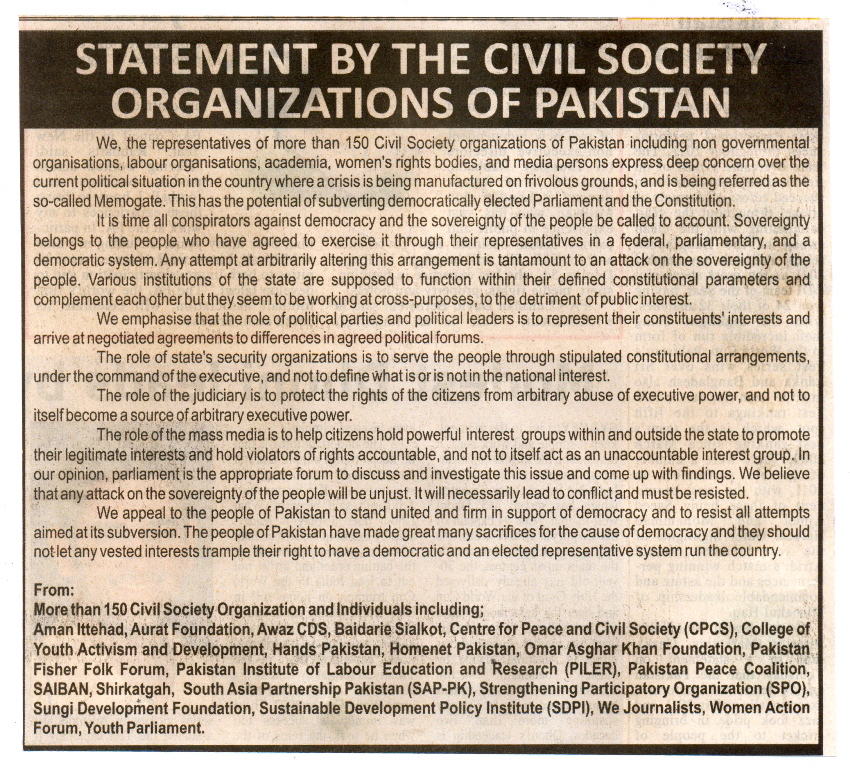
We, the undersigned, express our grave concern that Pakistani human rights defenders are being threatened and intimidated for their stance in the ‘memogate’ case. We are also concerned at the danger this crisis poses to Pakistan’s democratic political process that had taken a step forward with the elections of 2008.Continue reading →
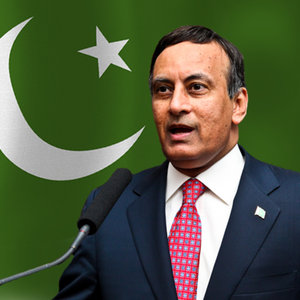
There are numerous issues besides ‘Memogate’ that directly affect the people, like the shortage of gas, electricity, clean drinking water, housing, healthcare, employment and so on. But the issue gains significance because so far, no democratically elected civilian government in Pakistan has ever been allowed to complete its tenure and hand over power to the next one through democratic elections (as I outlined in this paper). There were hopes that this government would be the first to do so – a critical step towards the continuation of a democratic political that is necessary to move the country away from the military-dominated politics of the past – something, as it is now all too apparent, is not a thing of the past after all. In this context, it’s important to understand the current situation and its dangers. Myra MacDonald sums it up in an analysis for Reuters. Some insights were posted to this blog earlier (here and here). Additional facts are laid out in a document received today (reproduced below) that outlines some facts about Husain Haqqani and ‘memogate’. Also read this important article, ‘Treason? Under what Constitution? in the New Pakistan blog, which dissects the ‘memo’ contents and notes that each item in the document falls under the constitutional purview of the federal government…
Former Pakistan ambassador Husain Haqqani’s counsel Asma Jahangir sounds a sombre warning about the danger Haqqani is in from the military and intelligence agencies that are capable of picking him up and ‘twisting his limbs’ to make him say what they want to hear. Talking to Dawn TV’s Matiullah Jan in a detailed interview of Jan 1, 2012 she says that she took up the case because she found it a travesty that an individual was being condemned on the basis of a media trial without due process or representation. However, she will not represent him before the Judicial Commission that has been formed as she does not trust the process. The interview, posted in six parts (about 5-6 min each), is worth listening to in full as she makes some crucial points about the significance of this judgement to Pakistan’s politics. She sums some of these points up in this earlier brief interview with Al Jazeera English:
Dec 30, 2011, Human Rights Watch press statement received today: “As the “Memogate” case proceeds, all arms of the state must act within their constitutionally determined ambit and in aid of legitimate civilian rule. In this context, justice must both be done and be seen to be done. Pakistan desperately needs a full democratic cycle and a peaceful transfer of power from one civilian administration to another. Should this process be derailed, the constitutional safeguards and legal rights protections created since 2008 may suffer irreparable damage. Continue reading →
Benazir Bhutto on her arrival in Karachi in Oct, 2007. Photo: Beena Sarwar
It’s four years since those pistol shots and bomb blast in Pindi’s Liaquat Bagh ended the life of Pakistan’s most promising politician and hope for democracy.There is no one to replace Benazir Bhutto but her legacy lives on in many ways. This is the first legitimately elected government ever in Pakistan to remain in office for as long as it has – and it will be the first to complete its tenure if allowed to do so and hand over power to the next elected government. This political process is essential to move Pakistan out of a quagmire that has taken decades to push us into. There are no quick fixes, no magic wands that can change things overnight. What’s important is the process and at least that is under way – thanks to Benazir Bhutto.
Thanks to YouTube, archival footage is now available to remind us of her legacy. Continue reading →
Also see Pakistan Media Watch about the dangers of speculation and rumour being presented as truth: “…there is a petition before the Supreme Court that is based on media reports that selectively summarise a foreign media report that paraphrases the speculation of unidentified people. As a result, the people’s perception of events may have been manipulated, and what they believe is reality may actually be a carefully designed version of reality that better serves a political end.” Complete article at: Media, Rumours and ‘Public Importance
Please note, the names on the signatories list will be updated as more endorsements are coming in.
PRESS RELEASE, December 17, 2011
Civil society terms “memogate” scandal an attempt to thwart democracy; Says threatening the representative system tantamount to attack on sovereignty of people. Read on for the text of the statement and the signatories’ list Continue reading →
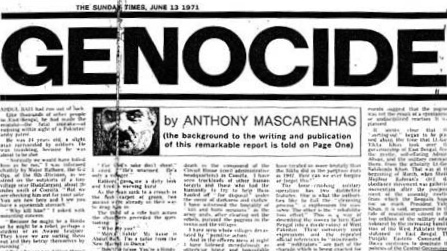
Thank you Mark Dummett, for the report in BBC today paying tribute to Anthony Mascarenhas, the brilliant and courageous Pakistani journalist who had to flee abroad in order to be able to tell the truth – Bangladesh war: The article that changed history.
Mascarenhas
“Eight journalists, including Mascarenhas, were given a 10-day tour of the province (East Pakistan). When they returned home, seven of them duly wrote what they were told to,” writes Dummett.
“But one of them refused.”
That was Mascarenhas, who died in 1986 in London.
His wife Yvonne Mascarenhas told Dummett that she remembers him coming back distraught: “I’d never seen my husband looking in such a state. Continue reading →
The body of missing Pakistani journalist Javed Naseer Rind was found on Saturday in a remote part of the troubled Pakistani province of Balochistan, marking the seventh death of a Pakistani journalist in 2011 and placing Pakistan on pace to rank as the world’s deadliest place for journalists for the second year in a row, according to a report by The Committee to Protect Journalists.
Rind, an editor and columnist with the Urdu-language newspaper Daily Tawar, was kidnapped in his hometown of Hub in southern Balochistan province. The discovery of his body paints a bleak picture of the working conditions for journalists in the troubled country, who battle pressures on the international front from the war on terror and human rights and ideological issues at home. Continue reading →
Watching Libyans celebrate the toppling of their dictator two things come to mind. First, Gaddafi’s apparent extra-judicial murder after being captured must be condemned. Secondly, a cautionary reminder: don’t expect the death or removal of a dictator to mark the end of the struggle. It is just the beginning of another struggle, an even messier one — the political process known as democracy. We in Pakistan know this all too well. Dictators die or get toppled but their legacies live on. Their creations like Zaid Hamid may lose, even as the creator Gen Zia wins (see Anas Abbas’ de-construction of this phenomenon at his blog) Continue reading →


 Citizens’ statement of concern about the democratic process in Pakistan democratic and safety of human rights defenders, to be released to the media on Jan 5, 2012 (to endorse, please enter your information in the form at this link)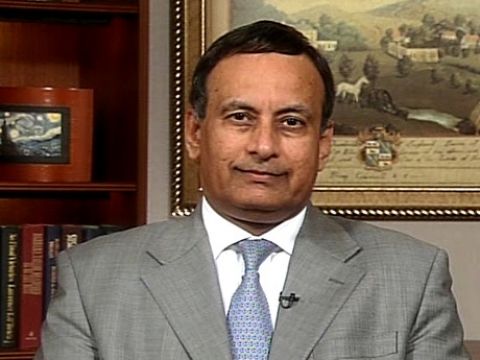




 Journeys to democracy