Remembering Anita Ghulam Ali

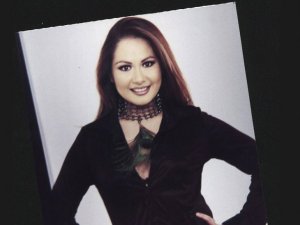
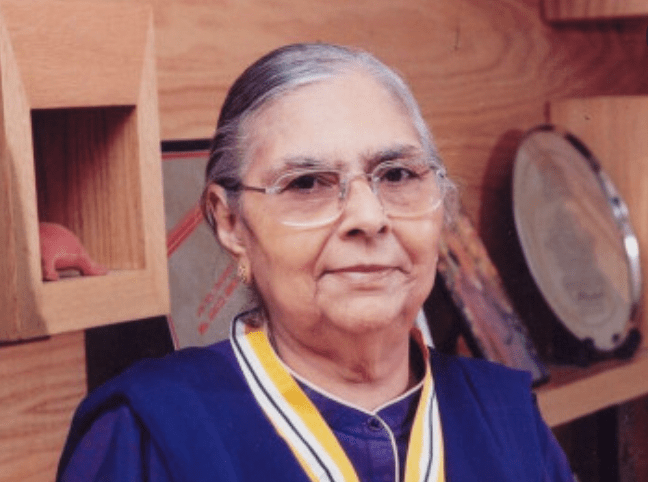
A trailblazer, Anita Ghulam Ali’s courage and biting wit will remain an inspiration. Photo: Courtesy Newsline magazine

Here’s the article I wrote on Anita Ghulam Ali for The News on Sunday: A legend passes on (Aug 17, 2014); also see Zubeida Dossal’s article about her, shared by Zubeida Mustafa. Here’s the link to her interview in Dawn, 2012.

She leaves a void that will be hard to fill, but her legacy will live on through the institutions she was associated with, and the people she mentored over the decades, particularly in the field of education. Although Anita Ghulam Ali had no children of her own, many of these individuals were as dear to her as if they were her own. She took a keen interest in their work and personal wellbeing, in the most non-interfering way, encouraging, questioning, supporting, and motivating. She would ask affectionately, with genuine concern, after their children and grandchildren, whom she’d seen grow from babies to “young ladies” or gentlemen, as she would put it.

It didn’t matter if you were a chaprasi or a CEO. With Anita Ghulam Ali, you could be assured of the same treatment, rooted in egalitarianism and respect for human dignity.

I can’t remember a time when she was not part of our lives. Heading the West Pakistan Teachers College Association (WPTCA), she had led the massive teachers’ strike in the late 1960s that my mother Zakia Sarwar participated in as a young lecturer at Sir Syed Girls College in Nazimabad, Karachi. They were demanding that private colleges, which had proliferated during the military regime of Ayub Khan, pay due wages to their teachers.

As many as 72 private colleges ungoverned by rules or regulations had cropped up in Karachi alone, compared to ten government colleges. The exploitative owners would make teachers sign for salaries listed as double of their actual pay, or make them perform menial tasks at their homes. Insults and harassment were common. The last straw was when anti-Ayub agitations closed down educational institutes for nearly five months, and private college owners stopped paying their teachers salaries. Some teachers resorted to operating pushcarts on the streets, vending clothes and other items to feed their families.

I visualise Anita Ghulam Ali as she must have been then, a short, stocky figure, hair pulled back severely from her broad forehead, intensely bright,
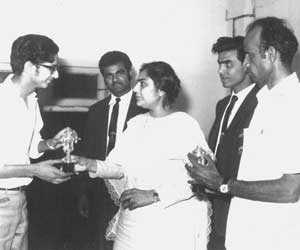
Distributing prizes at a debate competition at Islamia College
.Distributing prizes at a debate competition at Islamia College. File photo.

dark, slightly slanted eyes over wide, high cheekbones – the Slavic beauty inherited from her equally formidable and regal Georgian mother Shirin, a respected social worker.

The authorities, wanting the teachers to end their agitation, tried to get Anita’s father Justice Feroz Nana Ghulam Ali, to step in. A police officer went to tell him that his daughter was creating trouble and could be arrested.

“If she is breaking the law, by all means arrest her,” Justice Nana is reported to have replied calmly.

Anita Ghulam Ali remained true to her parents’ legacy, uncompromisingly honest and committed to humanitarian values all her life. A prominent leader in the field of education, she served as Sindh’s Education Minister in October 1996 and as a caretaker minister in November 1999. Some criticised her for having accepted a position under the military dictator Gen. Pervez Musharraf.

“I don’t care who appoints me, a dictator or a democrat. I just want to get the job done,” she told me.

A trailblazer in the field of education, leadership, and social activism, her courage, biting wit and will of steel, will remain an inspiration – not to mention her refusal to suffer fools. For over two decades she headed the pioneering Sindh Education Foundation, fending off corrupt ministers and bureaucrats who felt entitled to a share of the funds she raised. She would share stories of how she got the better of them, although there were setbacks too.

One minister had even eyed her paintings and ingratiatingly, but blatantly, asked her for them. She recalled the incident sardonically, relating how she had refused the man, telling him off in her own unique way – low-key, direct, firm, yet with a touch of irony and wry humour. She had nothing but contempt for such parasites, but she knew how to work with them, earning their respect, and getting what she needed.

Her pioneering adopt-a-school programme is now replicated in all provinces. A vocal opponent of child labour, she also initiated community-supported schools for underprivileged, working children in Karachi. These are places where working children can come in, be mentored, given education, get cleaned up, and receive medical care including vaccinations. As always, she had a pragmatic approach to the issue, recognising that these children work because they must, either as sole breadwinners for their families or to supplement the family income significantly.

A recklessly driven car crashed into her as she stood by the roadside many years ago, leaving her with long-term injuries that eventually confined her to a wheelchair. Additionally, she also suffered from debilitating arthritis. But Anita Ghulam Ali refused to let anything get in the way of her work. She obtained permission from her apartment authorities to get a small lift installed for her top-floor apartment. Later she courageously stood firm against the land developers who wanted to raze the building and build a multi-storey (illegal) structure there. Had it not been for her, the builders would have had their way long ago.

Anita Ghulam Ali received several awards, from the government – including the President’s Pride of Performance medal and the Sitara-e-Imtiaz – as well as from various private organisations. But the down-to-earth, unpretentious, totally unmaterialistic person that she was, for her, the real recognition came from the genuine love and respect she received from those whose lives she touched.

There is no ‘honour’ in killing – Sept 2008, sadly still relevant

samia sarwar

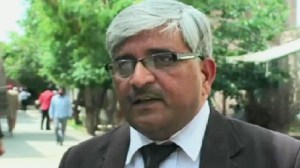
Not just the ‘poor’ and ‘uneducated’ – Samia Sarwar was murdered in her lawyer’s office by a man abetted by her own mother, a doctor.

The outrage against the murder of Farzana Parveen outside the Lahore High Court reminded me of something I wrote in September 2008, published in The News, Pakistan and in The Hindu, India, below. Farzana was going to the court to testify that she had married her husband of her own choice (defending him against kidnapping charges her family had brought against him). Such murders for ‘honour’ are common in the region. In Pakistan, the situation is exacerbated by the Qisas and Diyat law which enables the perpetrators to literally get away with murder (as Raymond Davis did). This case is particularly horrific because of where it happened and because the woman was three months pregnant.  See booklet by Hassam Qadir Shah: Honour killing-criminal procedures-Hassam Qadir Shah-Shirkat Gah (2002, PDF) 

There is no ‘honour’ in killing, Sept 2008

[Note: in my published article, I had mixed up the names, corrected below – the correct names are Saima Waheed and Samia Sarwar Continue reading

Requiem for a rights activist

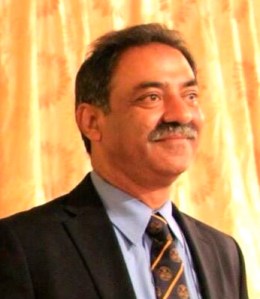
Rashid Rehman KhanSenior journalist and Director, Human Rights Commission of Pakistan I.A. Rehman on a valued comrade and beloved nephew, shot dead in his office last week:

He loved life but he loved justice even more. He did not fail anyone, everybody who mattered failed him…. What is the situation now?

• The journalists in Multan dare not write about the murder.
• The judges in the Lahore High Court are apparently avoiding hearing Aasia Bibi’s appeal.
• The Multan police want the people to believe they do not know who the mischief-makers are.
• There is no authority in the country that can stem the wave of intolerance that is going to erase all remnants of reason and civilisation.

Let all those hurt by murder in the HRCP office stop mourning  Rashid’s loss and gird up their loins to save the next ones marked for annihilation.

Read the complete article: Obituary: Requiem for a rights activist

“Another light has gone out in Pakistan”: the martyrdom of Dr Faisal Manzoor


Dr Faisal Manzoor“Another light has gone out in Pakistan.” Less than a week after advocate Rashid Rehman was killed in Multan, Dr Faisal Manzoor has been gunned down outside his hospital in Hasanabdal. Tragic beyond words. May his family and friends find the courage to bear the loss. May the security and political establishments find what it takes to find his killers, charge, try and punish them. This culture of impunity must end. Please read Dr Omar Ali’s blog post about his colleague Dr Rashid Manzoor, killed just two months after his cousin, also a doctor at the same hospital, was gunned down at the same spot — both killed only because they were Shia (The Martyrdom of Dr Faisal Manzoor). “They were not just Shia, they were prominent Shias. They were also prominent philanthropists, prominent doctors, prominent helpers of those in need, prominent hosts of distant cousins of friends of friends..and prominent friends of all and sundry. But being prominent Shia was what got them targeted…..and all the other prominences did not help one bit when the motorbike boys came looking for targets.”

 Also see my earlier piece – Pakistan’s ‘enlightenment martyrs’.

A migrant’s tragedy and a heartwarming response

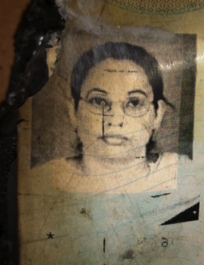
Photo from her charred Pakistani passport

Not a ‘Jane Doe’: Photo from her charred Pakistani passport

Some days ago, a woman died in a fire in Cambridge, MA. The media initially reported that she was in her mid-30s, but within hours, the local Pakistani and Indian community was abuzz with the news that she was a Pakistani, in her 50s. They identified her as Farzana Khan, who lived completely alone here as her entire family was in Pakistan. It was moving to see how many people were concerned and wanted to help. When I sent the report below to The News in Pakistan a couple of days after the incident, the medical examiner still hadn’t managed to get a close friend or relative to identify the body. Until then, she had to be kept in the morgue although she was not quite a ‘Jane Doe’. As word of the dilemma spread, a Pakistan origin couple in the Boston area whose children she had looked after briefly,  Continue reading

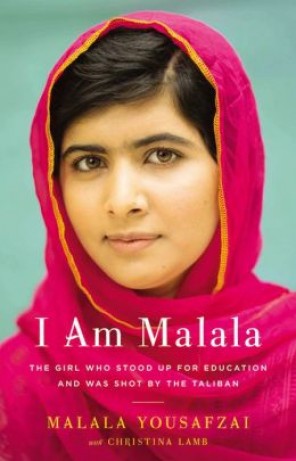
Censorship, book bans and Malala: exposing closet Talibans

malala bookRecently, an editor in Karachi told the well known defence and policy analyst Dr. Ayesha Siddiqa “not to bother writing anymore about the Tehreek Taliban Pakistan (TTP) or any other militant outfit, religious party or even the cricketer-turned-politician’s Pakistan Tehreek-e-Insaaf (PTI).” She was told not to even mention TTP and affiliated organisations. The call followed the attack on a vehicle carrying staff of a media organisation, in which three people were killed and four injured.

And in Peshawar, the launch of “I am Malala” was stopped from taking place at the last minute. Read poet and activist Harris Khalique’s comment about it – “Malala interrupted and the Khan surprised“. As he mentions, another activist and friend M. Tahseen had written an email, angry at the provincial government of Khyber Pakhtukhwa (KP) for preventing the book launch from taking place. It was scheduled last Tuesday, January 28,  at the Area Study Center, University of Peshawar,  organized by various civil society organizations  along with the Area Study Center.

Imran Khan’s response:

I tend to agree with my friend, the rights activist Dr. Fouzia Saeed, who proposes that if Imran Khan really means what he says, he should host a big event to launch the book. It is, after all, important as Fouzia says, “to make a distinction between KP ministers who did this, and the Taliban”.

Continue reading

Devise a long-term strategy for dealing with terrorism: Forum for Secular Pakistan

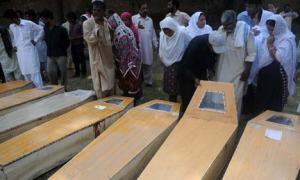
Peshawar-blast-78-Church-killing-suicide_9-22-2013_119340_lRead Omar Ali’s blogpost Three Layers of Confusion.. and their consequences” for a sound analysis of the vicious suicide bombing in Pakistan on Sunday targetting a church in Peshawar, killing at least 81 people, many of them women and children. Among them were six members of one family, including five women and a child.  As Dr Ali points out, “it is not that no action has been taken against them. ..but there is a curious disconnect between these operations and the national narrative being promoted by the same military”.  BELOW: a statement by the Forum for Secular Pakistan urging the government to Devise a long-term strategy for dealing with terrorism

Continue reading

Pakistan Elections: protest unethical and undemocratic electoral process

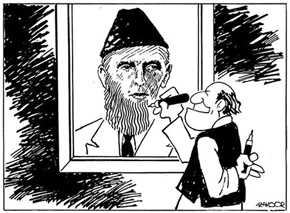
Cartoon by Zahoor, reproduced in Nadeem Farooq Paracha's article on Pakistan 'ideology', Dawn, April 19, 2012 http://bit.ly/10Nfsg7

Cartoon by Zahoor, reproduced in Nadeem Farooq Paracha’s article on Pakistan ‘ideology’, Dawn, April 19, 2012 http://bit.ly/10Nfsg7

Pakistanis are vocally protesting the trend of over-zealous Returning Officers knocking down prospective electoral candidates like nine pins on “moral” and “religious” grounds related to Articles 62 and 63 inserted into the Constitution of Pakistan by the military dictator Gen. Ziaul Haq. Recently, former MNA and prominent newspaper columnist Ayaz Amir’s candidacy was rejected on the grounds that he has written articles opposing the ‘two nation theory’ and the ‘ideology of Pakistan’. (Here’s an online petition in his support that I have signed). Here’s the HRCP statement slamming “this latest plot to deny people the right to determine who governs them”; Khushal Khattak’s blogpost on “the kind of pre-poll rigging that ANP faces”; The devious Article 62: How pandering to the extremists made it stay, by Aziz-ud-Din Ahmad. Below, prominent citizens statement against the “unethical and undemocratic” electoral process that is allowing the “ignorance and personal prejudices of the Returning Officers” to rule. Continue reading

LoC tensions: Need facts, not hype

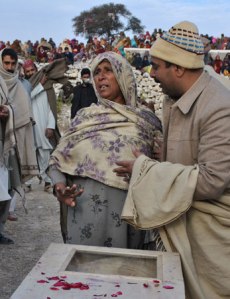
Jan 8, 2013: A grieving mother, mourning her son, Lance Naik Mohammad Alam.

Jan 8, 2013: A grieving mother mourns her son… Lance Naik Mohammad Alam.

My article in The News on Sunday, Jan 13, 2013

Need facts, not hype

Beena Sarwar

News about the death of two Indian soldiers at the Line of Control in Kashmir on Jan 8 triggered anger in India. Yes, a Pakistani soldier had been killed just two days earlier. But his body had not been mutilated. He had not been beheaded. For that is what Indian reports said, creating hysteria and leading to the beating of war drums: the bodies of their jawans had been mutilated, one of their heads was missing, and Pakistan was responsible (small mercy, authorities asked Indian journalists not to use the word ‘beheaded’ but ‘decapitation’).

India seemed to erupt in a storm of anger, outrage, and indignation, betrayal and hurt, and calls for retaliation against Pakistan. Understandable. Imagine the reaction in Pakistan had it been the other way around. Continue reading

We must move beyond outrage against selected rape cases

Protest at India Gate against gang rape in Delhi. TOI photo

Protest at India Gate against gang rape in Delhi. TOI photo

Grieved to hear that the student who was gangraped in a Delhi bus has passed away in the Singapore hospital where she was flown for treatment. And about the teenage gangrape victim in Patiala who committed suicide – one of countless, not just in India but elsewhere in Southasia. And the 42 year old woman. And the two girls – minors – in Umerkot, Sindh who were raped. And that a woman is raped every 22 minutes in India – I don’t know what the rate is in other South Asian countries, but doubt it’s much better elsewhere. But will the outrage at the “Delhi Gang Rape case” and the victim’s death change things for women in our part of the world – not just in urban but in rural areas, not just for women? And for those, including minor girls and boys, who are routinely subjected to sexual abuse, not only by strangers and security forces, but most often by family friends and relatives? And for the countless who are subjected to ‘revenge rapes’ or forced to marry their rapists or exchange girls and women for peace? We need to move beyond outrage at selected cases and work towards changing attitudes, not just of of society but of law enforcing agencies and courts that shame victims more than perpetrators.