An Ozzie update, and thanks

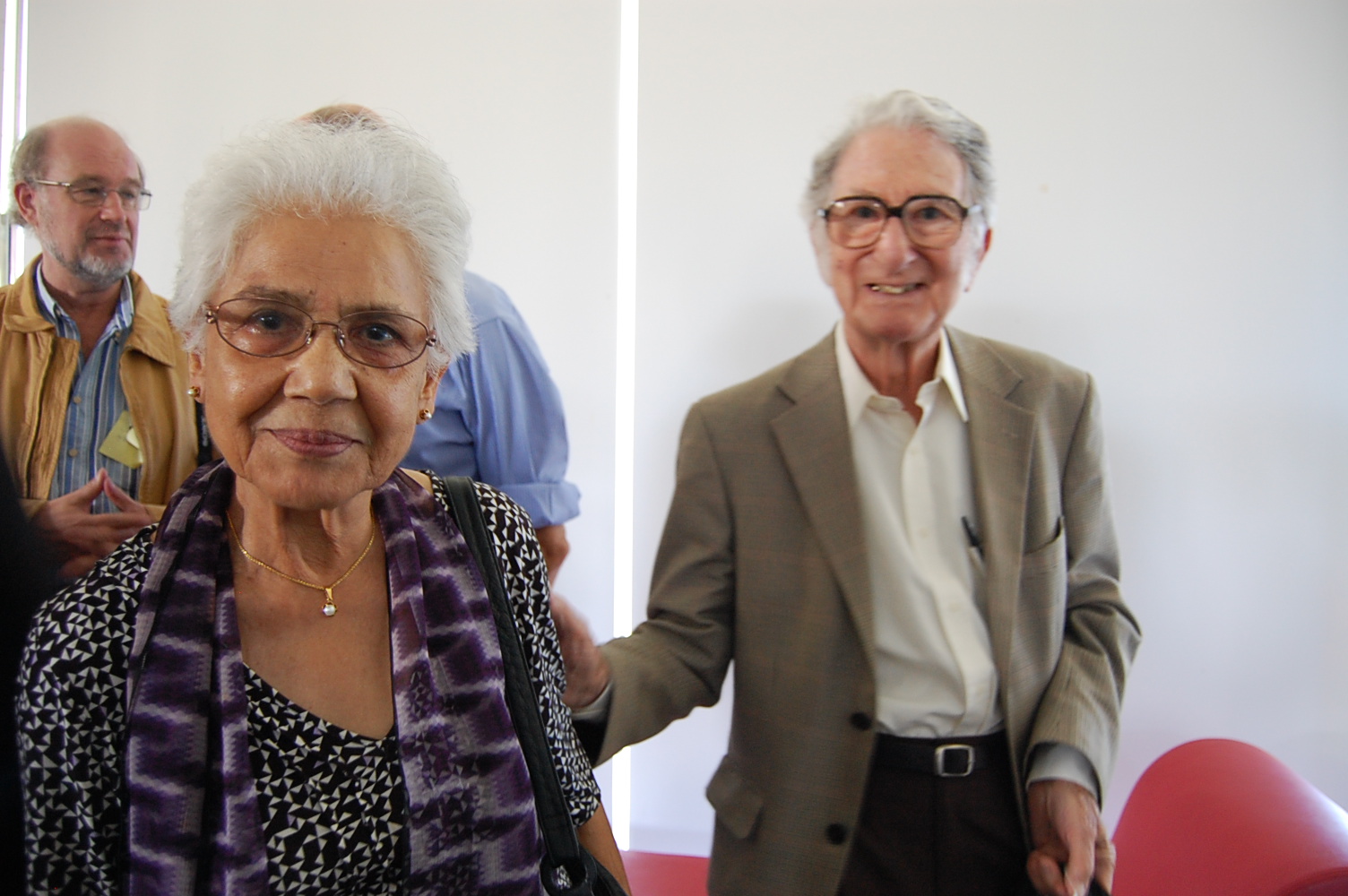
Sydney, Feb 17 2015: Christian Matthiessen, Ruqaiya Hasan and Michael Halliday at a symposium in honour of Michael in his 90th year. Photo by Lexie Don, courtesy Frances Christie.

Sydney, Feb 17 2015: Chris Mathieson, Ruqaiya Hasan and Michael Halliday at a symposium in honour of Michael in his 90th year. Photo by Lexie Don, courtesy Frances Christie.

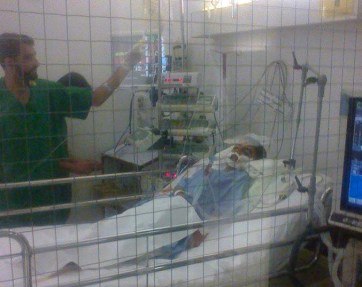
A quick update from Oz: my aunt Ruqaiya Hasan is improving, slowly but steadily. She was discharged from hospital and is now in another to receive palliative rehabilitation care until she is strong enough to return home, which the doctors hope will be in a couple of weeks. This really is nothing short of a miracle given the condition she was in last week. The other good news is that my mother Zakia Sarwar in Karachi has just got the visa and should be arriving on Sunday. Many people worked to make that happen in days rather than the month it usually takes. A multi-effort led to Ammi’s pre-visa medical exam being moved from July 4 to June 17. A heartfelt thanks to the friends in Islamabad who kept calling the Australian embassy, the linguists who appealed to the Australian government, and those who used their contacts in the Australian foreign office to expedite the visa.

Op-ed supporting Pakistan’s ‘NO’ to Saudi war in Yemen taken off newspaper website

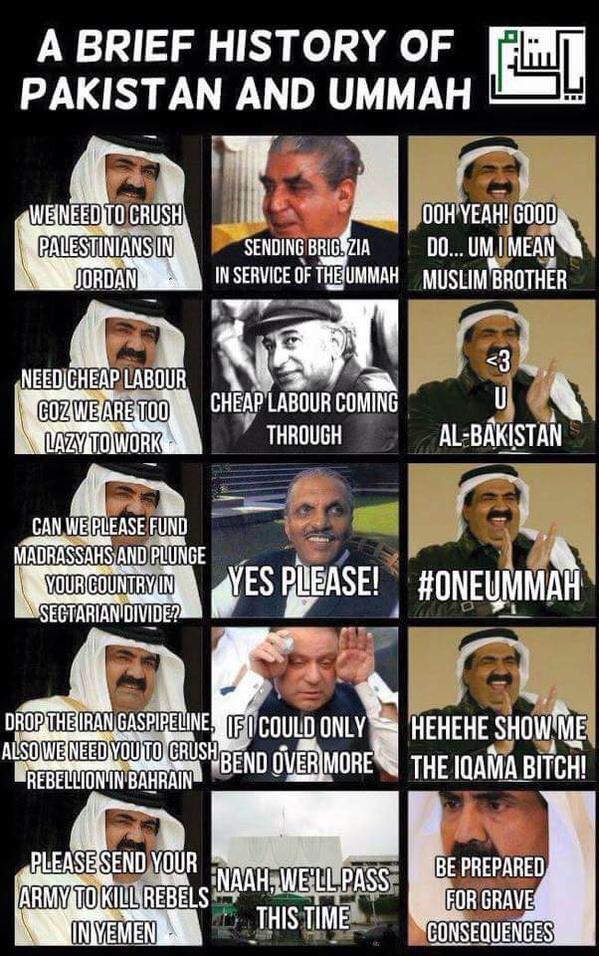
This meme that is doing the rounds on social media may be a bit harsh (not sure of original source) but it expresses the feelings of many Pakistanis.

A meme that is doing the rounds on social media (not sure of original source)

Pakistani citizens have for days been agitating against the reported decision to send troops to Yemen as requested (read “demanded”) by Saudi Arabia. It is tremendous news that the Pakistani parliament has taken a stand that supports the mood in the country. But there will be a price to pay. Just got this from an email list I am on, moderated by Shaheryar Azhar who writes: “The value of this op-ed is tremendous. Because it has been removed (from the website).. all its traces have been wiped out even though it had appeared in hard print where I had read it myself (Note: it is still there on the e-paper link). Luckily, I had received a digital copy on my email, which I had saved before the authorities (or whoever) decided to remove its existence. The Prime Minister is set to issue a policy statement on Yemen today in about an hour. If he sticks to his guns and to the unanimous Pakistani parliamentary resolution on Yemen, he will have our continued support. But if he backs off or dilutes our essential position of neutrality, he would be opposed.”

Continue reading

UPDATE: Shafqat execution stayed… for now

Huge, heartfelt thanks to all those who raised a voice to save Shafqat Hussain. The President of Pakistan has reportedly granted a 72-hour reprieve (originally reported as ‘indefinte’) for the case to be re-investigated. This young man has spent 10 years or more in prison already, since the age of 14 when he was first arrested for the murder of a little boy who had been kidnapped. There are many flaws in the case that led to Shafqat being sentenced to death at age 15 after a confession extracted under severe police torture. He has not seen his parents since he left his village in Neelum Valley, Azad Kashmir to come to Karachi for work after dropping out of school (has a learning disability). The execution has been stayed – for now. It’s a temporary victory for those who’ve fought for his life. The question remains, will the government re-examine the evidence and move to give him justice? And how many more Shafqats languish, poor, marginalised and resourceless, in our prisons and death rows?

beenasarwar's avatarJourneys to democracy

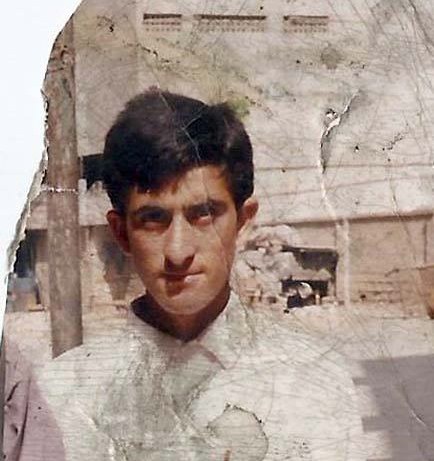
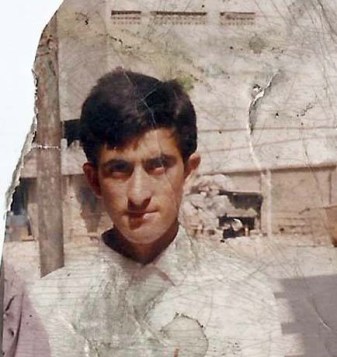
Shafqat Hussain, photo taken before he left Muzaffarabad more than 10 years ago. Shafqat Hussain, photo taken before he left Muzaffarabad more than 10 years ago.

Who is Shafqat, why is he being hanged, and why should we care? What were you like when you were 14? Please watch this lovely little video (also embedded below) and act to save Shafqat Hussain, death warrant issued (again) for Thursday, March 19. Shafqat was 14 when he left his village in Muzaffarabad, AJK, to go to Karachi looking for work. He was dirt-poor and resourceless, tortured into confession for the murder of a child, tried under the Anti-Terrorism Act (because the murder ‘spread terror in the neighbourhood’). The government-appointed lawyer never provided proof of his age. He was 15 when the court sentenced him to death. He has now been on death row for 10 years. In January, his execution was stopped under pressure from people like us. Pakistan Interior Minister Chaudhry Nisar had promised a re-investigation into the…

View original post 66 more words

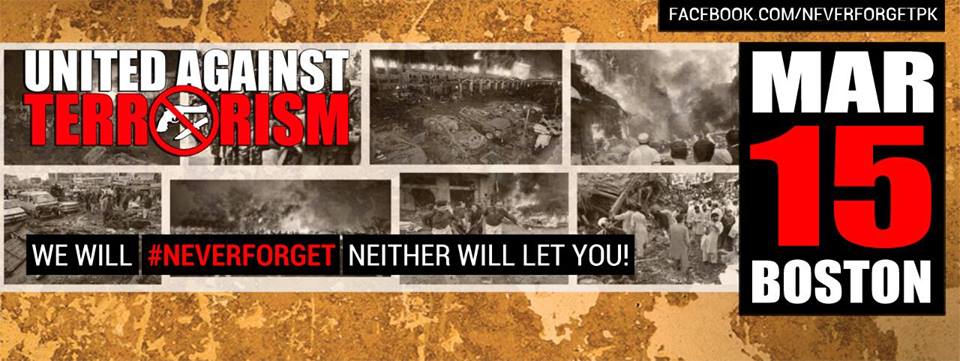
Pakistanis against Terrorism: Global Vigil, March 2015

NOTE: This is the first blog post I’ve done since Feb 21, 2015. That day a beloved, courageous and wise childhood friend lost her fight to cancer. I dedicate this post to Poppy, Shayan Afzal Khan, always so incredibly supportive, bold and outspoken for the liberal, progressive, secular Pakistan she believed in. She was there at the first Global Vigil in London in January. “A defiant figure in bright red lipstick and a yellow bobble hat, she yelled anti-Taliban slogans,” as Moni Mohsin wrote. Miss you and love you forever. We will keep the torch alive and see your dream come true, Inshallah. 

Never Forget PK March 15-16 Since the barbaric massacre of school children and teachers in Peshawar on 16 December, 2014, Pakistanis in the country and abroad have been converging for monthly global protest vigil around the 16th of every month. The third Global Vigil is taking place in several cities on Sunday 15th and on Monday 16th March in the following cities we know of so far:  Continue reading

#ChapelHillShooting All lives matter. “Terrorism, their’s and our’s”

Deah, Yosur, Razan#‎AllLivesMatter‬ My heart goes out to the family and friends of Deah, Yosur, and Razan, the beautiful young people whose lives were so cruelly snatched in Chapel Hill, North Carolina, ostensibly over a ‘parking dispute’.

It’s not front page or breaking news in the US mainstream media the way that racial killings or murders committed by Muslims make the news. Those defending the media in this case say that the murders were not motivated by Islamophobia, and that to highlight the religion of those involved is to create conflict. Continue reading

Shikarpur survivors’ update, urgent call for blood, and my article on the bombing: a deliberate attack on Sindh’s tolerant Sufi culture

8-year old Samar Abbas in critical condition at AKUH: He has a blood clot in his brains, a broken jaw and a collapsed respiratory system. Photo: Anas Mallick

8-year old Samar Abbas in critical condition at AKUH: He has a blood clot in his brains, a broken jaw and a collapsed respiratory system. Photo: Anas Mallick

UPDATE Shikarpur blast: Over 60 were buried in Shikarpur, funeral prayers attended by an over 10,000-strong crowd. 15 survivors were airlifted to hospitals in Karachi, of whom two have passed away. Urgent need for blood at the Agha Khan University Hospital laboratory in Karachi, including for critically injured 8-year old Samar Abbas is in urgent need of O+ blood. Below, extracts from my article yesterday in Scroll also linked here: Bombing of Shikarpur mosque is a deliberate attack on Sindh’s tolerant Sufi culture

Continue reading

India, Pakistan: Build on goodwill, not hate

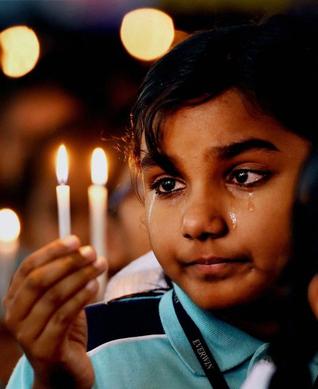
A student in Chennai prays for those killed in Peshawar. Schools across India held a two-minute silence on Wednesday. Photo: R. Senthil Kumar/ PTI

A student in Chennai prays for those killed in Peshawar. Schools across India held a two-minute silence on Wednesday. Photo: R. Senthil Kumar/ PTI 

I wrote this for The News on Sunday’s Jan 11, 2015 issue:

Build on goodwill, not hate

In the wake of escalation of tensions between India and Pakistan, people on both sides of the border continue to express solidarity through peace initiatives

In an unprecedented and heart-warming gesture from India to Pakistan, Indian Prime Minister Modi requested schools in his country to observe a two-minute silence to commemorate the children and teachers killed in the horrific attack on the Army Public School in Peshawar on Dec 16, 2014.

In another unprecedented, spontaneous show of solidarity, Indians began tweeting with the hashtag #IndiaWithPakistan, started by Indian columnist Tehseen Poonawala who tweets from the handle @tehseenp.

The hashtag peaked with over 63,000 tweets on Tuesday, the day of the tragedy. By Friday, the number of tweets containing this tag had crossed the one million with about 600 tweets per minute hash-tagged #IndiaWithPakistan (“IndiaWithPakistan hashtag crosses 1 million on Twitter”, TNN, Dec 20, 2014).

These developments spawned hope that relations between the two countries would improve.

However, India sent a very different signal by refusing to grant visas to 24 prominent Pakistanis invited to a seminar in Delhi on “Understanding Pakistan”, organised by the Pakistan-India People’s Forum for Peace and Democracy (PIPFPD) on December 19-21. Formed in 1994, PIPFPD is the oldest and largest people-to-people group between India and Pakistan that both governments have typically given visas to, leaving a door open even during hostilities.

Soon afterwards, there was a massive knee-jerk reaction in India, officially and in the mainstream media, to a lower court in Pakistan on December 26 announcing bail to Zaki ur Rehman Lakhvi, accused of the November 2008 Mumbai attacks.

The Indian media reacted furiously and with a sense of betrayal to news of the bail, without bothering to notice that this was a court order that the Pakistan government was contesting (Lakhvi is still in prison).

Meanwhile, the hashtag #PakWithIndiaNoToLakhviBail, started by Pakistani lawyer Ahmed Shaikh who tweets at @MohdAhmedShaikh, began trending on twitter in solidarity with the Indians’ sense of betrayal. By the afternoon, there were over 9,000 tweets hash-tagged #PakWithIndiaNoToLakhviBail, according to the data analytics company Frrole.

Indians and Pakistanis continued to express solidarity for each other’s hurt and to connect not just through Aman ki Asha but also initiatives like the peace video selfies (‘velfies’) of the ‘Dear Neigbour Movement’ and the Indo-Pak Peace Calendar launched by the cross-border youth organization Aaghaz-e-Dosti.

But events on the ground continue to test the goodwill. By the end of December, several incidents of cross-border firing were reported along the disputed border that divides Kashmir.

With heavy fog obscuring visibility and no independent observers allowed near the conflict zone, it is hard to tell what really happened. What is clear is that each side blames the other for ‘unprovoked’ firing and the killing of their soldiers and civilians, and that both sides have suffered casualties.

What’s also clear is that escalation of tensions and ‘tit for tat’ firing are causing massive sufferings to the people of the border areas. They also have the potential for long term repercussions as they “provide a greater space to extremist, hawkish and fanatic elements, whilst empowering war mongers on both sides,” to quote Kashmiri analyst and columnist Raja Muzaffar.

These tensions, as he notes, “have the potential to drag the whole region into a new war, destroying hopes of long term peace and economic stability”.

The only information available on what is happening at the border is what the security establishments on either side choose to tell their respective sides. Since we know how trustworthy they are, it makes sense to question the official narratives and obtain more information before jumping to conclusions.

Another case in point is the Pakistani fishing boat said to be carrying explosives that entered Indian waters on the night of December 31 that the Indian Coast Guard intercepted. Initial media reports in India said that the boat was a fishing vessel from Keti Bunder in Pakistan, and there were reportedly four men on board who blew it up when intercepted.

Sceptical of this narrative, Mumbai-based journalist Jatin Desai wrote to friends at the Pakistan Fisherfolk Forum (PFF) asking them to find out whether any fishing boat from Keti Bunder was hijacked or reported missing.

PFF President Muhammad Ali Shah responded within hours, terming the “terror boat” incident as “drama and false information”. He explained that an empty fishing boat from Jati district, Thatta – that is, without crew — had been separated from another boat due to strong winds. The Indian Coast Guard had burnt the empty boat at sea, said Shah. It was this empty boat that had been labelled as a “terrorist boat”.

Indian journalist Praveen Swami also questioned the official narrative in the Indian Express, writing that rather than being terrorists, those on board “might have been small-time liquor and diesel smugglers, ferrying bootleg cargo from the port of Gwadar to other fishing boats which were to have carried it into Karachi’s Keti Bandar harbor”.

He raised the question of “use of disproportionate force since the fishing boat did not have an engine capable of outrunning Indian interceptors”  and the possibility of the incident having occurred “in international waters, some distance from the thousands of Indian and Pakistani fishing boats in the area” since local fishermen said they had not seen the fire on December 31. (“Doubts mount over India’s claims of destroying ‘terror boat’ from Pakistan”).

India’s hyper-nationalist right wing promptly dubbed him as a traitor, held demonstrations against him and burnt his effigy (in Pakistan he would have been in danger for his life). Ironically, Pakistan has in the past denied Swami a visa.

The more commentary in the media, the worse the situation seems to be. In reality, the people in both countries have the same concerns and issues: to earn a decent living, educated their children, and feed, clothe and house their families. Lack of rule of law, gender and caste violence and militancy are common concerns.

Both countries need to capitalise on the goodwill that exists for each other rather than building on hate. The latter only feeds the agenda of those who have a vested interest in perpetuating hostilities. And I am confident that that is not what the people of the region need or want.

(ends)

No country for Shia men!

Mohammad Jibran Nasir's avatarThe Indus Ripple

Image

The bus is stopped. People are pulled out. Without asking any questions armed men start filtering the crowd. Almost everyone is asked to get back inside the bus but your family is left behind. You suddenly realize it is because you look different. As everyone else around you look of Turko-Mongol decent your family and you look Indo-Aryan. In a matter of seconds you feel like you are in a foreign country amidst alien people. But your father and your mother were born and raised here in Pakistan.

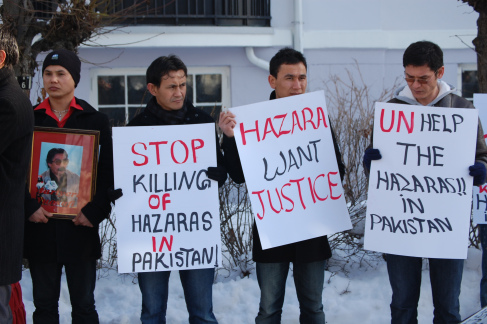
Gun Shot! You are too scared to look who fell but you know it’s a kin. Your only fortune is that you won’t have to feel that agony and pain for long as the gun barrel is now pointing at you. Reverse the ethnic equation and that’s just how the Hazaras are made to feel in Balochistan. A pre-dominantly Shia ethnic group…

View original post 957 more words

Who is Shafqat, why is he being hanged, and why should we care?

Shafqat is safe… for now. This is the second time he has received a reprieve at the last minute. Kudos to Justice Project Pakistan and everyone who raised their voices and fought to prevent a terrible injustice from taking place. This is just one of many such cases in Pakistan where the justice system leaves much to be desired. That’s one reason I’m against the death penalty. If even one innocent is sent to the gallows, it is too much. There are too many chances of that happening, even in a ‘good’ system.

On another level, he is the victim of another system, the social and economic inequalities that forced him, as a young boy of 14 to leave his home in Azad Kashmir and go to Karachi looking for work. That was ten years ago. His mother has not seen him since – they are too poor to make the trip.

beenasarwar's avatarJourneys to democracy

Shafqat Hussain, photo taken before he left Muzaffarabad more than 10 years ago. Shafqat Hussain, photo taken before he left Muzaffarabad more than 10 years ago.

UPDATE: Jan 01, 2014: Funds urgently needed for Shafqat’s defence. Please click this link for details and see what you or your friends can do. Detailed BBC report Justice at risk as Pakistan rushes convicts to the gallows

This is Shafqat Hussain. A poor boy who was arrested for  kidnapping and murder when he was 14 years old. He confessed to the crime after nine days of police torture (they pulled out three fingernails, the cigarette burn marks are still visible on his body). He has been in Karachi jail for over 10 years now and is on the list of ‘terrorists’ to be hung (his date is set for Tues, Dec 23rd). He comes from a very poor family from Muzaffarabad, had a learning disability, had dropped out of school at grade 4, and run…

View original post 218 more words

The importance of celebrating Malala

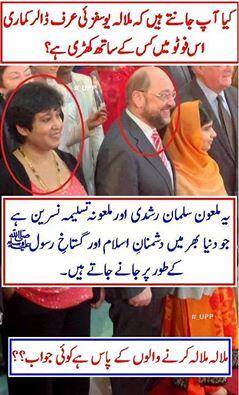
Propagandists floated this falsely captioned photo, trying to link Malala with Salman Rushdie (it's actually EU President Martin Scholl) and Taslima Nasreen (who wasn't even granted a meeting with Malala)

Propagandists floated this falsely captioned photo, trying to link Malala with Salman Rushdie (it’s actually EU President Martin Schulz) and Taslima Nasreen (who complained later in her blog about how religious Malala is, and how Taslima was not being granted a meeting with her)

I was invited to speak at an event in the Boston area recently titled “Celebrating Malala”. I talked about the hostile propaganda against her in her home country Pakistan, and the need to support her regardless of misgivings about how ‘the west’ or others are ‘using’ her. Scroll down to see the slides I shared with my presentation. Below, the report I sent to The News, reproduced below with additional links:

BOSTON: Several Pakistani professional and community organisations based in New England hosted an event on Saturday night titled “Celebrate Nobel Laureate Malala Yousafzai”.

It was thanks to Malala that these organisations joined hands for the first time to organise an event, noted Dr Khalil Khatri, a Sindh Medical College graduate and Rotarian who conducted the event wearing a natty ajrak bow-tie. Continue reading