Can a handkerchief bring peace? Indo-Pak school children’s campaign

HANKIES PEACE CHAIN initiative by Aman ki Asha, underway in India where thousands of schoolchildren have already signed & drawn peace messages for Pakistan. Launched yesterday in Pakistan. Below: text of the ad pubished in Pakistan on Apr 28, 2010 in The News and Jang

CAN A HANDKERCHIEF BRING PEACE?

Perhaps not. But there’s one small thing it could do. It could clean up a small space in the minds of our children. A little square piece where peace can bloom again. Just have your child write or draw a peace message on a handkerchief to children across the border and join in forming a chain that will stretch all the way from Lahore to Amritsar.

The Aman ki Asha peace chain is a nationwide schools initiative that will join hundreds of thousands of hankies in a chain of friendship that will stretch across generations to come.

Schools wishing to participate, please contact Aman ki Asha at amankiasha@janggroup.com.pk or phone 021-3221-5239; fax 021-3221-5238

Conversations 6: Push for peace parks

Conversations 6 – published in Political Economy Aman ki Asha page, The News on Sunday, March 28, 2010

Mar 25 2010

Dear Beena,

Let’s talk a little bit more this week about the notion of a joint war memorial, before moving on to other wrangles. Continue reading

CONVERSATIONS: Peace is hard work

Published in The News on Sunday, Political Economy section, aman ki asha page, Feb 21, 2010

CONVERSATIONS

Peace is hard work

A Pakistani and an Indian begin an email exchange, attempting to share their thoughts honestly, without fear and hostility, exploring what divides our countries, and seeking ways to bridge the divide

By Dilip D’Souza and Beena Sarwar

February 16 2010

Dear Beena,

I started writing this before Pune. When I heard about those 11 more senseless deaths, I decided to rewrite it. I want to start by saying how difficult horrors like this make it to remain committed to the idea of peace, of speaking the language of reason. Here’s the bottom line: most Indians believe that this latest attack, like previous attacks, was conceived in Pakistan. Continue reading

Asimicus, we will miss you

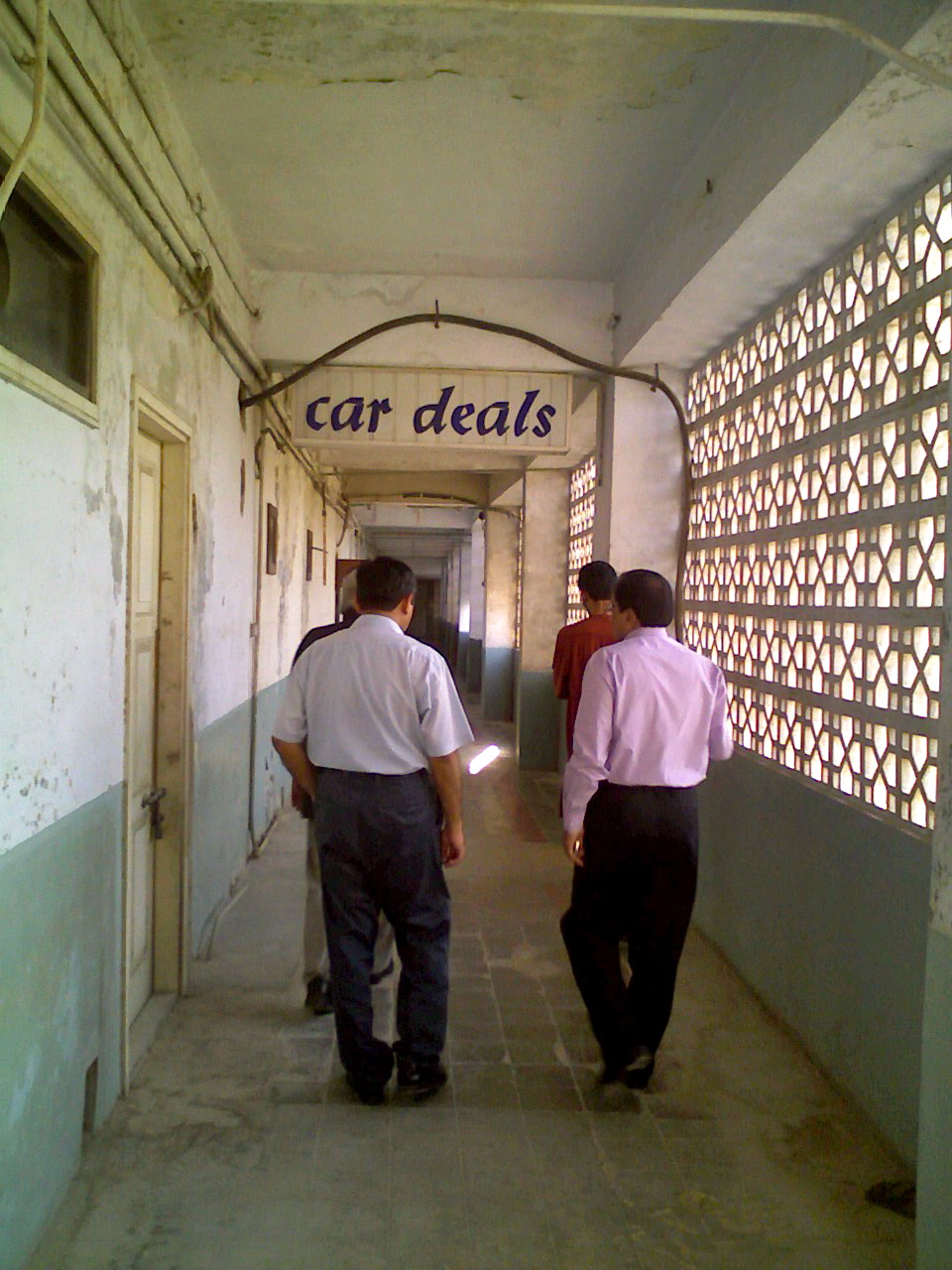
Metropole corridor: Imtiaz Mughal, Noman Ahmed, Arif Hasan and Asim Butt (red shirt)

Just got back from the Tribute to Asim Butt event at T2F, which was packed to capacity with those who knew and loved Asim, others who knew his work and were inspired by him, and some who happened to be at the café and joined in the Tribute. Sabeen introduced the event, and told the story of how Asim painted that wonderful mural on the walls of T2F.01.

Several people spoke movingly about Asim, providing ancedotes, photos and video that helped bring pieces of Asim the person together with pieces of Asim the artist, the intellectual, the activist and the rebel to form a more complete picture. I had to leave early as it’s a school night, but was there for most of it. Speakers included George Fulton who read out a lovely poem;  artist Ahmed Ali sent an email from Lahore that Mazhar Zaidi read out, Khurram talked about the LUMS days and how Asim was a trailblazer in so many ways even there (thanks to him, the BA in Social Studies is called that, and not ‘Universal Education’; the time he took on the mullah who began giving an azan outside the room where they were studying for their final exams). Naiza Khan talked about Asim as a student at the Indus Valley School, and Sabina Ansari talked about the Asim she’s known since childhood, who kept her company at school when the other kids wouldn’t talk to her – and the legacy he has left, evident in all those who filled the room.

Gul Jafri spoke about her relationship with Asim as an ‘aunty’ (and provided insights into his innocence, typified in his indignation and incredulity at having his things filched from public places – ‘but those were my things’…), Sharmeen Obaid Chinoy talked about Asim’s involvement with Citizens’ Archives of Pakistan (CAP) and showed a video clip of him painting for CAP which I hope they’ll put on the FB group wall. In fact I hope everyone puts whatever they said on a blog or website for Asim. Below, something I wrote today, which I referred to in my comments: Continue reading

Asim Butt. Artist. Activist. Rebel. Karachi lover. RIP

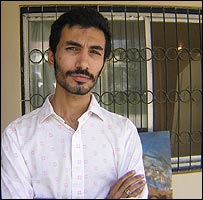
Asim Butt [BBC photo


Asim Butt. Artist. Activist. Rebel. Karachi lover. Peace lover. Asimicus. Saw him last two days ago heading home, he was waiting at a bus stop, we exchanged delighted hellos, I offered him a ride. “It’s all great,” he said with a big smile, gave an “all’s well” thumbs up. Funeral today 4 pm. Why?

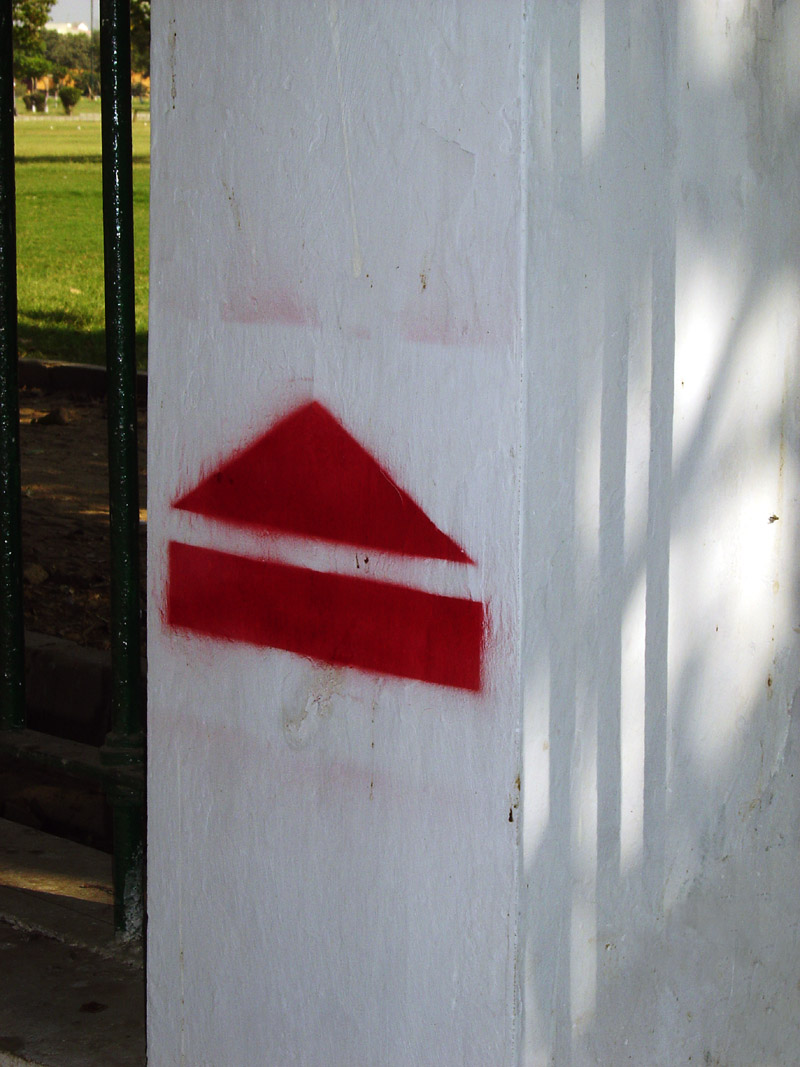
‘Eject’ (military OUT of politics) – graffiti art by Asim Butt (Photo K.B. Abro)

We may never know the answer to this “why”. Meanwhile we can only hope that he is at peace where ever he is. Life does go on, even after such a shock and bereavement. But Karachi will not be the same without ‘Asimicus’, his generous spirit, creative passion and love for the city, for democratic values and peace. He got into these symbols- the ‘eject’ sign, the ‘circle’ –  with great enthusiasm, even missed an anti-Musharraf Emergency  rally to which he was bringing posters – got so involved making them he lost track of time. But that was Asim. Continue reading

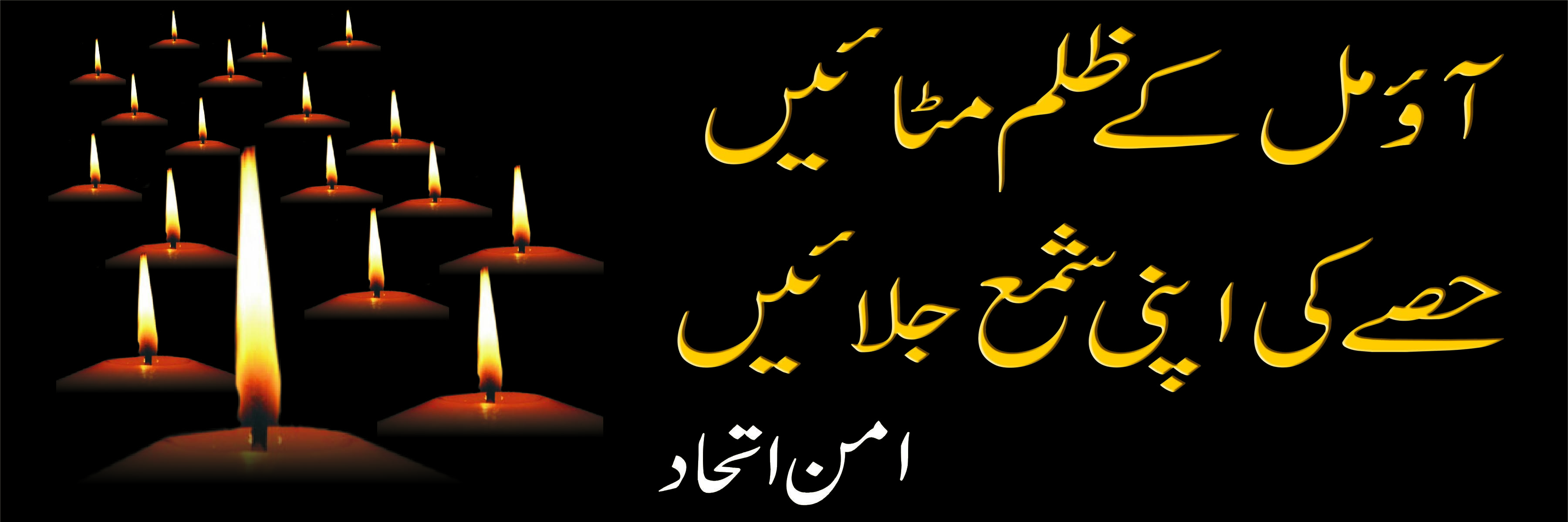
Irony of Lakki Marwat attack on Aman Ittehad day

Suicide attack in Lakki Marwat (NWFP) claims 70 lives – the day over fifty ‘Aman Ittehad‘ (peace and solidarity) rallies took place all over Pakistan…

The attack once again underlines how much more is needed than such rallies, inspiring though they may be, and the urgency of developing consensus and clarity on our direction as a nation: it  cannot be what the jihadi/militaristic mindset envisages.

Zehra Nigah poem; Aman Ittehad 300 in Swabi; Khi rally 4.00 pm

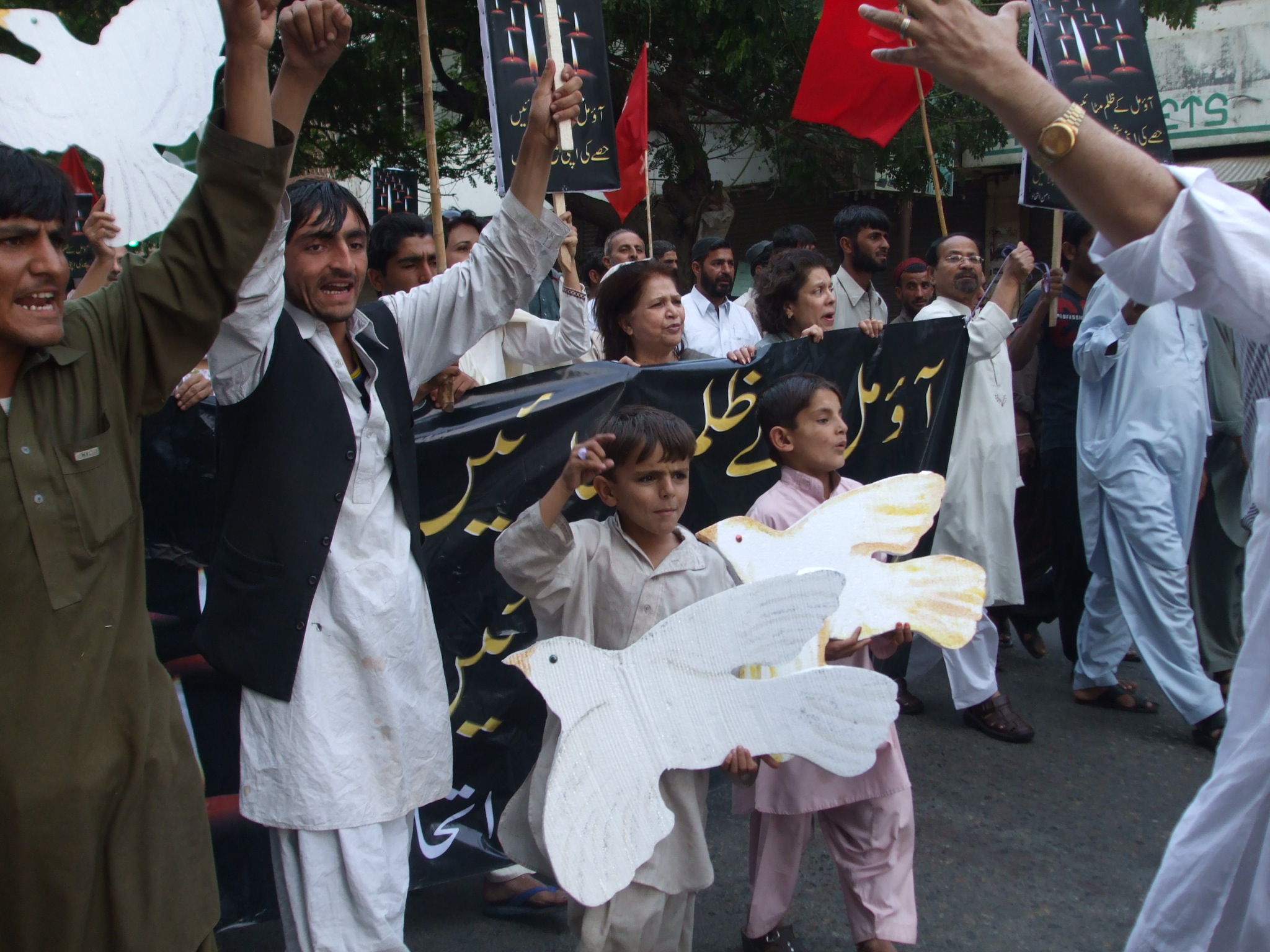
Children with images of doves at the Aman Ittehad rally in Karachi - photo Beena Sarwar

As 2010 begins, our thoughts are with those who have lost loved ones, particularly those who died in violent attacks. It’s always devastating when that happens but it really hits you when you know someone affected. I can’t stop thinking about Faheem who lost his 6-year old son and 13-year old niece, and Sajid who lost his brother and bhabi…

Zehra Nigah’s powerful and moving lines penned as a high school student for the martyrs of the 1953 student movement are sadly still relevant today. She wrote down the few lines she remembered when Sharjil and I went to interview her for our documentary on the student movement to be screened on Jan 9 at the Arts Council Karachi. See scanned image in her own handwriting at the Dr Sarwar blog Continue reading

Jan 1, 2010 – Aman Ittehad peace & solidarity day

JAN 1, 2010, ‘AMAN ITTEHAD’ – PEACE AND SOLIDARITY DAY
Please join us where ever in the world you are
Friday, January 1, 2010
2:30pm – 5:30pm
“Let’s stamp out injustice, light a candle each”

Rallies planned in Abbottabad, Haripur, Mardan, Karak, Swabi, D.I.Khan, Peshawar, Mingora, Lahore, Gujranwala, Multan, Bahawalpur, Faisalabad, Sialkot, Badin, Jamshoro, Larkana, Sukkur, Hyderabad, Karachi, Loralai, Quetta and Islamabad

Working together for an end to intolerance, violence, injustice. and equal opportunities for all. Citizens across the nation come together on the first day of 2010 to usher in a decade of peace, justice, equity and tolerance. More than a hundred organisations across Pakistan including the youth, students, concerned citizens, media, lawyers, labour, NGO’s and academics come together to express their resolve to struggle for the right to ‘a life of dignity’.

Join us…. for neither can we afford the luxury of indifference nor a lack of expression of the values that we hold so close to our hearts. Let our resolve find expression. We are one and we are all equals.Solidarity Day marks the beginning of a journey of building trust between citizens and the strengthening of democratic values and institutions.

For more details, contact Ali Asghar Khan

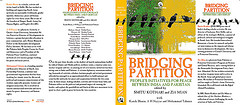
‘Bridging Partition: People’s Initiatives for Peace between India and Pakistan’

Cover art: K.B. Abro; design: Bindia Thapar

JUST PUBLISHED

BRIDGING PARTITION: People’s Intitiatives for Peace Between India and Pakistan

Edited by SMITU KOTHARI and ZIA MIAN

With Kamla Bhasin, A H Nayyar and Mohammad Tahseen
Essays by Shehryar Ahmad, Karamat Ali, Sumanta Banerjee, Kamla Bhasin, Nirupama Dutt, Madeeha Gauhar, Mubashir Hasan, Pervez Hoodboy, Asma Jehangir, Sheema Kirmani, Sanat Mohanty, Kuldip Nayar, Sandeep Pandey, Narendra Panjwani, Anand Patwardhan, Balraj Puri, Laxminarayan Ramdas, Lalita Ramdas, I A Rehman, Beena Sarwar, Jamila Verghese, Achin Vanaik

“Over the past three decades, in the shadow of hostile nationalisms fuelled by radical Islamic and Hindu politics, military crises, a runaway arms race, nuclear weapons and war, an amazing set of civil society initiatives has been taking root in India and Pakistan. A citizens diplomacy movement embracing thousands of activists, scholars, business people and retired government officials has emerged in an unprecedented effort to build national and cross-border networks for peace and cooperation between the two countries.

“In these essays, leading scholars, activists and writers from India and Pakistan reflect on the political and personal impact of crossing the border, and explore the possibilities and limits of this new movement in its quest to chart a path to peace between the two countries.”

Cover design Bindia Thapar
Cover art 60 Years of India Pakistan by K. B. Abro

Published by Orient BlackSwan India

A Peace Convention and the wisdom of Ali Nawaz

Article posted to my yahoogroup in June 2002  – the Rs 4000 minimum that Ali Nawaz from Balochistan talked about now would be more like Rs 10,000 (right, economists?). Although little has changed for him and people like him, the ‘Balochistan package’ and the historic NFC award agreed upon on Dec 11 at least offer some hope in terms of more equitable resource distribution and opportunities. This is the difference between dictatorship (no matter how mild) and democracy (no matter how messed up)

The News on Sunday, Jun 16, 2002

A Peace Convention and the wisdom of Ali Nawaz

by Beena Sarwar

Ali Nawaz works at a motorcycle factory at Hub Chowki in Balochistan, near Somiani, the sun-baked coastal area from where Pakistan recently test-fired the nuclear-capable Abdali missile as a warning to a war-ready India. From here, it takes over two hours to get to Karachi, driving east along the coast of the Arabian Sea. On Saturday June 8, along with some two dozen of his fellow workers, Nawaz made this journey using the factory van headed to the noise and rush of Saddar in the heart of Karachi.

The motorcycle workers are not interested in the bazaar; besides the fact that they can’t afford the goods on sale, there are more important things on their mind — like the Peace Convention organized at the Karachi Press Club by the Pakistan India People’s Forum for Peace and Democracy (PIPFPD) and the National Trade Union Federation of Pakistan.

As many as twenty five out of the forty one workers at Nawaz’s factory attended the Convention of their own accord. Why? Continue reading