Email exchange: Sanjiv Bhatt (day before his arrest), Badri Raina and Siraj Khan

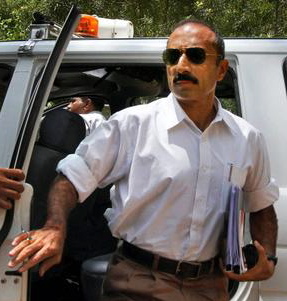
Suspended IPS officer Sanjiv Bhatt was on Friday detained in connection with an FIR filed against him by a police constable. File photo/PTI

Badri Raina’s poem on Sanjiv Bhatt posted to my yahoogroup and to this blog  on Sept 27 led to an inspiring and informative email exchange, on which I am privileged to have been copied. While compiling extracts for this post (with permission), I heard that Sanjiv Bhatt had been arrested (update: A court in Ahmedabad sent him to judicial remand on Saturday, to be be lodged in Sabarmati jail till his bail hearing comes up on Monday)

“Sanjeev Bhatt’s arrest proves how frightened his detractors are,” tweeted @reenasatin.

Film producer Mahesh Bhatt (@MaheshNBhatt): “If there is one man who is fearlessly living the Gandhian creed in Gujarat it is Sanjeev Bhatt. Will our courts protect this Whistleblower?”

That, time will tell. Meanwhile, below, the correspondence, which began with Siraj Khan’s prescient email to me on Sept 27th: Badri Raina’s poem is awesome. Sanjiv Bhatt needs to be protected. Unfortunately, he will not be allowed to walk away to get a hero’s status and have a fan club.”

My reply: “Thanks and I hope you are wrong about Sanjiv’s fate. Cc’ing to Prof Badri Raina, the poet, because I think you guys should know each other.” (See Bhatt’s last email of the series, just posted at the end). Continue reading

Sahmat Statement on Ayodhya Verdict

Thanks Sohail Akbar in New Delhi for sending this.

From: SAHMAT – Safdar Hashmi Memorial Trust
29, Feroze Shah Road,New Delhi-110001
Telephone- 23381276/ 23070787
e-mail-sahmat8@ yahoo.com
Date 1.10.2010

Statement on Ayodhya Verdict

The judgement delivered by the Lucknow Bench of the Allahabad High Court in the Ram Janmabhoomi-Babri Masjid Dispute on 30 September 2010 has raised serious concerns because of the way history, reason and secular values have been treated in it. First of all, the view that the Babri Masjid was built at the site of a Hindu temple, which has been maintained by two of the three judges, takes no account of all the evidence contrary to this fact turned up by the Archaeological Survey of India’s own excavations: the presence of animal bones throughout as well as of the use of ‘surkhi’ and lime mortar (all characteristic of Muslim presence) rule out the possibility of a Hindu temple having been there beneath the mosque. Continue reading

‘A prayer… of sorts’ – my Viewpoint article

Excerpt from ‘A prayer… of sorts’, my article in Viewpoint Online’s special issue on the Ahmadi massacre in Lahore:

…. Where do these people get the guts to operate so brazenly?

Perhaps because the administration turns a blind eye to their displaying banners like the one photographed recently on Mall Road outside Lahore High Court that reads: ‘Yahudi, Isai, Mirzai Islam ke dushman haiN’ (Jews, Christians, Ahmedis, are enemies of Islam).

Then there are the freebee giveaways by banned outfits like Harkatul Ansar – like this clock, photographed at a ‘parchoon’ shop in Karachi’s Delhi Colony. The hands are a Kalshnikov, four of the five pillars of Islam, Namaz, Zakat, Haj and Roza (prayer, charity, pilgrimage and fasting) mark the quarter hour points. The fifth pillar, Tauheed (belief in the singularity of the Almighty), has been replaced by Jehad (holy war), the word placed right in the centre. Jehad is not one of Islam’s five pillars. But of course, no one is going to proceed against them for misrepresenting, some would say defiling, the religion.

Those who raise a voice against these issues find themselves threatened with legal action or worse. A case in point is Malik Rashid’s article ‘Faithful Killers, Fatal Worship’ (Ibrahim Sajid Malick’s blog) about the massacre of Ahmedis in Lahore on May 28. In the comments section, a reader threatened legal action against Malik Rashid for referring to ‘Ahmedi mosques’. The fellow even provided his name, address and phone number (the number proved erroneous when a doctor in the US attempted to call it). [The website was later hacked, but restored] READ MORE

Support Diep; Massacre in Lahore, some thoughts & responses

Posted to my yahoogroup yesterday, with a very heavy heart:

WE MOURN. A man weeps at the death of a relative killed in the Friday attack, after a funeral in Rabwa, May 29, 2010

I signed this Petition to Stop Constant Harassment and Mental Torture of Diep Saeeda Indo Pak Peace Activist – pls read and sign also. I hope they’re going to take it to the authorities and stop this harassment of one of our most courageous, spirited and committed activists.

Meanwhile, we are reeling with the massacre of some 100 Ahmedis at two Friday congregations in Lahore. This was not an isolated incident but cold-blooded murder, conducted by trained gunmen with suicide vests. (Only one was caught alive – wonder how much he’ll be allowed to reveal).

The incidents brought together various strains that have been tearing apart Pakistan in the bloodiest way. Several recent incidents are part of this continuum, all of which claimed many innocent lives: Continue reading

‘Under the rubble’ – democracy

Extract from former Indian civil servant Harsh Mander’s recent article in The Hindu (he left government service after the 2002 communal riots in Gujarat), ‘Under the rubble’

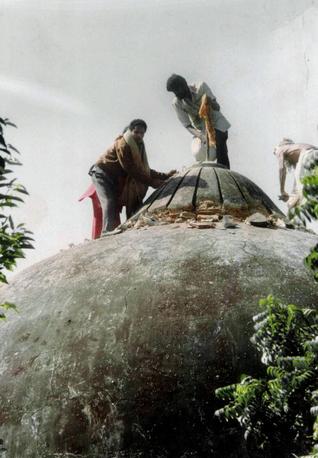
Under the rubble of the fallen mosque lay the idea of India itself.

But in the end, ordinary people of India – Hindu, Muslim and of other faiths – voted resolutely against the politics of hate and division, in general elections of 2004 and 2009. The most passionate votaries of the temple movement admit that it has today lost the power to mobilise voters any longer.

It is impoverished people of India who have picked the pieces of the idea of India from under the rubble of the medieval mosque razed by frenzied mobs in 1992. It is they who have reclaimed once again the inclusive pluralist traditions of this ancient teeming diverse land.

Bottom line: let democratic politics and the cycle of elections prevail, no matter how messy it seems. It will take a long time, but it will sort out. And it will is a continuing process.

The MF Husain controversy: Identity, intent and the rise of militant fascism

I wrote this essay for Nukta Art in September, for its November issue which has just been published

Beena Sarwar

Cover March 2009

Communalism Combat cover, March 2009: Fighting back

The campaign against the iconic Indian artist Maqbool Fida Husain, perhaps the most prominent living symbol of art under attack, is part of the political fight for India’s soul – secular democracy versus a ‘Hindu’ state.

Several interrelated issues arise from this situation, linked with intent, identity, politics, religion, the role of the state, and of course the nature of ‘art’ itself. The illogical controversy has unfortunately been allowed to overshadow the artist’s phenomenal, critically acclaimed work itself both in India and abroad.

Continue reading

Jaspal Singh, former police commissioner, on Gujarat 2002 investigation

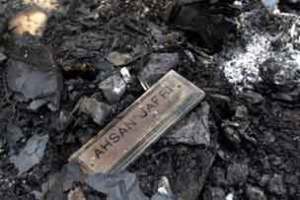
Name plate from the charred remains of murdered MP Ahsan Jafri's house

Name plate from the charred remains of murdered MP Ahsan Jafri's house

The fDi award to Narendra Modi (after outraged protests from around the world being given to the ‘state of Gujarat instead) has again spotlighted the Gujarat carnage of 2002.

Thanks to Badri Raina in New Delhi for forwarding this detailed letter of Sept 7, 2009 from Jaspal Singh (former Cabinet Minister, Government of Gujarat, Mayor of Vadodara, Commissioner of Police, Vadodara, Gujarat) to the Special Investigation Team (SIT). Singh terms the Gujarat riots “a thoroughly thought out elaborate and heinous strategy to communalise the society at large in Gujarat, with a view to derive political benefits”.

Crusading on: Zakia, wife of the murdered MP Ahsan Jafri

Crusading on: Zakia, wife of the murdered MP Ahsan Jafri

Ahsan Jafri with his daughter Nishrin Hussain

Ahsan Jafri with his daughter Nishrin Hussain

He also urges SIT to “go in to the series of circumstances indicating criminal motive of the CM, Gujarat and his collaborators in projecting the Godhra train fire incident as an outcome of conspiracy by ISI and a terrorist act. There is sufficient evidence to prove that even before the investigating or intelligence agency had any information about conspiracy behind the Godhra fire, the CM, Gujarat, a national leader of BJP, declared it to be a consequence of conspiracy.”

p.s. I wonder when we’ll get his counterparts in Pakistan to make similar demands about injustices to religious minorities here, including Shantinagar 1997 and Gojra 2009

7 September 2009

To: Dr. R.K. Raghavan, Chairman,

Special Investigation Team (SIT),

Dr.Jivraj Mehta Bhavan, Block-11,

1st Flr, Old Sachivalaya,

Gandhinagar

Sir,

Sub: Gujarat Riots of 2002 – Action thereon

Apropos my letter dated Jun 06, 2009, I write to compliment you for pursuing investigations in to the Gujarat riots of 2002 with vigour by recording statement of Mrs.Zakia Jafri, widow of late of Mr.Ehsan Jafri, a former member of the Parliament, Shri R.B.Sreekumar, IPS (Retd), former DGP of Gujarat, and Mr.Rahul Sharma a serving IPS officer of Gujarat cadre. While the progress of the case does bring some comfort to the victims of the genocide unleashed in Gujarat, lot more remains to be done as expeditiously as possible, so as to instil a sense of hope in the hearts and minds of Indians, that the rule of law would be respected and no one would be spared for flouting it. The happenings of 2002 have brought shame and disgrace of unfathomable proportions, and only investigation by the SIT under your command can redeem the honour of the country.

I list below some of the matters which need to be investigated in detail in pursuance of trust reposed in you, and your team by the Hon’ble Apex Court. Your efforts will assuage the terribly dented image of our great country, and hence your responsibility is immense. As a retired IPS officer I consider it a matter of pride that the job to redeem the honour of the country has been entrusted to the SIT headed by a IPS officer. The outcome of the SIT’s investigation and actions following it may prove to be a benchmark in the history of our country.

1.Communalisation of Gujarat: The mayhem in Gujarat was the result of a thoroughly thought out elaborate and heinous strategy to communalise the society at large in Gujarat, with a view to derive political benefits. Towards that end the exclusivist, fundamentalist and sectarian pseudo religious groups among Hindus and Muslims played a leading role, aided and abetted by those at the helm.

2.Examiniation of participants in the crucial meeting chaired by the CM – Narendra Modi:

Examination of the following persons is crucial for the purpose of the SIT:

a)Smt.Swarnakanta Varma IAS, the then Acting Chief Secretary

b)Mr.Ashok Narayan, IAS, the then Home Secretary

c)Dr.P.K.Mishra, IAS, the then Principal Secretary to the CM

d)Mr.Anil mukim, IAS & Mr.A.K.Sharma, IAS Secretaries to CM

e)Mr.P.C.Pande IPS, then Commissioner of Police Ahmedabad

f)Shri K.Chakravarty, IPS, the then DG of Police, Gujarat

g)Shri G.C.Raiger, IPS, the then Addl. DGP of Gujarat

h)Shri Nityanand, IPS, Secretary in the Home Department.

3.Representative of CBI: The SIT must examine Shri Rajendrakumar, the then Jt.Director, Central Intelligence Bureau (CBI) in charge of Gujarat who had insisted on the state DGP to deem the burning of the train at Godhra as a terrorist act mounted by the ISI.

4.Examination of Ministers: Examine all those ministers of Shri Modi Government about the details of the meeting held at the residence of the CM on 27.02.2002, including the then Minister of State for Home Shri Govardhan Zadapiya who had admitted in the State Assembly about the meeting convened by the CM. It may be mentioned that the State Assembly was in session on the day the tragic events took place at Godhra. This can be verified from the official records of the State Assembly. This will clarify that the CM had directed the officers to permit free play of Hindu revengefulness on the Muslims (Reference to June 03, 2002 issue of the weekly – Outlook).

5.Whether prompt action taken: Examine whether there was delay in requisitioning army and central para military forces with a view to give free hand to the anti Muslim rioters.

6.Law and order Review meeting minutes: Examine the minutes of the law and order review meetings chaired by the CM, the Chief Secretary, and the DGP jointly, or otherwise and subsequent follow up action by subordinate officers in the police department, and executive magistracy from District Magistrates to Mamalatdars. If minutes were not kept it would be obvious that monitoring of the implementation of decisions could not haven been done.

7.Follow up action: Examine how the monitoring of the implementations of the decisions in these review meetings was done by the CM to DGP without minutes of these meetings.

8.Media reports – sources: Conduct deeper probe in to the source of media reports about the meeting chaired by the CM, where the CM directed the officials to be soft on Hindu rioters.

Investigation on the above lines could provide evidence of extra judicial confessions.

Some further investigations that are necessary are:

a)Examination of documents on the communications between and among the CM’s office, CS Office, Home department, DGP Office and the Commissioners of Police of Ahmedabad, Baroda, and SPs of major riot affected districts in the period from 27.02.2002 to 31.05.2002. Similar correspondence from the relevant police stations to district / commissionrate level officers also be examined to find out whether there were major omissions and commissions to facilitate the Pogram against the Muslims

b)Examination of documents on communications between the DGP and the State Control room in Gandhinagar, and the Commissionarates, besides offices of the DSPs, Addl. DGP (Intelligence)

c)Examination of entries in the registers and log books of the police patrol vehicles in cities and important towns.

d)Examination of documents on various incidents and action reported by DGP and CP Ahmedabad and riot affected districts to their higher officers.

e)Examination of reports by DGP, Home department, Chief Secretary, ADGO (Intelligence) to the Central Government and to find out veracity of reports and efforts of anyone to suppress truth.

f)It is on record that the Gujarat State intelligence branch had sent daily reports to Shri B.K.Haldar, Jt. Secy, MHA, New Delhi from 13.03.2002 onwards. Besides, daily reports which were sent on various specific incidents that took place in Gujarat. A study of these reports will indicate that there was anti-minority prejudice explicit in the actions of the state police which prompted them to avoid arrest of Hindu rioters and concentrating on penalising the Muslims. Analysis of the statistics prepared by the Add. D.G., Intelligence, Gujarat in the form of daily reports will reveal that the casualties in the police action weighed heavily against the Muslims, as also the destruction and damage to properties.

g)Action must be taken to procure data regarding representations from the riot affected people and general public received through phone calls, written complaints and personal representations from 27.02.2002 to 31.05.2002. It is also necessary to examine the quality and character of response to these by the enforcing officers. In case responses are found to be inadequate, and unprofessional, an adverse inference can be drawn against the concerned officers.

h)Examination of documents on meetings held by CP, Ahmedabad and other police commissionarates and affected districts during the same period to find out the nature of instructions given and decisions taken thereon and the extent of their implementation.

i)Examination of concerned officers from DGP to field officers at the police station level on their failure to comply with the directions and instructions on handling of communal situation in Gujarat as per Gujarat State Police Manual Vol-III, Rule 21 to 31, and DGP Gujarat’s booklet on “Criminal Riots – Strategy and Approach” forwarded to all senior police officers by the then DGP Shri K.V.Joseph vide his letter No. SB/49/1050/1175 dated 19.11.1997, compilation of Government instructions captioned –“Criminal Peace”, and recommendations of Justice Reddy Commission and the Commission headed by Justice Dave.

j)Officers in charge of areas where large scale violence happened should explain the reason for their dereliction of duties in violation of the provisions of Gujarat Police Manual Vol-III, Rules 24, 134, 135 and 136. It is relevant to note that such culpable connivance by government functionaries with the rioters had prompted the Apex Court to portray the Gujarat bureaucracy as modern day Neros and the Hon’ble Supreme Court had actively intervened to correct the aberrations by ordering :

i)Transfer of Bilkisbano rape case to CBI in April 2004

ii) Transfer of Bilkisbano and Best Bakery cases to Maharashtra in April 2004.

iii) Review of 2000 odd closed cases (August 2004)

iv) Creation of SIT to reinvestigate 9 major carnage cases (March 2008)

v) Order of the Supreme Court to the SIT to investigate on all points contained in the complaint filed by Mrs.Jafre (April 2009)

k)SIT should go in to the series of circumstances indicating criminal motive of the CM, Gujarat and his collaborators in projecting the Godhra train fire incident as an outcome of conspiracy by ISI and a terrorist act. There is sufficient evidence to prove that even before the investigating or intelligence agency had any information about conspiracy behind the Godhra fire, the CM, Gujarat, a national leader of BJP, declared it to be a consequence of conspiracy. This is the starting point of anti minority carnage. The CM made a statement in the state assembly that the Godhra train incident was a pre-planned terrorist act and was a result of a conspiracy.

l)In fact the Gujarat police brought out the questionable conspiracy element only by the end of March 2002. The Apex Court had not supported the Gujarat State Government’s application of provisions of the then prevailing POTA on the accused of the Godhra train fire.

m)Revelations by some witnesses in the Godhra train fire case in the operation ‘kalank’ brought out by ‘Tehelka’ magazine about the Gujarat police bribing them to give false evidence. The then Home Secretary Mr.G.C.Murmu, and Government pleader Mr.Arvind Pandya tried to tutor the then Addl. DGP. Shri R.B.Sreekumar to support Government’s conspiracy theory during his cross examination by the Nanavati Commission. The then Godhra Collector Ms.Jayanti Ravi openly stated that the Godhra incident was criminal and she did not mention either about the conspiracy or it being a terrorist act.

n)In fact in my view the ill motivated declaration of ISI being behind this conspiracy was a part of the larger conspiracy to perpetuate genocidal crimes against the minority community for ensuring political consolidation of the majority community in favour of the BJP to procure electoral dividends. Simultaneously the Sangh Parivar could achieve their ever pursued hidden agenda of treating the Muslim minority as second class citizens. Having denied proper relief and rehabilitation in pre-riot vocations/trades, commerce and agriculture, many riot victims were forced to compromise with the perpetrators of the violence and consequently not even 25% of the cases reviewed on the Apex Court’s orders could end up in prosecution of accused persons.

o)Abnormality and impropriety in the following actions by Shri Modi government after the Godhra incident need to be uncovered, as they are linked to the plans to inflict maximum damage on the Muslims.

I.A condolence resolution was passed in the state assembly to condone those who were killed in the train fire, though no person for whom such resolutions are customary were killed.

II.No condolence resolution was passed to condone the death of Ehsan Jafri, a former MP as was customary. This was in total violation of legislative norms.

III.No discussion in the state assembly on the riots was held for over 10 days as the assembly remained closed during the period.

IV.The CM and BJP leaders supported the Gujarat Bandh call given by the VHP on 28.02.2002.

V.Neither the CM or any senior BJP leader made any appeal for peace on the eve of the Bandh on 28.02.2002.

VI.Parading of dead bodies of Godhra fire victims in Ahmedabad city was done in violation of all regulations in this connection. Please enquire in to how the dead bodies were handed over to unauthorised persons viz. VHP leaders and not the legally entitled kin of the diseased. SIT should procure all documentary evidence about the whole process viz. Which officer had released the dead bodies to the VHP. Please procure and confiscate the relevant records immediately. Who were the persons who received the bodies, why unidentified dead bodies were also handed over to such unauthorised persons. The concerned officers be asked to produce the details of Government order, if any, in this connection. In case relevant officers take the cover of non availability of records, they should be prosecuted for deliberate destruction of evidence.

p)Mr.P.C.Pande the then Commissioner of Police, Ahmedabad should be examined on the following fatal acts of negligence facilitating the blood bath in Ahmedabad city.

I.Non initiation of preventive measures as per numerous instructions including those in Gujarat Police Manual etc. from 27.02.2002 onwards when anti minority riots started.

II.Why imposition of curfew on 28.02.2002 was delayed up to 1300 Hours?

III.Why no redeployment of the SRP and additional police force was not done on 28.02.2002? The SRP continued to be at the same places as they were before.

IV.Please examine as to what follow up action he had taken on the state IB reports as cited in the affidavits filed by the then Addl. DGP Intelligence.

V.What further action did he take on his letters to the DGP, and the Secretary Home, about the role of VHP in fomenting trouble and extortion of protection money from miscreants.

q)Examine the officers of the state intelligence branch Ahmedabad City and other major riot affected areas as to whether they reported the anti minority stance of the police at the ground level during and after the riots resulting in non registration of FIRs by the riot victims. Misinformation of the intensity of crimes, clubbing of numerous offences as just one single incident.

r)Not arresting Hindu accused promptly, and not taking them on remand for collecting additional evidence, and recovery of looted or stolen property.

s)Prejudicial stand of Special Public Prosecutors some of who were office bearers of the Sangh Parivar.

t)Examine the officers in charge of the riot affected areas regarding the instructions given by them in response to distress calls from the riot victims, monitoring of the implementation of these instructions, any disciplinary action taken against anybody for non compliance etc. Examination of relevant documents in the CP or SP offices, Offices of Range DIGs/IGs and SDPOs, and police station officers absolutely imperative.

u)Electronic and print media had brought out graphically the pictures of parading of dead bodies, ghastly scenes of riots etc. These be procured and analysed, and further probes be done like arresting those found indulging in violence.

v)Many Sangh Parivar leaders and accused in anti minority carnage had boasted about their active involvement in the riots to Shri Ashish Khaitan, the Tehelka correspondent in the video. Make further inquiries about the information brought out in operation ‘kalank’. These revelations are extra judicial confessions. The forensic test of all these persons is also necessary.

w)Please examine state home department officials and DGP, Shri K.Chakravarty about follow up action initiated by them on the state IB reports regarding prejudices of the state police against the riot victims. Please examine Home Secretary Shri Ashok Narain, as to what action he had taken on the demand by the National Minority Commission about highly inciting and incendiary speech of the CM in 2002.

x)Please examine the Secretary, Law Department for appointing supporters and office bearers of the Sangh Parivar as Special Public Prosecutors to present cases against the accused belonging to Hindu community.

y)Please examine the District Magistrates of relevant districts as to why they recommended supporters and office bearers of the Sandh Parivar for appointment as Police Public prosecutors to the state law department.

z)Please examine the Chief Minister Shri Narendra Modi, about the details of instructions given by him to the Chief Secretary, Home department officials and the DGP during the riots and subsequently. Did he notice any acts of omission or commission by such officers, if so what action he had initiated to correct the system and discipline those who derelicted their duties. Did the CM initiate any curative measures to redress the grievance of the victims before the intervention by the NHRC, the Apex Court, and the national level bodies. If no such action was taken, then this must be deemed as part of a conspiracy to perpetuate violence on the Muslim minority and subversion of criminal justice system. Please examine Mr.Modi on the action taken by him about malicious role of one of his cabinet ministers, Mr.Bharat Barot in inciting anti minority violence as reported by the CP, Ahmedabad.

It is quite likely that the Government functionaries who collaborated with the CM and the Sangh Parivar in executing anti minority violence will refuse to provide relevant evidence to the SIT. Therefore the SIT will have to depend on the documentary evidence in Government and police records heavily. Once clear picture about planning and execution of conspiracy emerges, the relevant culprits should be confronted and their forensic test be carried out.

I strongly feel that a few officers known for their competence, professionalism and integrity need to be inducted in to the SIT from the Gujarat Police. The supervisory officers in the SIT at present are handicapped by their lack of knowledge Gujarati language. To overcome this problem I would strongly recommend the induction of the following officers in to the SIT.

1. Mr.Satish Verma, IPS 1986

2. Mr.Rahul Sharma, IPS 1992

3. Mr.Rajnish Rai, IPS 1992

4. Dr.(Mrs) Neerja Gotru Rao, IPS 1993 and

5. Mr.Hasmukh N. Patel, IPS 1993

For probing points contained in the complaint filed by Mrs Jafri.

Any failure by the Indian Judicial system to bring under the clutches of law, the real planners and executioners of anti-minority genocide in 2002 would further energise anti Indian forces internationally and particularly those jihadi groups who have been denigrating the Indian State authorities for their failure to protect the minority community. The Islamic terrorists who had claimed responsibility for explosions and terror acts throughout India since 2002 have declared their dastardly acts as revenge and retribution for Gujarat genocide. These groups will fully capitalise on any situation which will provide immunity from prosecution to the CM, Shri Narendra Modi and his aides and attract frustrated riot victims to their camps to the detriment of our national interest.

Praying for expeditious actions on the above suggestions/requests.

Yours sincerely,

Jaspal Singh IPS (Retd)

4,Green Park, Akota, Vadodara 390020


Hey Ram, the Things the Financial Times Group Does!

From Counterpunch, Sept 2, 2009

Narendra Modi’s Fanatic Heart

By VIJAY PRASHAD

A city, burning
Smoke billowing through the holes
Spreading into every eye
Every dream.

Adil Mansuri (1936-2008).

Things are at a bad pass for the Indian far right. Its political party, the BJP, is in disarray. At their last “chintan baithak,” (introspection meeting) in Simla, the leadership went at each other for their poor showing in the general election earlier this year. Expulsion followed expulsion, as formerly revered men and women were found guilty of one kind of infraction or another. A book by a former head-man of the party, Jaswant Singh (one time foreign minister and close confidant of Strobe Talbott), on Pakistan’s “father of the nation” Mohammed Ali Jinnah provided the opportunity for more blood letting. Singh gave credence to what the history profession already knew (from Ayesha Jalal’s useful biography of Jinnah), which is that Jinnah was hardly the clownish bigot so carefully portrayed in Richard Attenborough’s Greatest Hits of Gandhi (1983). Singh was shown the door. The Hindu right cut its teeth singing songs against Jinnah. He was always the “bad Muslim.” There are not many “good Muslims” in the Hindu Right’s cosmos.

With Jaswant Singh went Sudheendra Kulkarni, onetime Leftist and journalist turned intellectual bagman for the Hindu Right’s leader, L. K. Advani. A few days later, another former journalist who had done so much to burnish the credentials of the Hindu Right, Arun Shourie, went apoplectic on a television show. He accused the rump leadership of ineffectiveness, and went so far as to quote Mao, asking the cadre to “bombard the headquarters.” In the party of the far right, a call to arms is not made lightly. The fellows often take the thinkers seriously. Fortunately, Shourie’s writ runs in the chattering classes alone, and they were too busy locking up the silver to rush out and throw candelabra at the BJP’s citadel. Shourie is the former Minister for Disinvestment, a surreal post whose portfolio was blocked by massive protests. He was discomforted by the current boss, Rajnath Singh, whom he called Alice in Blunderland. Nothing in the ideology of the far right came under criticism from him, or from others who were on the way out.

The RSS, which operates as a sort of Reichsleitung (party directorate) of the Hindu Right, hastily tried to take charge of the collapse of its parliamentary arm. Mohan Bhagwat, the Sarsangchalak or headman of the RSS, told a press conference that the BJP would “rise from the ashes,” an indication of how bad things had become for the movement. BJP leaders rushed to the RSS headquarters to get the blessings of Bhagwat and to prove their Saffron bonafides. Gujarat’s Chief Minister Narendra Modi played a crucial role at the Simla introspection meeting. Some accused his prime ministerial ambitions of scuttling the BJP’s electoral chances in this go-around. Modi has a terrible reputation as an extremist of the far right, which gives pause to a population that was fortunately distracted by matters of the stomach to concentrate on jingoism. The murmurs of the BJP dissidents were not taken lightly. Modi is ambitious and has built a strong following among both the RSS and the party’s base. They like his clarity: no wavering from the hard right’s aversion to Muslims. Few contemporary politicians in India have their face on t-shirts. Modi is the far right’s Obama.

As all this transpired before the television cameras, the investigative moles of the Indian State gathered up their paperwork and went before various high and supreme courts, seeking permission to open an investigation against Modi. In April, Mrs. Zakia Jafri, whose husband Congress Member of Parliament Ahsan Jafri was killed in cold blood during the pogrom of 2002, and human rights activist Teesta Setalvad moved the Supreme Court to investigate the Modi government. In June, the Court ordered the Special Investigation Team (SIT) to “take steps as required by Law.” The wheels of justice had finally been wiped of their rust. The BJP tried to stop the process in the Gujarat High Court, but the state court declined and moved the SIT to continue its work (which would include the registration of a First Information Report against those whom it would accuse, including, perhaps the Chief Minister, Narendra Modi). There is ample evidence of Modi’s role in that pogrom, engineered as it was by his state apparatus and party (Human Rights Watch has a very clear report on this, chillingly called We Have No Orders to Save You, 2002). Two thousand people were killed in this state-engineered campaign. A virtuous police officer, Rahul Sharma, at the Ahmedabad police control room taped the calls coming from local Hindu right leaders to the Chief Ministers’ office during the heat of the riot. Modi is said to have egged them on. Now the government has finally taken notice. The boiling oil of legality was set to pour on Modi.

To divert attention from all this, Modi went ahead and banned the book on Jinnah written by his erstwhile comrade-in-arms (or put together by him; my teacher, C. M. Naim wrote a piece in the Indian Express showing several instances of plagiarism). Once expelled from the BJP, Jaswant Singh has let loose. He revealed that after the Gujarat pogrom some in the BJP leadership wanted to remove Modi. They were overruled at that time. Modi had too much support in the party, and besides his views had been given credence by the BJP’s then leader, Atal Bihari Vajpayee (on April 12, 2002, when the pogroms fires had only just begun to simmer, Vajpayee told a gathering in Goa, that Muslims, all Muslims, “tend not to live in co-existence with others, not to mingle with others, and instead of propagating their ideas in a peaceful manner, they want to spread their faith by resorting to terror and threats” – this is the sort of rude ideology of the far right, shared by its most eloquent and well-regarded leader, Vajpayee). Singh tried to hide behind Vajpayee in this, saying that the grand old leader had been distressed by the Gujarat massacres. No such evidence was given in public. At any rate, Singh’s breach of faith could not be tolerated. Modi struck back by banning the book in his state. The Supreme Court stepped in to prevent the banning, just as the RSS chief Bhagwat is to be in Gujarat to discuss the book and the fallout with Modi. The nadir for Modi is on the horizon.

Personality of the Year

Then comes FDI magazine, a five year old publication devoted to foreign direct investment and owned by the Financial Times’s parent company, the Pearson Group. Its editor, Courtney Fingar points out that her magazine investigates “issues that concern foreign investors,” talks to “leading corporate executives and government leaders” and highlights “the many opportunities and risks that await investors around the world.” It is a classic corporate magazine, little of interest to the general reader, a pretence of real journalism when it is actually filled with corporate and governmental press releases transcribed into better English. For that, FDI provides a real service.

As part of the press release culture, FDI picked Narendra Modi as the Asian Personality of 2009, citing in particular that he had attracted $2.8 billion in foreign direct investment to Gujarat (10.3% of the total FDI coming into India). This was in late August, just as the proverbial you-know-what hit the fan in the chief minister’s Gandhinagar residence. The FDI tribute was a boon to Modi. It was a nice way to take the spotlight off the 2002 investigations. The magazine is either ignorant of Modi’s checkered career, or else some mischief is afoot. It is probably the former. After all, in a manner of speaking, Modi makes the trains run on time.

What is remarkable about this award is that the Financial Times, the flagship of the Group, itself took Modi to pieces after the pogrom. Edward Luce, who was then the FT’s man in India and later wrote a very thoughtful book about India (In Spite of the Gods: the strange rise of India, 2007), put his case in a long piece on July 4, 2003 called “Faith, Caste and Poverty.” Luce didn’t hold back. When the BJP began its ascent in 1990, its leader L. K. Advani went on a national tour to garner support. Modi was his Gujarat man, and when Advani sailed through the state, Modi ran the organization, which included “a trail of anti-Muslim violence wherever [Advani’s cavalcade] went.” Calling Modi “India’s most hardline Hindu nationalist,” Luce described the 2002 pogrom which took the lives of 2000 Muslims and which cleansed Ahmedabad of 800,000 Muslim residents. “The riots followed a ruthlessly well-organized pattern,” Luce continued, “Armed with electoral rolls, mobs moved from one Muslim locality to another.” He quoted from Dr. Hanif Lakdawala, “They raped the women and the children. Then they poured kerosene down their throats and set them on fire. Their male relatives were forced to watch. Afterwards they were killed as well.” The police stood down. So did the other arms of the State. Luce went and interviewed Modi. When asked about the riots and the refugees, he prevaricated: “Your question is very loaded,” or “That is a myth peddled by vested interests,” or indeed, “Your question is factually incorrect.”

Courtney Fingar- fDi publicity photo

Courtney Fingar- fDi publicity photo

Courtney Fingar could have read this article on the FT’s website, where it is easily available, or else read the section in Luce’s book called “The Imaginary Horse.” It would have been instructive. She might even have run a quick google search and discovered that this is not yesterday’s news, but that the SIT investigation is set to go ahead and revisit the events that Luce so vividly described in the FT. Modi was denied a visa to enter the United States in 2005. This is remarkable, given how licentious the State Department is with visas to mass murderers who are otherwise given over to neoliberal capitalism. When Modi wanted to visit the US once more in 2008, the US Commission on Religious Freedom put the kibosh on the visit. He withdrew his application. It says a lot about the degeneration of standards at a magazine owned by a mainstream media conglomerate, with all the resources at its disposal, that it still wants to associate itself with a man widely regarded as responsible for leading the destruction of Gujarati society.

Then there is the small matter of how magazines like FDI calculate foreign direct investment. They typically look at the Memorandums of Understanding, which are often signed with a lot of hoopla and are not always acted upon. In fact, the MoUs signed by the government of Gujarat have only been acted upon 21% of the time (and a significant number of MoUs are written between government agencies). Modi likes to talk big about Gujarat’s economic development. Robert Kaplan did a cozy interview with him for the Atlantic Monthly (“India’s New Face,” April 2009) in which he did not deviate from the script. Kaplan went over the complaints about Modi, the comparisons with Hitler for example, and concluded, that Modi is really “part CEO with prodigious management abilities, part rabble-rouser with a fierce ideological following.” Modi wanted to talk about development, ducking questions about the 2002 riots. Kaplan ends his piece hoping that this “managerial genius” would pull it together, get rid of the extremism and inhabit his business side. But Luce had questioned that earlier, pointing out that Modi is not responsible for Gujarat’s take-off in the early 1990s. He simply took credit for it.

A few years ago, journalists Dionne Bunsha (for Frontline) and Salil Tripathi (for The Mint) went over the economic evidence and concluded, independently, that Modi is bad for business. In 1995, Gujarat drew in 14.5% of all foreign investment coming into India. Modi became Chief Minister in 2001. In 2002, the rate of investment dropped to 8.78% and then by 2005 it went to 7.67%. Tripathi joined Luce’s doubts, writing, “The sobering reality is that Gujarat had the lead in 1995 which it lost after the [2002] violence, and is trying to regain its erstwhile pre-eminent position. The fundamentals to attract investments-industrial peace, great infrastructure and ancillary industries-preceded Modi’s tenure. The Narmada dams were already under construction, workers polished diamonds in Palanpur, petrochemicals and cars were made in Vadodara, milk flowed from Anand, yarn churned out in Hazira and a refinery was being built in Jamnagar, much before Modi took office. Gujarat’s rural prosperity is substantially, though not entirely, due to significant remittances from overseas Gujaratis.” Human development figures for Gujarat are abysmal, with little improvement during Modi’s tenure.

Even the business community recognized this. The Confederation of Indian Industry (CII) offered its complaints in 2002. Three CEOs, Airfreight’s Cyrus Guzder, HDFC’s Deepak Parekh and Thermax’s Anu Agha went public with their criticisms. But hastily Gujarat’s business community stood behind Modi, afraid, in many ways, that any less than this would put them into a difficult position. At a Confederation meeting in 2003, historian Jairus Banaji questioned Modi for his blather on corporate governance, when justice was denied to the Muslims of Gujarat. “Why does the CII give credibility to a politician who has blood on his hands,” Banaji asked. When others wanted Banaji thrown out of the gala, Modi stopped them. He offered his defense and then, in speaking of the transparency in his state, smirked, “An individual can check where his file is taking a rest.” The barons of Indian industry smiled and apologized to Modi. In October 2002, a few industrialists formed the Group of American Businesses in Gujarat to promote their interests. Industry Minister Suresh Mehta addressed the founding meeting of this group, created to “re-brand” Gujarat after the 2002 pogrom. “Some doubts have been created in foreign countries,” said Mehta, as the group’s Vice Chairman Kaushal Mehta (CEO of Motif) noted, that industrialists would have to “create brand awareness about Gujarat in US.” FDI magazine has helped the Group of American Businesses in Gujarat “rebrand” Modi.

The head of the Pearson Group, which owns the Financial Times and FDI is Dame Marjorie Scardino. She also sits on the board of the MacArthur Foundation, which is devoted to peace and security. Mira Kamdar and I drafted a letter to her, asking her to act against this atrocity. I’m sure Edward Luce feels the same way as us, and certainly much of the newsroom of the Financial Times must be appalled. Hundreds of people have signed on to the letter which we sent to Dame Scardino. Modi thrives on this kind of naïve publicity. He must not be allowed to get away with it. Within a few hours of the email campaign and our letter to Dame Scardino, we got an email from Courtney Fingar. The FDI has found a way to nuzzle out of a fix. They now say that “the criteria of the award has always remained focused on rewarding a region in attracting foreign investment.” This could not have been all that clear, because Fingar also wrote, “FDI has also decided to highlight the geographic regions of all the other winners.” Now Gujarat will get the award, not Modi. This is something. But not enough. Modi will still take credit for this. He should not be allowed to do so.

Vijay Prashad is the George and Martha Kellner Chair of South Asian History and Director of International Studies at Trinity College, Hartford, CT His new book is The Darker Nations: A People’s History of the Third World,New York: The New Press, 2007, which was chosen for the Muzaffar Ahmad Book Award, 2009. He can be reached at: vijay.prashad@trincoll.edu


fDi award to Modi going to ‘Gujarat’ instead – Anand’s response

Thanks to Vijay Prashad for the use of this graphic

Thanks to Vijay Prashad for the use of this graphic

Thanks to all those who sent in their protests against  the ‘Asian Personality of the Year 2009’ award being given by fDi magazine (a subsidiary of Financial Times) to Narendra Modi. This was a minor victory – offset by the magazine’s decision to give award the ‘state of Gujarat’. This is problematic because the period they are awarding Gujarat for includes the 2002 carnage. In addition, Modi, as Chief Minister, will probably still be the person to receive the award.

Below:
1. Mumbai-based filmmaker Anand Patwardhan’s response to fDi’s change of stance
2. fDi editor Courtney Fingar’s form letter emailed to all those who wrote in to register their protest
3. Vijay Prashad’s press release and compilation of signatures
1. From Anand Patwardhan, Sept 2, 2009:
To Courtney.Fingar@FT.Com
Dear Ms. Fingar

While it may appear to some as a minor relief that you have taken cognizance of the public outcry against the genocide-perpetrating Narendra Modi and decided to give your award to the Gujarat government instead, until such time as Mr. Modi remains the Chief Minister of Gujarat, this is only a cosmetic change.

Would you have felt comfortable giving such a prize to Adolph Hitler in the case that he had invited foreign investment in his dream projects, some of which did actually help in the industrialization of Germany? And if people had protested in time, would you then have given your award to the Third Reich instead?

It is not too late to correct this grave error. If you cancel this award altogether you will not only have a clear conscience, you will also save yourself considerable embarassment and the effort it takes to find arguments to reply to people like me.

Anand Patwardhan

Courtney Fingar- fDi publicity photo

Courtney Fingar- fDi publicity photo

2. From fDi editor Courtney Fingar to those who wrote in to protest the ‘Asian Personality of the Year 2009’ award to Modi:

Thank you for your email and for sharing your views with us — please know that they have been taken onboard.

Following a review prompted by the ongoing investigation into the 2002 Gujarat riots, fDi has decided to present its award to Gujarat state, rather than Mr Narendra Modi, the state’s chief minister.

fDi would like to clarify that the criteria of the award has always remained focused on rewarding the success of a region in attracting foreign investment.

The award is in recognition of Gujarat state’s ability to attract an outstanding volume of inward foreign investment. Gujarat increased that volume by more than 50% over the past year for a total of 10.3% of all foreign investment into India.

Mr Modi was Chief Minister of Gujarat at the time of the riots. Mr Modi’s alleged role in connection to the riots is under investigation but he denies any responsibility.

fDi has also decided to highlight the geographic regions of all the other winners. The magazine is keen to maintain its primary focus on reporting on the effectiveness of different economic regions and rewarding innovative and effective promotional strategies.

Courtney Fingar
Editor
fDi – Foreign Direct Investment
Financial Times Business
http://www.fdimagazine.com

3. Press Release from activists, September 1, 2009.

When we heard that FDI magazine had chosen Narendra Modi, CM of Gujarat, as Asian Personality of the Year 2009, we were shocked. FDI is run by the Financial Times, whose reporter, Edward Luce covered the aftermath of the Gujarat riots of 2002, and had a very strong condemnation of Mr. Modi in the paper. The Special Investigative Team is getting ready to investigate Mr. Modi as we write this press release. And yet, this publicity. We hastily drafted the letter below, and asked our friends to sign. Before we knew it, hundreds of people sent us notes of support. We have a number of their names below, but there are more. Of those who have signed, there are several luminaries. Well-known academics such as Arjun Appadurai, Gayatri Chakrovarty Spivak, David Ludden, Sheldon Pollock and Sanjay Subrahmanyum. Well regarded artists such as Anand Patwardhan, Meena Alexander and Mallika Sarabhai. Human rights activists such as Teesta Setalvad and Rasheed Ahmed. Journalists such as Beena Sarwar and Amit Sengupta. These are just a few of the people who signed on.

Our letter was sent to Dame Marjorie Scardino, who is the head of the Pearson Group, which owns the Financial Times and the FDI. We hope to hear from her soon.

If you have any further questions, please write to vprashad@trincoll.edu.

Mira Kamdar
Vijay Prashad.

——————

Dear Marjorie Scardino,

We are writing to inform you of what we consider a shocking action taken by one of the publications under the Pearson Group umbrella, an action that begs for your attention. The magazine FDI, of the Financial Times Group, has selected Narendra Modi, the chief minister of the Indian state of Gujarat as its Asian Personality of the Year (2009). This award gives Mr. Modi, whose human rights’ reputation is most troubling, a huge boost of legitimacy where he deserves none. We thought it important that you, as Chief Executive Officer of Pearson Group and as someone associated with organizations that work hard to promote peace and security, including the MacArthur Foundation, know of the damage to FDI’s credibility, and thus to the Pearson Group, this award has caused.

India’s National Commission on Human Rights as well as Amnesty International and Human Rights Watch have demonstrated the responsibility of Mr. Modi and the government he continues to head for a pogrom against Muslim citizens in his state in 2002 that left some 2,000 men, women and children dead and several hundred thousand citizens homeless. (See the Human Rights Watch report “We Have No Orders to Save You” http://www.hrw.org/en/reports/2002/04/30/we-have-no-orders-save-you). On the basis of these and other reports, the U. S. government denied Mr. Modi a visa to visit the United States in 2005. The United States Commission on Religious Freedom subsequently recommended that he be denied a visa when he applied for one again in 2008, at which point Mr. Modi withdrew his application.

Furthermore, Mr. Modi and key members of his administration are under active current investigation by India’s Special Investigation Team (SIT) under the direct supervision of India’s Supreme Court for criminal charges relating to his direct responsibility for killings perpetrated during the 2002 pogrom. Here is link to an article in the Times of India from July 29, 2009 reporting that Mr. Modi’s petition requesting a stay on the investigation: http://timesofindia.indiatimes.com/news/india/SIT-free-to-quiz-Modi-in-post-Godhra-riots-case-HC/articleshow/4815592.cms. A simple web search will demonstrate that the ongoing investigation into Mr. Modi’s role has been widely reported in the Indian press. It is astounding that FDI magazine had no knowledge of Mr. Modi’s current legal woes in India, or, if it had knowledge, decided to confer the award upon him anyway.

In terms of Mr. Modi’s financial leadership, FDI magazine seems to have missed the many stories that show how despite the consistently high claims about foreign direct investment into Gujarat, the economy has failed to deliver any significant improvement in the lives of the majority of the people who live there. From 1996 to 2006, despite all the hullabaloo about the economic miracle Modi engineered, Gujarat’s position in India’s human development index actually fell in the categories of education, health, child mortality, infant mortality and in the weight of children. Moreover, and this is relevant to the award, the 2002 pogrom led by Modi had a direct effect on investment in Gujarat, which fell from 14.45% of all investment capital in 1995 to 8.78% in 2002, and by 2005 to 7.67%. In addition, one should bear in mind that less than 21% of the memoranda of understanding signed by the Modi government have been acted upon. Writing in Mint, the Wall Street Journal’s publication in India, Salil Tripathi notes: “It is odd, therefore, to credit Modi with Gujarat’s vibrancy. And it is hard not to blame his government for the colossal failure to protect civilians during the anti-Muslim violence in 2002.” The entire piece bears reading: http://www.livemint.com/2009/01/21220308/The-real-Modi-story.html

Given the above, we are naturally stunned with FDI’s decision to confer upon Narendra Modi, of all people, the Asian Personality of the Year award of 2009.

We are fully confident that you had no role in this decision. But we hope that you will, in your capacity as CEO of the Pearson Group and as someone whose presence on the board of the MacArthur Foundation indicates you to be someone dedicated to high ethical standards, take immediate action to insure that this award is rescinded and a public statement of regret is made by the responsible publication.

Sincerely,

Mira Kamdar, Author, Senior Fellow, World Policy Institute, New York
Vijay Prashad, Professor, Trinity College

cc. Robert Galluchi, President, MacArthur Foundation.

The list of signatories to this letter is below:

Abha Sur, Professor, MIT
Aditya Nigam, Centre for the Study of Developing Studies.
Akhil Gupta, Professor, UCLA.
Adley Siddiqi.
Adrien Rebello.
Ajay Skaria, Professor, University of Minnesota.
Ajit Saldanha.
Ali Kazimi, Film maker, Professor, York University, Toronto.
Alliance for South Asians Taking Action, San Francisco.
Allwyn D’Souza.
Ameena Saiyid, Oxford University Press, Karachi
Amit Sengupta, Hard News, New Delhi.
Amitayu Sengupta.
Anand Patwardhan, Filmmaker.
Angana Chatterji, Professor, California Institute of Integral Studies.
Anirvan Chatterjee, Founder, Bookfinder.com [an Amazon.com company]
Ammu Abraham, Feminist and anti-communal activist, Mumbai.
Amrit Wilson, South Asia Solidarity Group, London
Anne Murphy, University of British Columbia.
Anu Mandavilli, San Jose Peace and Justice Center, CA.
Arindam Datta, Associate Professor, MIT.
Asad Jamal, Advocate, Lahore.
Ashwini Hardikar
Ashwini Tambe, Professor, University of Toronto.
Badri Raina, Professor, University of Delhi.
Balmurli Natarajan, Assistant Professor, William Paterson University.
Beena Sarwar, journalist, Karachi, Pakistan.
Bindu T. Desai, neurologist.
Amrita Dhillon, University of Warwick, UK.
Anchita Ghatak.
Andy Nazareth, Bangalore.
Anirudh.
Anju Lavina.
Anuja Gupta.
Arjun Appadurai, Goddard Professor of Media, Culture, and Communication, New York University.
Arvind Gopal.
Asad Hussain.
Asad Jamal, Advocate, Lahore.
Ashutosh Singh.
Ashwini Rao.
Barbara Foley, Professor, Rutgers University.
Biju Mathew, Professor, Rider University.
Bipin Trivedi.
Bishakha Datta, Executive Director, Point of View, Mumbai.
Brajesh Satya.
Carl W. Ernst, William R. Kenan Jr. Distinguished Professor of Religious Studies, UNC, Chapel Hill.
Caterina Guenzi, Researcher South Asian Studies, Paris.
Chinmoy Banerjee, SANSAD, Vancouver.
Chukka Srinivas.
Clarissa D’Lima.
Clive Nihal D’Lima.
Col. (Retd.) Dr. M.J. Shamsi, Lucknow.
Corinne Lefevre, EHESS, Paris.
Cyril D’Lima
David Lloyd, Professor, University of Southern California.
Daya Varma, Professor, McGill University, Montreal.
Deepti Misri, Assistant Professor, University of Colorado, Boulder.
Douglas Haynes, Professor, Dartmouth College.
Dr. Anees Ahmad, Associate Professor, Universiti Sains Malaysia.
David Ludden, Professor, New York University.
Devaki Singh
Devaki Singh.
Dolphy D’souza.
Douglas E Haynes, Dartmouth College
Howard Spodek, Temple University
Ghanshyam Shah.
Dr. A. R. Mookhi
Dr. Wasim Khan, Network of Progressive Muslims.
Durba Ghosh, Professor, Cornell University.
Elisabeth Armstrong, Associate Professor, Smith College.
Fatima S. Alloo, UC Davis.
Felix Padel.
Firoz Vohra, Chicago.
Fr. Cedric Prakash, Director, Centre for Human Rights, Justice and Peace, Ahmedabad.
Fredric Landy, University of Paris X, CEIAS, CNRS-EHESS, Paris
Garga Chatterjee, Harvard University.
Gautam Babbar, New Delhi.
Gayatri Chakravorty Spivak, University Professor in the Humanities, Columbia University.
Gopika Solanki, Carleton University.
Hari Sharma, SANSAD.
Howard Spodek, Temple University.
Hyder Khan, MD.
Imteyaz Ahmad.
Indranil, ANWESHAN, New Delhi.
Irfan Engineer, Director, Institute for Peace Studies and Conflict Resolution, Mumbai, India.
J. Manjrekar, Baroda, India.
Jehangir Merwanji.
John Demmery Green, Canada.
John Ishvaradas Abdallah, World Without Borders.
Justin Podur, York University.
Kamayani Bali-Mahabal, Human Rights Activist, India.
Kanishka Goonewardena, Associate Professor, University of Toronto.
Karthik Ramanathan.
Kasim Salt, Chennai.
Kasturi Ray, Assistant Professor, San Francisco State University.
Kavita Philip, Professor, UC Irvine.
Khalid Azam, IMC.
Kushru Misstry.
Lalit Batra, CUNY.
Lalit Vachani, Filmmaker.
Leena Ganesh, Researcher, Architect, Activist.
Leya Perpetua D’Souza, Bahrain.
M. V. Ramana, Princeton University.
Manu Bhagavan, Assistant Professor, CUNY.
Marika Vicziany, Professor, Monash University.
Mario D’Penha, Rutgers University.
Mehru Jaffer, Writer.
Milan Moudgill.
Minal Hajratwala, author, Leaving India.
Minni Menon.
Mitu Sengupta, Assistant Professor, Ryerson University.
Nadeem Akhtar.
Nandini Majrekar, Tata Institute of Social Sciences, Mumbai.
Nasir Abid.
Nasr Sadruddin.
Eric P. Meyer, INALCO, Paris
Erwin Lazrado, Gujarat.
Faisal Hussain.
Fauzia Minallah, Artist.
Feroze Mithiborwala.
Firoz Vohra, Chicago.
Gopika Solanki, Carleton University.
Hasan Kazi, Schaumburg, Illinois.
Hussein Tayabbhai.
Imteyaz Ahmad.
Ines Zupanov, CNRS, CEIAS-EHESS, Paris.
Iqbal Akhtar.
Irfan Engineer, Institute for Peace and Conflict Resolution, Mumbai
Isobel Nazareth, Bangalore.
J. Manjrekar, Baroda.
J. S. Bandukwala.
Jaffer Ahmed
Jagdish Parikh.
Janaki Andharia.
Jaswant Krishnayya, Systems Research Institute, Pune.
Javed Iqbal.
Jayati Vohra.
Jesse Knutson, University of Chicago
Jyoti Gulati
Jyoti Punwani.
Kabi.
Kadeeja Arif, BBC World Service, New Delhi.
Kalim Irfani.
Kamani Bali-Mahabal, Human Rights Activist
Neville Lobo
Kanika Satyanand, New Delhi.
Kedar Satyanand, New Delhi.
Khozema Mohamed.
Krishna Satyanand, New Delhi.
Kulamarva Balakrishna, Vienna
Kunda Pramila Nilakantha, People’s Media Intiatives, Mumbai
Kushru Misstry.
Laila Halani, Institute of Ismaili Studies, London.
Lena Ganesh, Researcher, Architect, Activist
Lynette Gomes.
Lynette Viegas.
M. Usman Baki.
Mallika Sarabhai, President, Darpana
Mariamma Michael.
Marie Fourcade, EHESS, Paris.
Marika Vicziany, Monash University.
Marina Budhos, Author, Assistant Professor, William Paterson University.
Mary Ganguli.
Masud Sheikh
Mathilde Damoisel, Documentary Film Maker, Paris.
Meena Alexander, Distinguished Professor, CUNY.
Milan Moudgill
Jacques Pourchepadass, CNRS/EHESS, Paris
Moazzam Siddiqi.
Mohit Satyanand, Chairman Board of Trustees, Liberty Institute, New Delhi.
Mona Alam Sheikh.
Mona Karim, MD, Morristown, New Jersey.
Mriganka Sur, Professor, MIT.
Mrinalini Sharma.
Nagesh Rao, Assistant Professor, College of New Jersey.
Najia Alavi.
Najid Hussain, Son-in-Law, M.P. Ahsan Jafri, murdered in 2002 genocide, USA.
Nalini Vishvanathan, Silver Springs, MD.
Nancy Lobo.
Nasir Abid.
Nataniel Roberts, USA.
Naveen Qayyum, Thailand.
Nazia Kazi, CUNY.
Neelanjana Mukhia.
Neville Lobo.
Nida Kirmani
Nikhil Aziz, Grassroots International.
Nishaant Choksi, University of Michigan, Ann Arbor.
Nivedita Menon, Professor, Jawaharlal Nehru University, India.
Noreen Celine D’Lima.
Nurul Kabir, Cambridge.
Nuzhat Kidvai, Teacher, Karachi, Pakistan.
Omar Ali, Assistant Professor, Medical College of Wisconsin.
Omar Khalidi, Professor, MIT.
Onaiza.
PA Nazareth, Bangalore.
Padma.
Pamposh Dhar
Pankaj Shah.
Pankil Shah.
Patricia Uberoi, Professor, Centre for Developing Societies, Delhi.
Paula Chakravartty, Associate Professor, UMASS, Amherst.
Pei Wu, California Institute of Integral Studies.
Philomin Raj, Advocate, Madurai.
Pierre Lachaier, École Française d’Extrême Orient, Paris.
Pierre Rousset, ESSF, France.
Poornima C. V.
Porrna.
Prachi Patankar, South Asia Solidarity Initiative.
Prathim Maya Dora Laskey.
Pratima Narayan Chabbi, Southern University of Illinois.
Premila Nazareth Satyanand, New Delhi.
Prerana Reddy, Director, NY Arab & South Asian Film Festival.
Priyadarshini Ghosh.
Puja.
Purnima Mankekar, Associate Professor, UCLA.
Radhika Chandiramani.
Rahul Roy, Filmmaker.
Rajagopal, Researcher, Chennai.
Rajeev
Rajeev Talwar
Rajesh Mishra, Arch Vahini, Gujarat.
Raju Rajagopal, Kuala Lumpur.
Ramki Ramakrishnan, Tiruvanathapuram.
Ranjan Pal, Director, Intercedent Asia.
Rasheed Ahmed, President, Indian Muslim Council, USA.
Raza Mir, Professor, William Paterson University.
Rita Kothari.
Ritty Luokse, Associate Professor, New York University.
Rohit Barot.
Rudolf C. Heredia, Indian Social Institute, New Delhi.
Rukmani Ramani, MSSRF, Chennai, India.
Rummana Fakih.
Rupa Viswanath, Assistant Professor, University of Pennsylvania.
Rishab Malik.
Rita Kothari, MICA, Ahmedabad.
Robin A. F.Viegas.
Rohan D’Souza, Professor, JNU.
Rohini Hensman.
Rohit Barot, Bristol University
Rohit Prajapati.
Ruchi Chaturvedi, Assistant Professor, Hunter College, CUNY, New York.
Ruchi Shroff.
Rudolf C. Heredia, Indian Social Institute, New Delhi
Rummana Fakih.
Rupal Oza.
Ruth D’Souza, management consultant.
Saachi Bhalla.
Saadia Toor, Assistant Professor, CUNY.
Saba Dewan, Filmmaker.
Sabeen Mahmud, Director, PeaceNiche, Karachi.
Sadanand Nanjundiah, Professor, Central Connecticut State University.
Sahar Shafqat, Associate Professor, St. Mary’s College of Maryland
Sandeep Vaidya, India Support Group, Dublin, Ireland.
Sangay Mishra, Drew University.
Sangeeta Kamat, Professor, UMASS-Amherst.
Sanjay Subrahmanyam, Professor, UCLA.
Sanjna Singh, Producer/Director, Out of Status.
SANSAD.
Sapna Gupta, Paris, France.
Sayan Bhattacharyya, Ann Arbor, MI.
Shabab Danish, Angelique International, India.
Shahed (Robin) Khundkar, Huntington Beach, Ca.
Shahid Ali, M. D.
Shalini Gera, Hayward, CA.
Shashwati Talukdar, filmmaker.
Shazia Hashmi.
Shishir K. Jha, Professor, IIT Bombay.
Saibal Chatterjee, Film Critic and Writer, New Delhi.
Sam Merchant.
Sameera Khan, Journalist, Mumbai, India.
Samir Sur, Professor, Boston University Medical School.
Samira Sheikh, Vanderbilt University.
Sandipan Dhar.
Sankaranarayan, Bhubaneswar.
Shabab Danish, Angelique International, Delhi.
Shabnum Tejani, SOAS.
Sheldon Pollack, Ransford Professor of South Asian Studies, Columbia University.
Shyam Bahadur Namra.
Siddhartha Kaundinya
Simona Sawhney, Associate Professor, University of Minnesota.
Snehal Shingavi, Assistant Professor, University of Texas.
South Asia Solidarity Initiative, New York.
Sreekala MG
Sriram Ananth, Editorial Board Member, Elaan.
Srirupa Roy, Associate Professor, UMASS Amherst.
Subhanil Chowdhury, ICRIER, New Delhi.
Sujani Reddy, Professor, Amherst College.
Sukla Sen, EKTA, Mumbai
Sunil Deshmukh, Miami, Florida.
Sunita S. Mukhi, Director, Wang Centre, SUNY Stony Brook.
Swastika Ghosh.
Teesta Setalvad, Citizens for Justice and Peace.
Thomas Bärthlein, Deputy Head of South Asia Service, DW-Radio, Bonn, Germany.
Thomas Bärthlein, South Asia Service, DW-Radio/ DW-World, Bonn.
Tina Shrestha, Cornell University.
Umber Khairi, Journalist.
Usman Kazi
Uttara Rajgopal
Uttara Shidore.
Venkatesh Athreya, Professor, Chennai.
Veronica Fernandes
Veronique Benei, Professor, London School of Economics, London.
Véronique Dupont, IRD, Paris.
Victor Edwin, University of Birmingham.
Vinay Gidwani, Professor, The Graduate Center, CUNY.
Vinay Lal, Professor, UCLA.
Vinayak Chaturvedi, Professor, UC-Irvine.
Vinod Mubayi, New York.
Vipool Kalyani, Editor, Opinion, London.
Vrijendra.
Walter Fernandes, Director, North Eastern Social Research Centre, Assam, India.
Waquar Ahmed, Professor, Mt. Holyoke College.
Wasim Khan, MD, MPH.
Yasmeen Lari.
Zafar Iqbal, Washington, DC.
Zafar Iqbal.
Zafar Siddiqui, Minnesota.
Zafar Siddiqui.
Zainah Mustansir
Zubin Shroff

Stop ‘Financial Times’ award to Narendra Modi

images Sharing here an email from Shabnam Hashmi in New Delhi. Please write to Financial  Times and the British High Commission in Delhi to  protest the FT award to the ‘butcher of Gujarat’, and ask your friends to also do this. Thank you.

Continue reading