

It was only as an adult long after 1971 that I learnt about the internment camps where Bengalis in then West Pakistan had been detained. My source was an essay titled ‘Crossing Borders on the Wings of Language’, by Hafiza Nilofar Khan, in Borderlines, Vol. 1 (2014), an anthology published by Voices Breaking Boundaries, my sister Sehba Sarwar’s nonprofit in Houston (now archived at the University of Houston).
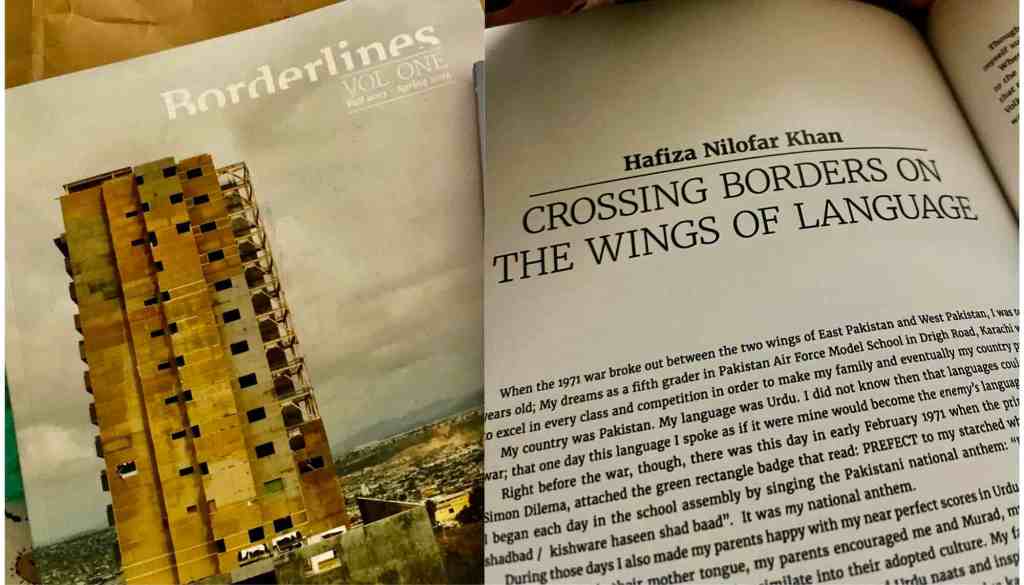
The ten-year-old Hafiza whose father is in the Pakistan Air Force and proud of her prowess in Urdu suddenly finds herself and her family in the situation that Lahore-based historian Ilyas Chatta details in his recently published book Citizens to Traitors: Bengali Internment in Pakistan 1971-1974 (Cambridge University Press, 2025).
I have not read the book but this review by Irfan Chowdhury, ‘Silences within silences’: Excavating the hidden history of Bengalis interned in Pakistan after 1971 shines a spotlight on this hidden history, of what happend to the Bengalis stranded in what was left of Pakistan after the liberation of Bangladesh. Surprisingly, that’s a history that even many Bangladeshis don’t know about, according to Chowdhury, who is from Dhaka.
Coincidentally, old friend and colleague Tom Maliti in Kenya, who has lived and worked in Lahore, has also been digging into the happenings of 1971. It was a five-part podcast series on Al Jazeera, ‘36 July: Uprising in Bangladesh,’ that piqued his curiosity, and then Tahmima Anam’s novel The Golden Age. He writes about that, and how he relates it to Kenya, in this piece for Sapan News, that hopefully is the first of many.
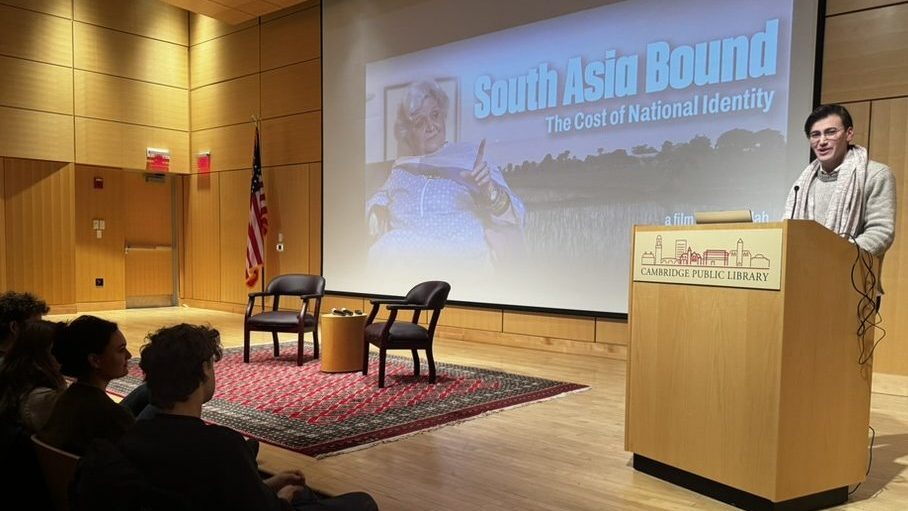
Last Monday, I was privileged to host a house-full session at the Cambridge Public Library on behalf of the Southasia Peace Action Network, for the premiere of ‘South Asia Bound: The Cost of National Identity‘ a thoughtful and thoughtprovoking documentary by Tufts University senior Zac Colah. He spent several weeks in Pakistan his past summer and interviewed several people around the issues of identity, oppression, and aspirations. He finally chose just four around which the film revolves, with Zac’s own commentary moving the narrative along. Read the Sapan News report about the event here.
All these and more Sapan News syndicated features are available for republication with due credit.
We were excited about having Arundhati Roy in conversaton with us – Readers WIthout Borders and Sapan peacemongers — sadly she coudn’t join at the last minute. Still, we had a good discussion. Here’s a press release about that on the Southasia Peace website: Book lovers and ‘peacemongers’ come together over Arundhati Roy’s new memoir.
Note: Why do we use ‘Southasia’ as one word? “Because our histories entangle, our struggles intersect, and our futures are bound together. It is not just a spelling choice, it’s a political and poetic one.” Beautifully articulated by Sapan News Associate Editor Pragyan Srivastava.
Filed under: Human rights, Progressive politics | Tagged: 1971, Arundhati Roy, Bangladesh, books, history, Pakistan |


 Journeys to democracy
Leave a comment